
by Grant Newman
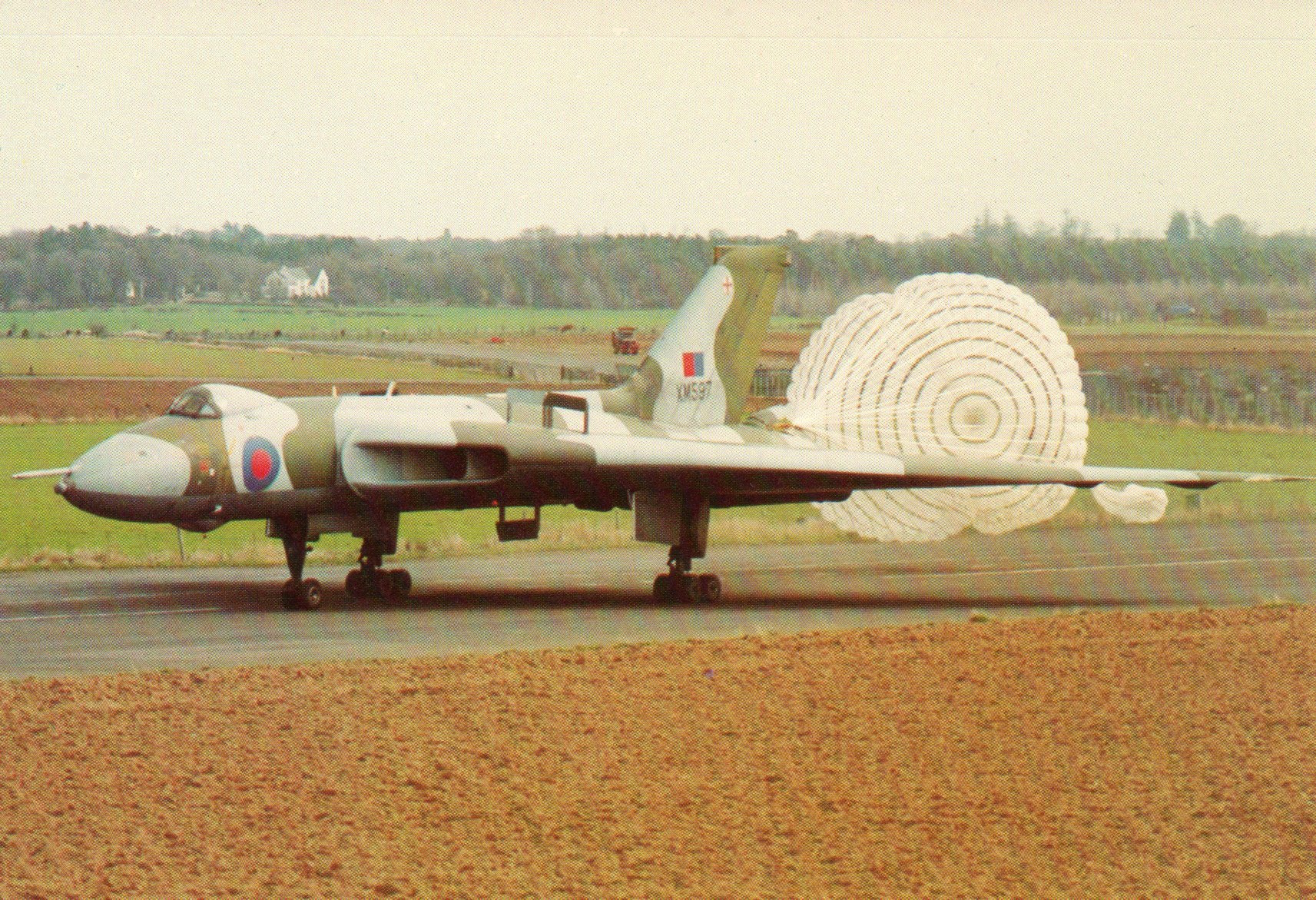
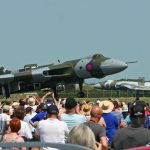
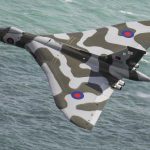
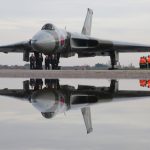
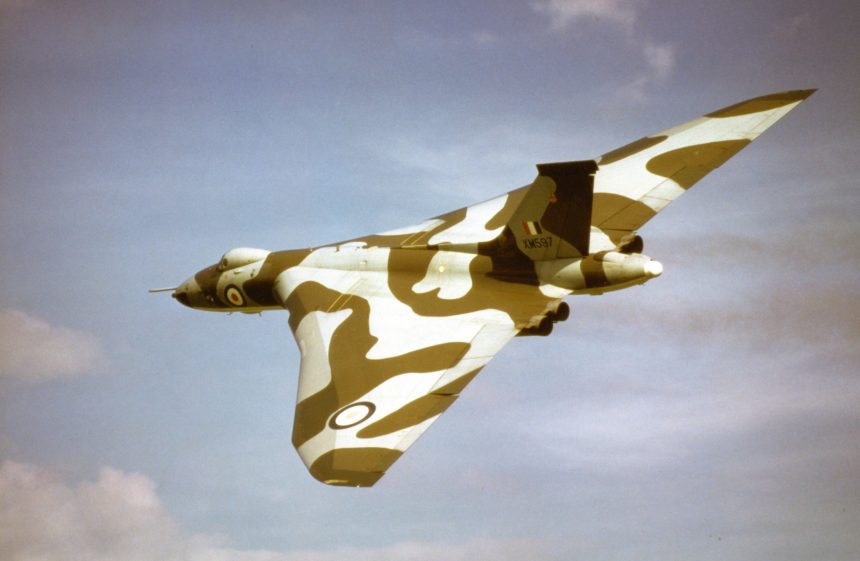
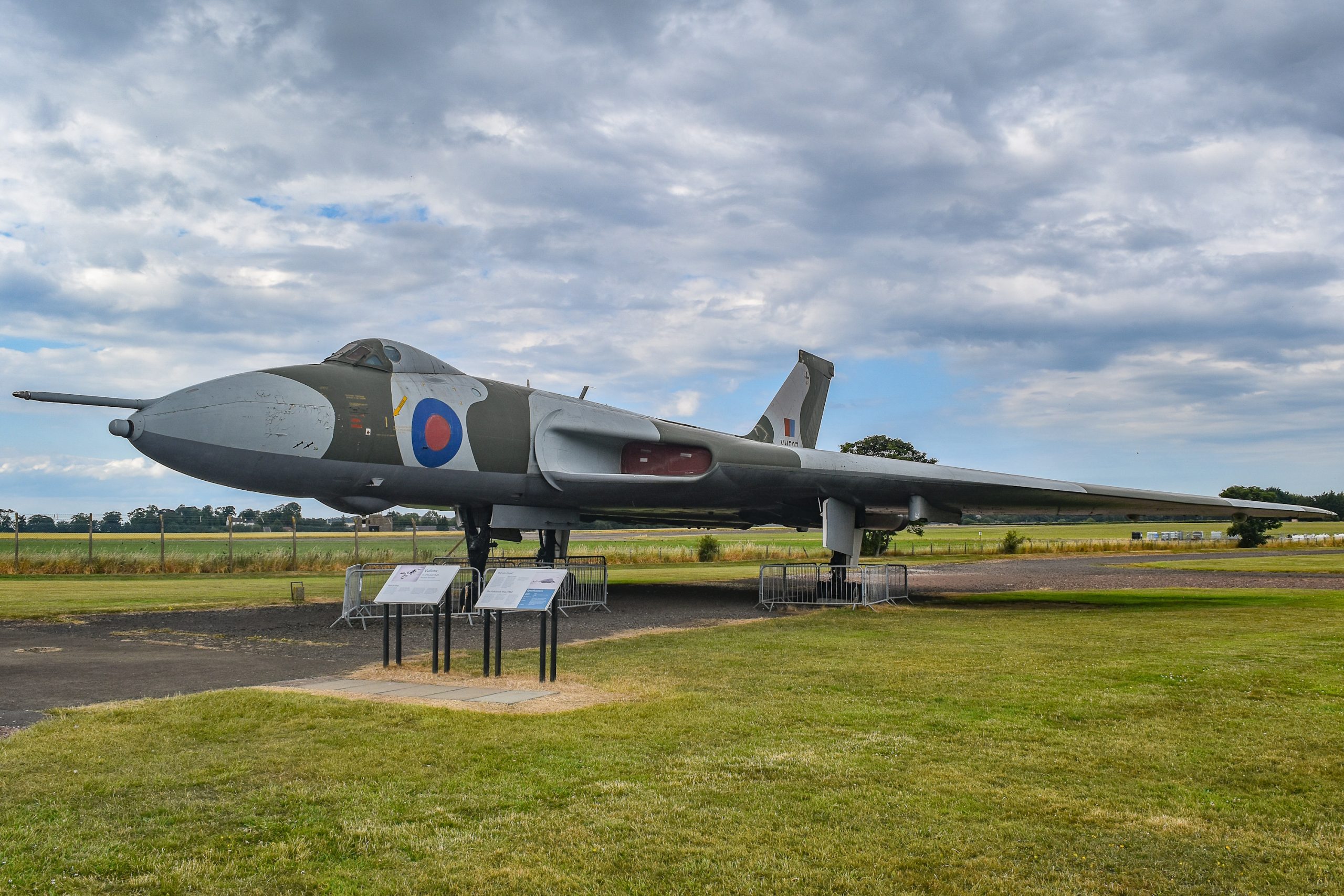
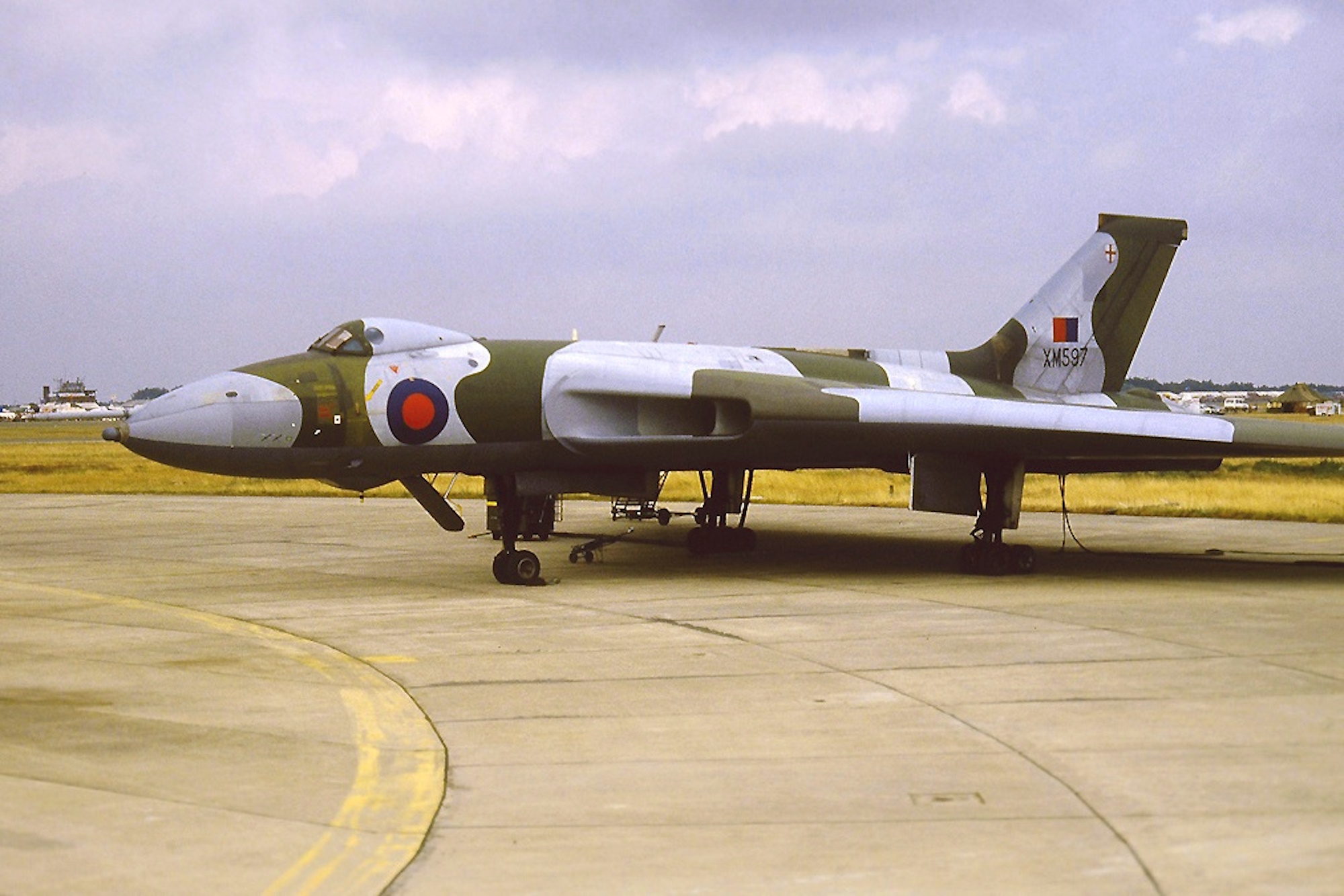
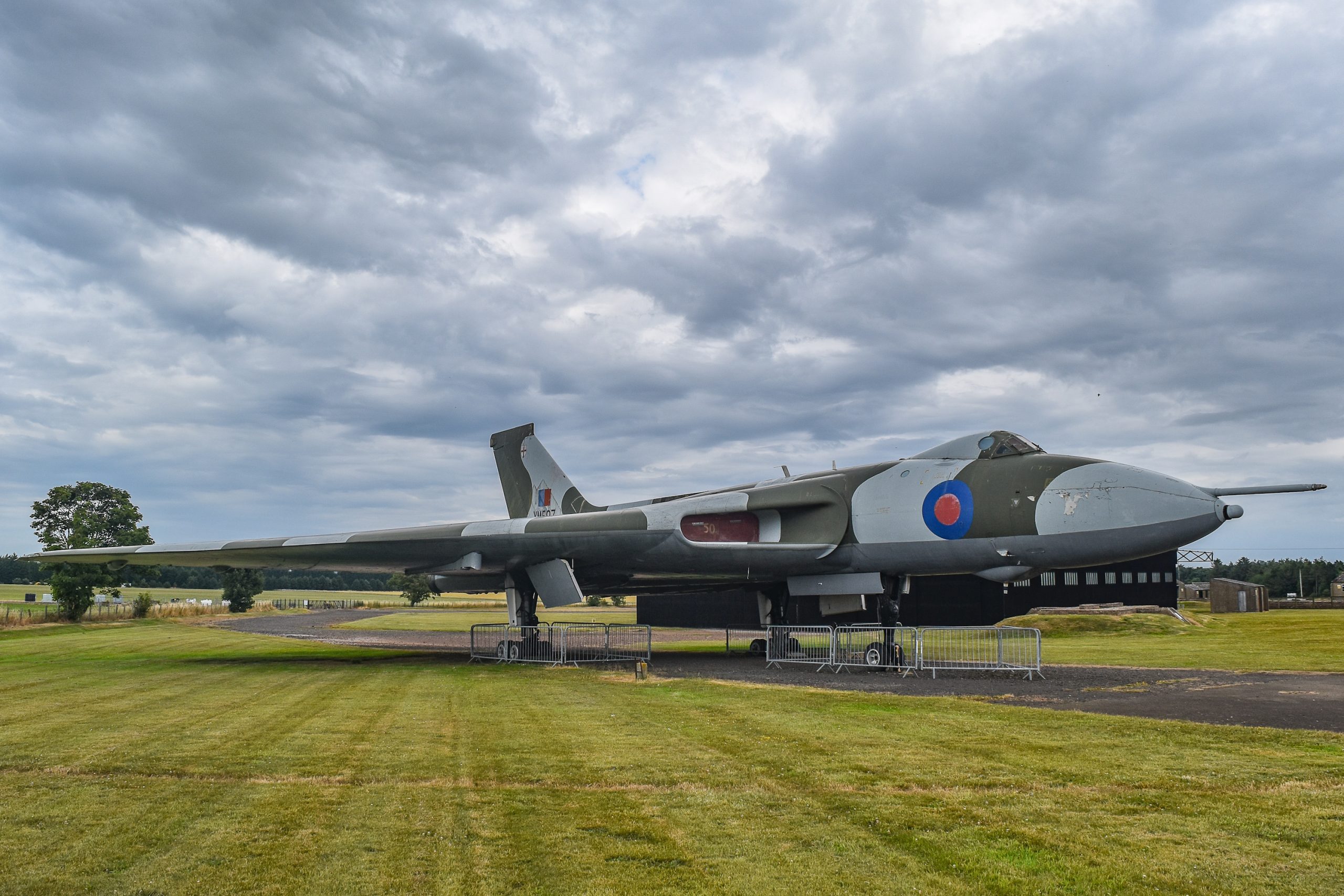
Surviving at Scotland’s National Museum of Flight in East Lothian, 22 miles east of Edinburgh, Avro Vulcan B Mk.2 XM597 flew a 6,800-mile round trip from Wideawake airfield on Ascension Island to fire AGM-45A Shrike anti-radar missiles at Argentine radar installations at Stanley Airport during 1982’s Falklands War. Although overshadowed by the achievements of fellow Falklands War veteran Vulcan B.2 XM607, which became the only ‘V’ Bomber to have dropped bombs in anger, XM597 led an active service life, incorporating some notable firsts and lasts for the type.
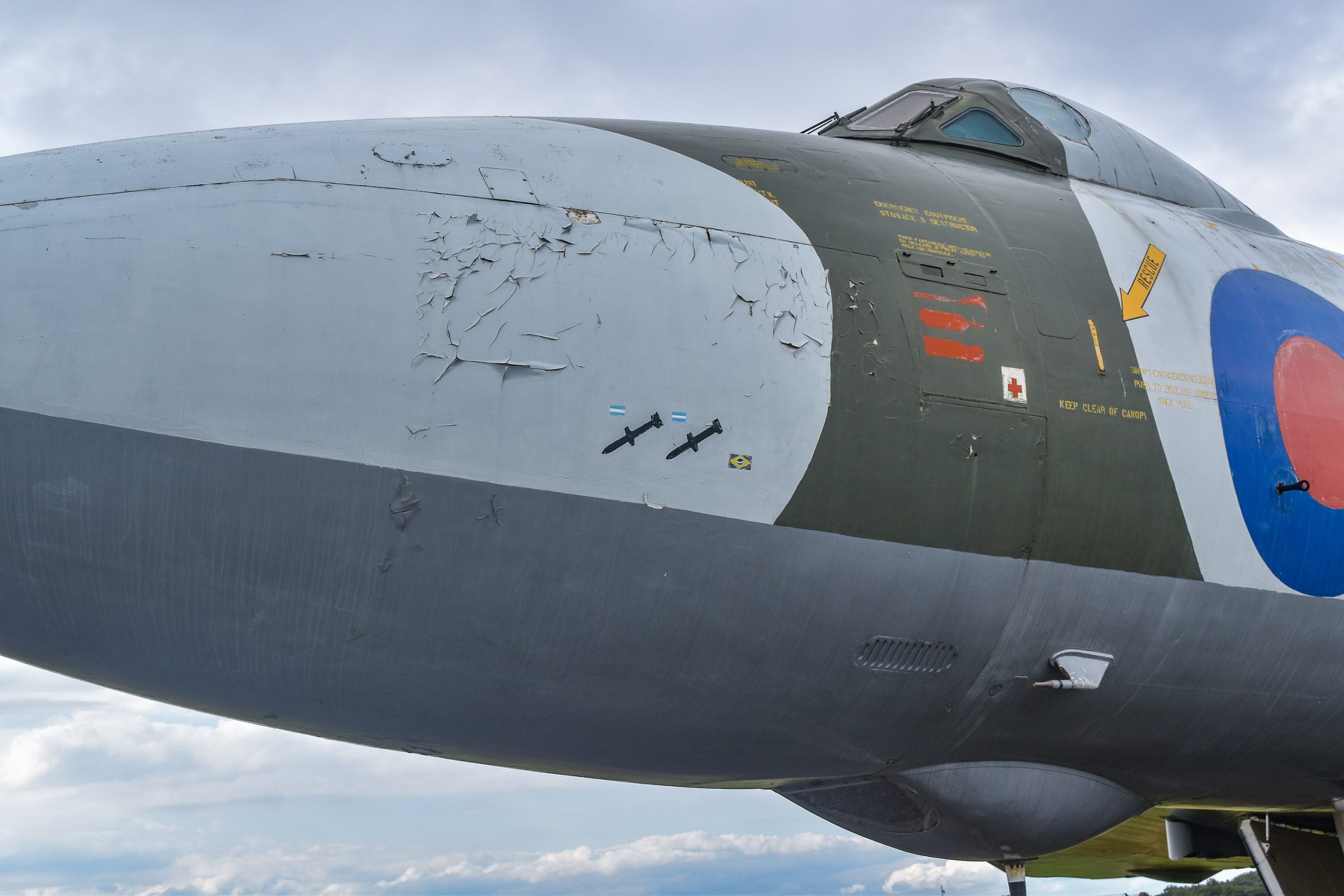
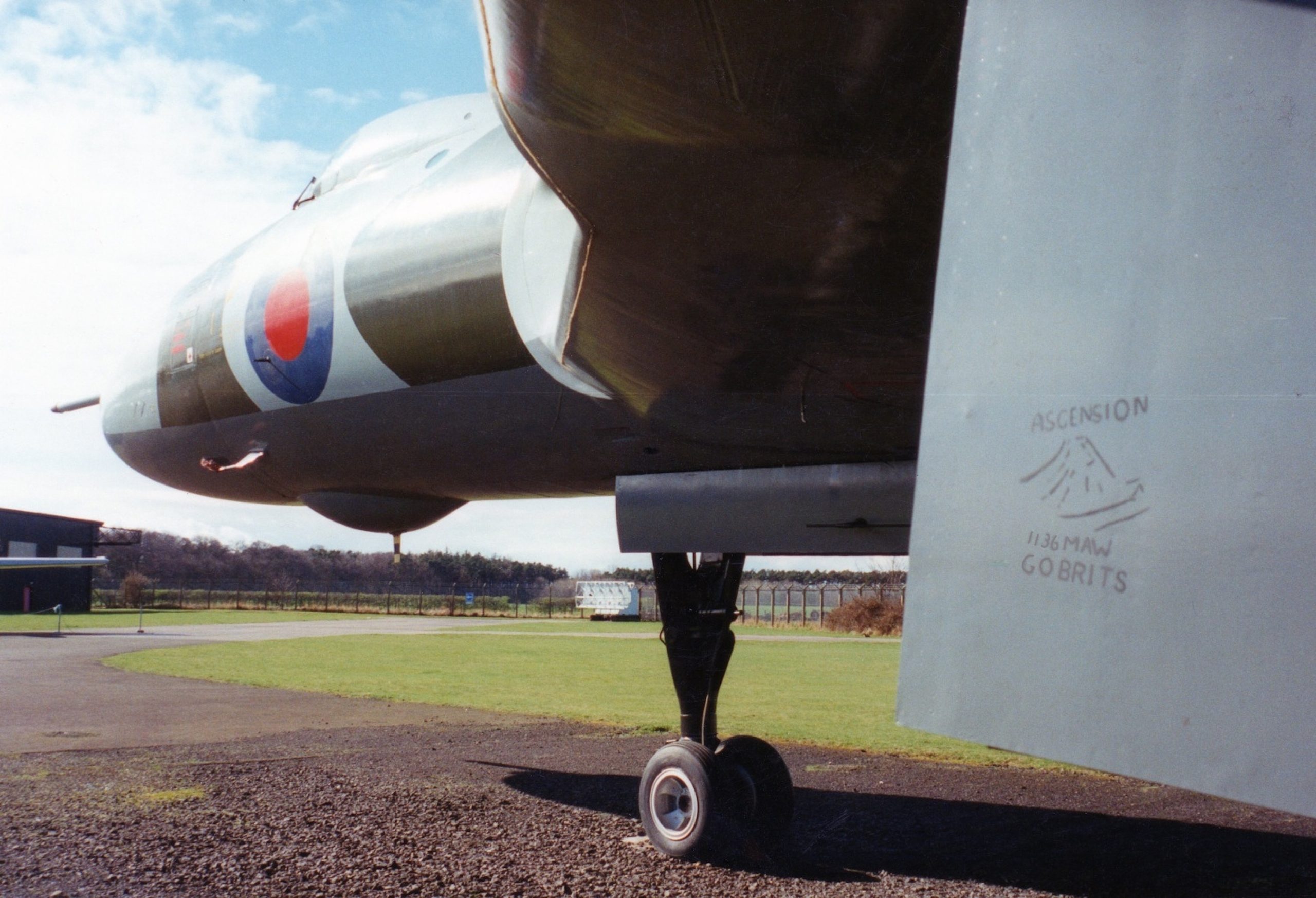
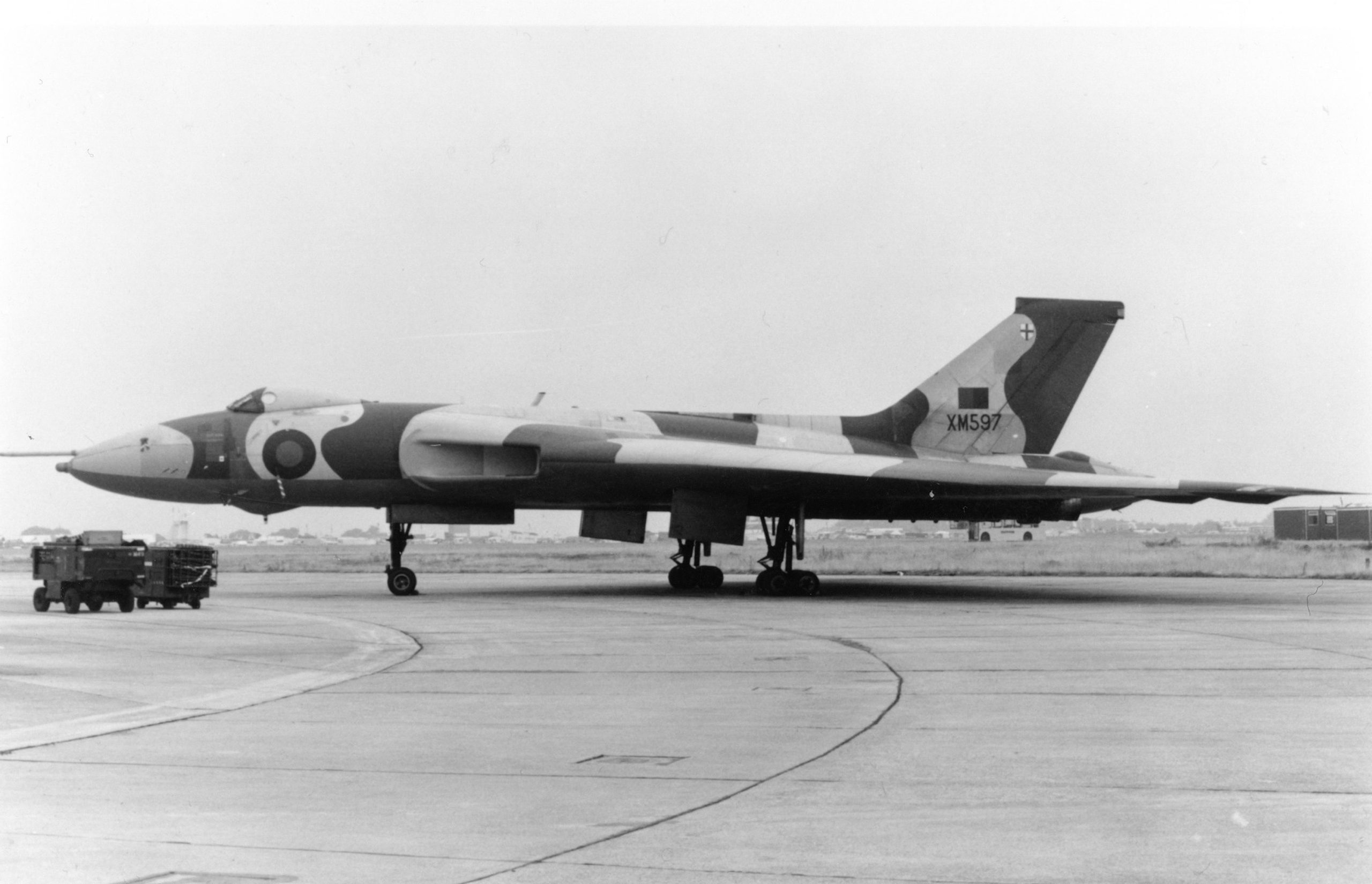
Completed in 1963 as the sixty-first Vulcan built, XM597 was the first to be modified on the production line for carrying the cancelled Douglas GAM-87A Skybolt Air Launched Ballistic Missile, and the last to be fitted out for carrying the Avro Blue Steel stand-off nuclear missile. Although selected as one of five Vulcans for long-range air raids during the Falklands War, XM597’s role in weapons trials prior to its operational debut was vital for the use of the Vulcan in that conflict. It was an unscheduled stopover in Brazil that earned it lasting notoriety, however. This event in the aircraft’s history is discreetly evident today, recorded as a Brazilian flag painted on the port side of its nose, next to two missile symbols denoting operations flown during Operation Corporate, the British plan to retake the Falkland Islands.
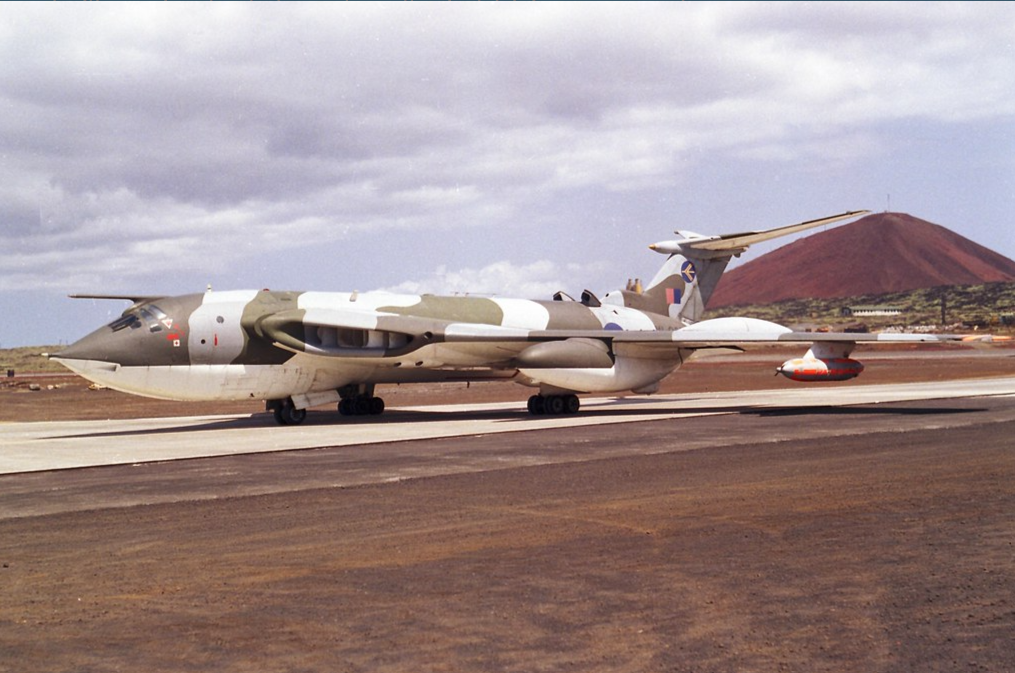
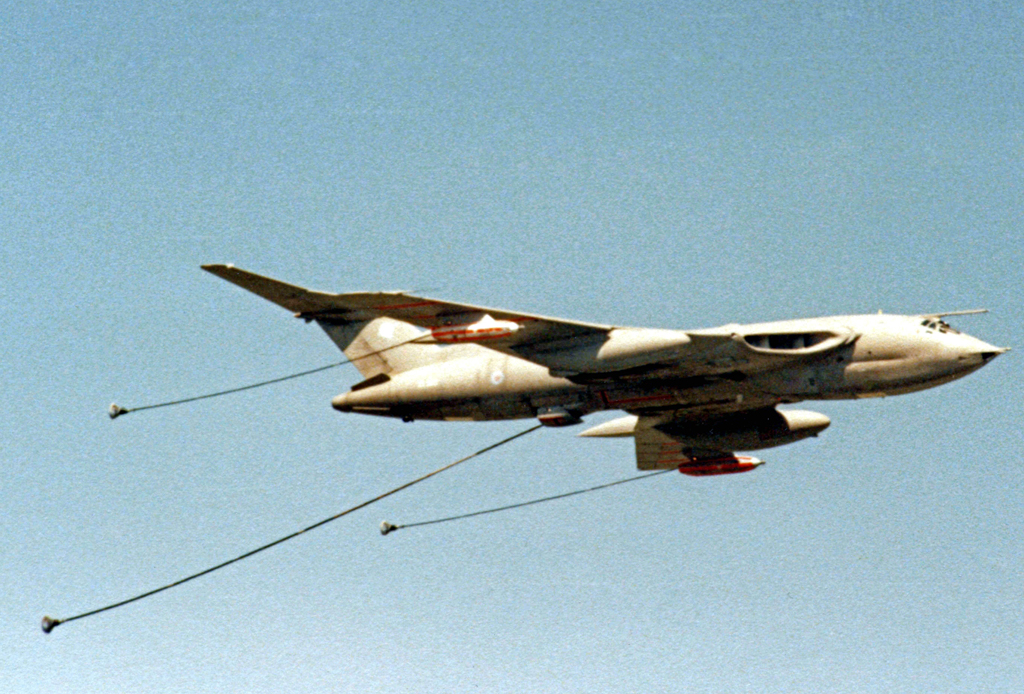
On April 2, 1982, Argentine amphibious forces wrested control of Stanley, the principal town in the Falkland Islands, from the small British military garrison there. To Britain’s Prime Minister, Margaret Thatcher, there was no question as to whether the Falklands would be retaken by force. Realising that effective air support was a necessity in the retaking of the desolate, far-flung island colony, Royal Air Force chiefs quickly drew up a plan to utilise their long-range bomber units, at the time in the throes of disbandment. The use of the Vulcan, the last of the V-bombers, was still in its intended role, and Handley Page Victors were undertaking in-flight refuelling, which was fraught with the potential for failure. If successful, the rewards were numerous; their deployment meant the direct application of enormous firepower on pinpoint targets, not to mention the psychological impact the big bomber’s presence would have on the enemy.
National Museum of Flight in East Lothian, 22 miles east of Edinburgh, Avro Vulcan B Mk.2 XM597 flew a 6,800-mile round trip from Wideawake airfield on Ascension Island to fire AGM-45A Shrike anti-radar missiles at Argentine radar installations at Stanley Airport during 1982’s Falklands War. Although overshadowed by the achievements of fellow Falklands War veteran Vulcan B.2 XM607, which became the only ‘V’ Bomber to have dropped bombs in anger, XM597 led an active service life, incorporating some notable firsts and lasts for the type.
At the time of the Argentine invasion of the Falklands, the Vulcan was in the twilight of its career, and a reduction in the number of serviceable aircraft had already begun. After examination of the existing Vulcans still in service, ten were initially selected for Operation “Black Buck”, the long-range bombing offensive against Argentine-controlled Stanley Airfield. This number was eventually narrowed down to five suitable aircraft: XL391, XM597, XM598, XM607 and XM612.
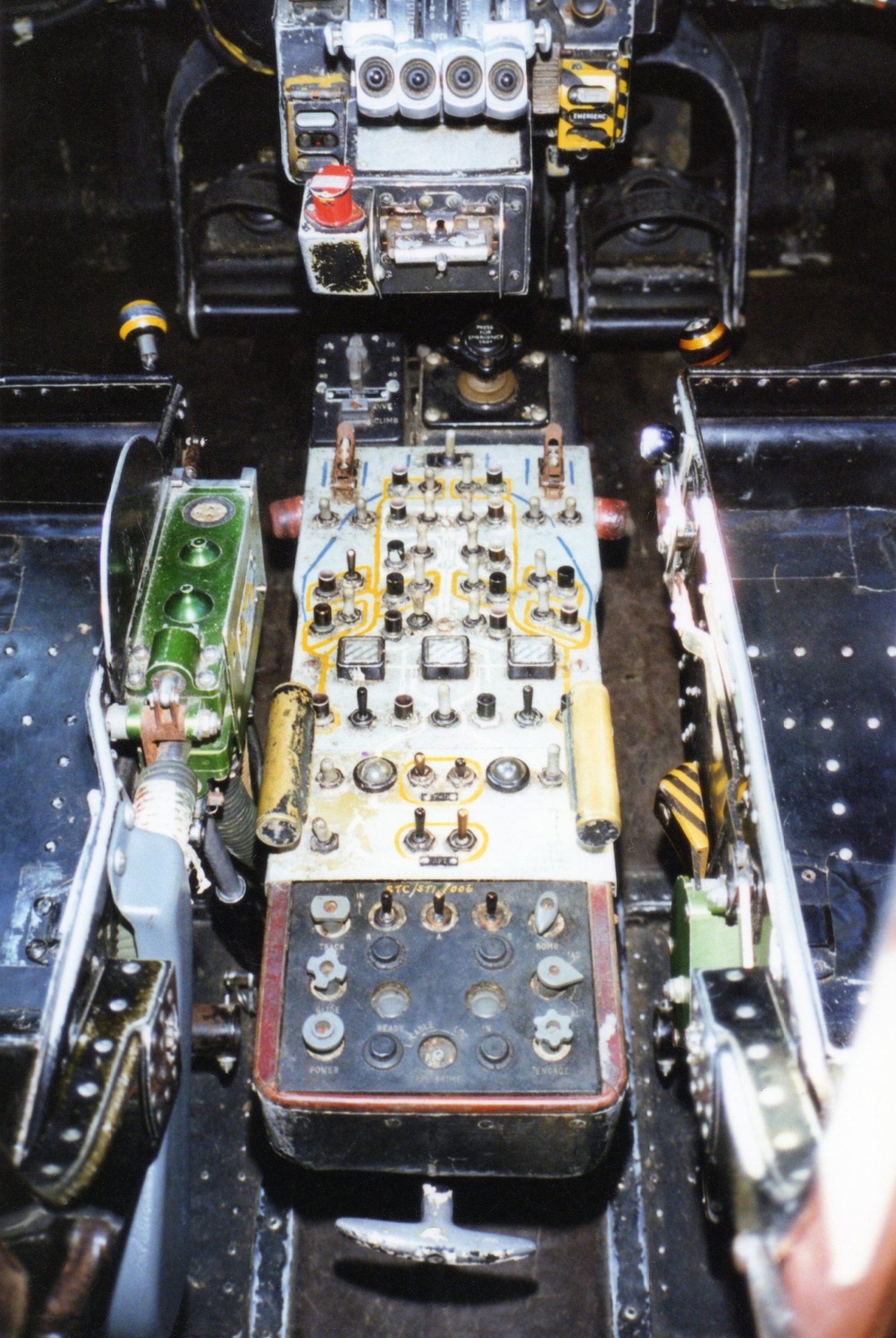
Criteria for selection to undertake Black Buck raids included the incorporation of Skybolt modifications, the fitting of functional in-flight refuelling equipment and that each aircraft had to be powered by the 18,000 lb st thrust Bristol Siddeley Olympus 301 powerplant. Each Vulcan was fitted with two Delco Carousel Inertial Navigation System units removed from stored British Airways’ Vickers VC.10s. Because much equipment had already been disposed of by the Vulcan units, in the frantic rush to prepare for deployment, air stations, museums and scrap yards around the UK were visited by RAF personnel in the search for serviceable supplies. Vulcans already in museums were robbed of their workable refuelling probes and any other equipment that could be used in support of the Black Buck aircraft.
Twenty-seven days after the Argentine invasion, XM597 departed RAF Waddington in Lincolnshire as a reserve aircraft for XM598 and XM607 on their 4,100-mile flight to Wideawake Airfield, Ascension Island in the mid-Atlantic Ocean, roughly halfway between the United Kingdom and the Falkland Islands. XM597 returned to Waddington later that day.
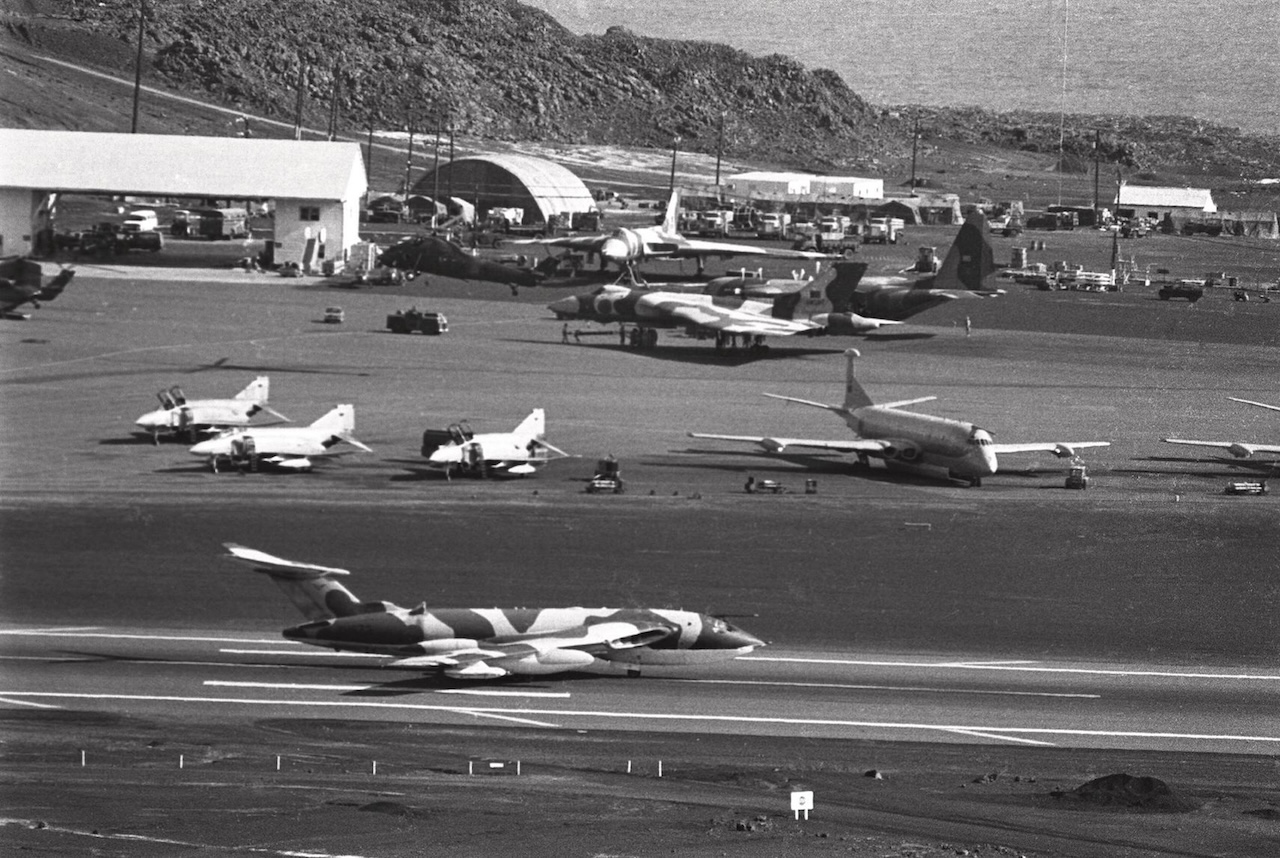
This was to be the pattern for each Black Buck raid flown from Wideawake: a primary aircraft set off, followed by a reserve, fully equipped to carry out the mission if the primary aborted. If all checked out aboard the primary, the reserve returned to Wideawake after several hours of flying time. Each raid was to be flown by a single Vulcan due to the logistics of the refuelling effort, requiring as many as fifteen Handley Page Victor K.2 tankers to ensure the attacking and support aircraft were fully fueled during the marathon incursion.
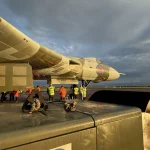
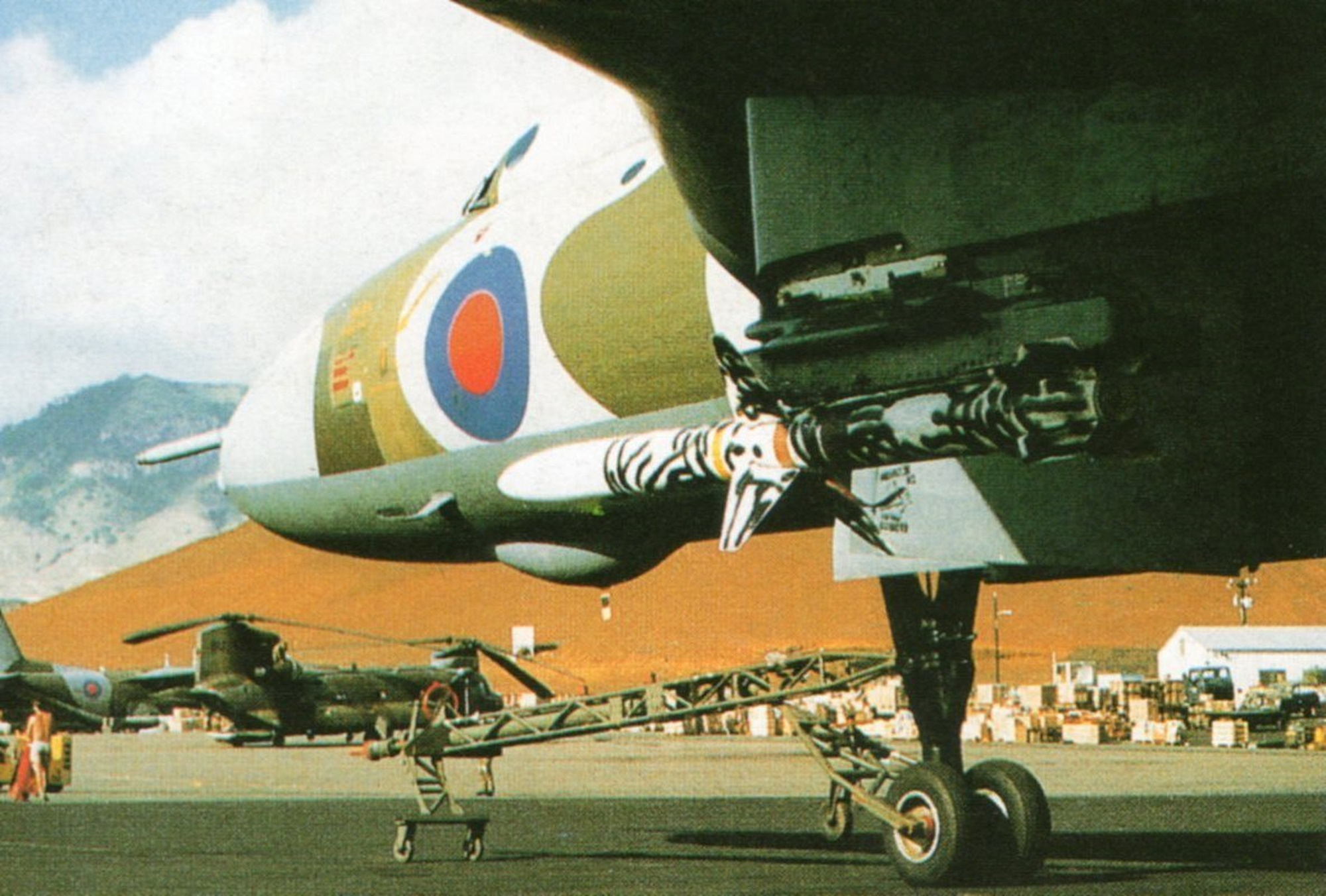
Throughout April and May 1982, XM597 carried out weapons trials for the possible carriage of laser-guided bombs and AS.37 Martel TV-guided missiles on makeshift pylons constructed from metal girders discovered at Waddington. The pylons were fitted to hardpoints initially incorporated into the Vulcan’s wings for the carriage of the Skybolt missile. The plumbing for the cooling and electronic systems for the cancelled American weapon housed the cabling for the carriage of stores under the Vulcan’s wings during Black Buck. Hastily designed by Squadron Leader Chris Pye, Waddington’s mechanical and engineering officer, the underwing pylons subsequently became known as “Pye pylons”. These were fitted to the Vulcans after refinement at RAF St Athan for operations, although based on Sqn Ldr Pye’s designs. Aside from those still fitted to XM597, the Museum of Flight holds an original set of Pye pylon prototypes built at Waddington.
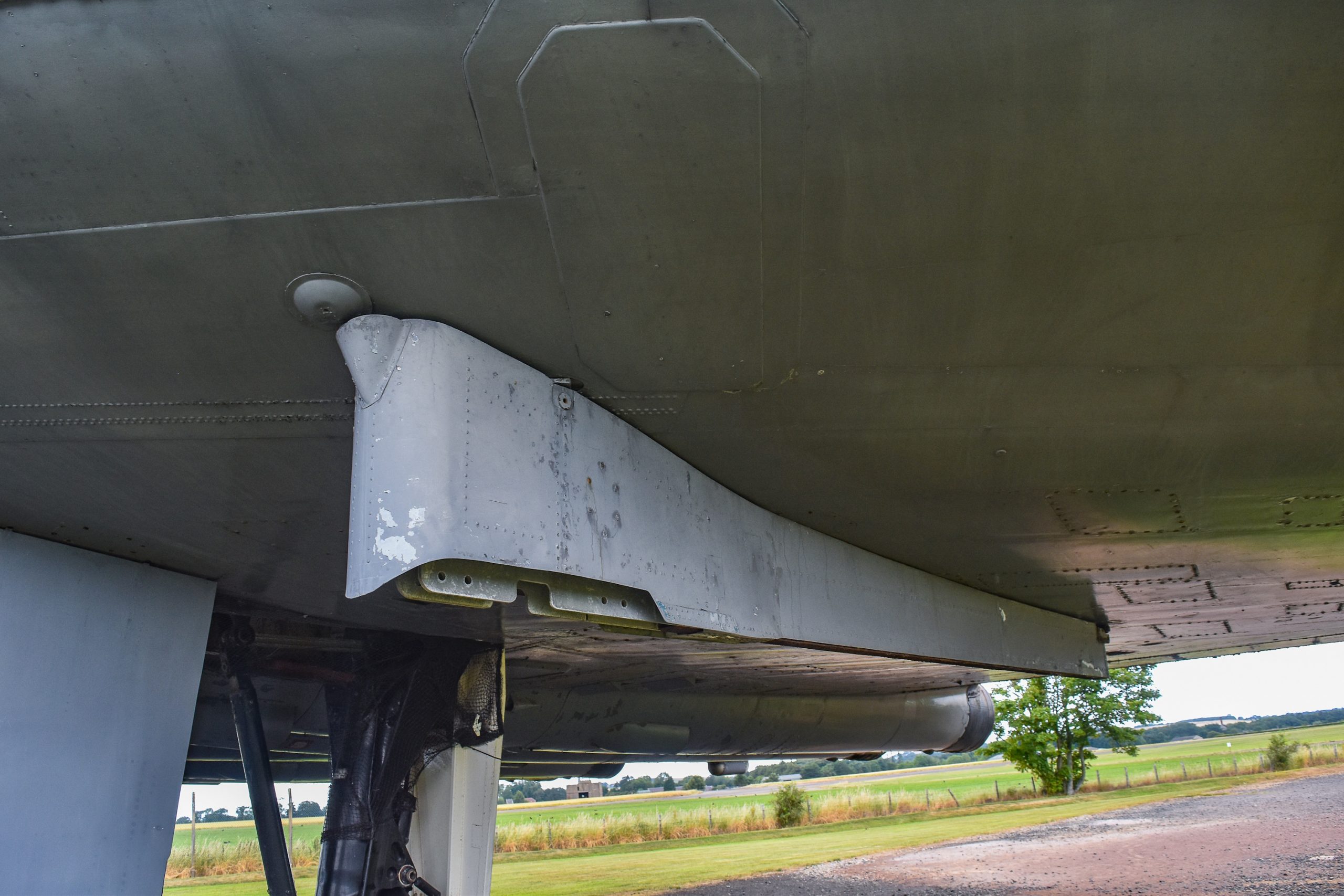
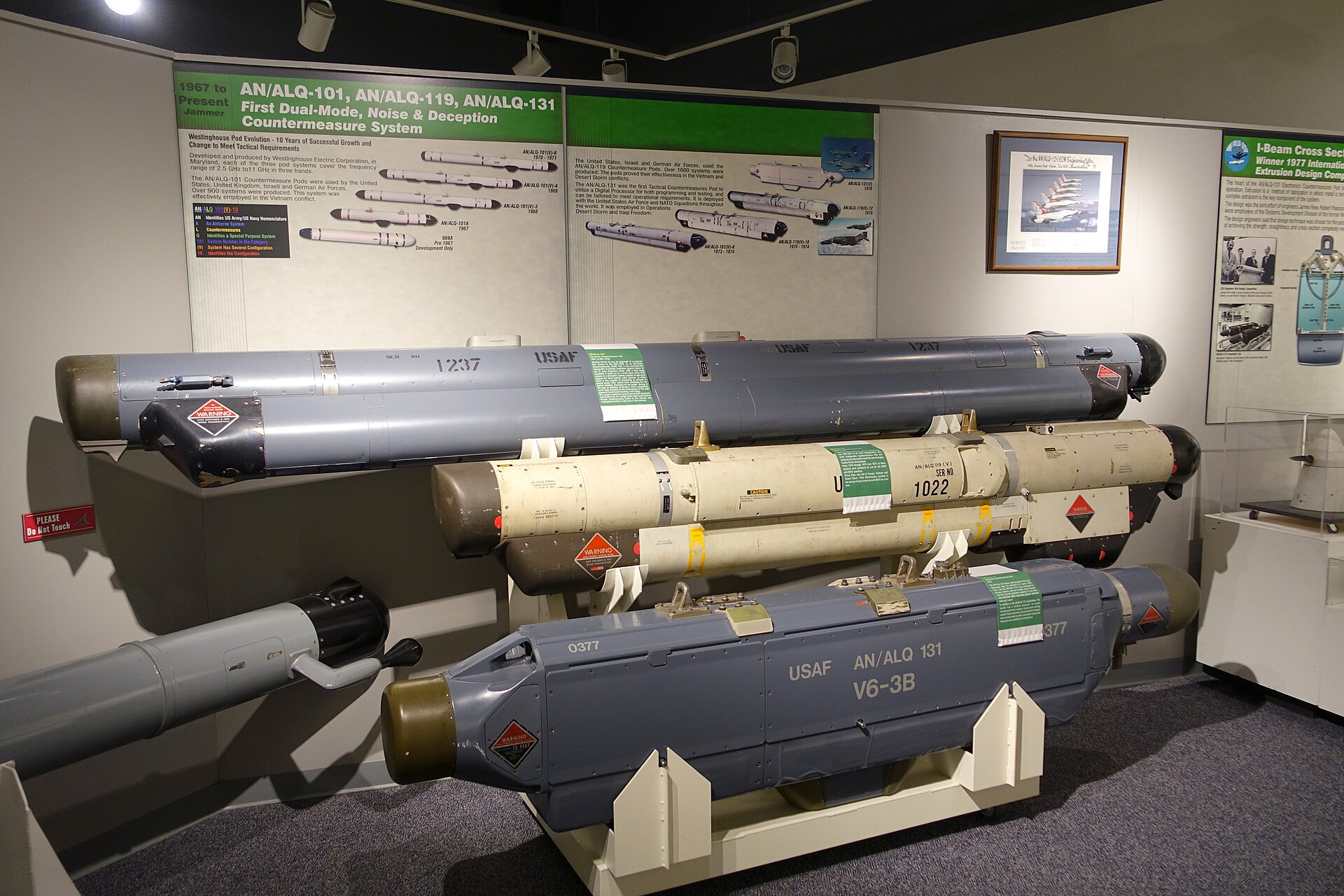
Eagle-eyed observers notice that the port wing pylon fitted to the Vulcan is larger than its opposite under the starboard wing. This is because it was intended that the Vulcans carry an AN/ALQ-101 E-10 ECM pod, known as the “Dash Ten”, on the smaller pylon and a Martel on the other. In RAF use by Blackburn Buccaneers, the Dash Ten ECM pod was capable of jamming modern US-supplied Argentine search radars, whereas the elderly “Red Shrimp” radar jamming equipment located in the Vulcan’s bulbous tail section was not considered powerful enough to do so. During trials, both laser-guided bombs and Martels were dropped from the aircraft; three 1,000 lb High Explosive laser-guided bombs were carried internally, or a single Martel was carried externally. On May 4th, the first flight carrying a single Martel round and a Dash Ten pod was made. The next day, XM597 carried out the first live firing trial with a Martel without its warhead, at the Aberporth Firing Range in Wales. While the Dash Ten pod was sent to Ascension Island aboard Vulcans, the Martel was not because of concerns over its performance after long hours exposed to the cold at high altitude.
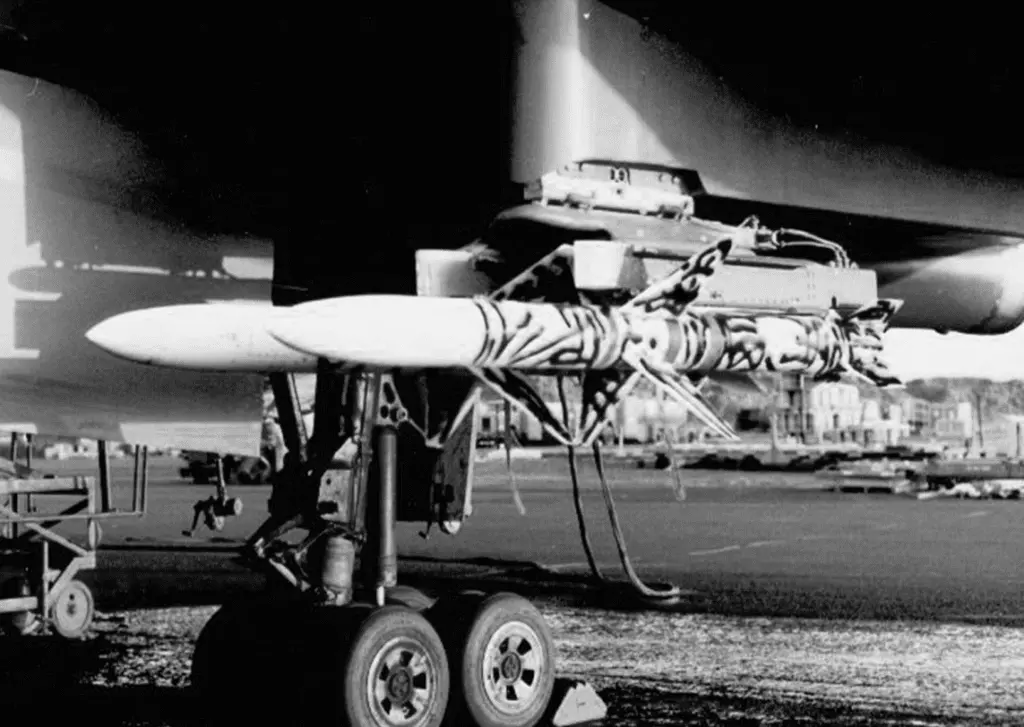
Laser-guided weapons were not carried by Vulcans either, but due to the threat of enemy air defences during attacks on Stanley Airfield, the United States covertly supplied a number of AGM-45A Shrike anti-radar missiles at the beginning of the conflict. Fuel tanks were fitted in the Vulcans’ bomb bay when carrying the Shrikes, reducing the number of refuelling points required on these missions. XM597 arrived at a busy Wideawake airfield on May 27th, and immediately it was readied for its first operation. Black Buck Four took place on the night of 28 May with XM597 as primary aircraft and XM598 as reserve. Crewing XM597 was Sqn Ldr Neil McDougall (captain), Fg Off Chris Lackman (co-pilot), Flt Lts Dave Castle (nav-radar), Barry Smith (nav-plotter) and Rod Trevaskus (air electronics officer). Since Vulcan pilots had abandoned in-flight refueling practice by 1982, a sixth crewmember was shoehorned into the confines of the Vulcan’s five-place cabin to visually aid in this delicate operation. XM597’s sixth crewman was Flt Lt Brian Gardner.
Carrying a single Shrike under each wing, XM597’s role was the destruction of the American supplied Westinghouse AN/TPS-43 search radar, which had been providing support to Argentine strike aircraft attacking the British Task Force. BB4 was aborted five hours after departure when one of the supporting Victor tanker’s in-flight refuelling Hose Drum Units failed. Two days later, on the night of May 31st/June 1st, Black Buck Five was launched, with ‘597 as primary, coordinated with a Harrier strike on Port Stanley Airfield. An 801 Squadron, Royal Navy Sea Harrier from the aircraft carrier HMS Invincible provided top cover. Flt Lt Dave Castle recounted the raid some years later. “At 200 nm from the Falklands, and after refuelling five times en route from a fleet of Victor tankers, XM597 descended to 300 ft above the sea and ingressed to Port Stanley airfield at 300 kts. At just under 40 nm, she climbed to 16,000 ft and attempted to locate the TPS-43 radar with both active and passive sensors (H2S radar and ALQ-18228 Radar Warning Receiver). A game of ‘cat and mouse’ ensued between the Vulcan crew and the Grupo 2 VYCA crew of the TPS-43 radar.”
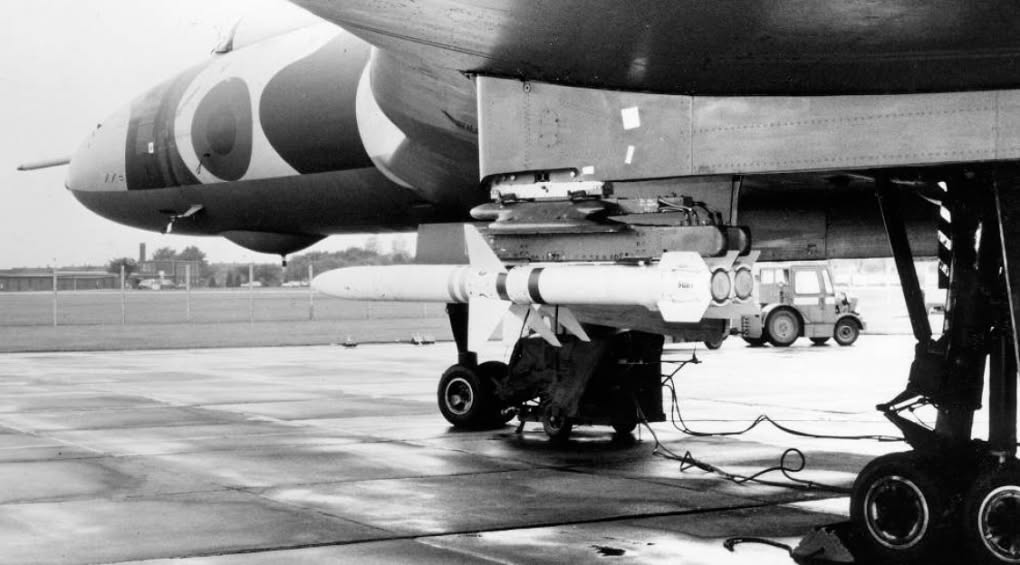
“After 40 minutes, XM597’s crew successfully located the TPS-43 mobile radar with some degree of certainty, and ripple fired its Shrike missiles, one of which impacted 10 metres from the target, inflicting minor blast damage to the radar’s waveguide assembly. The TPS-43 radar was then wisely shut down by the Argentinian crew who feared further attack, which then allowed RAF Harriers to attack Port Stanley relatively unopposed.” Over the combat area, a hostile airborne intercept radar target was tracked, but nothing else was heard. The Vulcan returned to Wideawake precisely 16 hours later, having just flown the longest air strike in history; it remained so until bettered by Boeing B-52 Stratofortresses during Operation Desert Storm nine years later. Since the results of BB5 were deemed inconclusive, however, Sqn Ldr McDougall and crew were told they would have to do it all again. The same mission, aircraft and crew were specified for Black Buck Six on June 2/3, but there would be no Sea Harrier top cover on this raid. This time, the four Shrikes were carried; each under-wing pylon was fitted with a cradle to carry two missiles each. Two of the missiles were optimised for attacking the TPS-43 radars, with the other two programmed for targets of opportunity, such as the Sky Guard fire control radars aiding the Oerlikon Anti-Aircraft Artillery (AAA). During this raid, the Argentine radar operators were alerted to the presence of the Vulcan, and they switched off their search radars when the aircraft was on approach to the islands. After loitering overhead for forty minutes unsuccessfully attempting to entice the TPS-43 into action, Sqn Ldr MacDougall decided to take a risk by descending from the safe altitude of 16,000 feet to within range of the Oerlikon AAA. This ploy worked and the Vulcan was illuminated by a Sky Guard unit. Two Shrikes were fired, and the radar was destroyed. Four Argentine radar operators were killed.
After further unsuccessful taunting of the TPS-43 into activity, XM597 then made a hasty departure for the refuelling point that would take the aircraft home, as its fuel situation was critical. An RAF Nimrod maritime patrol aircraft supplied guidance for rendezvous with the Victor tanker for the last refuelling before reaching Ascension Island. On the first prod of the Vulcan’s probe into the Victor’s trailing basket, a loud bang was heard from the cockpit and fuel sprayed all over the windshield until dispersed by the slipstream. The tip of the probe had fractured, preventing further reception of fuel by the Vulcan. The hapless crew found themselves in dire straits, as there wasn’t enough aboard for the journey back to Ascension. Realising the predicament they were in, Fg Off Chris Lackman did some hasty calculations and recommended that they fly at an altitude of 43,000 feet for a more economical fuel consumption by the thirsty Olympus engines.
Flt Lt Castle later recalled: “There were no pre-arranged or recognised diversions and the crew’s brief was to ditch the aircraft should the final refuelling RV fail. Reluctant to ditch XM597 in the South Atlantic, the crew elected to climb to 43,000 ft for best range/endurance performance and headed west towards South America and Brazil. Before entering Brazilian airspace, the unused Shrikes had to be ejected from the aircraft to prevent any potential embarrassment to the British Government, and Brazilian authorities should be informed of the landing. Unfortunately, one missile refused to jettison, which created additional problems later. Before the aircraft could resume heading for the Brazilian coast, the Vulcan was then turned onto a southerly heading to avoid a small fishing fleet, exacerbating further the fuel dilemma.”
“After de-pressurising at 43,000 ft and jettisoning secret documents and film through the crew escape hatch, XM597 then descended to around 20,000 ft. Fortunately, XM597 was able to unwittingly evade a pair of Força Aérea Brasileira F-5s that had been scrambled to intercept it.” A serious problem arose when sensitive documents were put in a canvas bag and hurled out the underside door; on closing, the door refused to seal, preventing full pressurization of the cabin and forcing the occupants to breathe pure oxygen. This had the effect of making the crew’s voices (in the words of Sqn Ldr McDougall) “…sound like Donald Ducks!”, which made communication with Brazilian Air Traffic Controllers considerably difficult! Contact was made with Rio de Janeiro 250 nautical miles out on a VHF distress frequency. Flt Lt Castle recalled, “With insufficient fuel for a procedural instrument approach into Rio’s Galeão International Airport, XM597 was flown to the overhead where it commenced a spiral descent and visual approach. The aircraft was landed with only 2,000 lbs of fuel remaining in the tanks, insufficient for a missed approach procedure and visual circuit in a Vulcan.” On landing at Galeão Airport, the wayward Vulcan was immediately impounded by the Brazilian authorities. The crew was given the option to leave, but they decided to remain, although they were not allowed to leave the air base without escort, as they had no passports or documentation with them. The next day, news of the Vulcan’s internment in Brazil had reached the front page of newspapers around the world, causing much embarrassment to the British government as the aircraft was still carrying live ammunition; the Shrike missile that refused to jettison from its pylon. On landing, the aircrew hung their anoraks over the missile to shield it from press photographers, who appeared en masse shortly after the aircraft’s arrival.
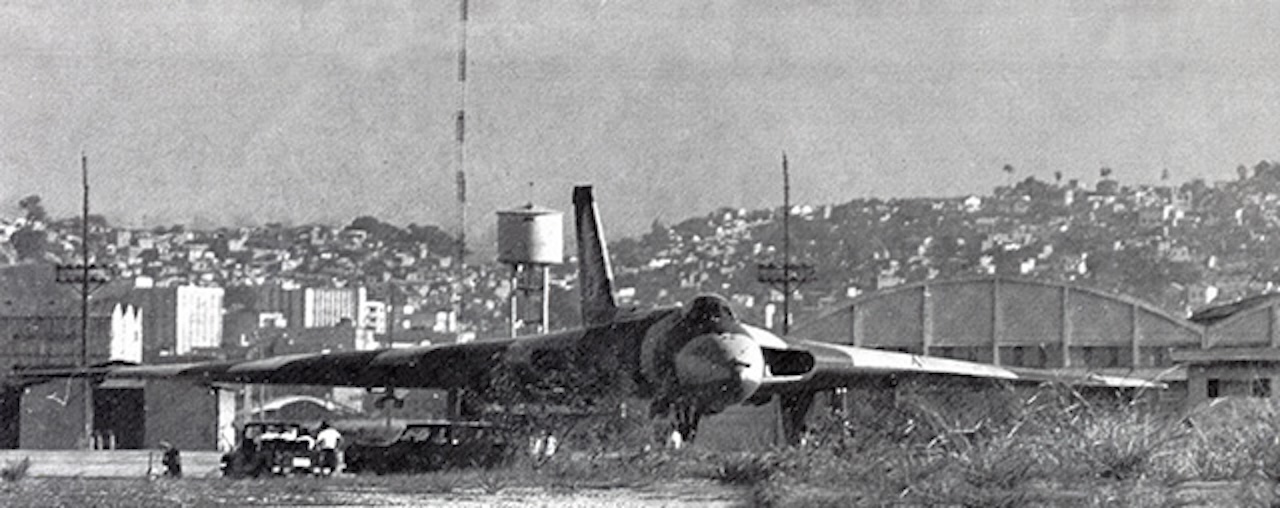
One of the conditions of the release of the aircraft and its crew was that it was not to take any further part in Operation Corporate; the Brazilians also stipulated that the Shrike missile was to remain in Brazil. Initially, the Brazilians incorrectly identified it as a “Sidewinder”, and to hide the aircraft’s true operational role, the British crew played along with this. One Brazilian newspaper article reporting the incident showed a photograph of the Vulcan with the weapon on the pylon circled and identified in the caption as a “míssil ar-ar Sidewinder”. The aircraft and crew remained with their Brazilian hosts for seven days before returning to Ascension on June 9th, the Shrike missile staying behind as requested. Three days late,r XM597 departed Wideawake Airfield for RAF Waddington, its brief part in the Falklands War over. For his sterling leadership during the Black Buck raids, Sqn Ldr MacDougall was awarded the Distinguished Flying Cross.
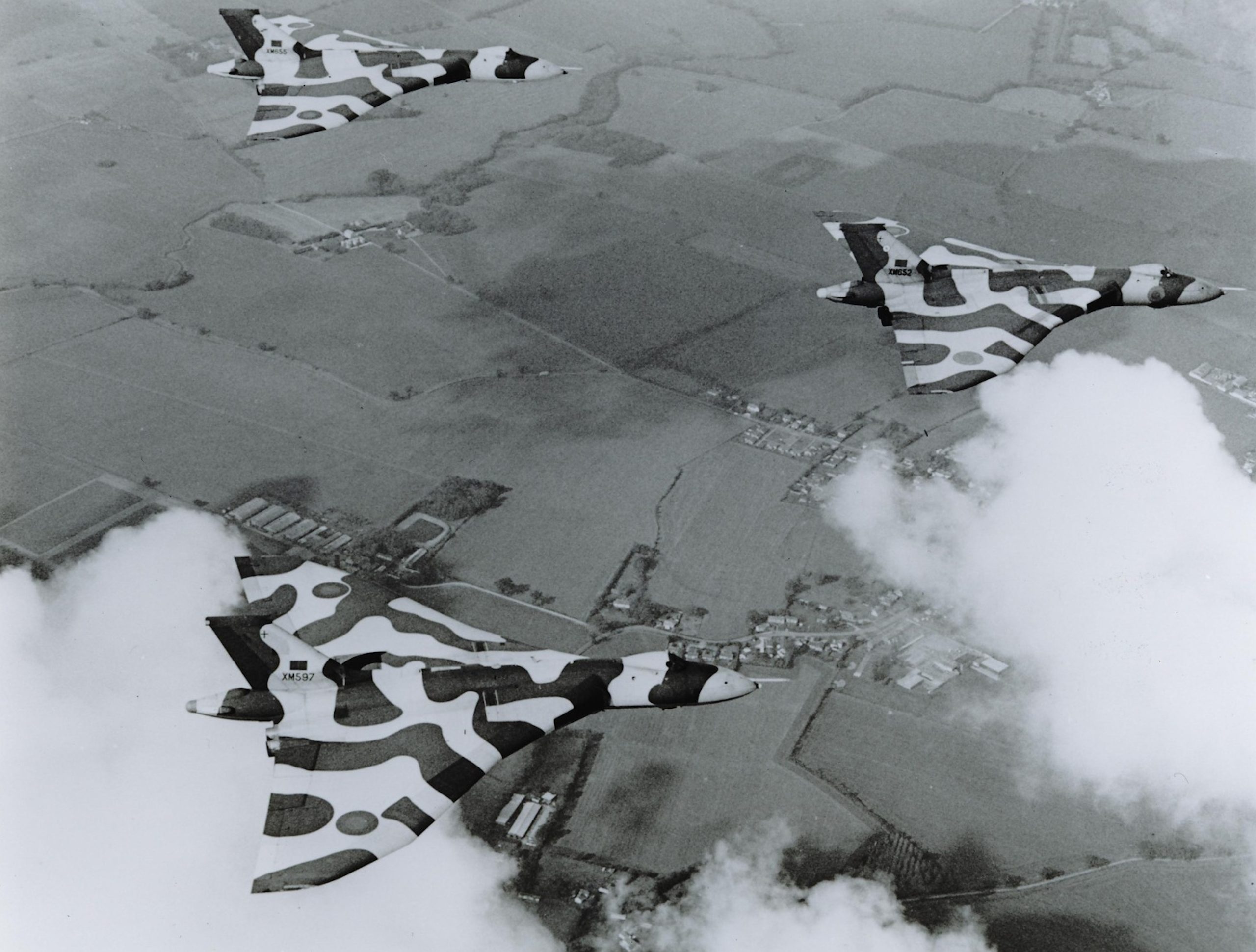
Some months after the cessation of hostilities in the South Atlantic, XM597 took part in a historic moment on December 17, 1982, the last operational Vulcan scramble before the type’s retirement as a bomber. Seven aircraft took part in the momentous occasion before 44 Squadron’s disbandment as the last active V Bomber unit. Later that day, XM597, accompanied by three other Black Buck Vulcans, XL391, XM607 and XM612, carried out a farewell flight around former Vulcan stations Coningsby, Cottesmore, Finningley, Scampton and back to Waddington.
After an illustrious RAF career spanning some twenty years, XM597 was sold to the Royal Museum of Scotland in April 1984. Piloted by Sqn Ldr Bill Burnett, the infamous delta bomber flew into East Fortune Airfield, her last resting place, on the twelfth of that month. A large crowd of well-wishers turned out to see her final landing at East Fortune, including Sqn Ldr McDougall DFC, the aircraft’s former commander during the Black Buck raids that thrust her into the limelight as one of only two Vulcans used in anger. The author would like to thank Flt Lt Dave Castle, RAF Ret’d and staff at the Museum of Flight for their assistance in the preparation of this article. Much of this article is based on conversations the author had with Flt Lt Castle at the museum.