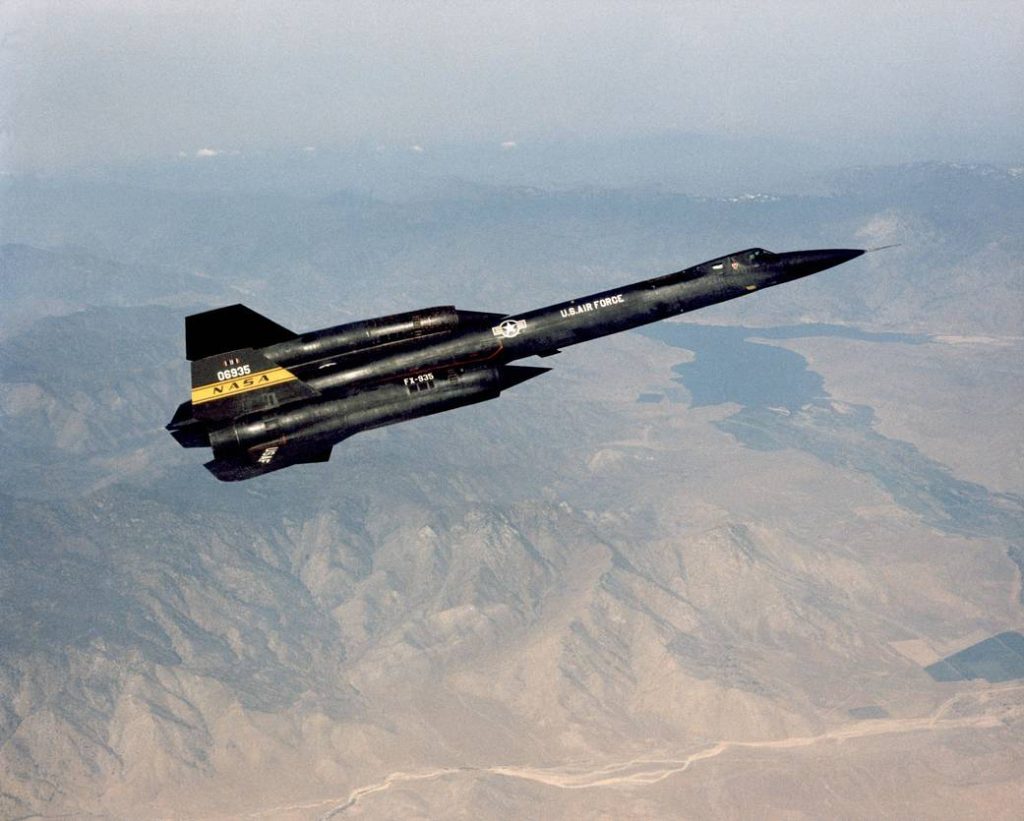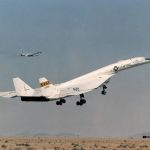


During the Cold War, the United States wanted to study high-speed, high-altitude flight using a fighter interceptor. As a result, the experimental YF-12 was developed, which set two world records on May 1, 1965, when it reached a speed of 2,070 mph and an altitude of 80,257 feet during US Air Force tests. The research on the YF-12 later gave birth to the legendary SR-71. Painted flat black, the YF-12 was built mainly from titanium alloy, which allowed it to withstand skin temperatures above 500°F during sustained high-speed flight. Work on the aircraft began in secret in the late 1950s at Lockheed’s Advanced Development Projects office in Burbank, California, commonly known as the Skunk Works. The original design was a long-range, high-altitude aircraft called the A-11. The program was led by Clarence “Kelly” Johnson, who had earlier directed development of the U-2. On February 29, 1964, then-US President Lyndon B. Johnson publicly announced the aircraft’s existence, and it received the US Air Force designation YF-12A.

The Air Force flight test program continued through 1966 at Edwards Air Force Base under the 4786th Test Squadron. A crew led by Col Robert L. Stephens and Lt. Col. Daniel Andre set the speed and altitude records. In July 1964, President Johnson also announced the development of a long-range strategic reconnaissance aircraft. That aircraft became the SR-71, which entered military service, while the interceptor, the YF-12, did not. Although the Air Force ended operational testing, the aircraft remained valuable for research. NASA engineers began studying Blackbird flight data in 1967. On July 18, 1969, NASA and the Air Force announced a joint research program using the YF-12. The experiments were conducted at the NASA Flight Research Center at Edwards, later renamed the Dryden Flight Research Center. Under its research agreement with NASA, the Air Force provided the agency with two YF-12As in 1969. NASA conducted several research programs on the aircraft’s structural loads, aerodynamic heating, and technologies needed for sustained supersonic cruise, while the Air Force focused on operational and combat-related research. The first NASA-Air Force research flight took place on December 11, 1969.
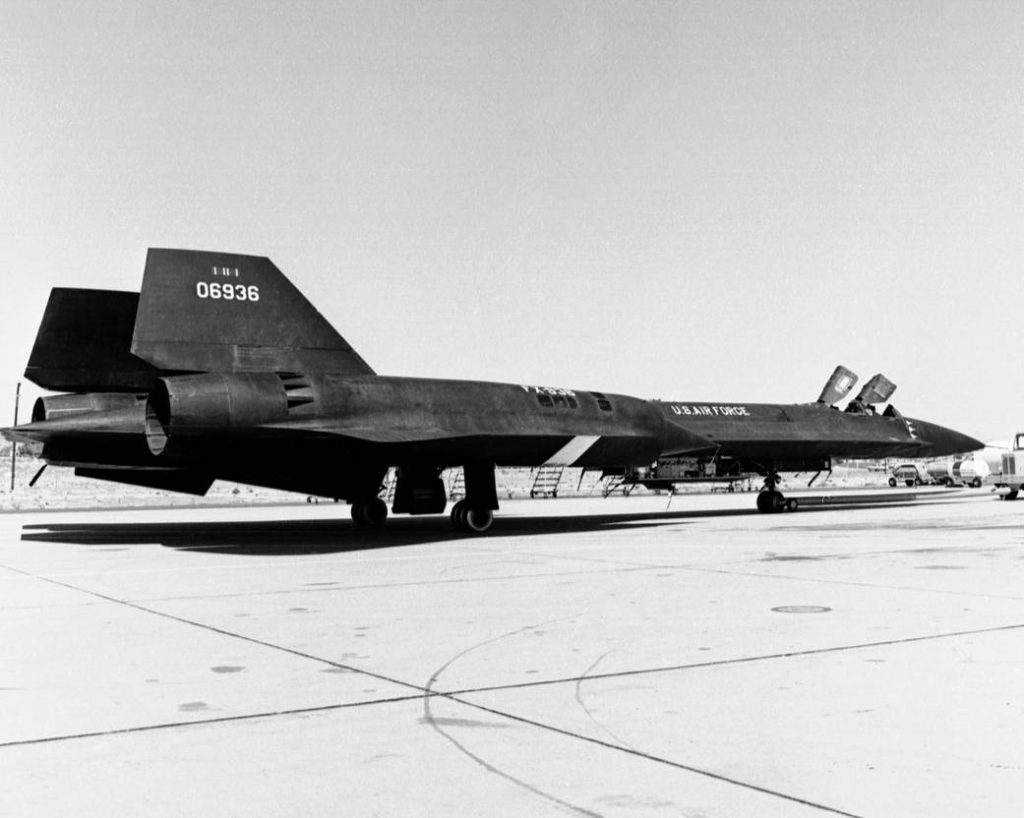
The YF-12 carried a crew of two, including a pilot and a flight engineer. NASA research pilots Fitzhugh Fulton and Donald Mallick flew most of the missions between 1970 and 1979 while flight engineers Victor Horton and Ray Young served on NASA crews. The aircraft flew regularly, often on a weekly schedule when not undergoing maintenance. On June 24, 1971, one YF-12A suffered a fuel line failure that caused an in-flight fire. While the aircraft was destroyed, Air Force pilot Lt. Col. Ronald Layton and fire control officer Maj. Billy A. Curtis ejected safely. The aircraft was replaced by another, designated YF-12C, which was actually an SR-71A, to allow NASA to continue its research. The YF-12’s ability to cruise above Mach 3 allowed NASA to study flight conditions not available on other aircraft. Research covered aerodynamics, propulsion, flight controls, structural loads, onboard systems, and other areas, including noise testing and measurements, the physics of the upper atmosphere, and handling qualities. Flight data was supported by wind tunnel tests, laboratory work, and computer analysis, and the program produced more than 125 technical reports.
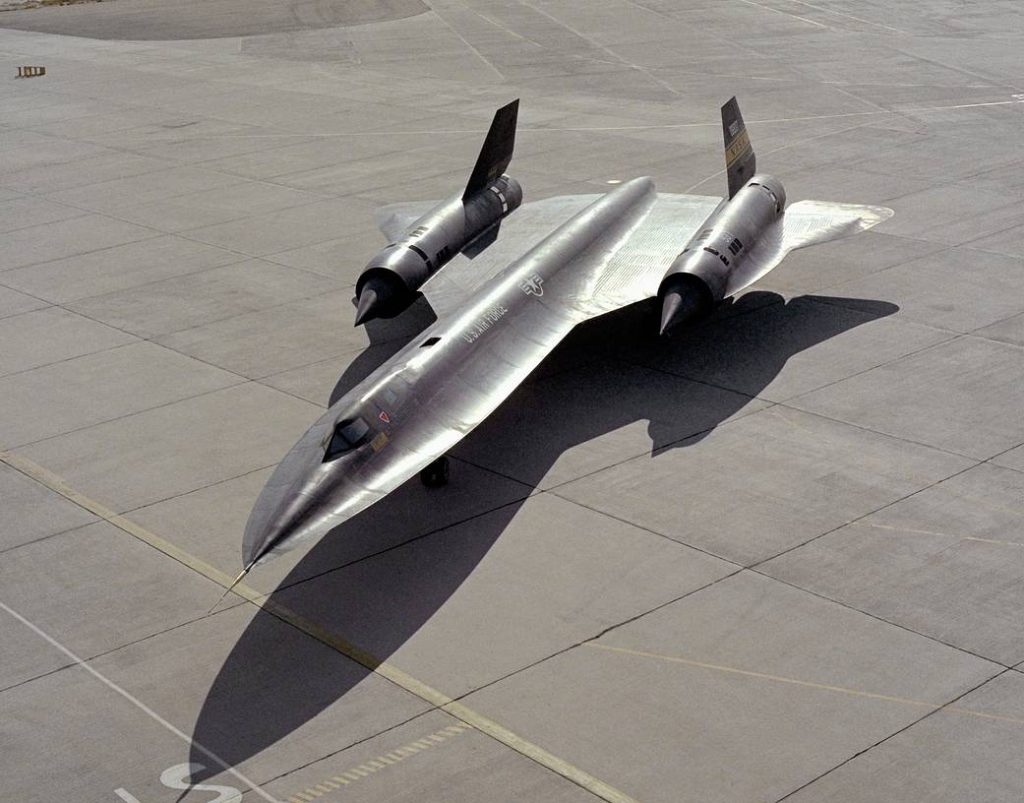
Engineers studied several important topics to improve aircraft performance. They looked at how engines work, how aircraft move through the air, the forces on the aircraft’s structure, how air flows into the engines, and ways to reduce drag. The engineers also tested noise from the aircraft’s boundaries, engine failures, and turbulence from the aircraft’s wake. One major issue was that aircraft were prone to an airflow problem at the engine inlets, called an “unstart,” which caused a thrust imbalance and violent yawing. The YF-12 research helped engineers understand and manage this problem. In addition, high-speed flight subjected the aircraft to extreme aerodynamic heating, and NASA used the YF-12 to study the resulting thermal effects. Another experiment was the Cold Wall Experiment, which involved exposing a cooled, sensor-equipped hollow cylinder mounted beneath the aircraft to the friction and heat of a Mach 3 environment. As the plane approached Mach 3, a primer cord was used to remove the insulation from the cold cylinder. During the flight, the engineers compared the temperature, pressure, and friction readings from the cylinder with data from theoretical analysis and wind-tunnel tests, achieving a moment of glory in fluid dynamics research. NASA also conducted ground tests in a Thermal Loads Facility that reproduced Mach 3 heating conditions and generated large data sets. Engineers developed methods to separate aerodynamic forces from thermal effects, improving design tools for future supersonic and hypersonic aircraft.
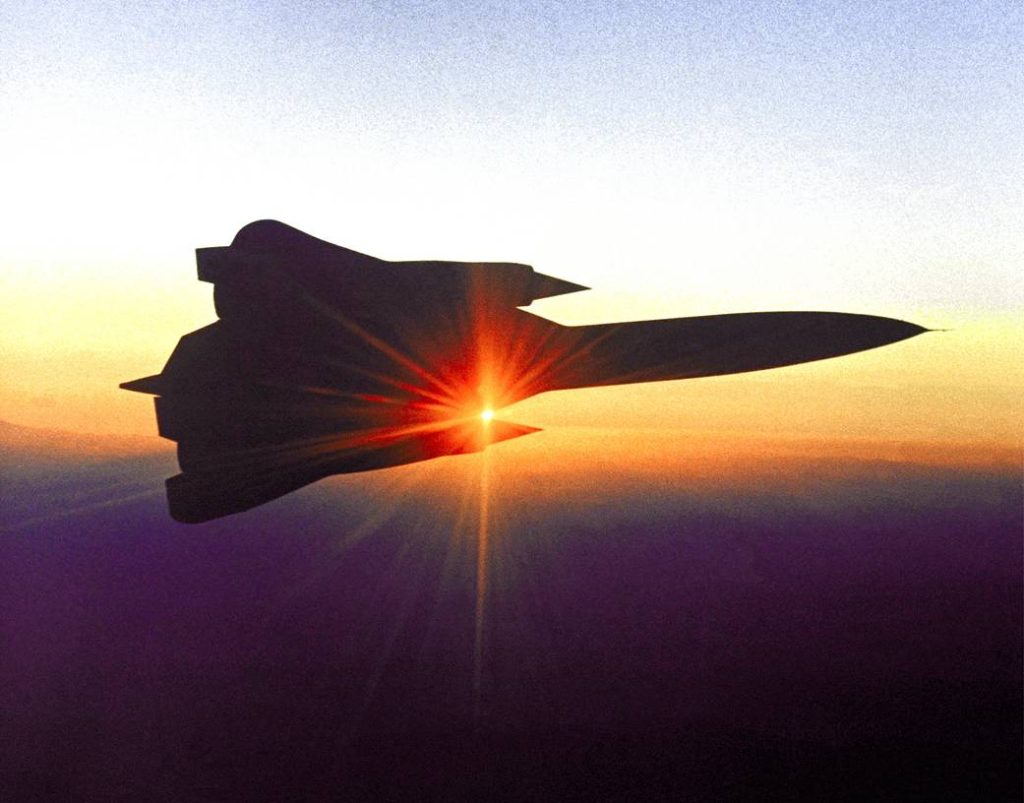
The joint NASA-Air Force research program lasted nine years. It logged 297 research flights and about 450 flight hours. The YF-12 program was ordered terminated in 1977; however, limited funding allowed flights to continue until 1979. The aircraft last flew with NASA on October 31, 1979, and on November 7, 1979, it was transferred to the National Museum of the US Air Force, where it remains on display. Research on the YF-12 continues to help NASA, in the Office of Aeronautics and Space Transportation Technology, achieve its goal of providing design tools for the next generation of aircraft. In the Flight Test Files series, the research on the YF-12 stands among the most important work NASA conducted at Dryden to achieve the speed fighter aircraft need in the modern world. Read more Flight Test Files articles HERE.