
By Katherine Hamilton
Who Is Kilroy?
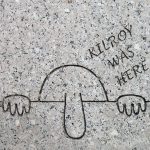
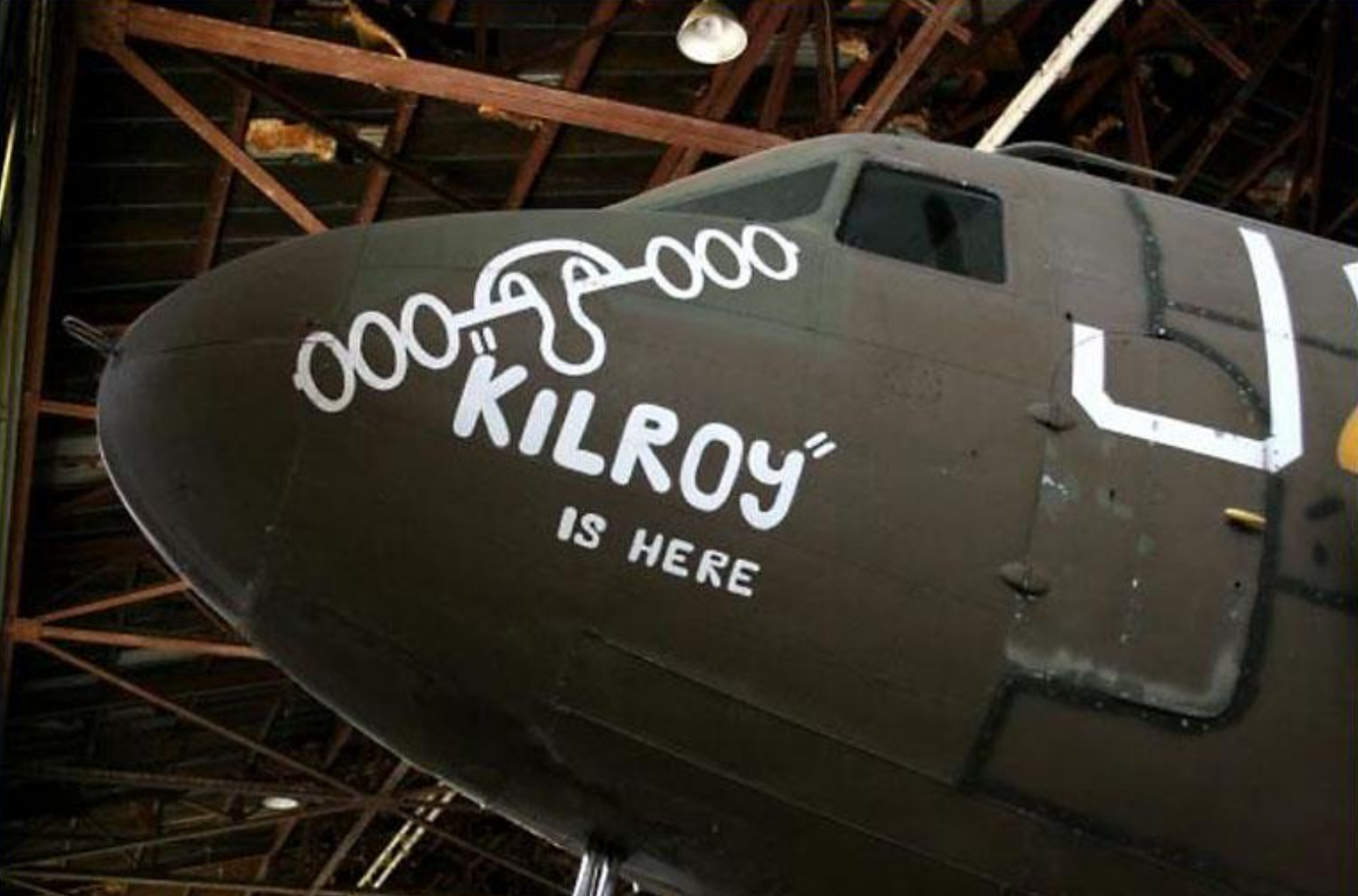
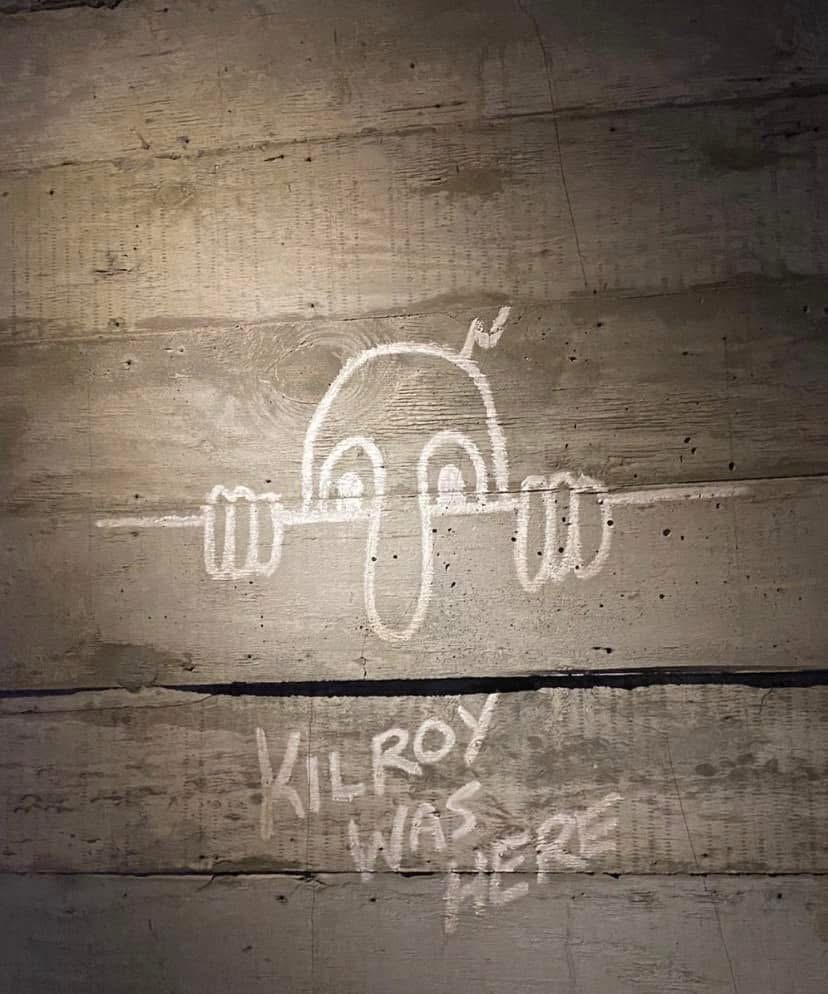
During World War II, a shipyard inspector, James J. Kilroy, started an important piece of history without realizing it. In Quincy, Massachusetts, James was a shipyard inspector and would mark certain sections with “Kilroy was here” to indicate that this was his own inspection work. With how Kilroy chose to sign his work, this sparked American soldiers to adopt this style, along with a little drawing. Kilroy is a Simplified Graffiti drawing depiction of a bald-headed character looking over a wall or a fence.
Where Was Kilroy Seen?
Kilroy was spotted in many unexpected places during World War II, particularly on the walls of POW camps, vehicles, and anywhere where American soldiers were during World War II, and was also frequently spotted in enemy territory. Kilroy helped boost morale and was also a way to connect to other soldiers. Some interesting rumors about Kilroy also came with a lot of mystery and ubiquity, which led Axis Powers like Japanese and German intelligence to become concerned with the fact that Kilroy might have been a supposed Allied Superspy. There were rumors that Hitler himself was confused by the appearance of Kilroy on captured American equipment, leading him to order his intelligence services to find out who Kilroy was.
Kilroy’s Impact on Artwork During and Post-War
Kilroy became a symbol of widespread resilience from American forces during World War II. Kilroy, in a way, became its own meme during World War II. This helped the start of a new form of media during the war, with anti-war artwork, and also the start of anti-war media films and media.
Other Media That Had a Significant Impact
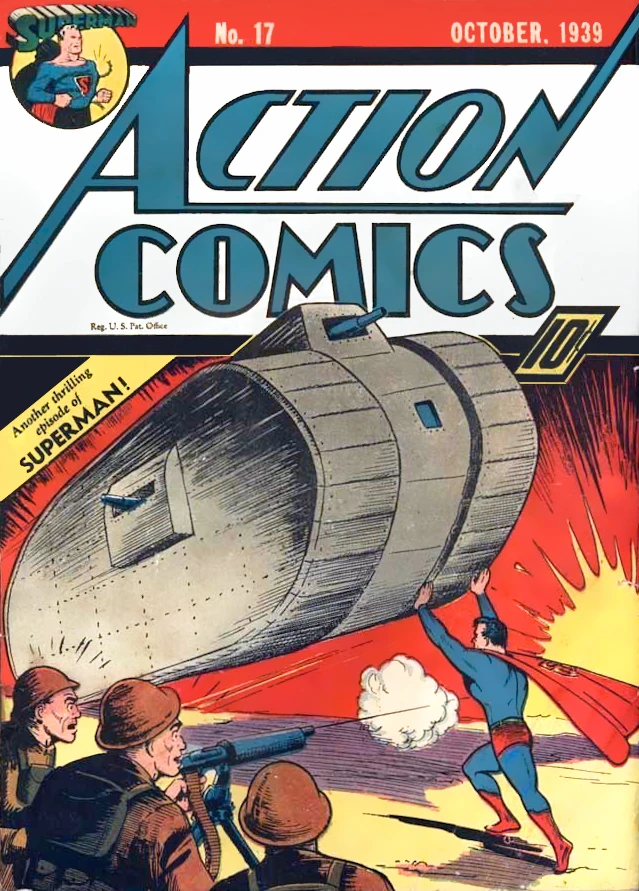
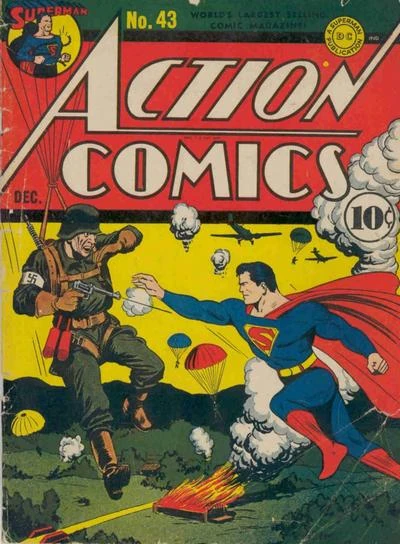
With the help of film, media, and regular day-to-day propaganda, the media became really predominant during the war to help people express their thoughts. Some of the key media included during this time were comic books, magazines, films, and even bubble gum wrappers. Action Man comics help launch the legendary careers of one of the most well-known and beloved superheroes. Superman comics were created in 1938 by writer Jerry Siegel and illustrator Joe Shuster. Superman’s fighting abilities and iconic look help him become the most well-known and first superhero. A lot of the early Superman comics help show what was going on during World War II in a way that was easy to understand. The first World War II-related comic was Action Comics Issue 17. In this issue, Superman is on the cover, battling soldiers who appear to be in similar military uniforms that are very similar to Nazi-style uniforms. The next Action Comics No. 43 (October 1940), later in 1941, erased any doubts about what the Superman creators thought about the war. The cover consisted of a paratrooper firing at Superman while being mid-air, the paratrooper’s armband had a nazi party armband on it. The next comic cover followed up with Superman disabling a nazi artillery shell, bending the cannon barrel in half.
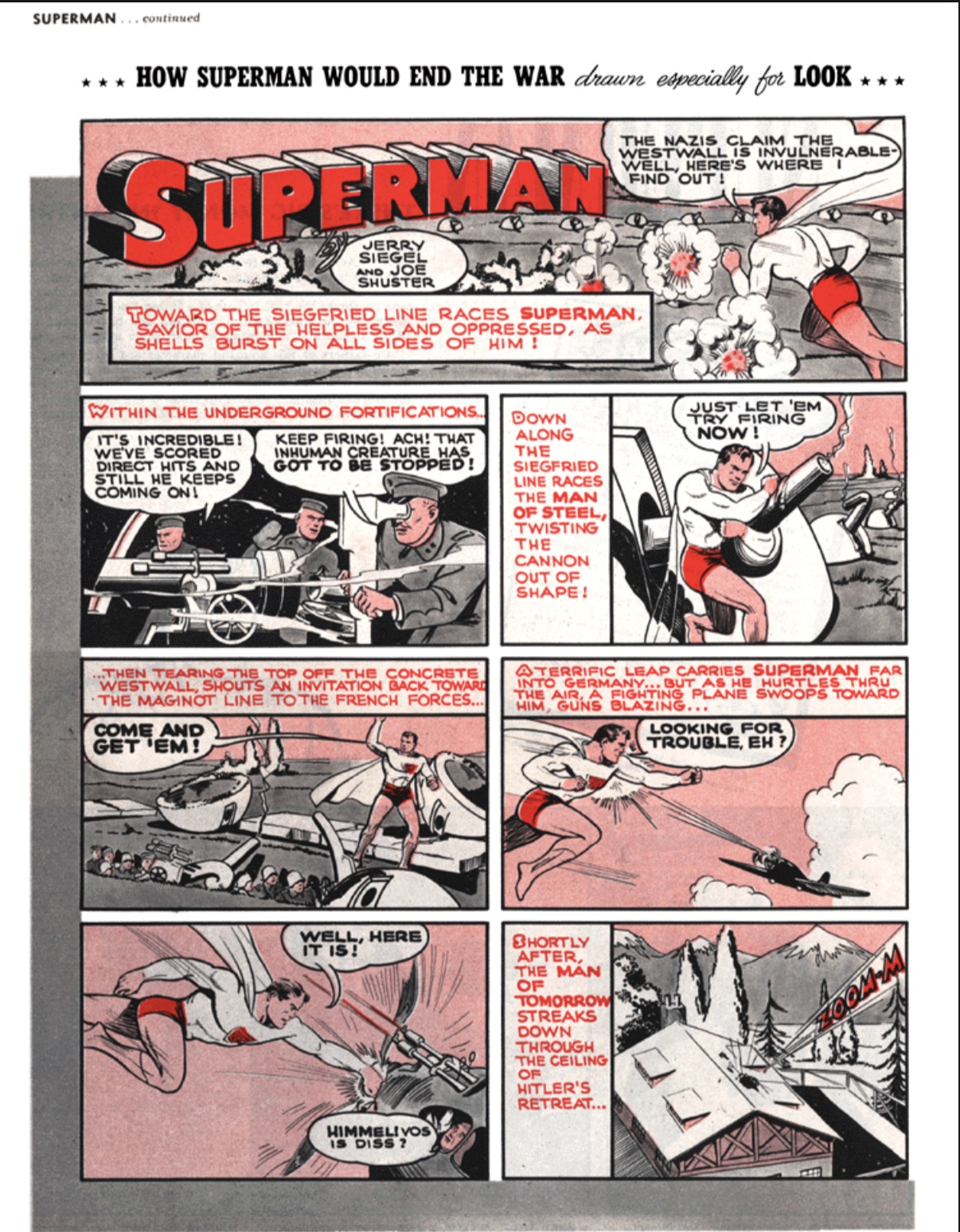
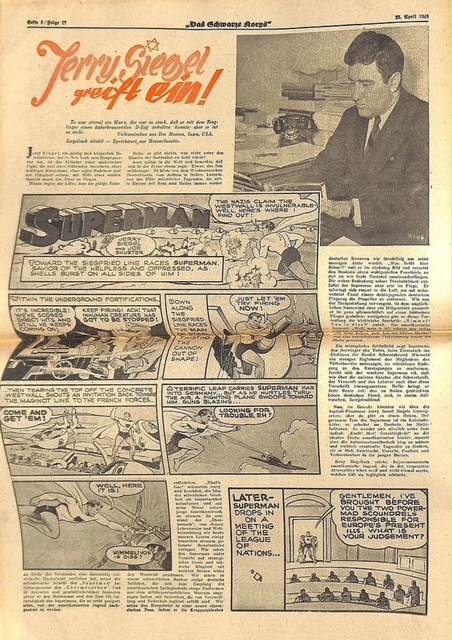
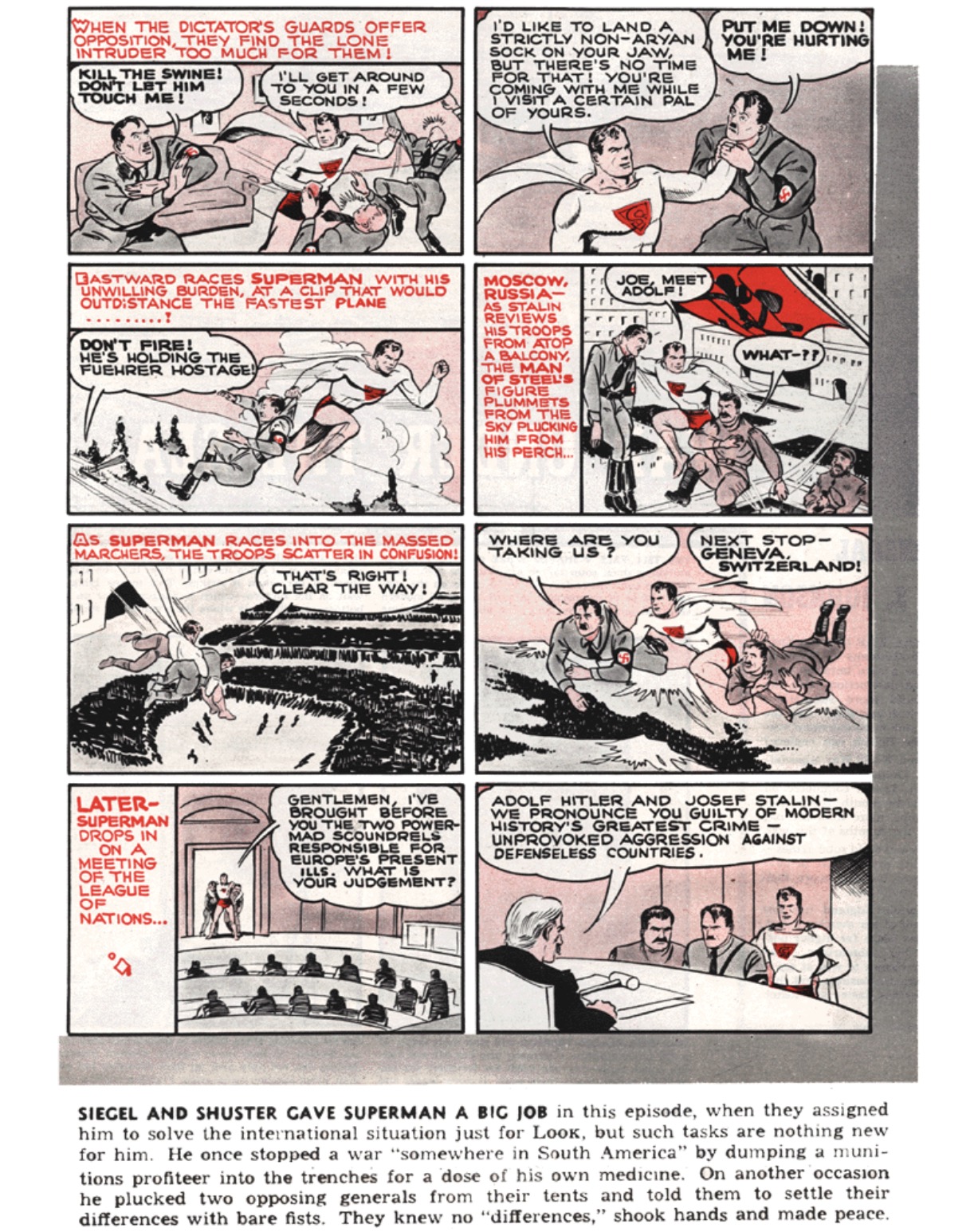
In April 1940, the weekly SS newspaper in Germany published a full-page article about Superman and Superman’s creators, who were Jewish. It was a response to a February 27. 1940 feature in Look Magazine titled “How Superman would end the war”. The feature comic showed Superman capturing both Hitler and Stalin and bringing them both to the League of Nations. According to the SS paper, they described Superman writer Jerry Siegel as “An intellectually and physically circumcised chap. The newspaper then described Superman “spreading hate, suspicious evil, laziness, and criminality among American Youth”.
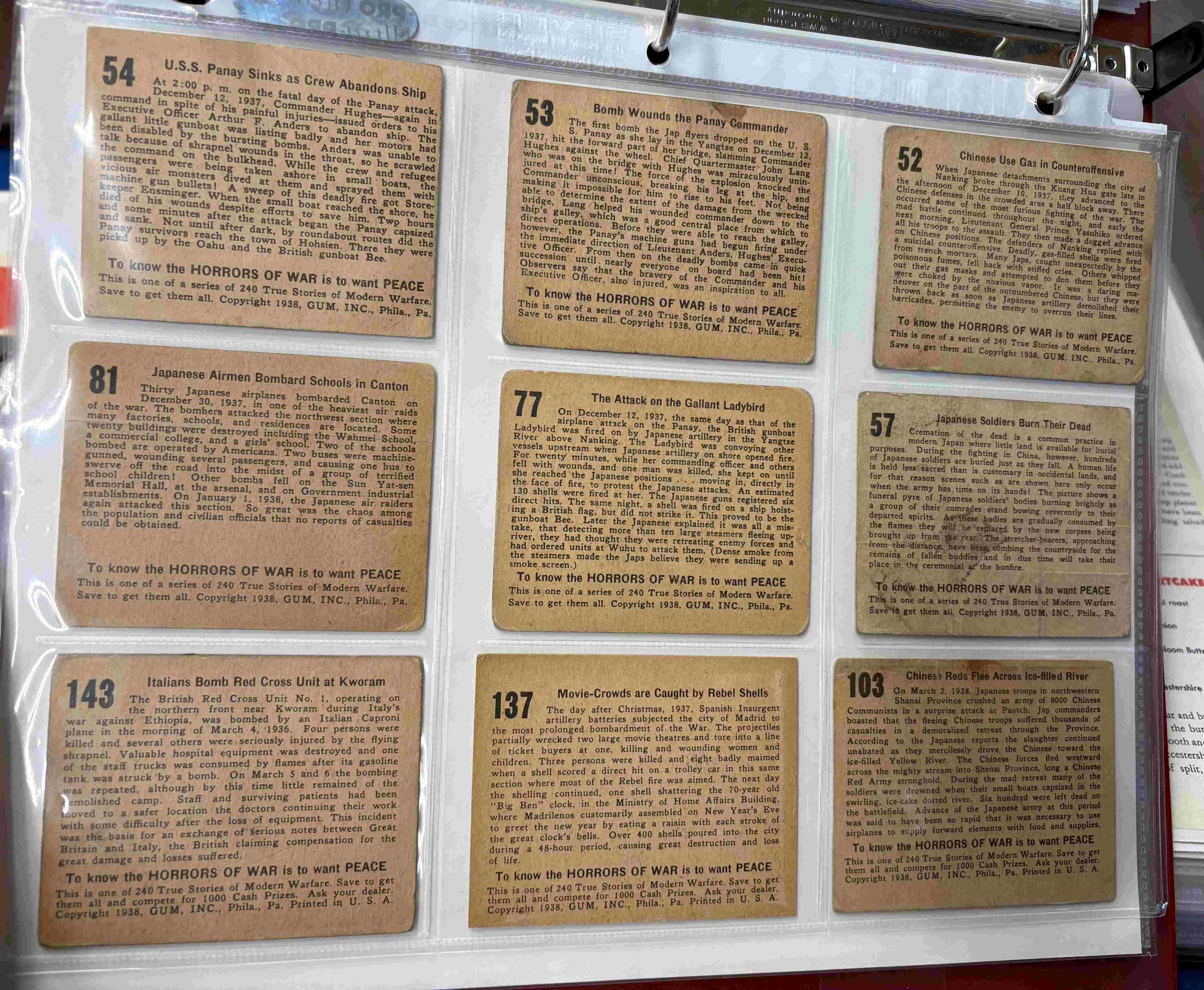
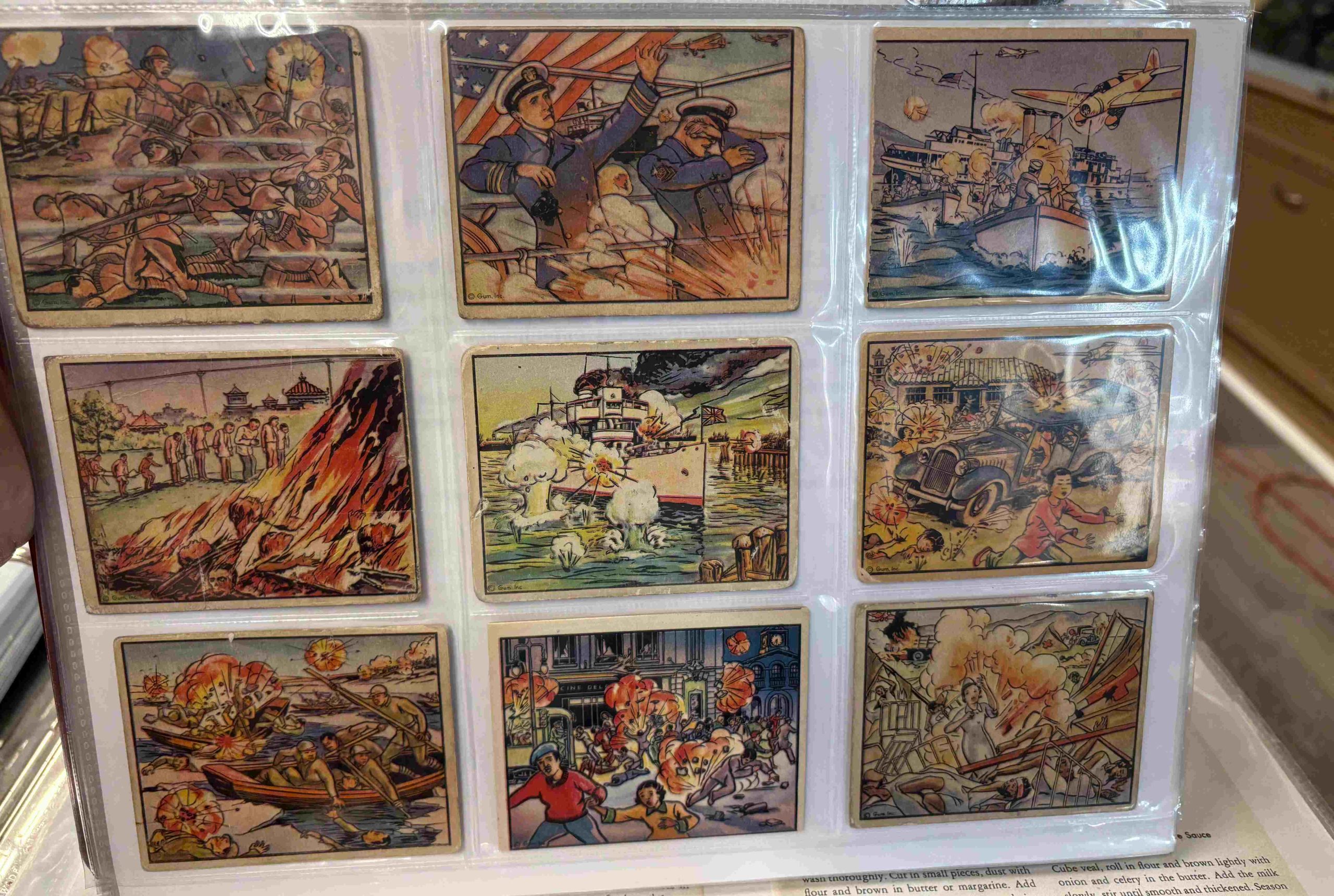
Goudey Gum “Horrors of War” Series
In the 1930s, a Philadelphia bubble gum entrepreneur, Warren Bowan, was the first person to establish a bubble gum company in Japan. In 1937, Bowan heard about the war raging in China. Bowan then had some ideas. To sell his bubblegum, he wanted to make collector’s cards very similar to baseball cards but showing scenes from the wars that were going on during the time, like in China, Spain, and Ethiopia. Bowman figured that this would attract the attention of children, but open their minds to the importance of peace rather than the glamourization of war. In total, 240 cards were made of battle scenes or civilian attacks. The card series was named “Horrors of War,” with the bottom of each card having the inscription “to know the horrors of war is to know peace. The cards were controversial, for the graphic violence and their perceived emphasis on Japanese and other war-related atrocities. Japanese-Americans in particular were offended, and the Japanese government implemented a formal protest with the U.S. War Department. The protest was rejected due to the sinking of USS Panay in the Yangtze River by Japanese aircraft on December 12, 1937, an event depicted on card #54 of the “Horrors of War” series. Bowman was then declared an “Enemy of Japan” by the Japanese government. As a result, Bowman was forced to close his gum factory in Japan.
Johnny Got His Gun Is an Anti-War Masterpiece
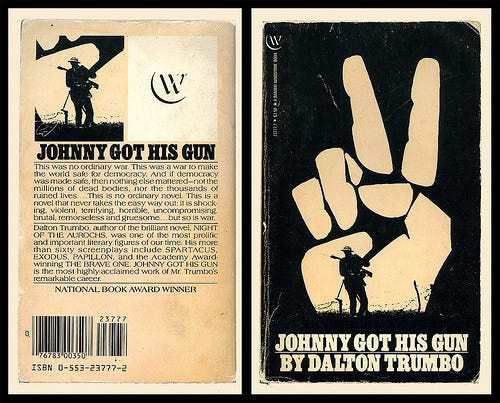
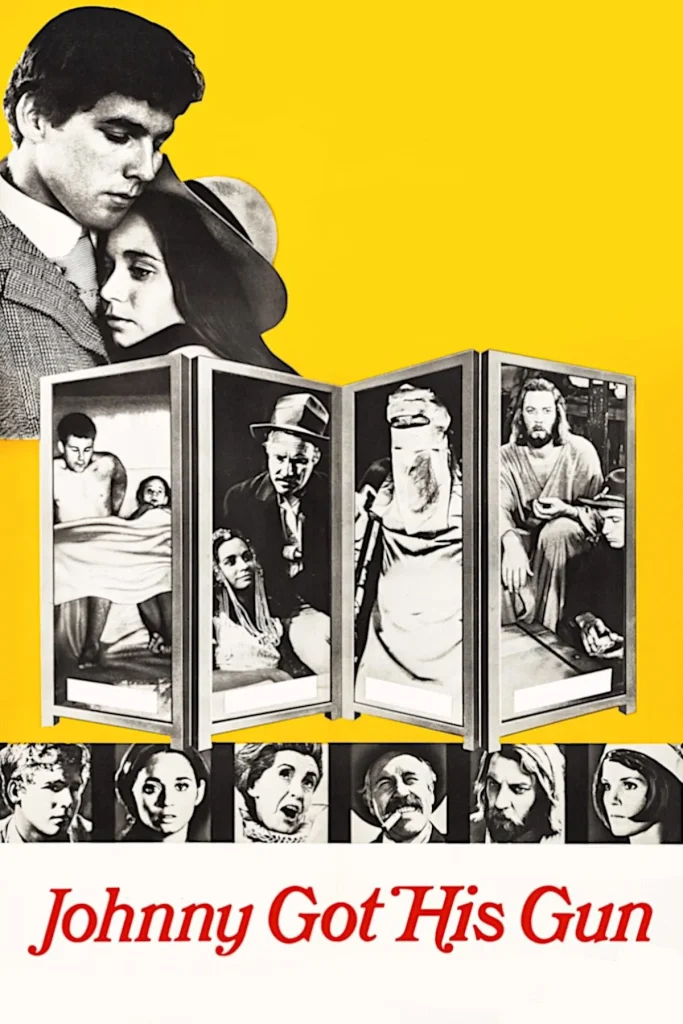
Dalton Trumbo is an American Screenwriter with some award-winning films like the classic 1953 film “Roman Holiday,” Starring Gregory Peck and Audrey Hepburn. Trumbo started his career writing for Macallister’s, Vanity Fair, and the Saturday Evening Post. He was eventually hired as managing editor of Hollywood Spector in 1934. Trumbo later left the magazine to become a reader in the story department at Warner Bros. Trumbo started working on movies in 1937, but continued to write. His anti-war novel “Johnny got His Gun” which was inspired by a newspaper article of an account of a hospital visit the then prince of Wales had made to a Canadian soldier who lost all of his limbs in World War I. the novel was serialized in the Daily Worker in 1940, published by the Communist Party USA, a Party that Trumbo had connections with. The book became a “Rally point for the political left” which opposed involvement during World War II during the Molotov-Ribbentrop Pact from 1939-1941, when the USSR maintained a non-aggression pact with Nazi Germany. Shortly after the German invasion of the soviet union, Trumbo and the publication suspended the reprinting until after the war, due to the communist party USA’s support of the war as long as the US was allied with the Soviet Union against the Nazi Party. The Book itself is a very haunting and well-written reminder of the Horrors of War and Military Combat. In 1971, the book was adapted into a film directed by Trumbo, and it does a good job portraying the main Character and the overall synopsis of the book.
Slaughterhouse-Five
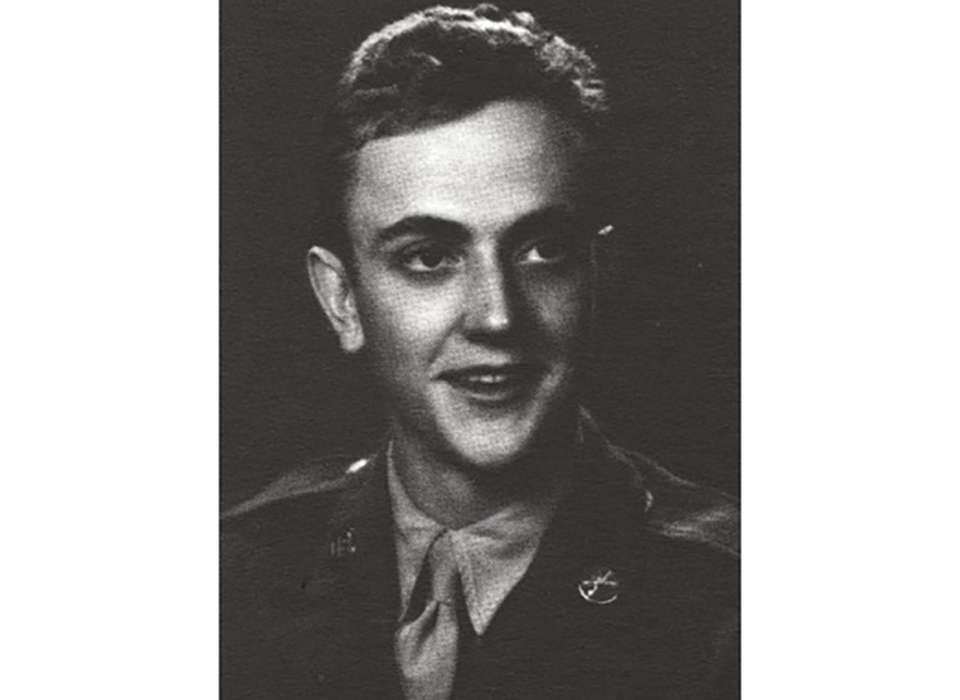
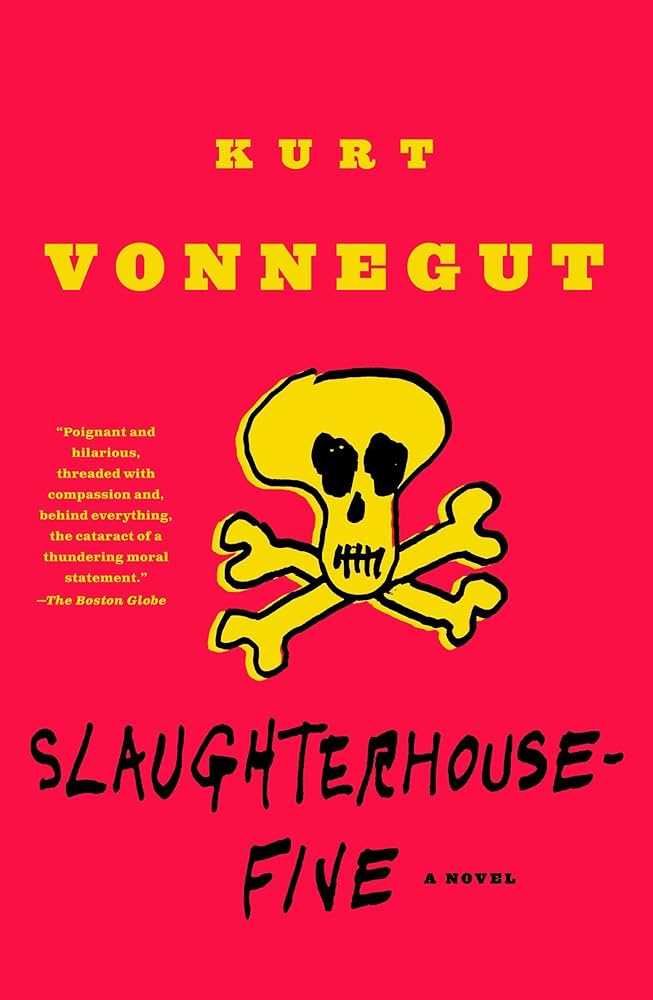
Slaughterhouse-Five is a 1969 semi-autobiographical/ sci-fi novel written by Kurt Vonnegut. It has been considered a very popular “anti-war” and a modern-day classic. It follows the experiences of Billy Pilgrim, his early life, and time as an American soldier during World War II. Throughout the book, Billy recollects his experiences of surviving the Dresden Bombings, and his recollection also ties in with his Experiences of dealing with PTSD after the war. Billy is a reflection of Vonnegut’s own experience during World War II.Vonnegut’s military service is heavily influenced by his work. Vonnegut was an intelligence scout with the 106th Infantry Division. In December 1944, Vonnegut and 50 other American Soldiers were taken in a boxcar to A POW camp south of Dresden, Germany. On February 13, 1945, Dresden became a target of Allied Forces for hours and two days; the Allies engaged in Firebombing. As a result, 25,000 civilians were killed. Vonnegut, along with a few other POWs, survived the firebombings by taking Shelter in a meat locker that was three stories underground. After the firebombings, Vonnegut and other POWs were tasked with evacuating civilians out of the rubble. Vonnegut’s work is very satirical, but has heavy influences in anti-war-related perspectives. Some of the common themes you would find in Vonnegut’s work are nuclear war and the dangers of the growing advancements of technology. Slaughterhouse-Five has been through many attempts at censorship and book banning. In 1972, the ruling of Todd V. Rochester Community Schools banned the book from school libraries, describing the book as “Depraved, immoral, Vulgar, and anti-Christian. As of 2024, it has been banned in multiple states, such as Tennessee, Texas, and Florida, as the contents of the book are being challenged for multiple reasons because of the content in the book, ranging from the language, characters, and intensity of the book itself.
Post-War Media
After the war, many different forms of media continued to inform, convey a message, and even make a huge impact on society. Some of the interesting forms of media that took a lot of war experiences besides books were music and movies as well. One of the most well-known songs that has a strong message of the horrors of war is the 1980 Orchestral Manoeuvres in the Dark’s song “Enola Gay”, which puts the song in B-29 Pilot Paul Tibbets’ perspective of dropping the atomic bomb “Little Boy” on the Japanese city, Hiroshima. This song also puts the question of the human condition in question about the impacts of war on a person.
The mystery of Kilroy has even appeared after the war, in 1983, Styx released “Mr Roboto”, whose premise of the mystery behind Kilroy, but with an interesting twist of a mysterious/ futuristic rock n roll prisoner robot whose menial jobs in prison alter the state of Robert Kilroy’s image, revealing who is behind “Kilroy” in the song.