






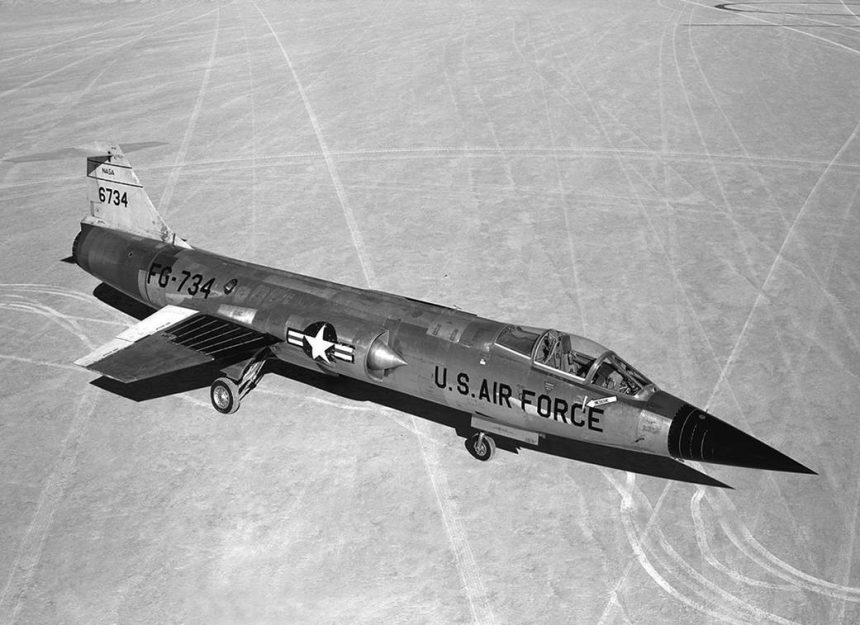

When the first preproduction YF-104A (55-2961) arrived at the High-Speed Flight Station at Edwards in August 1956, it did not arrive as a combat aircraft. It came to prove that speed could be studied and understood. What NACA, which later became NASA, needed at the time was not just a fast airplane. It needed an aircraft that could safely operate at supersonic speeds, where even small aerodynamic problems could become serious and where a pilot had only a fraction of a second to react. The Lockheed F-104 Starfighter appeared as a solution with a slender fuselage, a needle nose, and a wing so thin and small it appeared unfinished. Yet that wing, razor-thin, low aspect ratio, optimized for minimal drag at high speeds, was what made the aircraft valuable to flight researchers. Over the next 38 years, NASA operated 11 Starfighters, logging more than 18,000 flights in research, chase, simulation, and aerodynamic experimentation. Few aircraft have spent so much of their life not fighting a war, but helping engineers understand one.
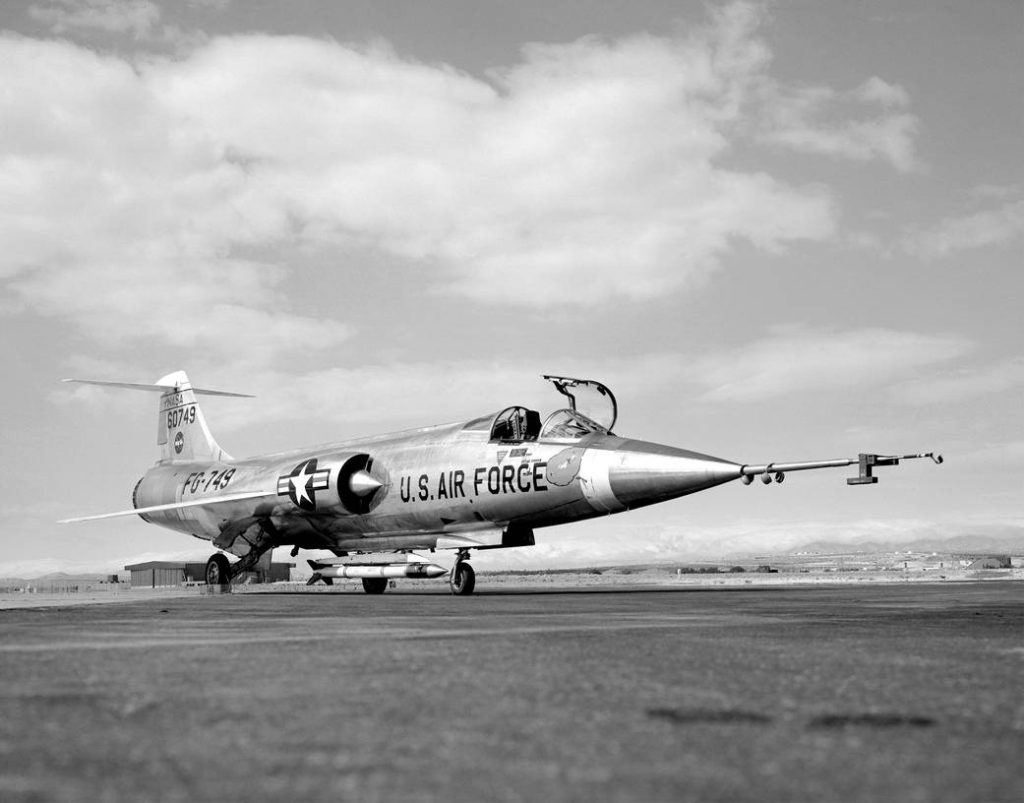
The YF-104A, redesignated JF-104A and later registered N818NA, flew its first NASA mission on August 27, 1956. It would remain in research service until 1975, with 19 NASA pilots flying that single airframe, including Neil Armstrong and Joe Walker. One of its most important roles was as a reaction control system testbed. As the X-15 program approached, pilots needed experience in handling vehicles that relied not only on aerodynamic surfaces but on small thrusters for attitude control at high altitude, where the air grew thin, and control effectiveness diminished. A NASA F-104 modified with a hydrogen peroxide thruster system provided the necessary experience for the soon-to-be rocket pilots. In that sense, the F-104 helped bridge the gap between aircraft and spacecraft. The aircraft’s narrow wing and high wing loading made it unforgiving at low speed but exceptionally stable at high Mach numbers. That combination allowed researchers to explore roll coupling, pitch sensitivity, and supersonic handling qualities. Hence, the Starfighter served perfectly as an aerodynamic test bed.
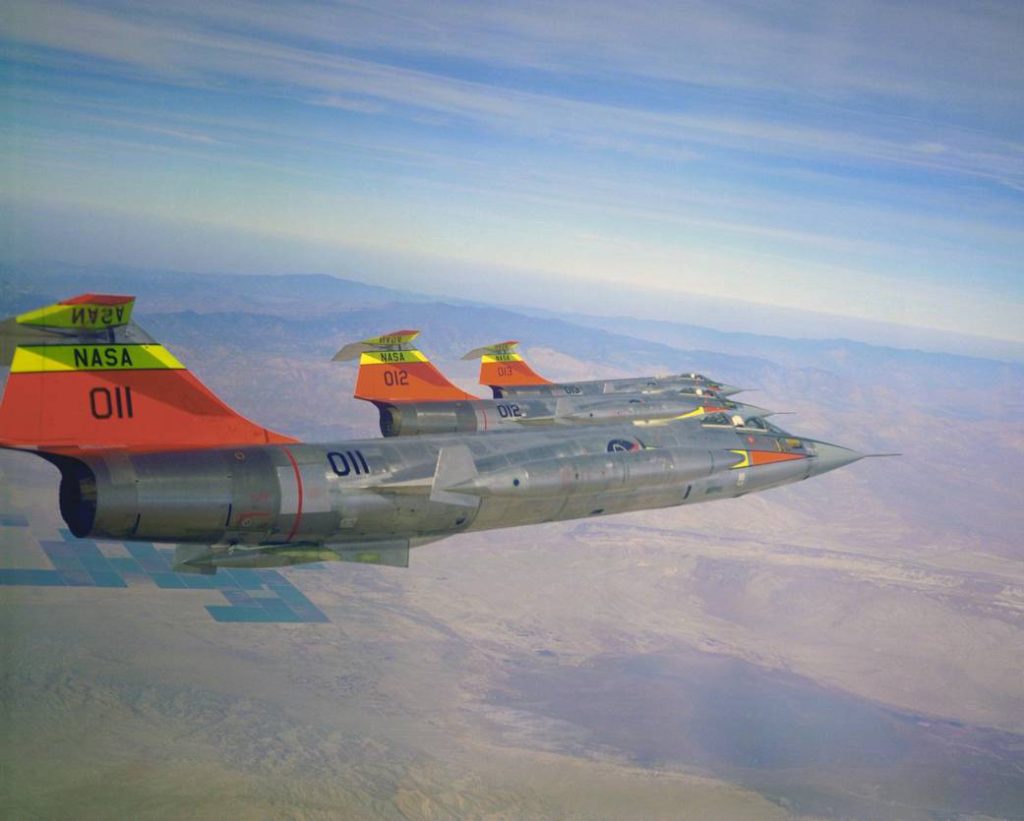
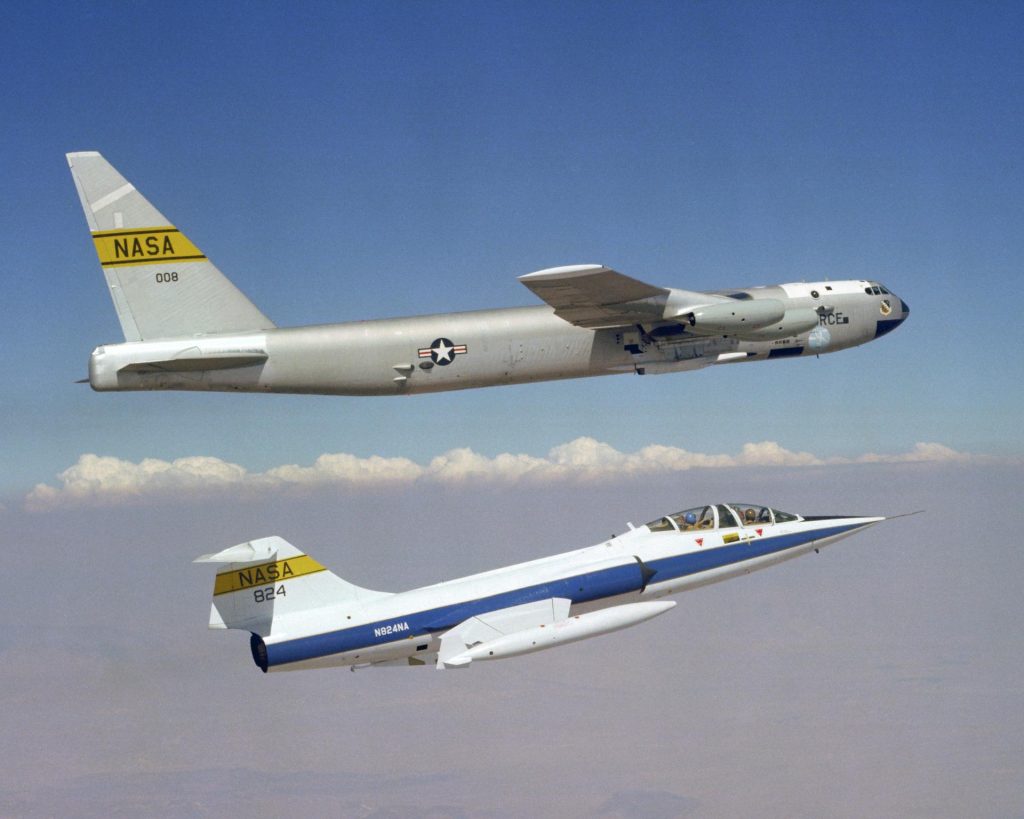
At Ames Research Center in 1959, another JF-104A conducted “steep approach” research that would influence spaceflight decades later. Steep descent testing, including power-off landing approaches and demonstrations of minimum lift-to-drag ratio (L/D) landings, grew out of interest in using low L/D lifting bodies for recovery from space. The question put to the flight research organization was how low an aircraft’s L/D could be while still allowing a safe landing. Flight tests with the JF-104A Starfighter were carried out by Fred Drinkwater, who demonstrated steep approach techniques that were later adopted for the space shuttle. These two-segment profiles began with a steep upper descent from about 25,000 feet, aimed at a point roughly a mile short of the runway, followed by a 3-degree glide path to touchdown. Within the test pilot community, the procedure became known as the “Drinkwater Approach.” The F-104’s limited glide capability, a natural result of its small wing, made it an ideal surrogate for these experiments. What appeared to be a design limitation became a research advantage. In 1963, Lockheed delivered three purpose-built F-104N Starfighters directly to NASA for high-speed chase duties. These aircraft, bright in NASA colors and coded 011, 012, and 013, became familiar companions to some of the most ambitious flight programs of the era. They chased the X-15. They flew in formation with the XB-70. They observed lifting body tests over Rogers Dry Lake. Their role was to provide visual confirmation, photographic documentation, and immediate safety oversight for experimental aircraft.
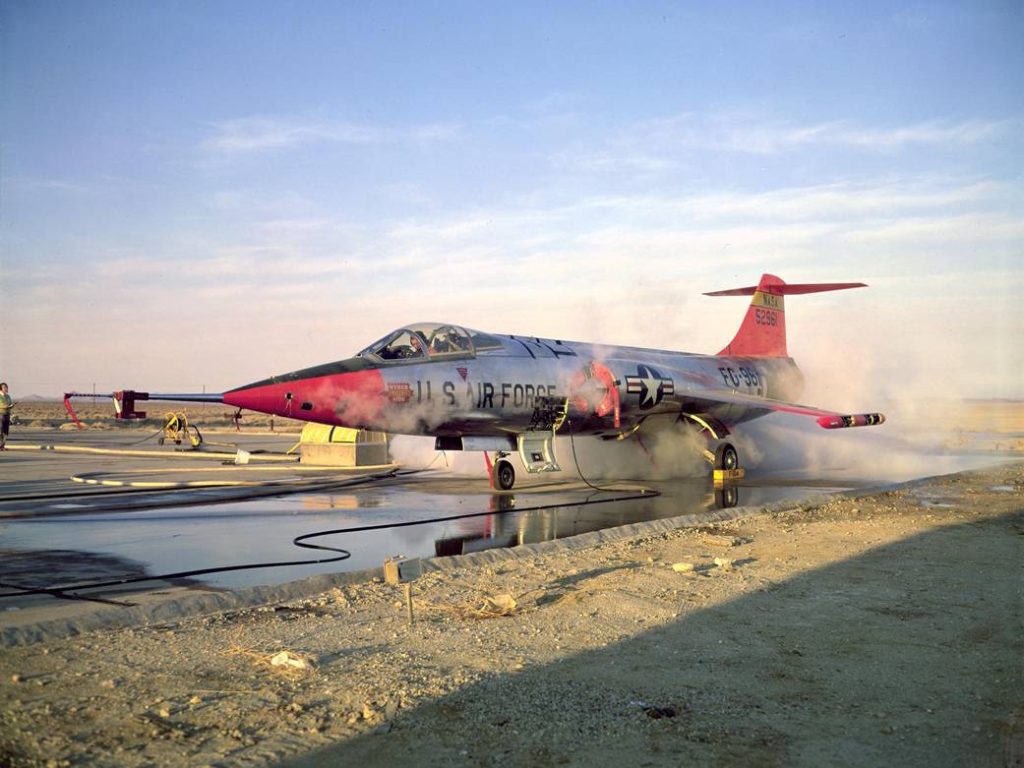
On June 8, 1966, during a publicity photo mission with the second XB-70A Valkyrie, F-104N 013 collided midair and was lost. NASA pilot Joseph A. Walker was killed. The accident proved that flying at Mach numbers leaves little margin for error. The surviving F-104Ns continued service for decades. Through the 1970s and 1980s, the Starfighter fleet evolved. Ex-US Air Force and ex-Luftwaffe F-104Gs and TF-104Gs joined NASA’s inventory, stripped of military equipment and repurposed as testbeds and trainers. Some supported optical periscope tests, others flew in the early NASP (National Aero-Space Plane) studies. Tandem-seat TF-104Gs provided pilot transition training and research support. The aircraft designated N826NA, originally a German RF-104G, became the last operational NASA Starfighter with its final research flight on January 31, 1994. During those years, the F-104 supported everything from rain-impact studies on Space Shuttle thermal protection tiles to aerodynamic research on roll damping and control power. It simulated X-15 approaches. It served as an airborne instrumentation platform, acting as a chase aircraft for experimental lifting bodies that had no wings at all.
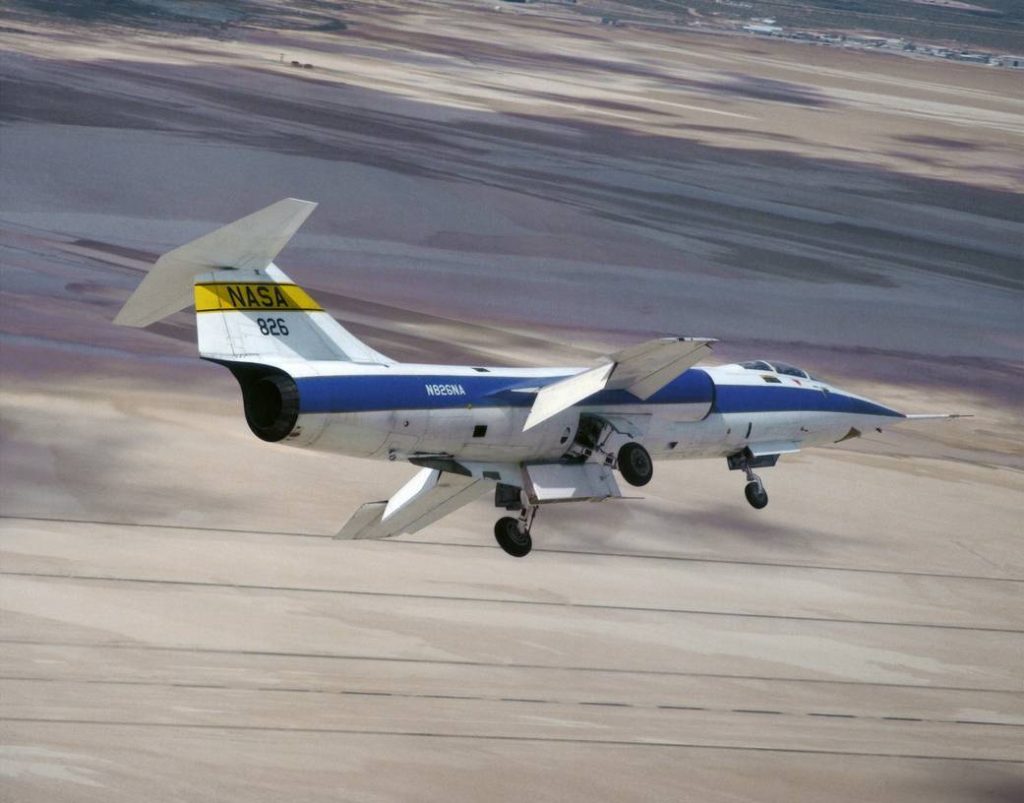
NASA Starfighter provided flight research data on everything from aircraft handling characteristics, such as roll coupling, to reaction control system research. The data gathered from these flights were used to design upcoming supersonic fighters and experimental vehicles. The Starfighter also demonstrated how pilot workload increased as stability margins decreased. Its short, stiff wing and powerful engine meant that control inputs produced rapid responses, especially at transonic speeds. From 1956 to 1994, NASA’s Starfighters completed over 18,000 flights. Individual airframes logged thousands of sorties. F-104N N811NA alone accumulated 4,370 flights, N812NA recorded 4,442. The two-seat N819NA flew 1,731 research missions over nearly two decades. On February 3, 1994, NASA 826 flew the final symbolic Starfighter sortie from Edwards, piloted by Tom McMurtry, Chief Flight Operations Division. By then, newer aircraft had taken their place, and the Starfighter’s analog precision, once essential, was no longer required in the same way.
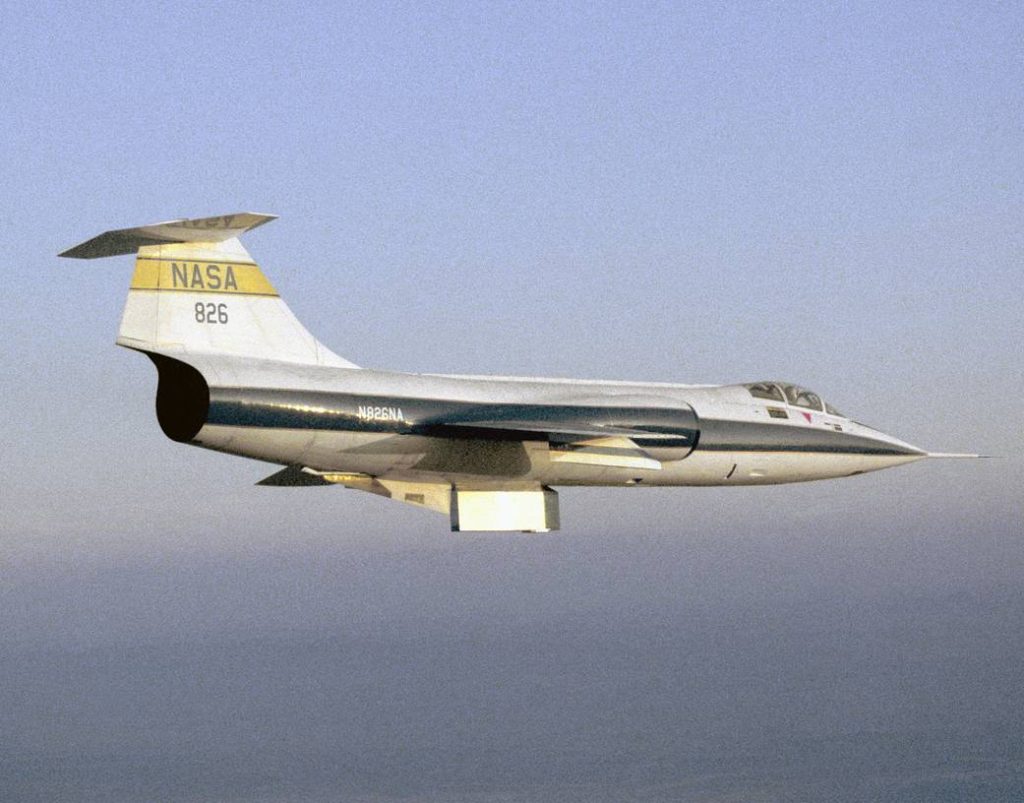
From aircraft handling to reaction control training for the X-15 to steep approach profiles for the Shuttle, from supersonic handling research to safety chase for lifting bodies, the F-104 Starfighters proved most valuable to NASA as flight research and support aircraft for nearly 40 years, a distinction that few other aircraft share. After completing its final NASA mission in early 1994, the aircraft was placed in storage at Dryden in March of that year. By January 1995, it remained on the Edwards flight line, and later that September, it was moved inside one of the main hangars at Edwards Air Force Base for longer-term preservation. On April 21, 1997, it appeared for the first time as a gate guardian at Moffett Field, home of NASA Ames Research Center in Mountain View, California. The aircraft was formally removed from the U.S. civil register on October 3, 2003. In 2006, it was noted as part of the Moffett Field Historical Society collection. Restoration work was underway in Hangar 3 by June 6, 2009, and the aircraft was publicly displayed following restoration during the NASA Ames Research Center air show on April 9, 2010. Check out other Flight Test Files articles HERE.








Great article
Question “Why did the German Air Force call the Star Fighter “The Flying Coffin” “