






(Image credit: VAN)
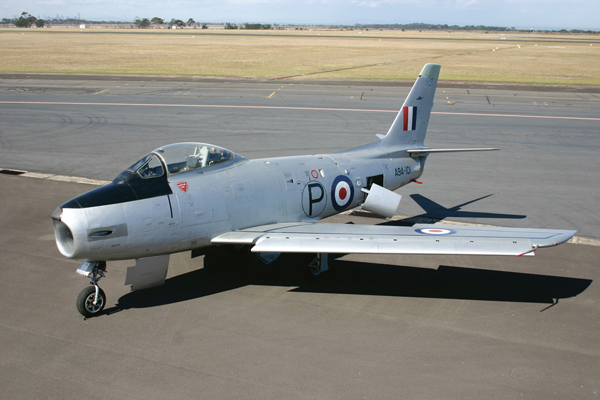
On this day in aviation history, 72 years ago (August 14, 1953), Australia joined the exclusive “supersonic club.” Over Avalon Field in Geelong, Victoria, Royal Australian Air Force Flight Lieutenant William H. Scott made history as the first Australian pilot to fly faster than the speed of sound. At just 28 years old, Scott was Chief Test Pilot for the Government Aircraft Factories. That day, he was at the controls of the Commonwealth Aircraft Corporation CA-26 Sabre—an Australian-built jet fighter based on the famed North American F-86 Sabre.
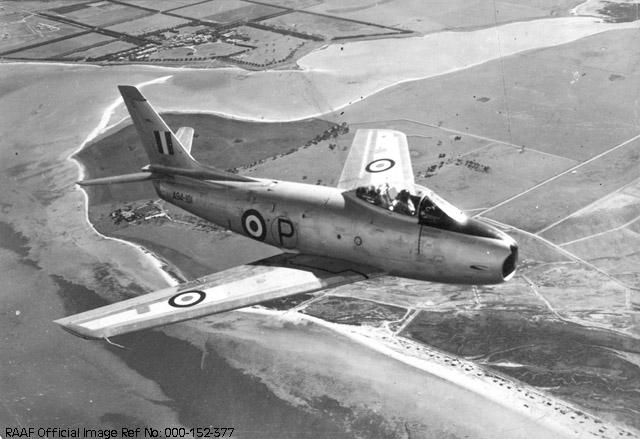
Flying prototype CA-26 A94-101, Scott initiated a shallow dive from 25,000 feet over Port Phillip Bay. It was only the aircraft’s sixth test flight, following its maiden sortie on August 1, 1953. This flight, however, would be unforgettable. Moments later, Scott and the Sabre blasted through the sound barrier at approximately 670 mph, producing an audible triple sonic boom that echoed across Melbourne. The CA-26 was powered by a license-built Rolls-Royce Avon RA.7 turbojet, producing 7,500 pounds of thrust. This gave the Sabre a top speed of 700 mph, a climb rate of 12,000 feet per minute, and a service ceiling of 52,000 feet. Its range was 1,002 nautical miles. Heavily armed, the CAC Sabre carried two 30 mm ADEN cannons, twenty-four Hispano SURA R80 80 mm rockets, two AIM-9 Sidewinder air-to-air missiles, and up to 5,300 pounds of bombs on four underwing hardpoints.
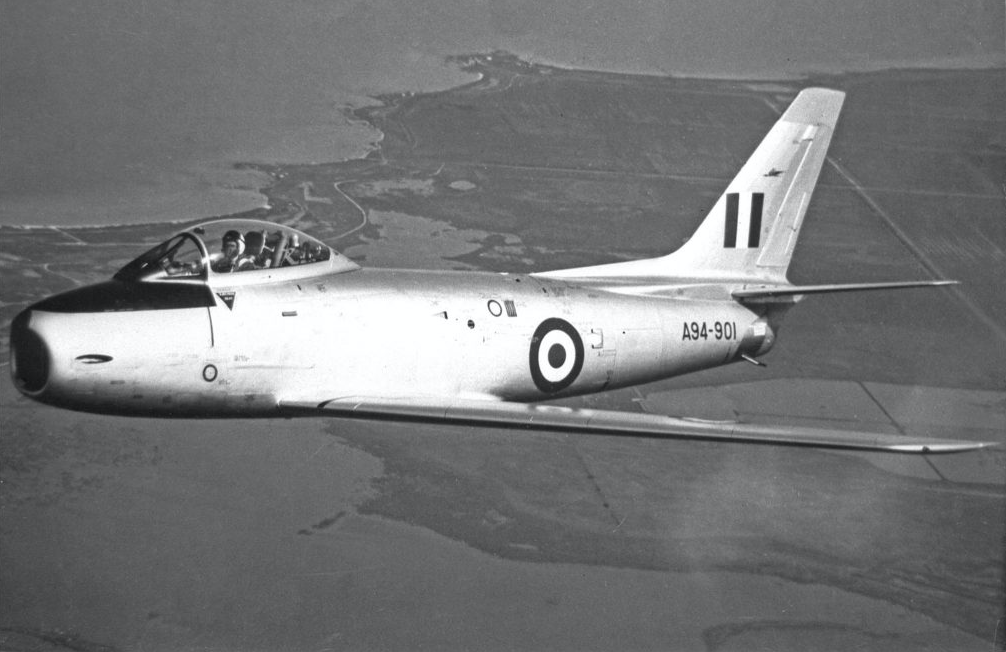
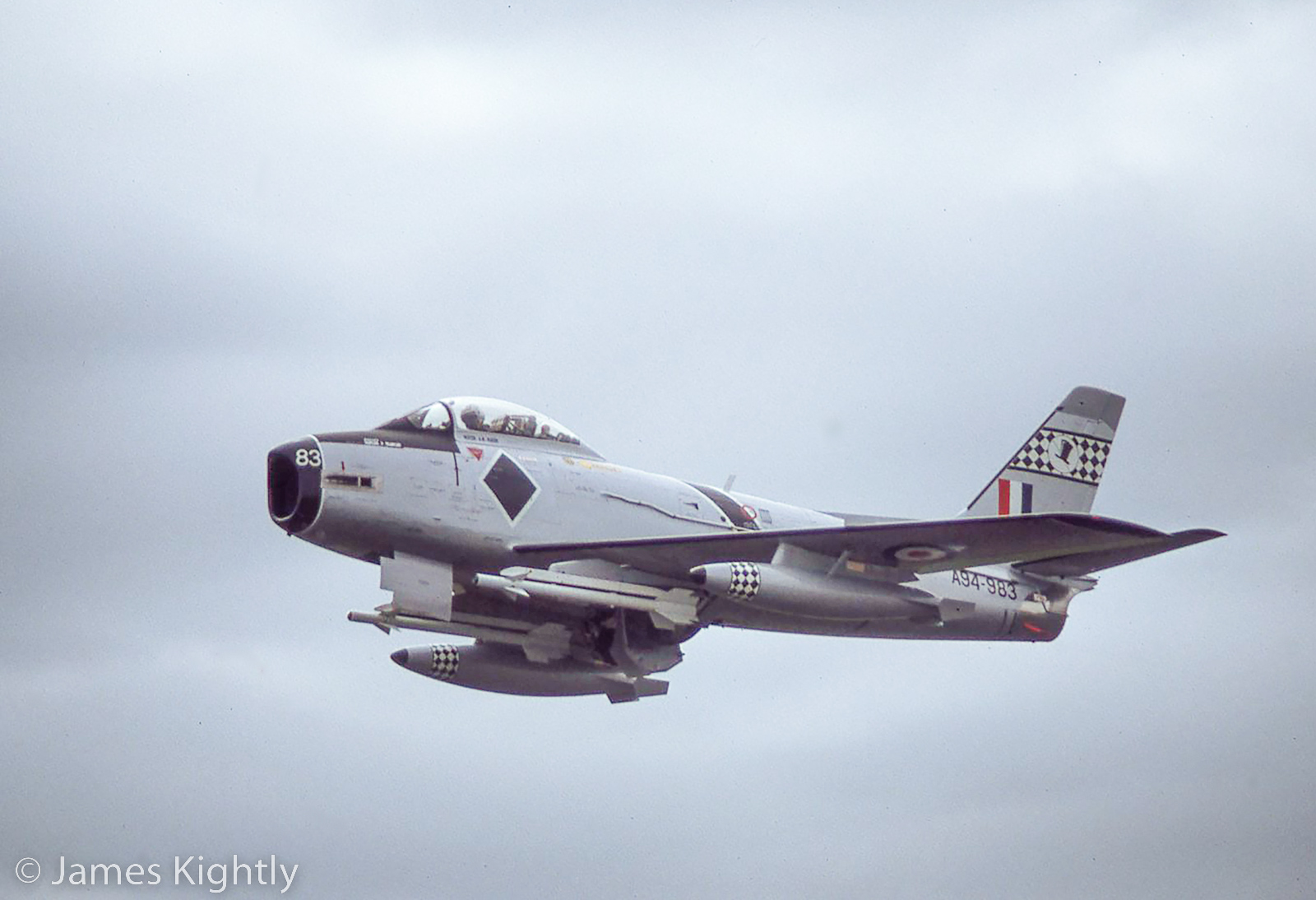
A total of 112 CAC Sabres were produced between 1953 and 1961, serving primarily with the Royal Australian Air Force, the Indonesian Air Force, and the Royal Malaysian Air Force. The RAAF retired its Sabres in 1971, with the IDAF following in 1982. Today, only two original CAC Sabres remain airworthy in Australia: A94-983, operated by the Air Force Heritage Squadron (Temora Historic Flight) in New South Wales, and A94-352, owned by retired Squadron Leader Jeff Trappett and based at Latrobe Regional Airport.



When the prototype of the CA-26 Sabre went supersonic in a dive from 25,000 feet, it generated a SINGLE sonic boom, not a triple sonic boom. All of the early jet fighters could break the sound barrier in a dive, and people on the ground would hear one boom.. Where did you get the notion that an aircraft going supersonic would create a triple sonic boom, that really makes no sense, at all.
Yes, it is possible for a single aircraft, including jet fighters, to produce multiple sonic booms. These are often perceived as a single, loud boom, but can be heard as separate booms under certain conditions.