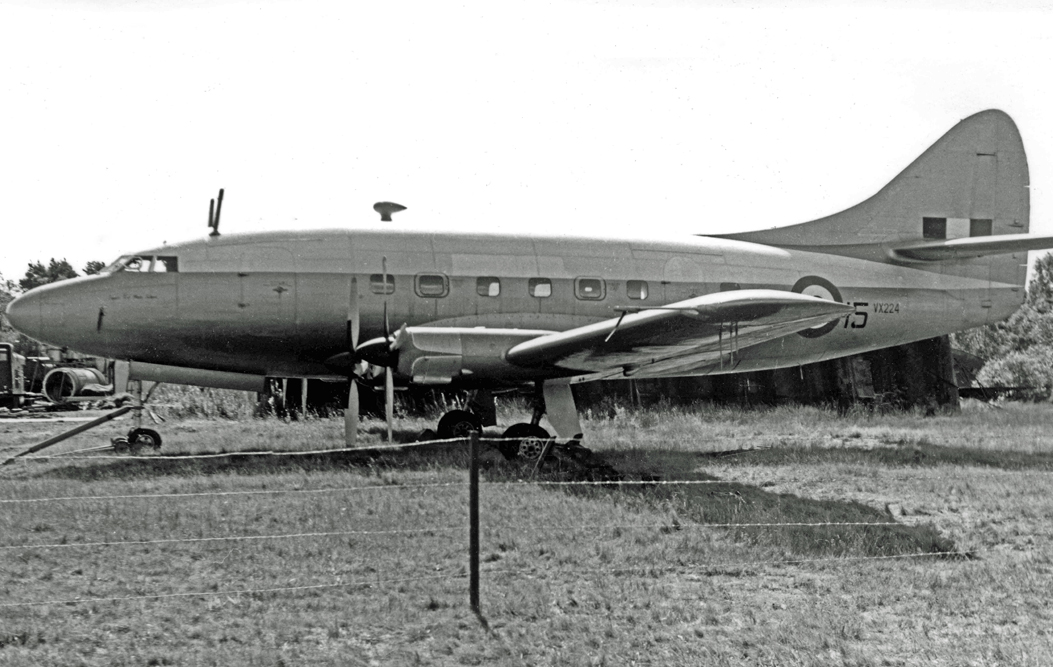
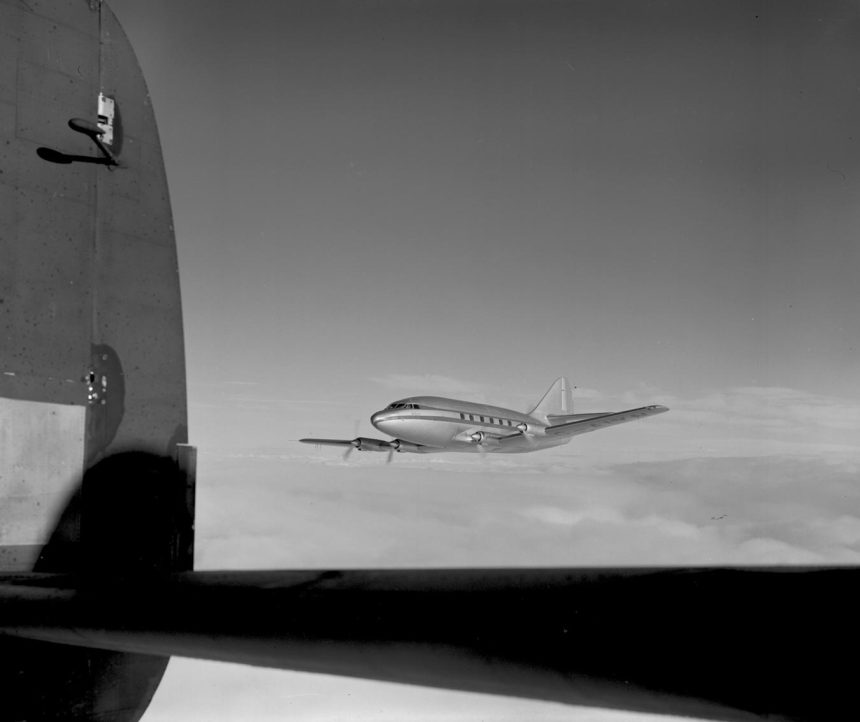


On this day in aviation history, 77 years ago (April 10, 1949), the first flight of the Armstrong Whitworth AW.55 Apollo took place. The AW.55 was a four-engined turboprop airliner that was designed and built by British aircraft manufacturer Armstrong Whitworth. Development of the Apollo began upon the issuance of Air Ministry Specification C.16/46, which called for an aircraft able to carry 24 to 30 passengers over 1,000 miles, at a cruising speed of 300 mph. This Specification resulted from the Brabazon Committee’s Type II design, which sought a modestly sized, medium-range pressurized airliner that could fly its “less-travelled” routes. Armstrong Whitworth’s response to Spec C.16/46 was a low-wing cantilever monoplane with retractable tricycle landing gear. The aircraft was powered by four Armstrong Siddeley Mamba AS.1 axial-flow turboprop engines, each providing 1,010 shaft horsepower. The narrow profile of these engines meant there was no room for the landing gear to retract into the nacelles, so they were designed to raise into the wings instead. The AW.55’s tail was of conventional design and featured a mid-rise cantilever horizontal stabilizer and tailplane. The fuselage was pressurized, a trend that was becoming standard in airliners at the time.
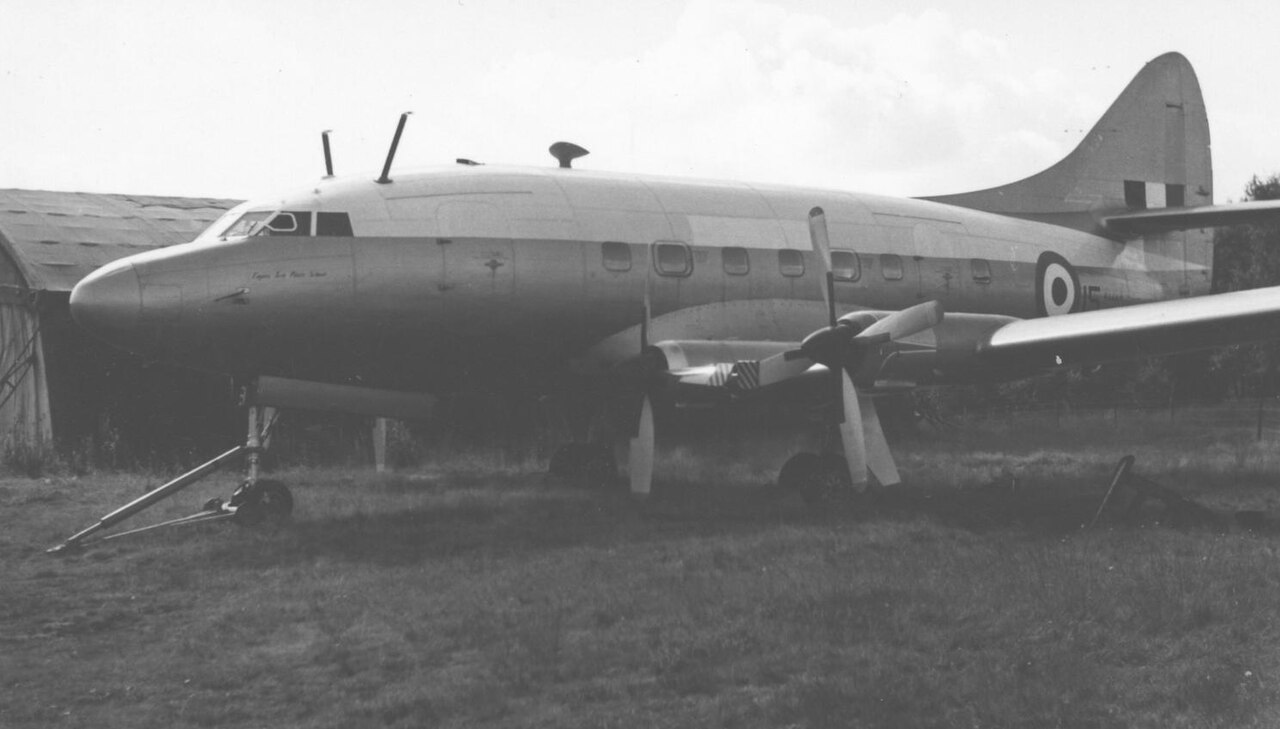
At the time of AW.55 prototype s/n VX220’s first flight, the Mamba engines could only produce 800 shp each. Regardless, the first flight successfully took place from the grass field at Baginton, Coventry, lasting 30 minutes in duration. After 9 hours of test flying, the Apollo showed itself to be underpowered and unstable. Armstrong Whitworth grounded the airliner prototype in hopes of remedying the issues. In August of 1949, test flying resumed, but the engine issues persisted. The tail was modified with a larger dorsal fin, in an attempt to improve the AW.55’s flying qualities. The Apollo received a limited category Certificate of Airworthiness in October of 1950, which allowed the aircraft to carry non-fare-paying passengers.
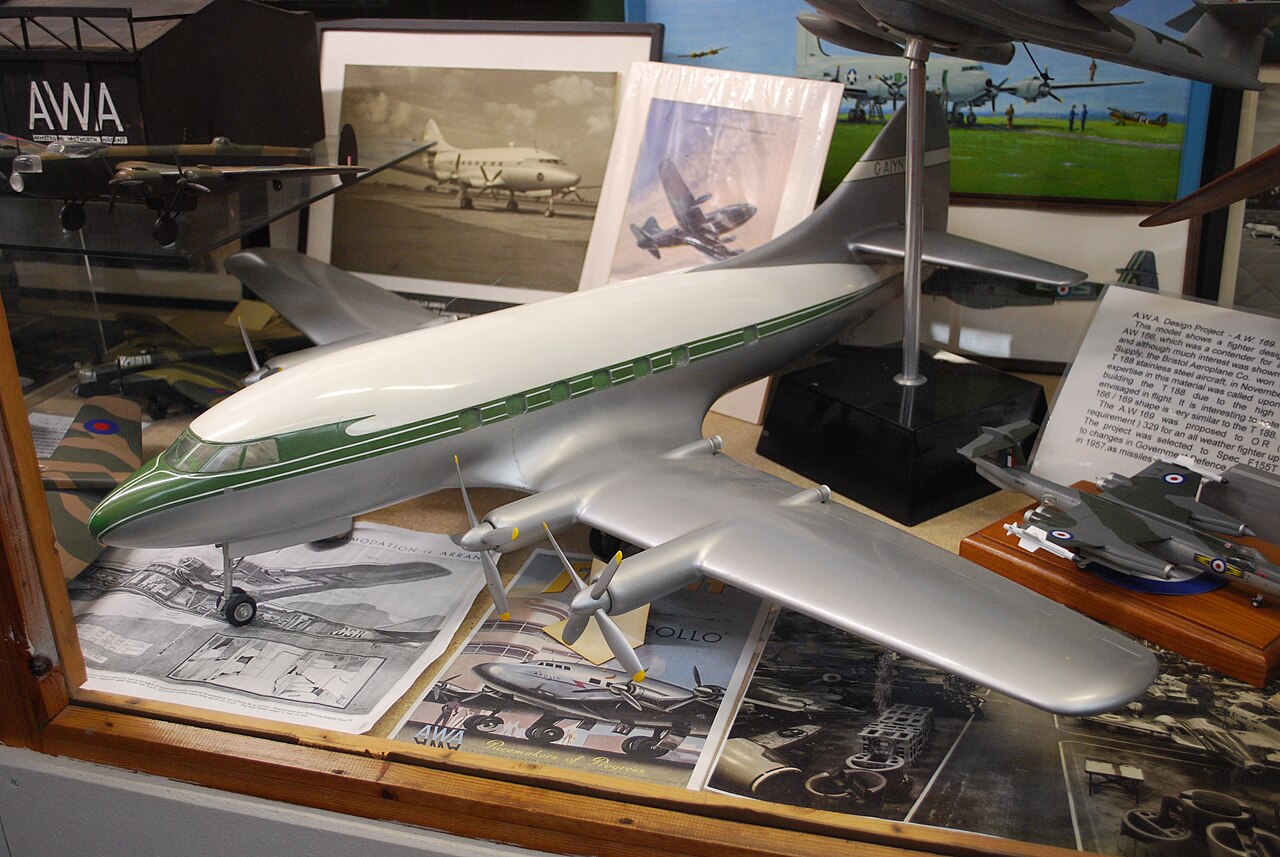
On March 12, 1941, a “proving” flight was made from Baginton to Paris, taking 1 hour and 26 minutes. Engine problems persisted, and the AW.55’s flight testing was stopped. In June of 1952, after receiving no interest from potential airline operators, the Apollo project was abandoned. The Vickers Viscount ultimately won the acclaim of the Air Ministry and filled the needs of their Specification. The AW.55 still had purpose after development was terminated. The prototypes entered service at the Aeroplane & Armament Experimental Establishment at Boscombe Down in September 1952. In 1954, the aircraft were used for multi-engine pilot training at the Empire Test Pilot’s School. One prototype was scrapped in 1955, and the other was scrapped in the 1970s, after a stint with the Structures Department at RAE Farnborough as a water tank pressure testing platform.