







By Jerry O’Neill
So, you are restoring a vintage aircraft. Whether you are an individual or a museum, every restoration project finds itself in the same predicament: what will the final paint scheme be? Will it be painted in the factory finish it wore when it rolled off the production line? If the aircraft’s history is known, will it wear the markings it carried while in service? Do you opt to present it in a paint scheme that honors a local veteran or famous pilot? All of these choices have merit. Museums may tend to keep an aircraft as close to its original configuration as possible so as not to misrepresent a historic artifact, but there are many exceptions. Sometimes, an individual funding a museum restoration can dictate the paint.
Lots of options. What do you do?
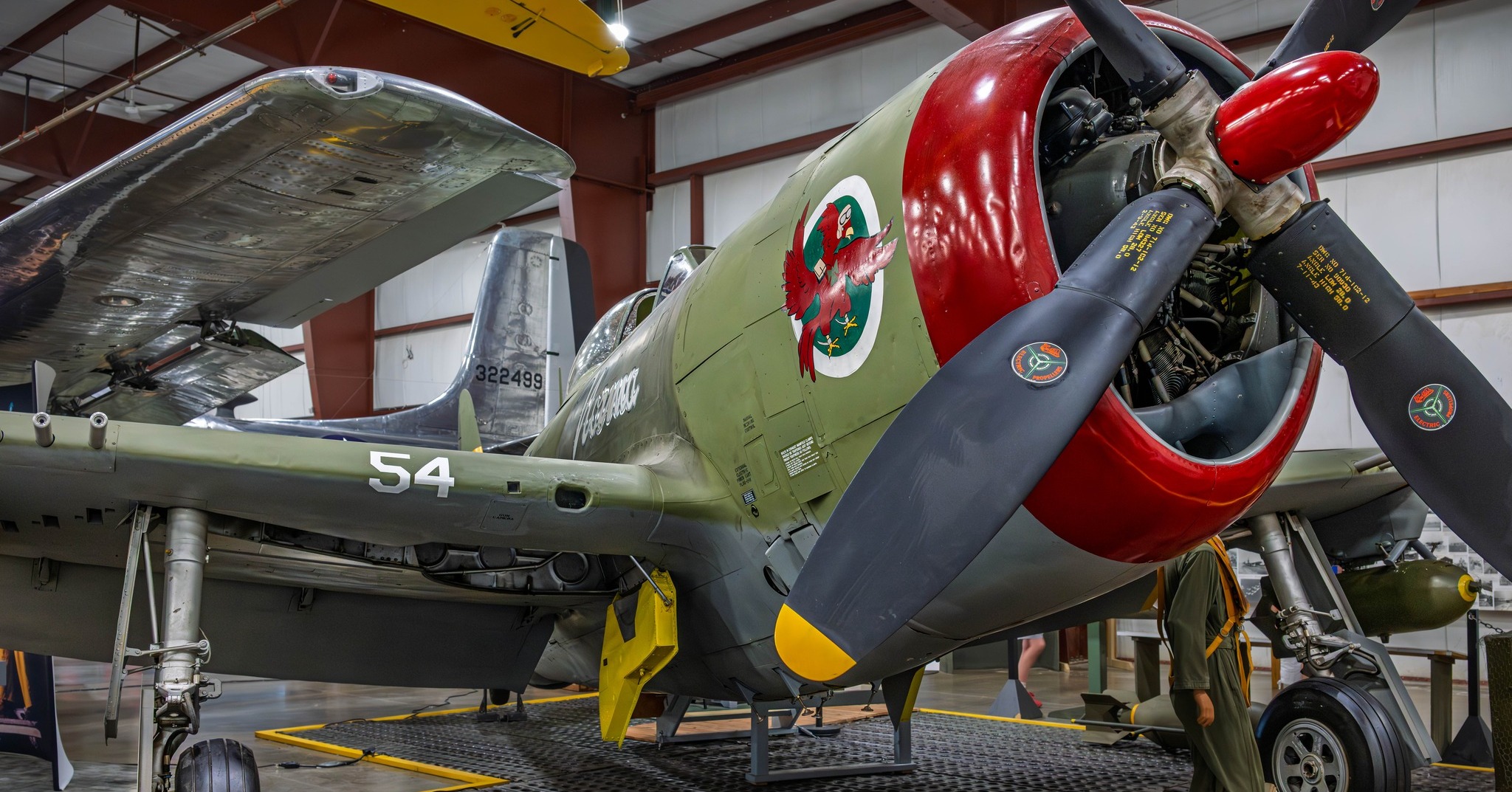
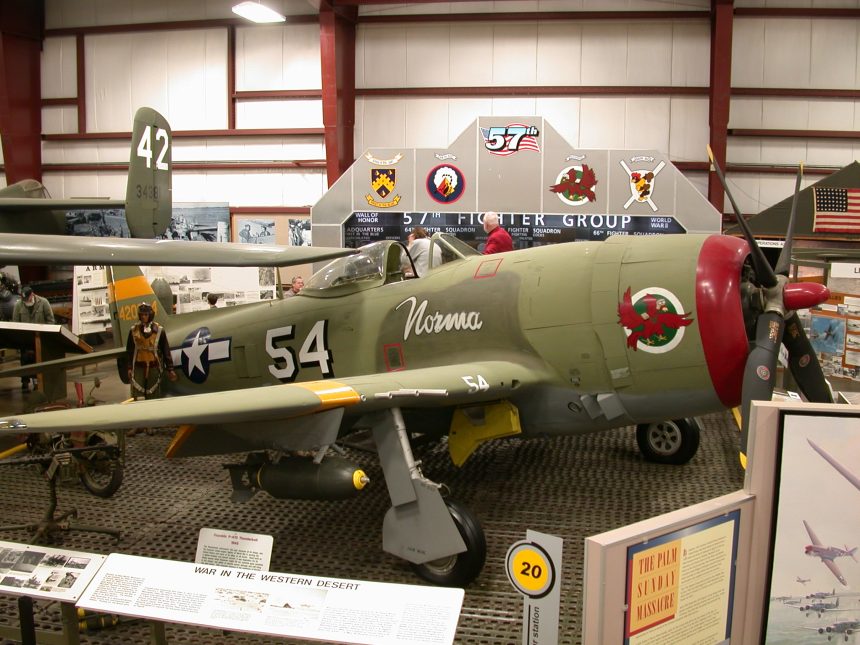
Here is the story behind the paint scheme worn by the New England Air Museum’s Republic P-47D Thunderbolt known as “Norma.” The P-47D-40-RA on display is 45-49458. It was delivered from the factory in a natural metal finish with no overall paint except the stars and bars. It likely served in the Air National Guard but did not remain in service in the United States for very long. It was transferred to the Peruvian Air Force (PAF) in 1947, where it flew as P-47D “451.” In 1971, it was donated by the Peruvian Air Force to the Air Force Museum in Dayton, Ohio (now the National Museum of the United States Air Force), and in 1972 it was loaned to the then–Bradley Air Museum (now NEAM). It arrived in its original PAF markings on natural metal. At that time in the museum’s history, it was expected that the Thunderbolt would have to be displayed outdoors, so it needed to be painted to protect the aircraft. The Connecticut Air National Guard at Bradley International Airport took on the restoration, guided by museum staff.
In 1941, the 57th Fighter Group was the first fighter group assigned to the newly completed Windsor Locks Army Airfield in Windsor Locks, Connecticut. The airfield was renamed during WWII as Bradley Army Air Field after Lt. Eugene Bradley became the first training casualty at the field. In a coincidence of history, the 57th Fighter Group became the subject of William Wyler’s color documentary Thunderbolt, which followed his popular The Memphis Belle. Although released postwar, Thunderbolt consisted entirely of wartime color footage of the 65th Fighter Squadron, part of the 57th Fighter Group, operating from Corsica.
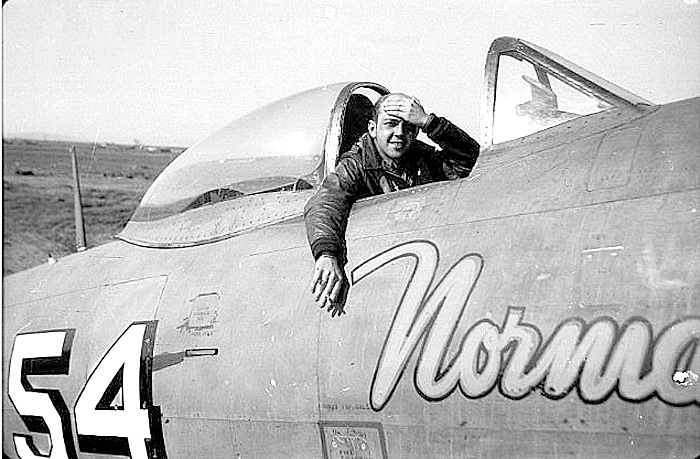
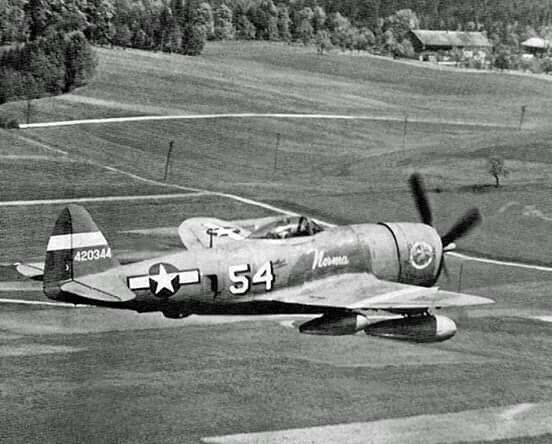
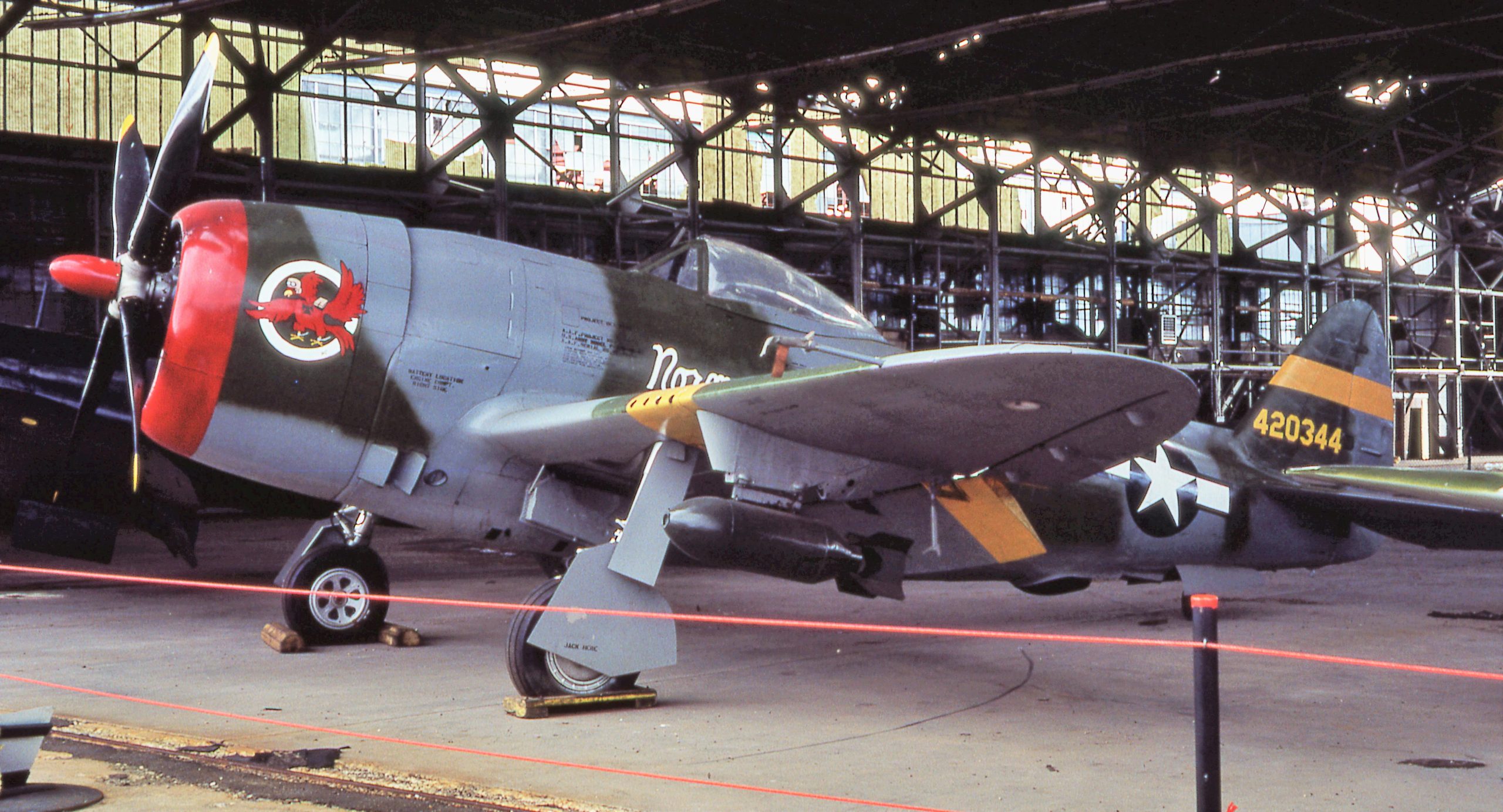
It was decided that a color scheme from the 57th Fighter Group would be most appropriate. The group operated in the Mediterranean Theater of Operations and had many P-47Ds that were fully painted, but they were earlier “razorback” models. NEAM’s aircraft was fitted with the later bubbletop canopy, featuring a lowered fuselage spine aft of the cockpit. Later in the war, the group received these newer bubbletop P-47Ds in natural metal finish with only national markings. The museum could have used silver paint and chosen one of several well-known 57th Fighter Group schemes, but silver paint at the time simply would not have looked right. After some searching, NEAM’s team located a black-and-white photo of an olive drab bubbletop P-47D named “Norma.” The decision was made to proceed with that scheme. Because the image was in black and white, no one could clearly determine the exact colors. There was a general consensus that it resembled the green and gray camouflage pattern used by the 8th Air Force’s 56th Fighter Group, so that is what they chose.
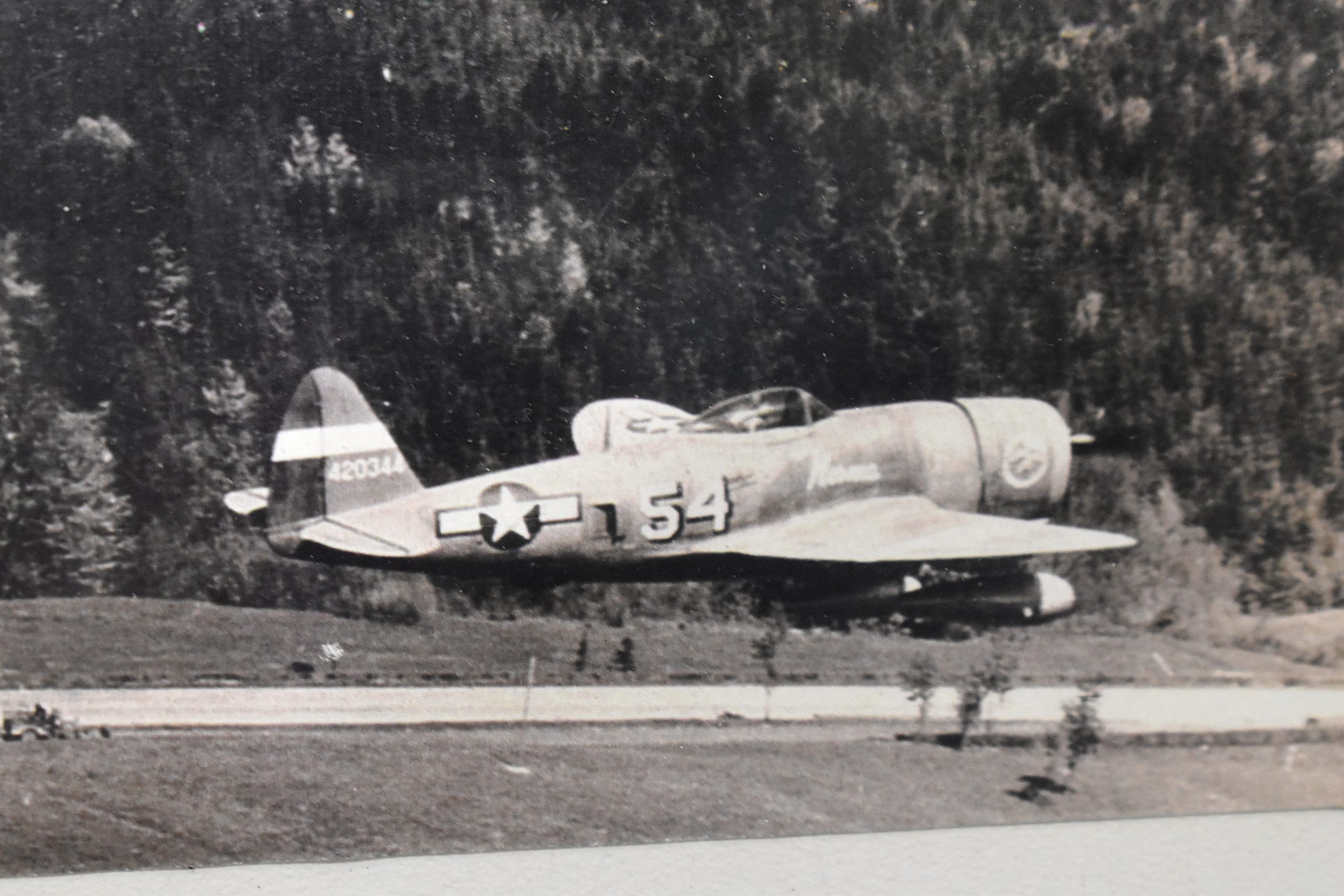
The name “Norma” followed a familiar wartime pattern. Lt. Bradley Muhl, a 65th Fighter Squadron pilot, was one of several pilots assigned to this aircraft. While stationed in Italy, he met Lt. Norma Holler, an Army nurse. They began dating, and he named his P-47D “Norma” after her. They married that same year and lived long, happy lives after the war. When “Norma” was finished and rolled out in 1979, it looked great—but, unknown to most, it wore the wrong colors. Since 1984, I have been involved at various times with the New England Air Museum and served as an Associate Curator for seven years. By 1992, NEAM had become home to the 57th Fighter Group’s archives and had amassed a large collection of related documents and artifacts.
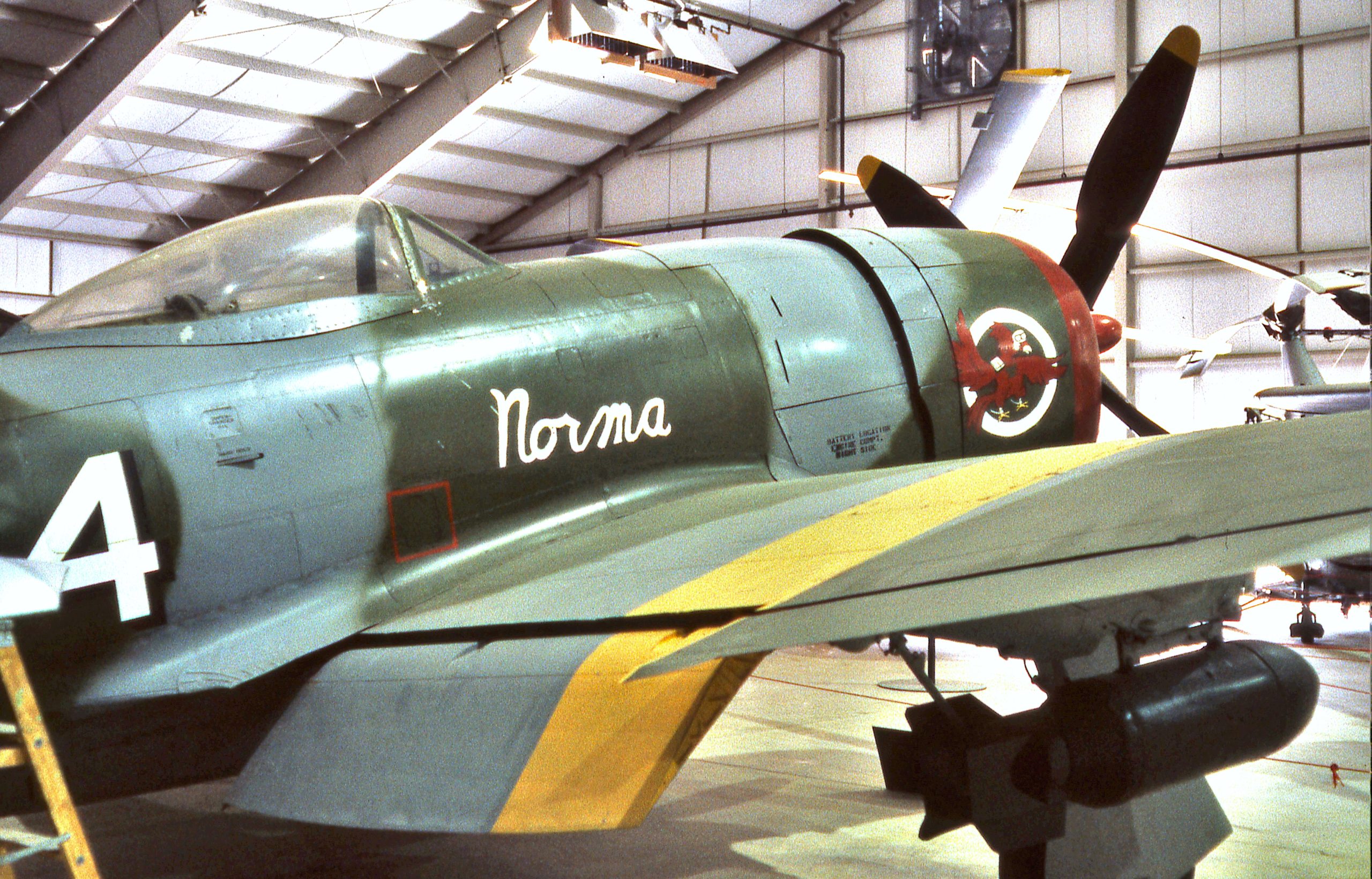
A decision was made to create a major display honoring the group, centered around the museum’s P-47D. Fellow volunteer Dennis Savage and I examined the aircraft closely and attempted to convince the curatorial committee that it should be repainted in the correct colors before the exhibit was completed. After 13 years, the big question remained: what were the correct colors?
Do we leave the error uncorrected?
Do we keep it as “Norma”?
Do we strip the paint, polish the natural metal, and present it as a different 57th P-47?
Decisions, decisions.
Over time, additional images of “Norma” in combat surfaced, making it clear that the aircraft had a unique story. It is now known that other squadrons in the 57th Fighter Group had one or two bubbletop P-47s painted overall olive drab, but evidence suggested that “Norma” was the only such aircraft in the 65th Squadron.
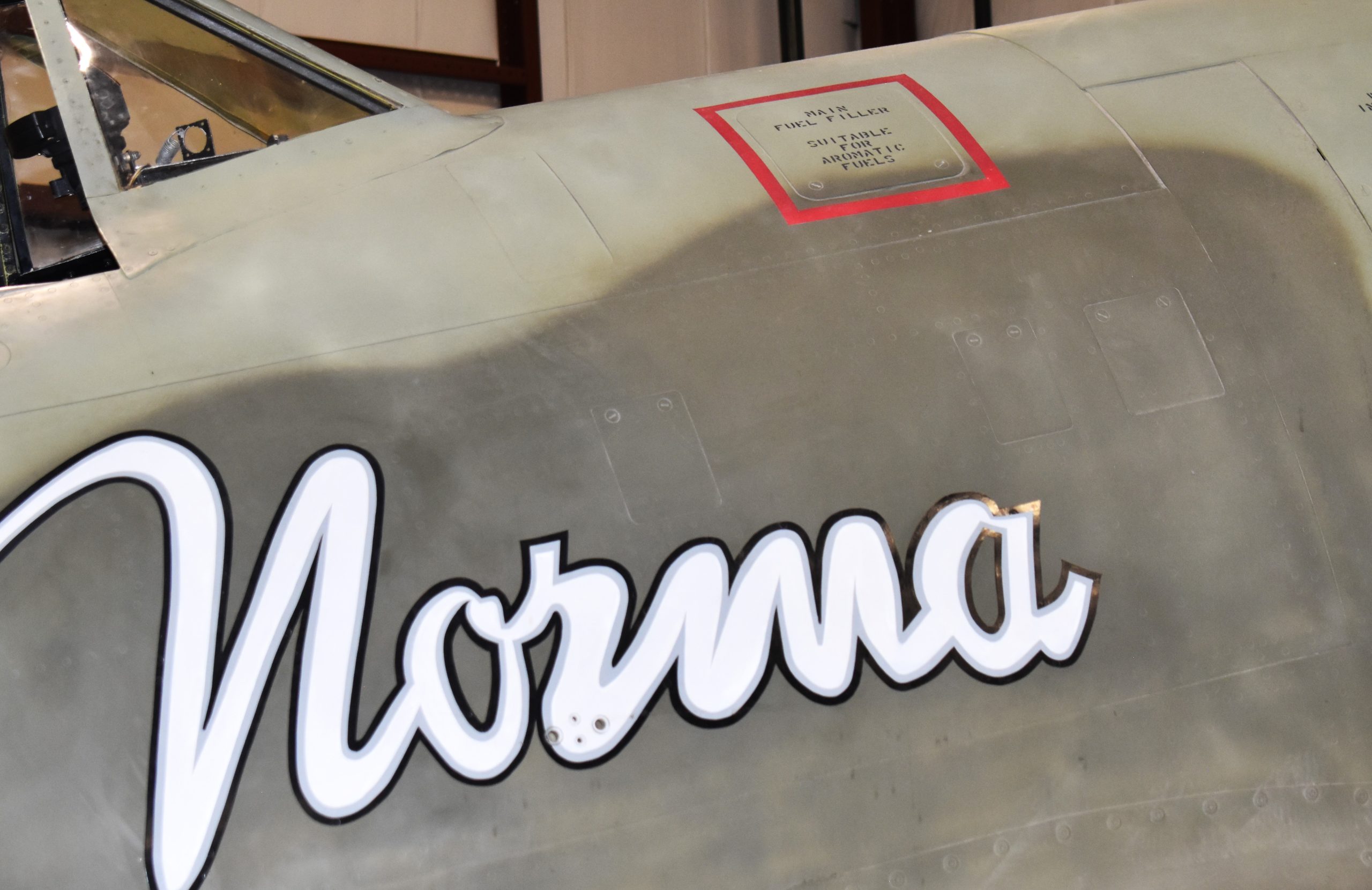
We examined the images closely, analyzing every detail as we debated the paint scheme’s origin. We developed slightly different opinions regarding both the exact color and the dark “blotch” visible on the right side of the aircraft. As a video professional and photographer for most of my career, I have developed a strong eye for color—and for how black-and-white film and filters can alter the appearance of colors. Depending on the film type or filter used, the same color can appear very different in two photos of the same subject. It is essential to compare known colors in vintage photos and match tonal values across different parts of the aircraft and across multiple images to determine consistency.
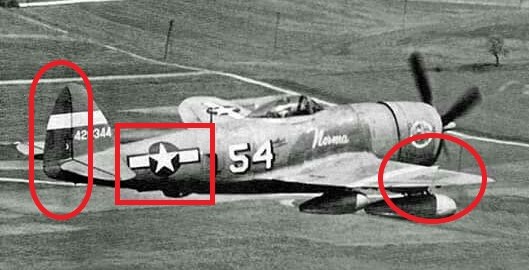
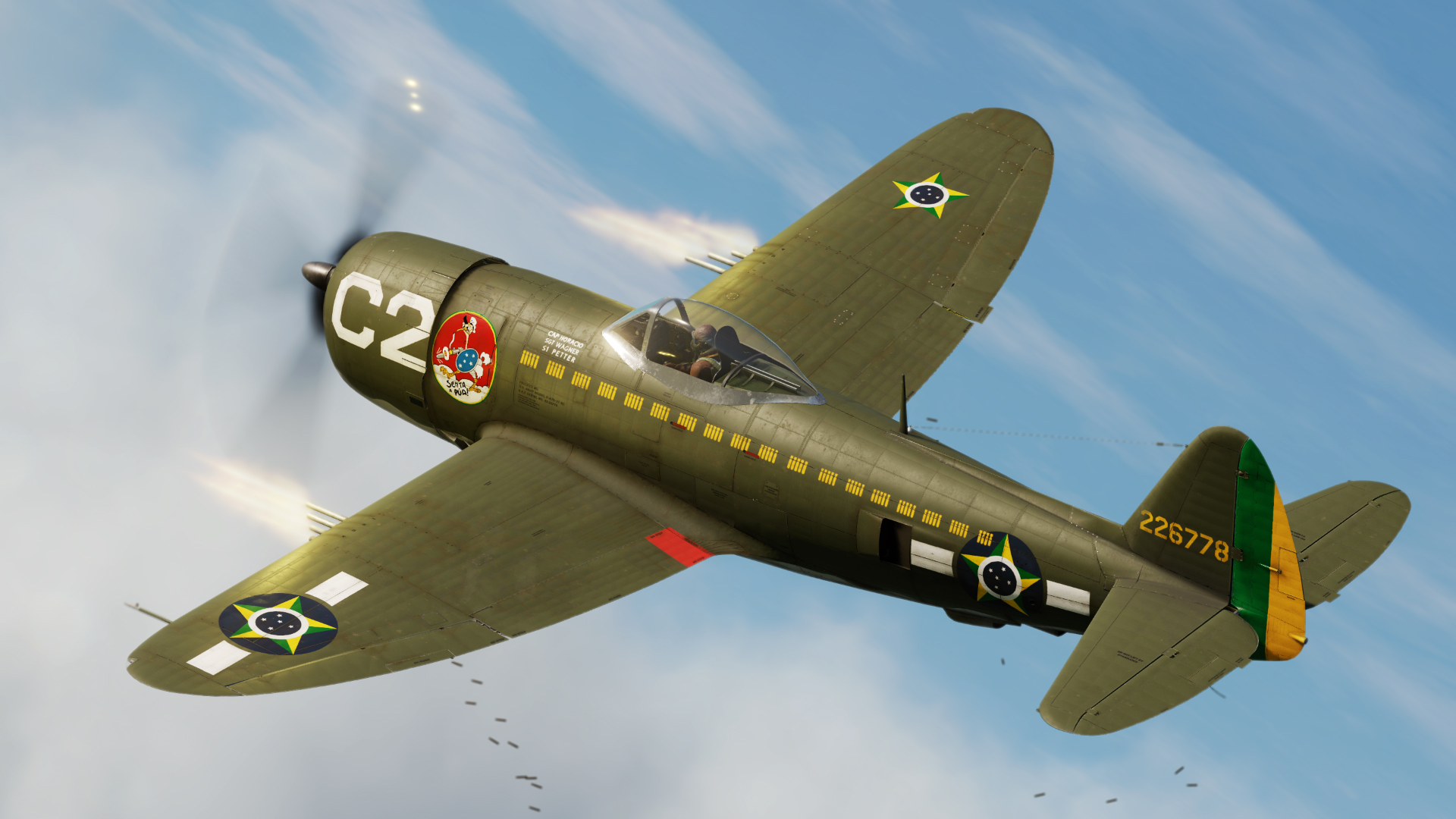
The 57th Fighter Group operated in the Mediterranean Theater, including from Alto Airbase on Corsica. The 1st Fighter Squadron of the Brazilian Air Force, also flying P-47Ds, was based on the opposite side of the same airfield. Their aircraft were painted overall olive drab with gray undersides. Our assessment was that “Norma” had originally belonged to the Brazilian unit and was later reassigned to the 57th Fighter Group for unknown reasons. Due to their low-level missions, Brazilian aircraft were painted olive drab for camouflage. They also carried green and yellow vertical bands on the rudder and had unique national insignia placements. Photos of “Norma” show a darker, newer-looking rudder, suggesting repainting over Brazilian markings. There are also slightly oversized U.S. star-and-bar insignia on the upper left wing and fuselage, likely covering Brazilian markings. Evidence also suggests overspray on the right wing where a Brazilian insignia had been removed.
As for the large dark area on the right side of the fuselage, some on the committee believed it was camouflage. I disagreed. Several wartime photos show “Norma” without this “blotch.” The only images showing it are two inflight photos, likely taken on the same day. This suggests a different origin. P-47Ds had no internal wing fuel tanks, only fuselage tanks. The main fuel filler was located on top of the fuselage, and the oil reservoir access panel was on the right side behind the engine. Ground personnel would stand on the right wing while servicing the aircraft, often leaning against the fuselage. I theorized that the “blotch” resulted from ground crew activity—dirty coveralls, fuel spills, and oil residue—combined with airflow patterns on a tail-dragger aircraft. The shape and streaking pattern support this explanation. Additionally, the discoloration follows panel lines, which a deliberate camouflage pattern would not.
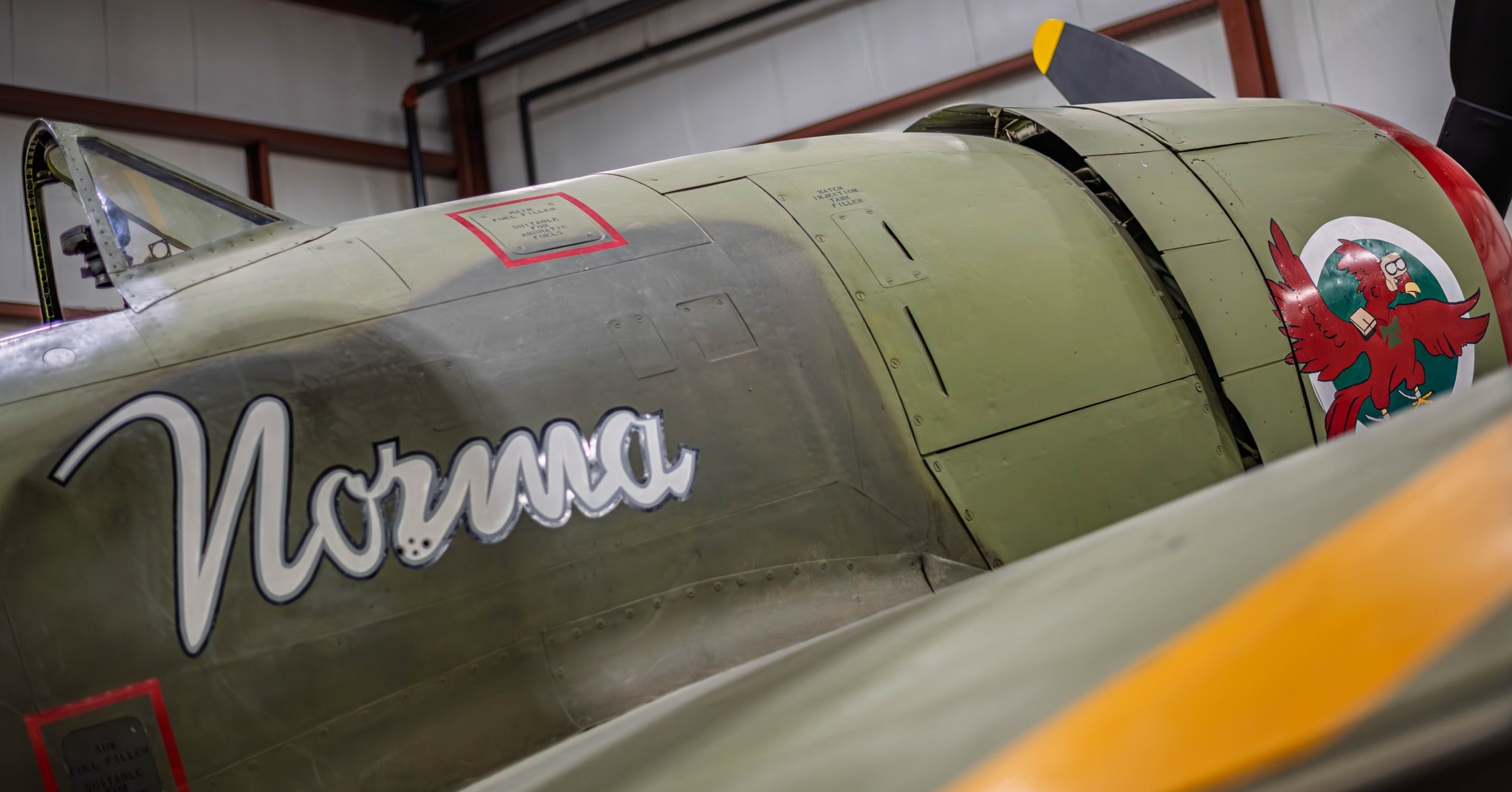
It is also possible that the area had been repainted due to wear or damage. On natural metal aircraft, such discoloration would be less visible and might even appear polished. I advocated for omitting the “blotch” in the repaint, using a darker olive drab consistent with Brazilian aircraft, and including the oversized insignia. However, I was not persuasive enough. The committee ultimately chose a lighter, weathered olive drab to convey a war-worn appearance and included the darker “blotch.” One final note: the original aircraft also carried the name “Little Bunny” on the left side of the cockpit, painted in the same style as “Norma.” This name, chosen by Lt. William “Willy” Lyke, was discovered through photographic evidence only after the repaint and was therefore not included. So, that’s a glimpse into the lengths some will go to when deciding how an aircraft should be painted. To this day, “Norma” sits wearing a handsome—but slightly inaccurate—paint scheme. I guess I just wasn’t convincing enough. For more information about the New England Air Museum, visit www.neam.org.




That dark spot could have been a fuel spill stain from the ground crew refueling the plane. After all, there is a large fule tank right there that goes from the front of the pilot and down under the cockpit.