
(Image credit: VAN)
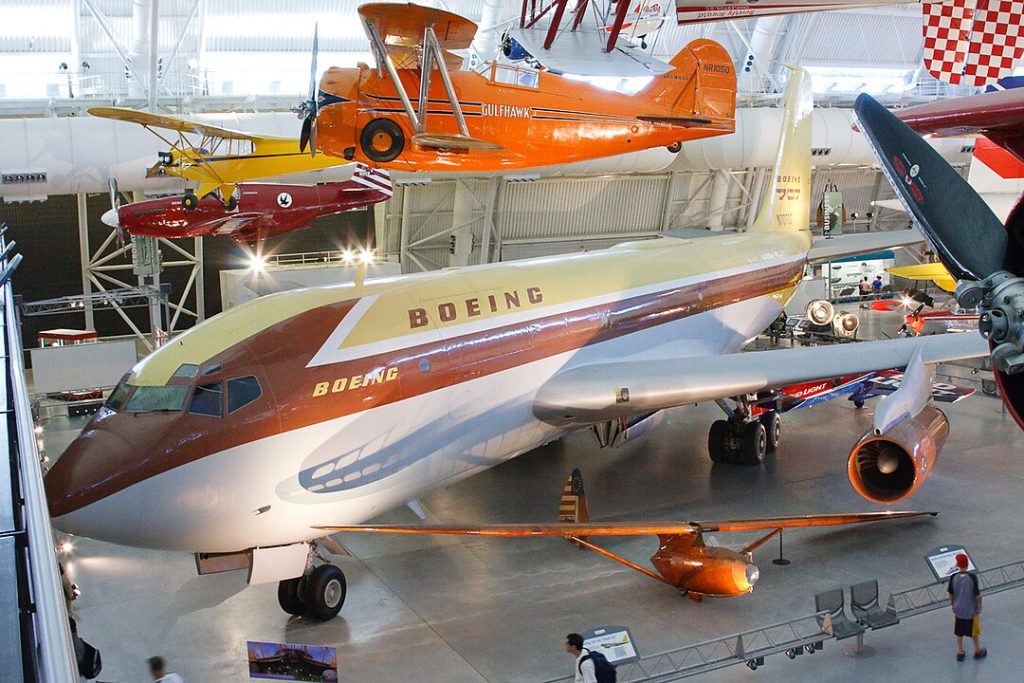
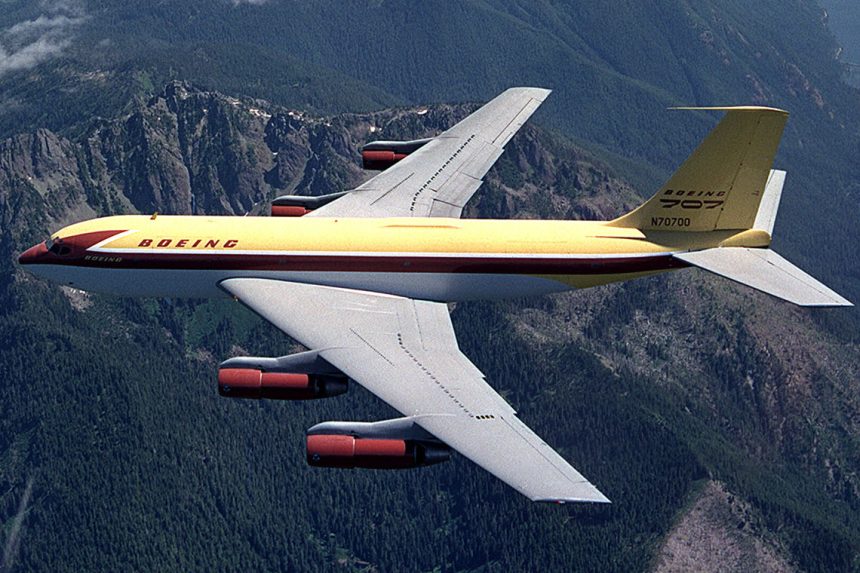
On this day in aviation history—July 15, 1954—the Boeing 367-80 took to the skies for the first time, marking the dawn of a new era in air travel. The milestone flight lifted off at 2:14 p.m. from Renton Field near Seattle, Washington, with Boeing test pilots Alvin M. “Tex” Johnston and Richard L. “Dix” Loesch at the controls. Once the aircraft, registered as N70700, reached its rotation speed of 130 miles per hour and left the ground, it paved the way for revolutionary advancements in both commercial aviation and military aerial refueling.

The 367-80, known as the “Dash 80,” was conceived and built by Boeing to showcase the advantages of jet propulsion in passenger aircraft. Though a one-off prototype, it laid the groundwork for two iconic aircraft: the Boeing 707 commercial airliner and the KC-135 Stratotanker. Development of both began two years after the Dash 80’s debut flight. The KC-135 flew for the first time on August 31, 1956, followed by the 707 on December 20, 1957.
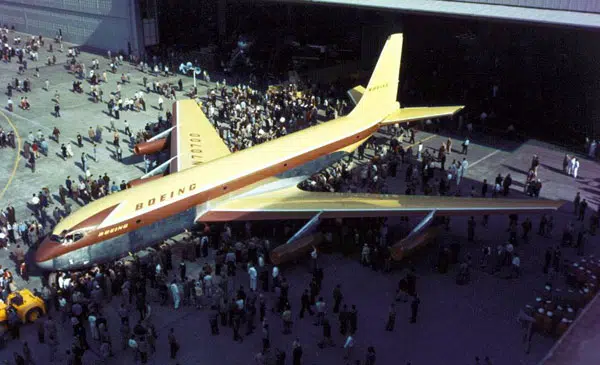
Powered by four Pratt & Whitney JT3C turbojet engines, each producing 10,000 pounds of thrust, the Dash 80 demonstrated impressive performance during testing. It cruised at 550 miles per hour, with a top speed of 582 mph, a range of 3,070 nautical miles, and a service ceiling of 43,000 feet—capabilities that made it a compelling proof-of-concept for long-range jet transport.
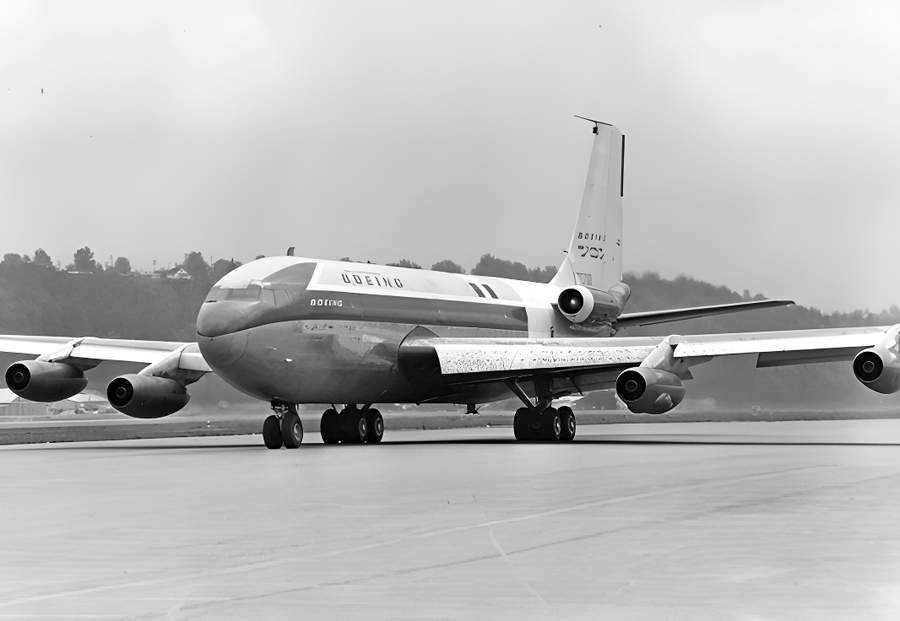
Over its career as a prototype and testbed, N70700 completed 1,691 flights and logged 2,350 flight hours. On May 26, 1972, Boeing donated the aircraft to the Smithsonian National Air and Space Museum. For nearly two decades, the Dash 80 was stored at the “desert boneyard” at Davis-Monthan Air Force Base in Arizona. In 1990, Boeing brought the aircraft back for restoration. Upon completion, it was flown on August 27, 2003, to Washington Dulles International Airport, where it became a centerpiece of the Steven F. Udvar-Hazy Center. Today, the Boeing 367-80 remains proudly on display, a tribute to a pivotal leap in aviation history and Boeing’s legacy of innovation.