
(Image credit: VAN)
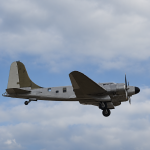
Eighty-three years ago today, on September 21, 1942, the Boeing B-29 Superfortress took to the skies for the very first time. This four-engine heavy bomber represented a major leap forward in technology and capability, designed during World War II to carry out high-altitude strategic bombing missions deep into enemy territory. Although originally built for precision bombing, the B-29 would later become famous for its devastating low-level, nighttime incendiary raids. Its name, Superfortress, was a nod to Boeing’s earlier success with the B-17 Flying Fortress, which had already proven itself in daylight bombing operations over Europe.
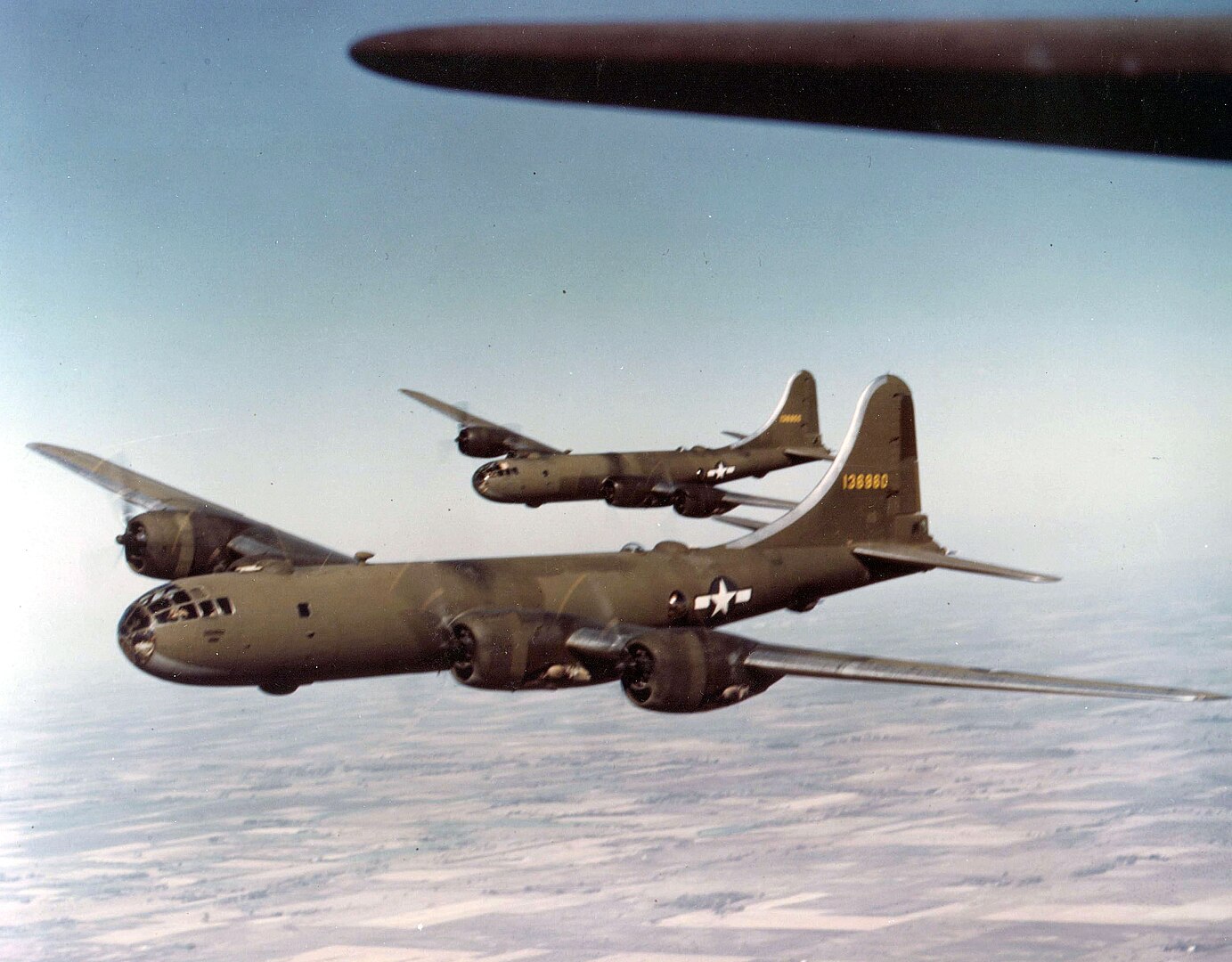
Boeing received the order for a new heavy bomber prototype on August 24, 1940, which set development into motion. Compared to its predecessor, the B-17, the B-29 introduced several groundbreaking features, including pressurized crew compartments that allowed for high-altitude flight and remotely controlled defensive gun turrets. Power came from four Wright R-3350 Duplex-Cyclone radial engines producing 2,200 horsepower each. Early versions of this powerplant were plagued with reliability issues and were notoriously difficult to maintain, but the problems were eventually resolved. Later variants, such as the B-29D—later redesignated B-50—were equipped with even more powerful Pratt & Whitney R-4360 Wasp Major engines.
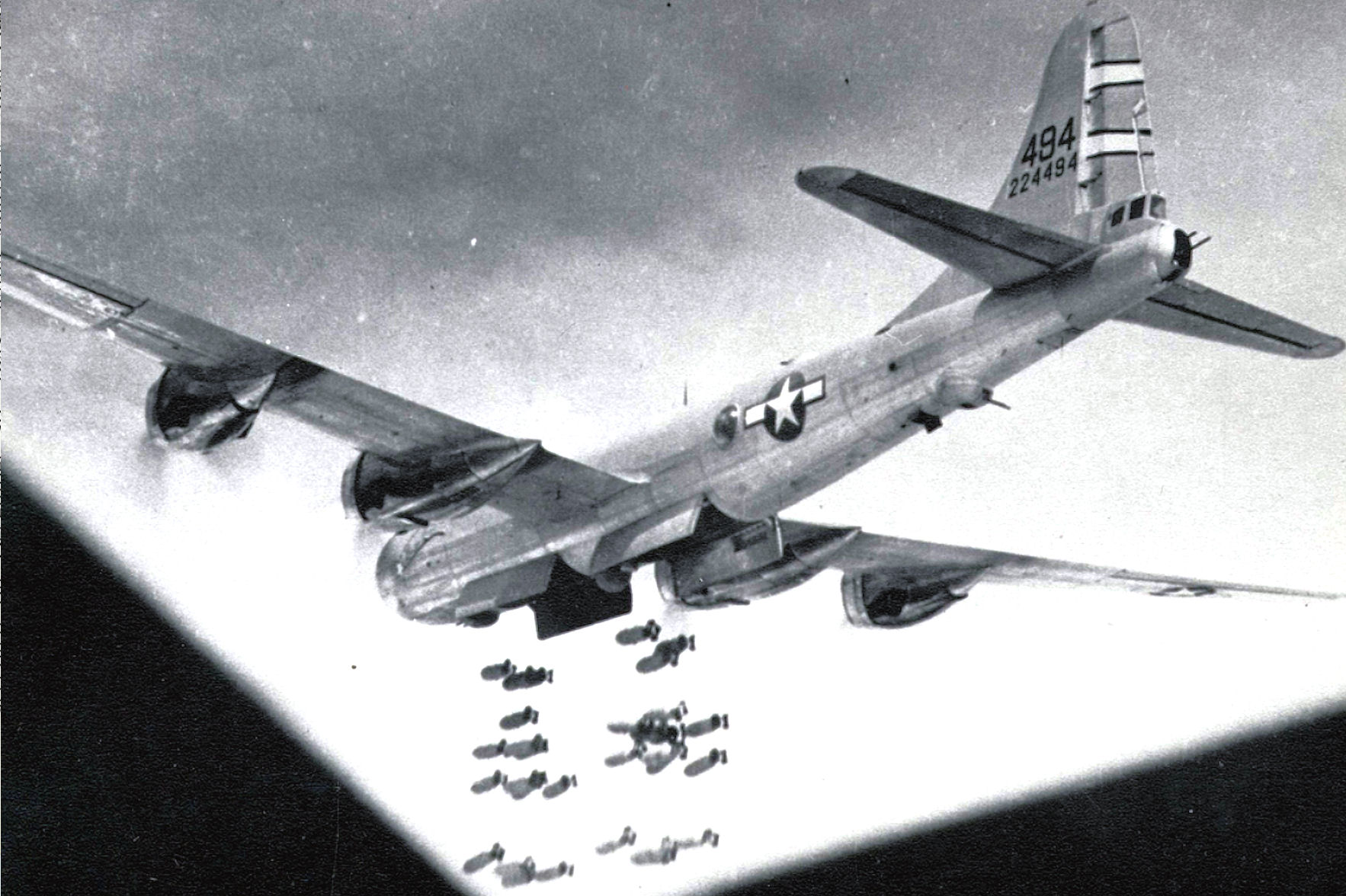
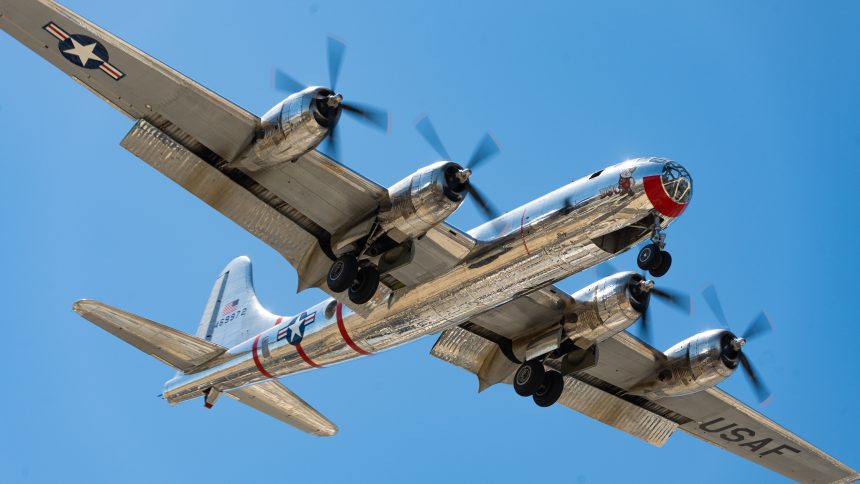
The B-29 was a large and formidable aircraft. It had a wingspan of 141 feet 3 inches and measured 99 feet in length. Its four engines turned massive 16-foot, 7-inch constant-speed propellers that could push the bomber to a maximum speed of 357 miles per hour, with a cruising speed of about 220 mph. It could range up to 2,820 nautical miles and operate at altitudes as high as 31,850 feet. The Superfortress carried a crew of eleven, including pilot, co-pilot, bombardier, flight engineer, navigator, radio operator, radar observer, three gunners, and a central fire control operator. For defense, the B-29 mounted ten .50-caliber Browning M2 machine guns in remote-controlled turrets, with an additional pair of .50s and a 20 mm cannon in the tail. Its bomb load varied depending on range, from 5,000 to 22,000 pounds.
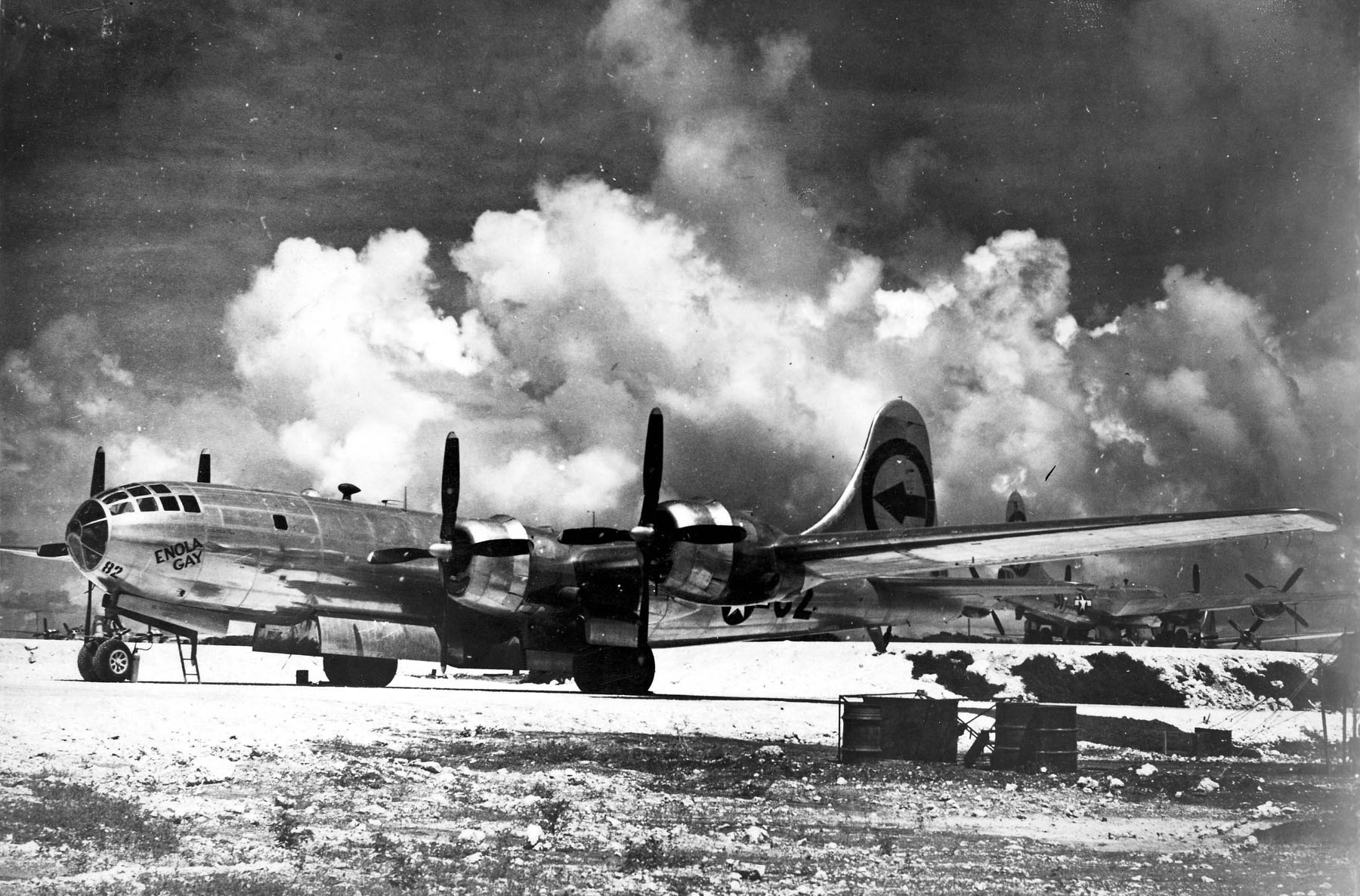
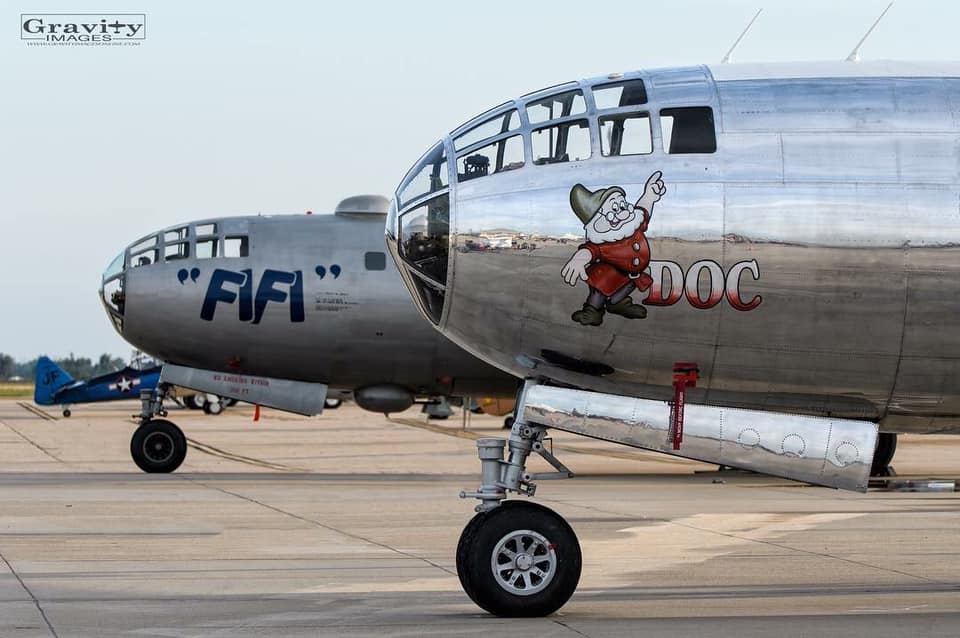
The B-29 is perhaps most famous for its role in ending the Second World War, as it was the aircraft type used to drop the atomic bombs over Hiroshima and Nagasaki. Both of the aircraft that carried out these missions survive today. Enola Gay is displayed at the Smithsonian National Air and Space Museum’s Udvar-Hazy Center, while Bockscar is preserved at the National Museum of the United States Air Force. Remarkably, two B-29s remain airworthy today: the Commemorative Air Force’s Fifi and Doc’s Friends’ Doc. These aircraft tour the United States, giving the public a rare chance to see and hear the Superfortress in flight, keeping its story—and the history of World War II aviation—alive for future generations.