
(Image credit: VAN)
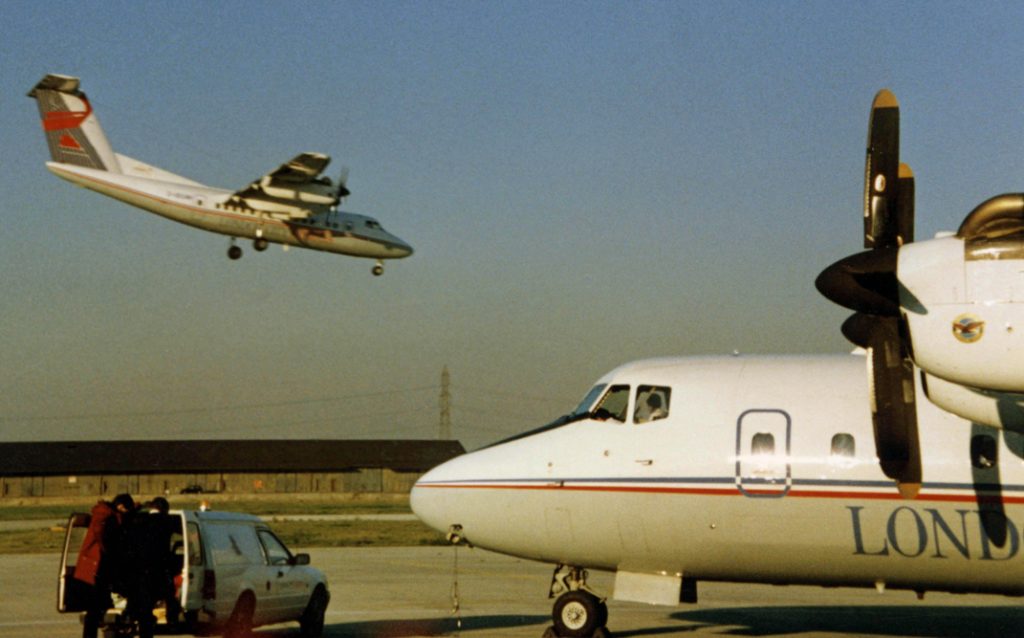
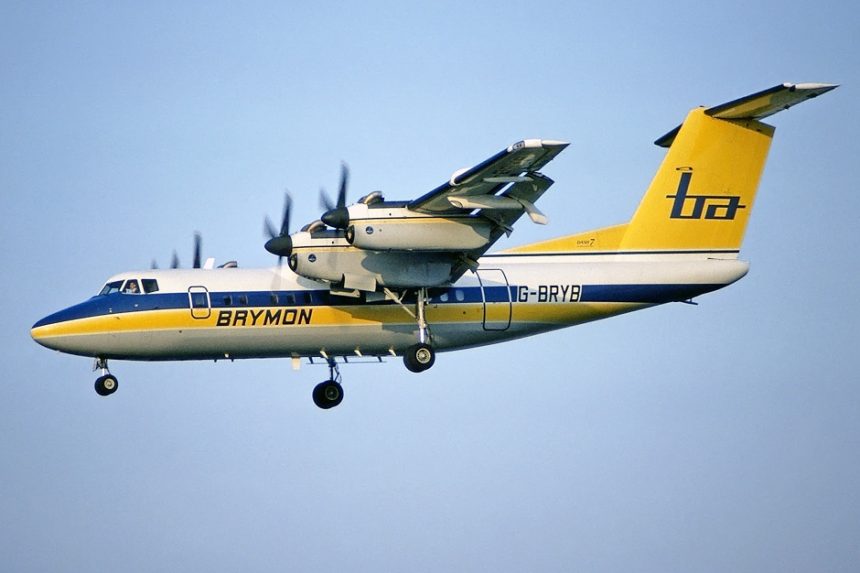
On this day in aviation history, 51 years ago (March 27, 1975), the first flight of the de Havilland Canada DHC-7 took place. More commonly referred to as the Dash 7, the DHC-7 is a turboprop regional airliner that has short take-off and landing (STOL) capabilities. The Dash 7 was developed in Canada by de Havilland Aircraft and was built on their earlier success with high-performance STOL aircraft like the DHC-2 Beaver and DHC-6 Twin Otter.
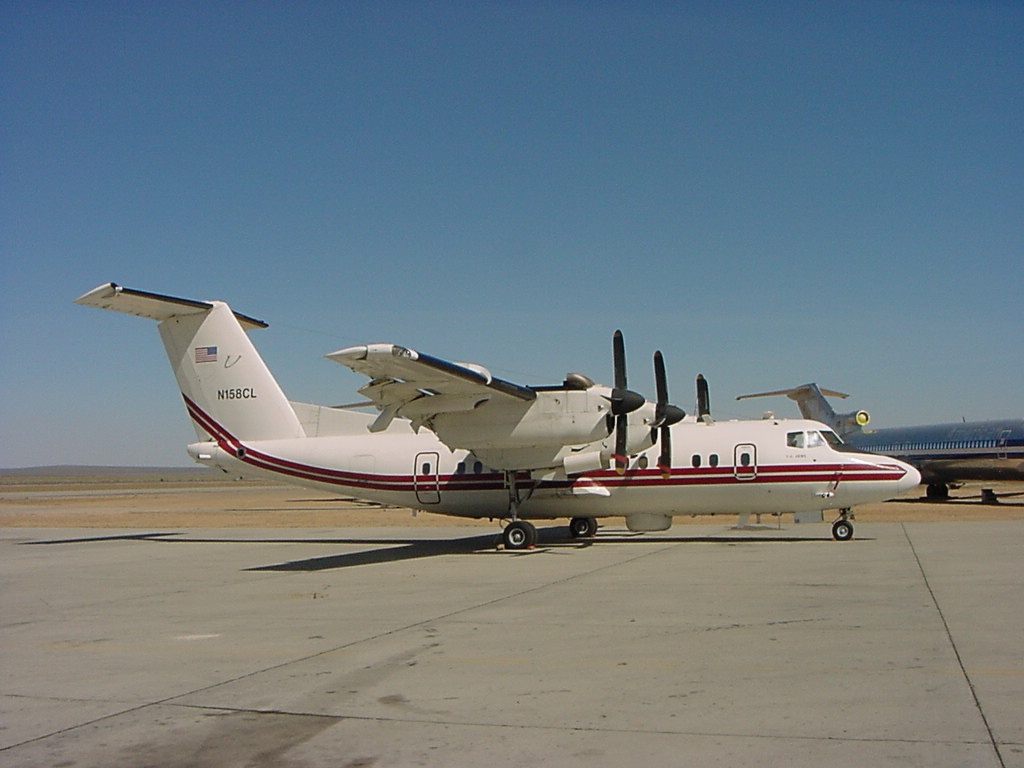
Both the DHC-2 and DHC-6 were great aircraft in their own regard; however, they lacked passenger capacity and range. De Havilland sought to create an aircraft that could carry more passengers, and also fly further to better serve busier regional airline routes. Feeling that they could realistically compete with higher-performance turboprop aircraft, the Fokker F27, Convair 580, and Hawker Siddeley 748, de Havilland began their own regional airline design. What resulted from the Canadian company’s efforts was an aircraft that was, true to form, a larger, four-engine version of the Twin Otter.
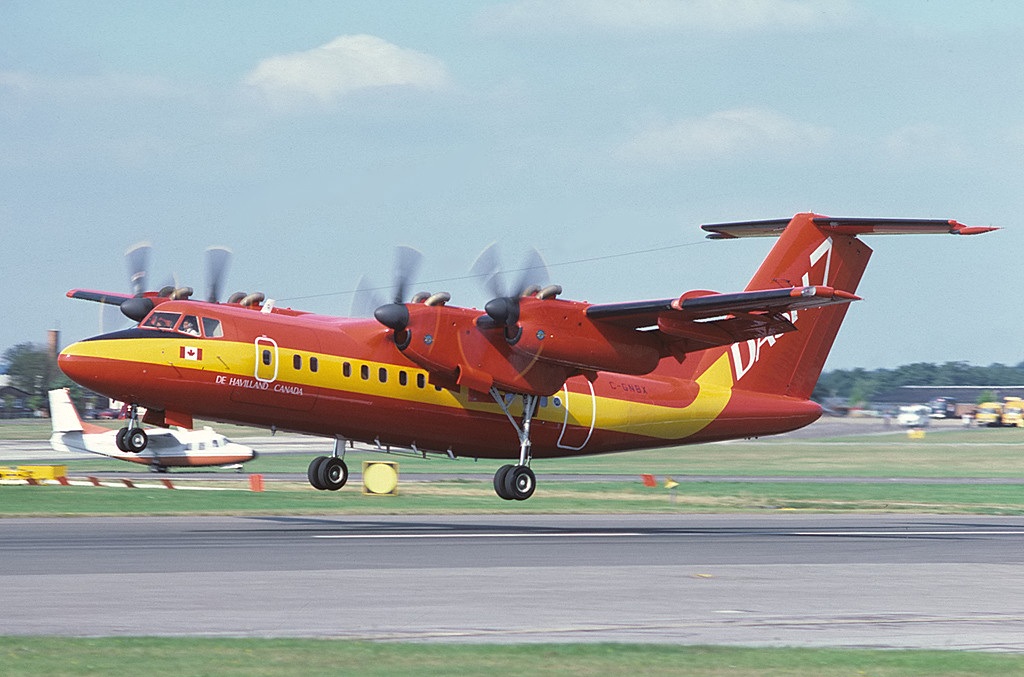
A high-mounted, high-aspect ratio wing gave the DHC-7 lift enough for STOL operations. Cabin pressurization was added, along with landing gear that retracted forward into the nacelles. A larger t-tail was used to keep the elevator clear of any propwash from the four 1,120-shaft-horsepower Pratt & Whitney Canada PT6A-50 turboprop engines. The DHC-7 featured smaller ailerons that were augmented by two sets of roll spoilers, or “spoilerons.” The roll spoilers and addition of Fowler flaps gave the Dash 7 exceptional STOL capabilities at low speeds.
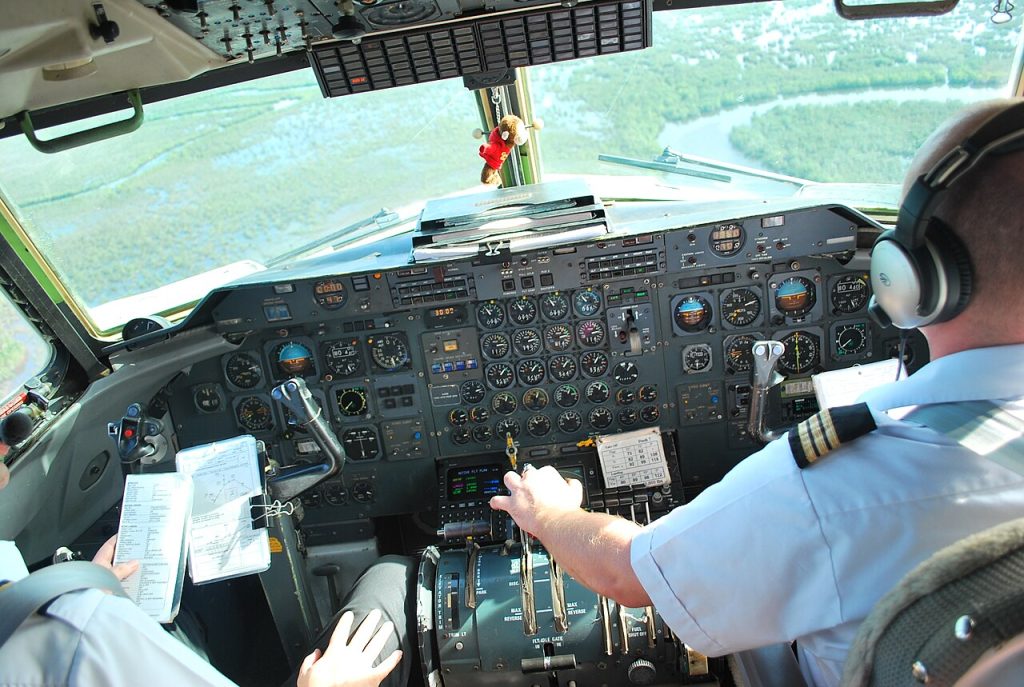
The de Havilland DHC-7 had a crew of 2 and a capacity for between 50 and 54 passengers. A maximum airspeed of 266 mph and a service ceiling of 21,000 feet are attainable for the Dash 7. The regional airliner had a range of 690 nautical miles, can takeoff within 2,260 feet, and land within 1,950 feet. De Havilland built a total of 114 DHC-7s between 1975 and 1988, and many remain in limited service today with Air Tindi, Airkenya Express, and the United States Army, to name a few. Prior, the Dash 7 was operated by Delta Connection, Air Wisconsin, and Air Atlantic, among others.