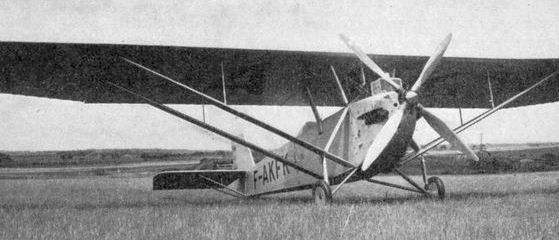
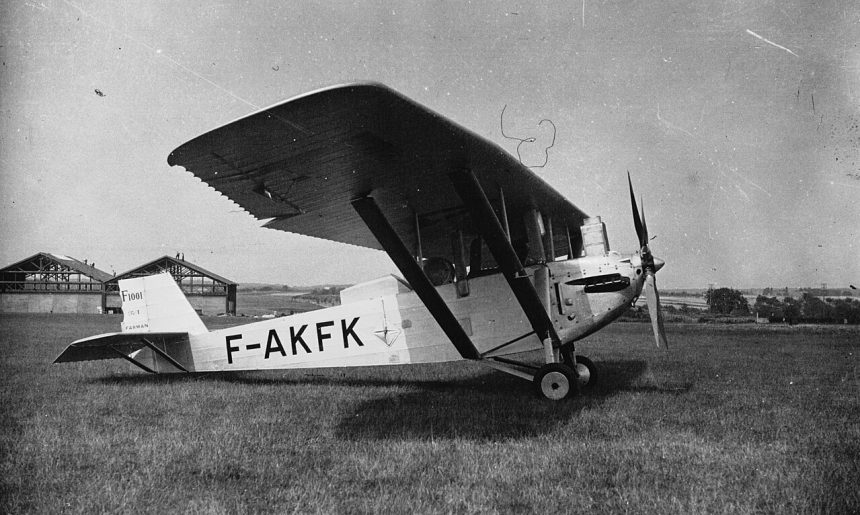


On this day in aviation history, 94 years ago (June 25, 1932), the first flight of the Farman F.1000 took place. A product of French-based Farman Aviation Works, the F.1000 was a high-wing monoplane designed with the intent of breaking the world altitude record. The first flight was piloted by Lucien Coupet. The F.1000’s design was less than accommodating for pilot visibility, as the view on takeoff and landing was obstructed. A modification was made that raised the pilot’s seat higher, leaving only his legs within the cockpit itself. In cruise, the pilot would be seated wholly in the cockpit, but upon the landing approach, a pressurized hatch could be opened to allow him to get into a higher vantage point. The cabin itself was pressurized for higher altitude operations. In flight testing, the F.1000 only managed to attain 16,405 ft of altitude, so a redesign named the F.1001 was developed.
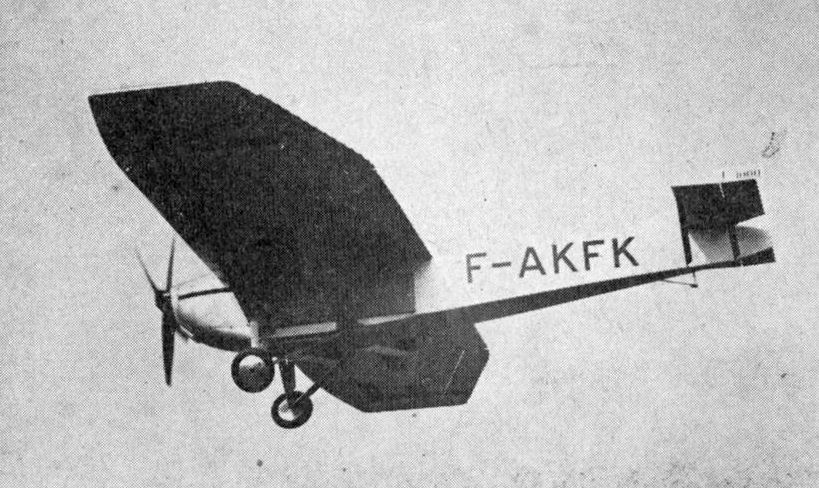
The F.1001 was powered by a Farman Wirs engine, and an attempt at the world altitude record was made on August 5, 1935. Pilot Marcel Cagnot was sadly lost on this record-attempting flight when one of the cockpit windows failed, leading to depressurization at an altitude of 32,810 ft. Farman was not giving up on their record quest; an F.1002 variant was soon on the drawing board. The F.1002 would make several flights to over 26,425 ft, although little is known about the exact specifications of this variant. The Farman F.1000 was powered by a 350-hp Farman 8Vi inverted V-8 water-cooled engine with three superchargers. Maximum airspeed for the F.1000 was 179 mph, while the estimated service ceiling was 65,615 ft. Farman’s F.1000 had a wingspan of 60 ft – 8.25 in, a length of 37 ft – 8.75 in, and it sat 11 ft 5.75 in tall. Gross weight for the F.1000 was 5,589 lbs.