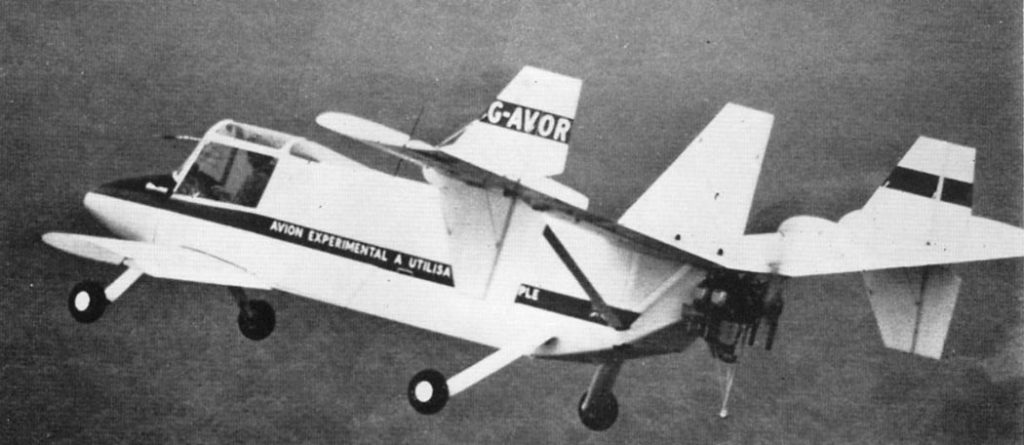
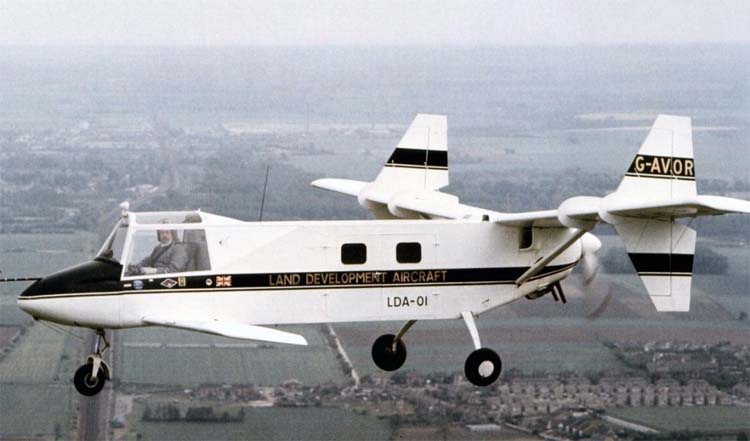


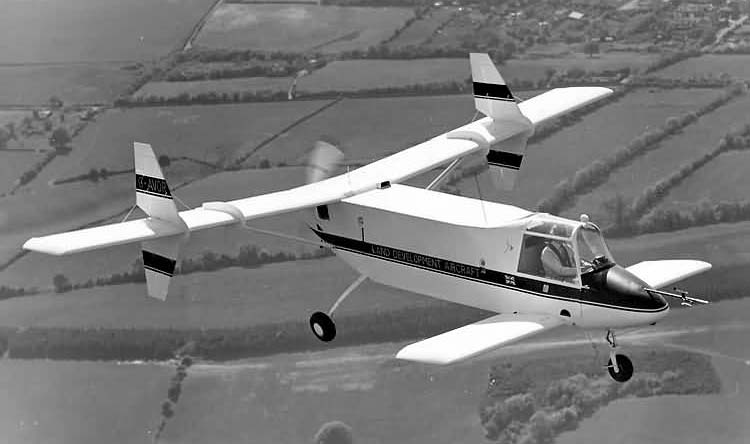
In the early 1970s, British engineer David Lockspeiser designed an experimental aircraft as a low-cost utility transport. The aircraft, designated Lockspeiser LDA-01, was intended to operate in areas with poor infrastructure at low operating and maintenance costs. The LDA-01 was a single-seat monoplane with tandem wings. It had a fabric covering and a metal frame. The foreplane was half the size of, and of identical design to, the separate left and right wings of the main plane. The design aimed to reduce the number of spare parts by allowing the same wing component to be used in both locations. The main wings were attached at the back of the fuselage, and the forewing was mounted underneath the front. Initially, the fuselage had a four-wheeled landing gear but was later changed to a more standard tricycle configuration. The plane was powered by a rear-mounted pusher engine.
Design of Lockspeiser LDA-01
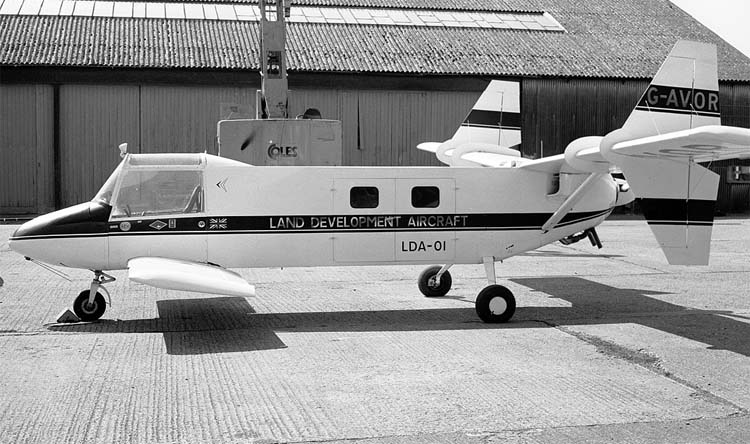
The Lockspeiser LDA-01 first flew on August 24, 1971, at Wisley in Surrey, powered by an 85-horsepower Continental C85 piston engine, but was later upgraded to a more powerful Lycoming O-320 engine producing 160 horsepower. The Lockspeiser LDA-01 was 22.6 feet long, 10.3 feet high, with a wingspan of 13 feet, a rearplane span of 13 feet, and a wing area of 108.8 square feet. The empty weight was 1,237 pounds, the gross weight was 1,616 pounds, and the maximum takeoff weight was 1,700 pounds. Its fuel capacity was 36 US gallons in two fuel tanks, providing it a range of 160 miles. The Lockspeiser LDA-01 was equipped with a 5.9-foot-diameter constant-speed metal pusher Hoffmann HO-V72 propeller. It had a cruise speed of 110 mph and a stall speed of 48 mph. By the end of the project, the aircraft had logged about 100 flight hours, demonstrating that it could handle difficult tasks such as cargo transport and agricultural support. However, the Lockspeiser LDA-01 project halted development around 1973, primarily due to a lack of funding. Designer Lockspeiser paid for the prototype’s construction and testing himself.
The Cancellation
Lockspeiser later tried to get financial support from UK organizations such as the Technical Development Capital (TDC) and the Industrial and Commercial Finance Corporation (ICFC), as well as from international aid groups interested in its use for agriculture and development in third-world countries. However, these efforts did not succeed. The only prototype was initially registered as G-AVOR and later changed to G-UTIL on August 12, 1986. After testing, the Lockspeiser LDA-01 remained active and was displayed at the 1975 Paris Air Show, where it was painted in a camouflage scheme for both civilian and military use to display its versatility. A demonstration flight was canceled when a swarm of bees landed on the cockpit. Later that day, while taxiing, one of the landing gears broke, damaging the undercarriage, but it was fixed. The Lockspeiser LDA-01 was stored at Old Sarum airfield and had a UK Permit to Fly issued by the Popular Flying Association. Later, when the aircraft was being modified for production by Brooklands Aerospace at Old Sarum Airfield, it was destroyed in a fire on January 16, 1987. In the Grounded Dreams series, the Lockspeiser LDA-01 was a good aircraft, but it couldn’t receive funding to mature. Read more Grounded Dreams articles HERE.