





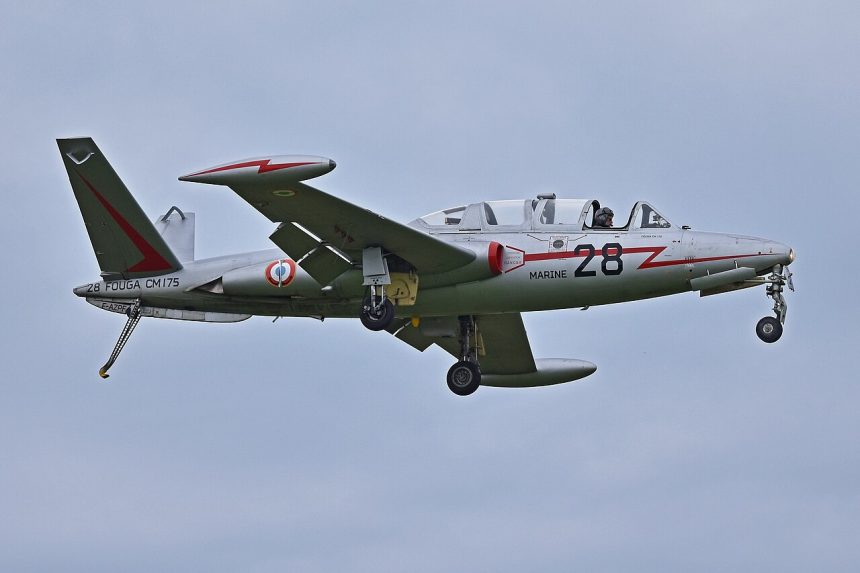


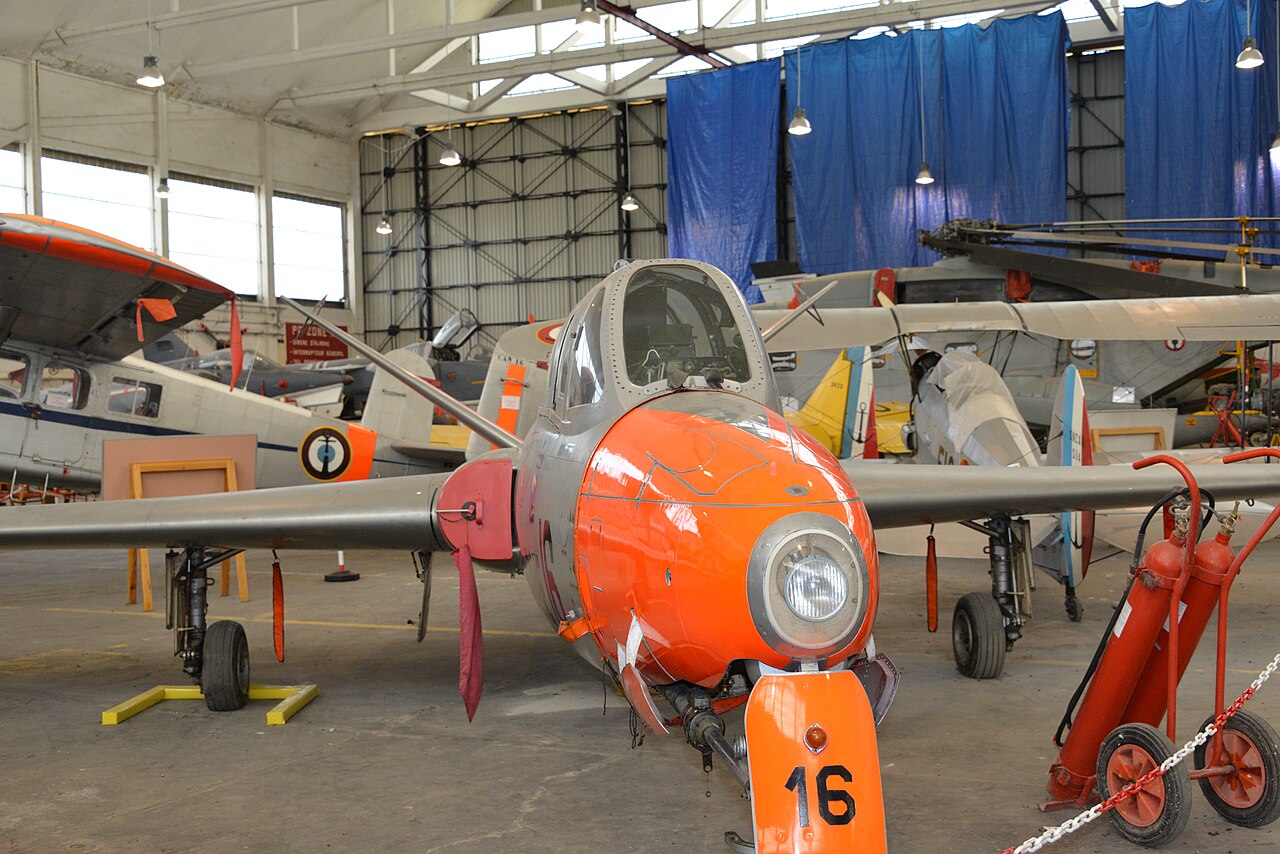
On this day in aviation history, 70 years ago (July 31, 1956), the Fouga CM.175 Zéphyr took flight for the first time. A variant of the popular Fouga CM.170 Magister, the CM.175 began life as the CM-170M Esquif. The CM.170M was developed as a carrier-capable jet trainer for the French Navy. Following the Esquif’s first flight on 7/31/56, the CM.170M would be redesignated as the CM.175 and named the Zéphyr. The CM.175 took part in carrier testing with HMS Eagle (R05) and HMS Bulwark (R08) in August of 1957 and March of 1958.
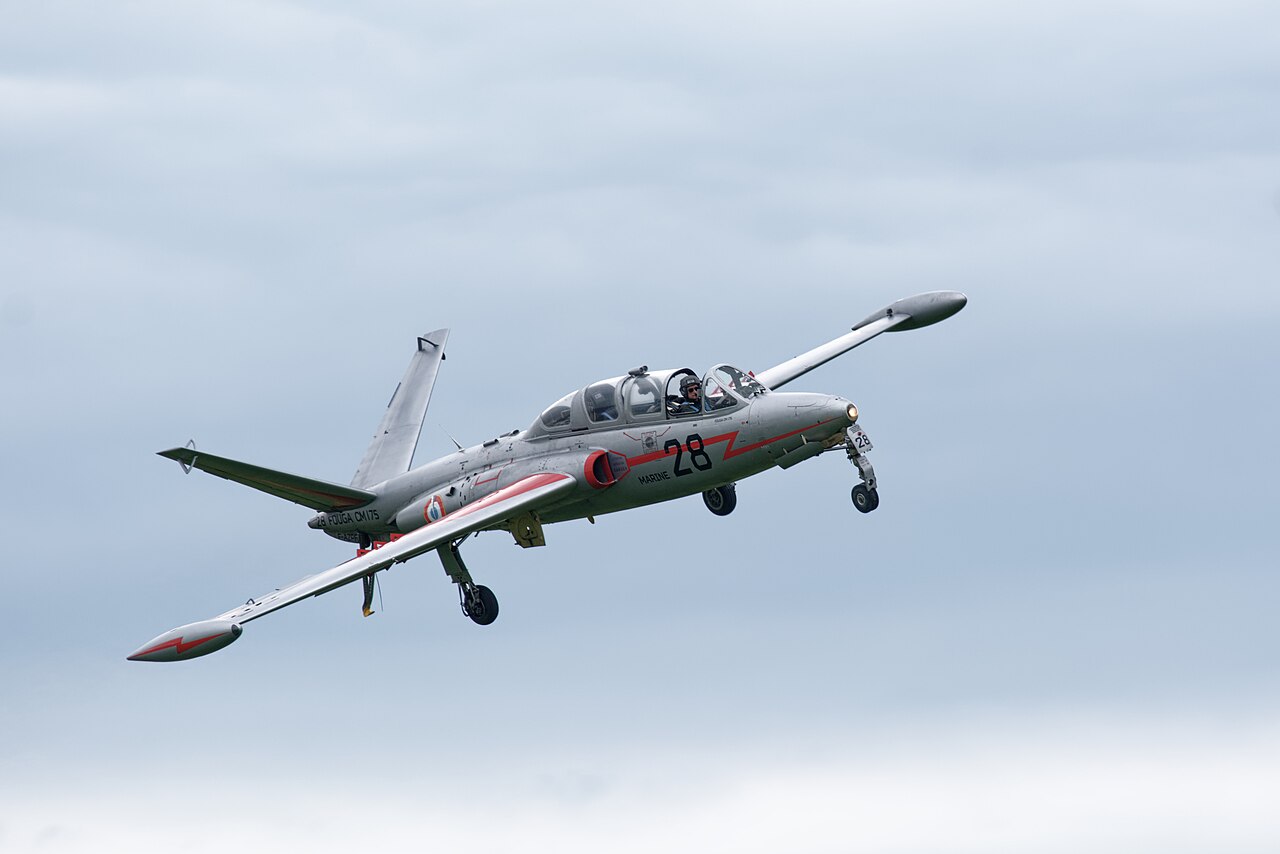
The CM.175 Zéphyr featured upgrades over its CM.170 Magister relative. For carrier operations, the CM.175 was equipped with a tail arrestor hook, reinforced airframe structure, and strengthened landing gear. Ejection seats were not installed in the Zéphyr, but sliding canopy hoods were. These were locked open on takeoff and landings, in the event of a necessary crew egress. Fouga manufactured a total of 32 CM.175s. Beginning in 1959, the trainer began to serve with 59S at the Hyéres carrier landing school. This unit would form the Patrouille de Voltige d’Hyéres aerobatic flight team, operating the Zéphyr in aerial demonstrations.
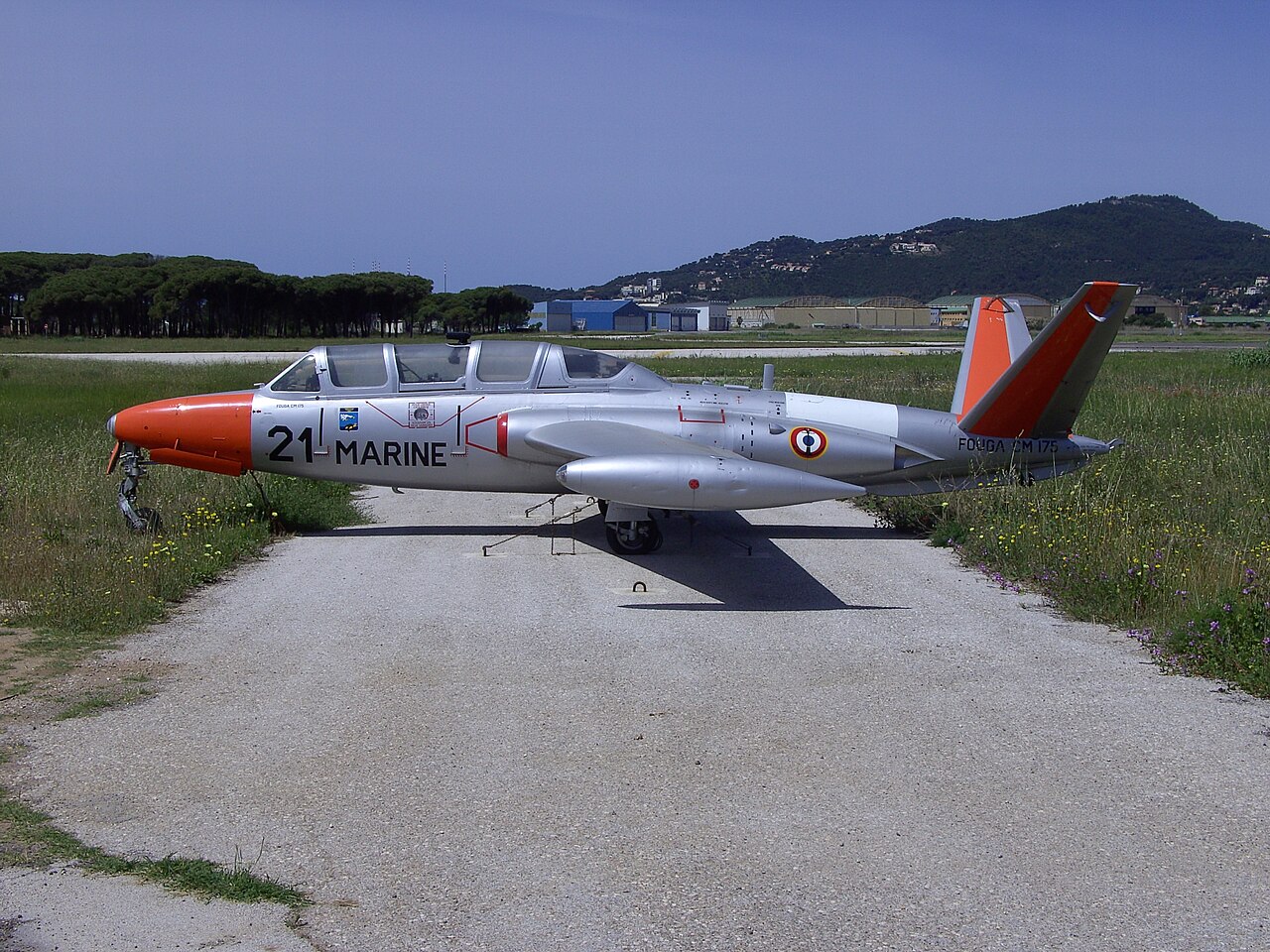
Fouga’s CM.175 was powered by two Turbomeca Marboré IIA turbojet engines, with 882 pounds of thrust per engine. The Zéphyr could attain a maximum airspeed of 444 mph, and reach a service ceiling of 36,000 feet. The CM.175’s range was 499 nautical miles. Armament for the Naval Fouga consisted of one six-round rocket pod, which could be mounted under each wing for the purpose of weapons training. Additionally, twin 7.5 or 7.62 millimeter machine guns could be fitted in the nose; however, these were rarely armed.



I wonder if the French trained field carrier landings on land with an instructor on board, then students went solo out to the ship for actual traps? I fly a CM170 and can’t imagine the 175 had enough performance left with the weight of extra structure plus an IP. It does just fine in normal operations. Great handling characteristics.