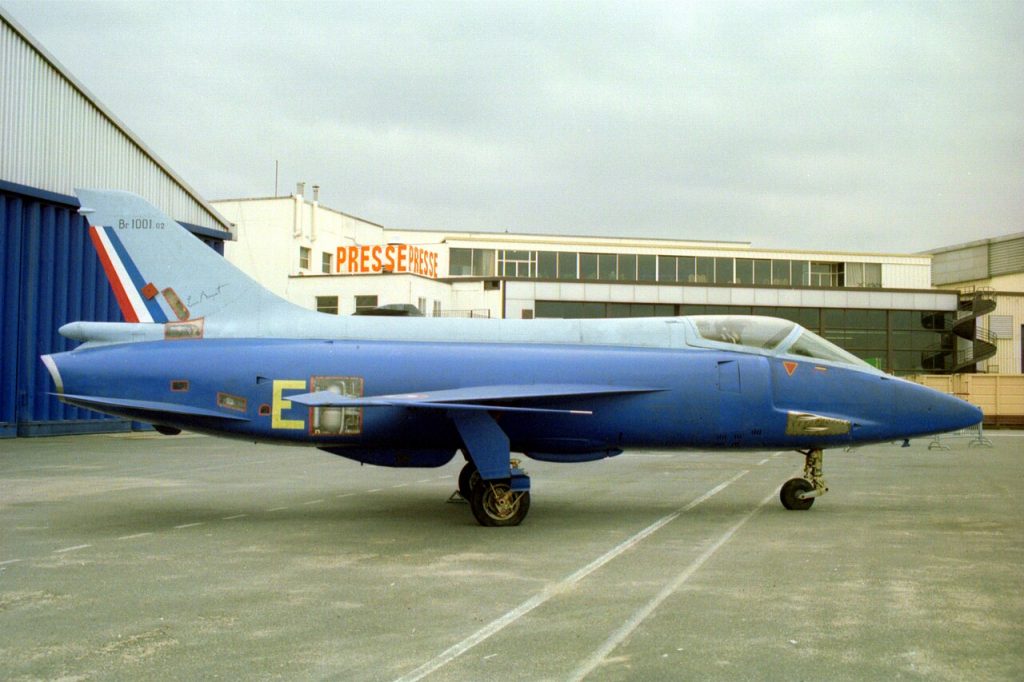
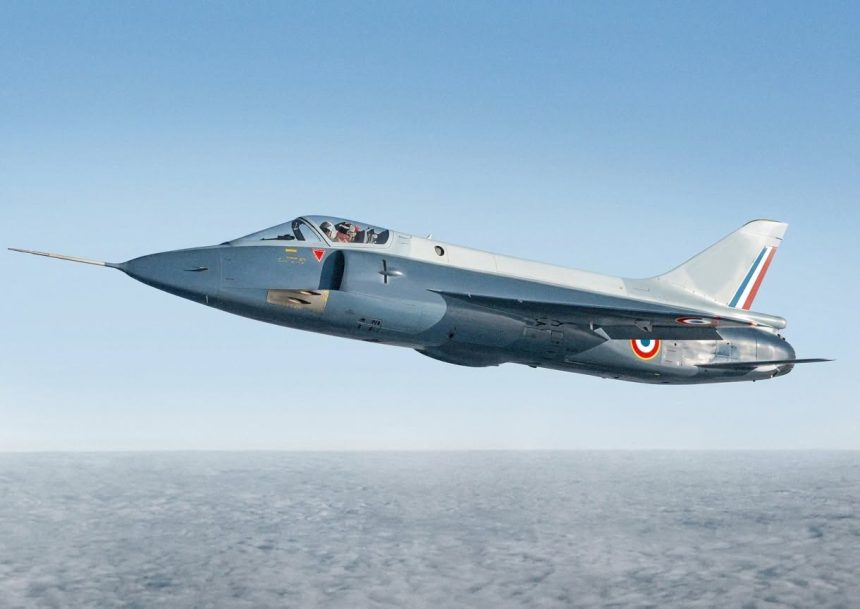


On this day in aviation history, 69 years ago (July 26, 1957), the first flight of the Bréguet 1001 Taon took place. French for “Gadfly,” the Taon was a prototype strike fighter jet that was developed in France to meet the needs of NATO Basic Military Requirement 1. Development of the 1001 began in 1953 with aims to create a compact fighter that could conform to the area rule, reducing the Taon’s drag at transonic airspeeds. While sharing some similarities with the Bréguet 1100 that preceded it, the 1001 was narrower and shorter overall. In 1955, the Taon was named as the leader of NATO’s Basic Military Requirement 1 program. Three 1001s were ordered for flight testing purposes. In the months following the Taon’s first flight, the fighter would be evaluated against the Fiat G.91 and Dassault Mystère XXVI. Ultimately, the Fiat G.91 would win the NATO requirement competition. No other nations expressed an interest in the 1001, as no production orders were made. Bréguet manufactured two Taon fighters before the aircraft’s development ceased.
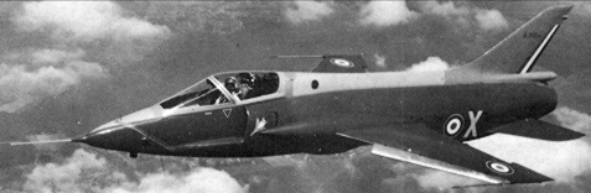
Despite not being produced for militaries in large numbers, the Taon still managed to make a mark on aviation history. On April 25, 1958, the Taon set an international airspeed record of 650.36 mph, while flying on a 620-mile course at 25,000 feet. On July 23, the Taon once again broke the record with an airspeed of 667.98 mph. The Bréguet 1001 featured swept wings and tail surfaces, and was powered by a Bristol Siddeley Orpheus B.Or.3 turbojet engine that produced 4,850 pounds of thrust. Had the Taon been selected for military service with NATO, the fighter would have been armed with four 0.5-inch Colt-Browning machine guns.