







It is a place steeped in 20th-century aviation achievement. 22 miles from London, Hatfield Aerodrome, Hertfordshire, was a truly innovative hub of British aviation for more than 60 years. Hatfield is a remarkable story of civil and military aircraft development, hangar and rocket engine design, and testing. From 1930, Hatfield served as the home production and testing center for the de Havilland Aircraft Company (1920-1963). It oversaw the mass production of the de Havilland DH 82 Tiger Moth, DH 89 Dragon Rapide, and the legendary DH 98 Mosquito fighter-bomber. In the 1930s, it was the venue for thrilling air races. After WWII, Hatfield continued as a pioneering aerospace engineering center, developing the de Havilland DH 106 Comet, the world’s first commercial jet airliner, and rocket engine technology. In 1960, the de Havilland Aircraft Company was bought by Hawker Siddeley and subsequently became British Aerospace (1977). The Hatfield site was closed in 1994 and redeveloped. Before it disappeared, the former airfield was used as a Hollywood film location, including for ‘Saving Private Ryan‘ (1998) and mini series ‘Band of Brothers‘ (2001). In 2003, the site reopened as a campus for the University of Hertfordshire, alongside new housing, offices, and light industrial units. Today, Hatfield’s surviving buildings and a 4-km-long (2.5 miles) heritage trail continue to offer a fascinating glimpse into its proud aviation past.
Origins
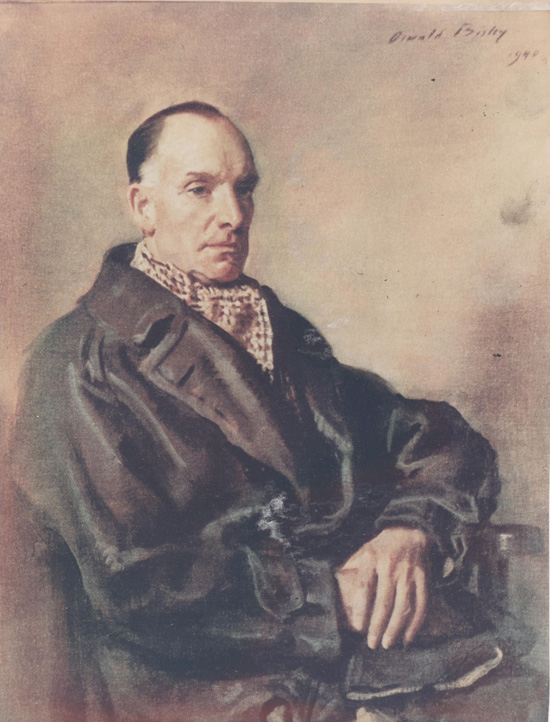
The story of Hatfield Aerodrome began with the phenomenal growth of the de Havilland Aircraft Company. Founded in 1920 by pilot, aviation design genius, and entrepreneur Sir Geoffrey de Havilland (1882-1965), the company initially operated out of Stag Lane Aerodrome in Edgware, North London. By the late 1920s, with commercial and private demand for new biplanes rocketing at home and abroad, the company had outgrown the site. de Havilland purchased some 400 acres of open farmland in Hatfield, Hertfordshire, in 1929, and production shifted to a new purpose-built airfield and factory. The new Hatfield Aerodrome officially opened in 1930. It operated a single-wide grass airfield for the London Aeroplane Club (a popular flying school) and hangars for wood, fabric, and metal biplane manufacturing. In 1934, de Havilland aircraft production took off. By the mid-1930s, de Havilland was booming, with full order books and 900 workers. It became a national aviation manufacturing powerhouse.
Art Deco HQ and Aviation Factory
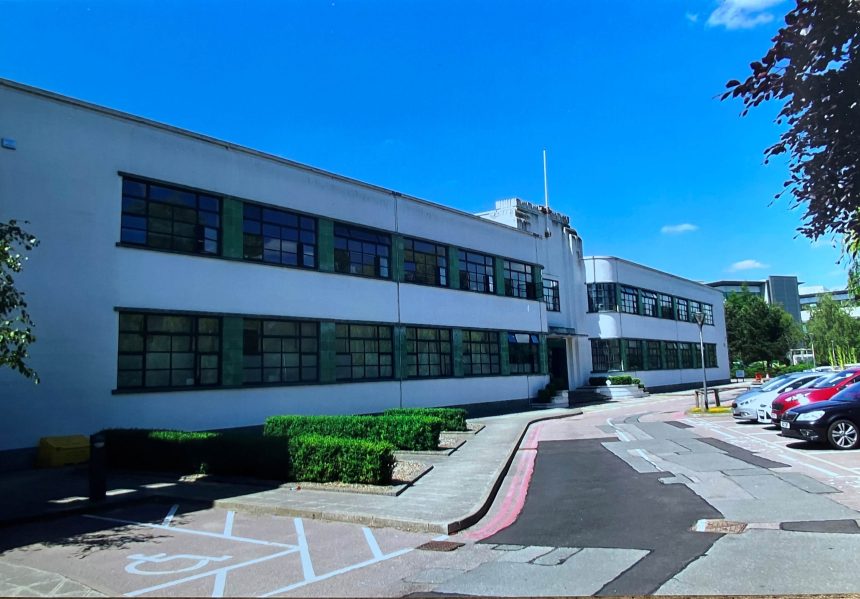
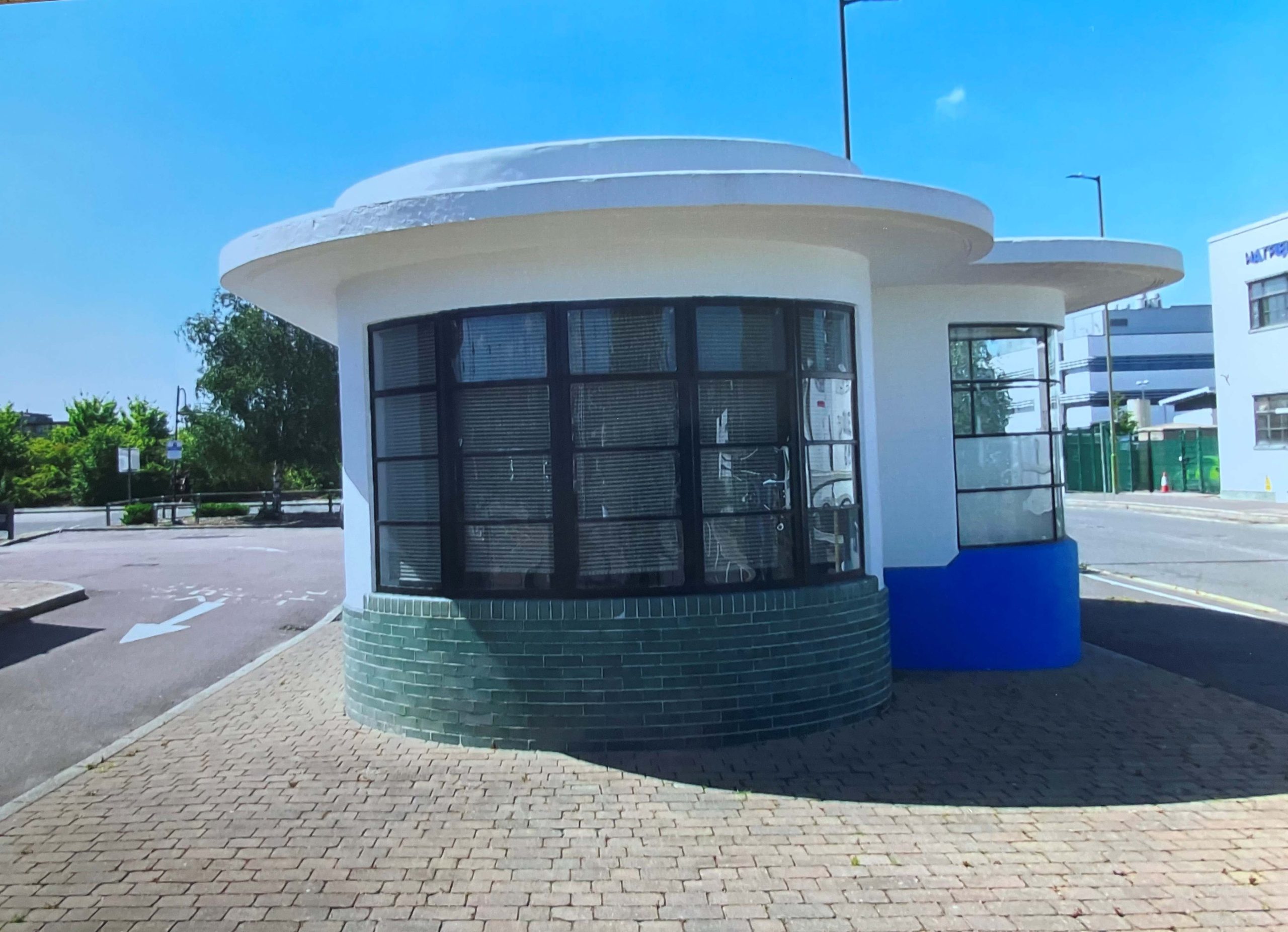
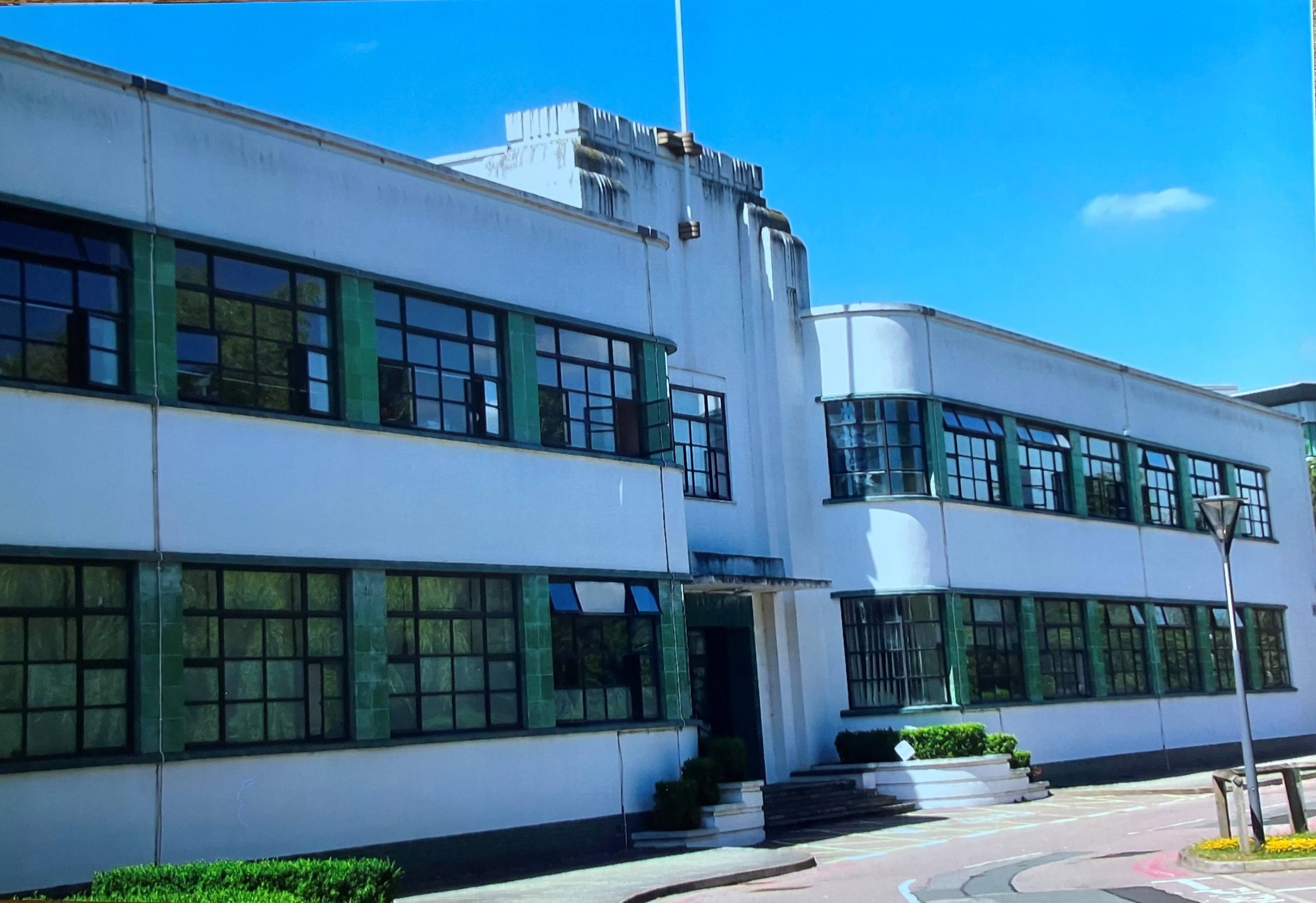
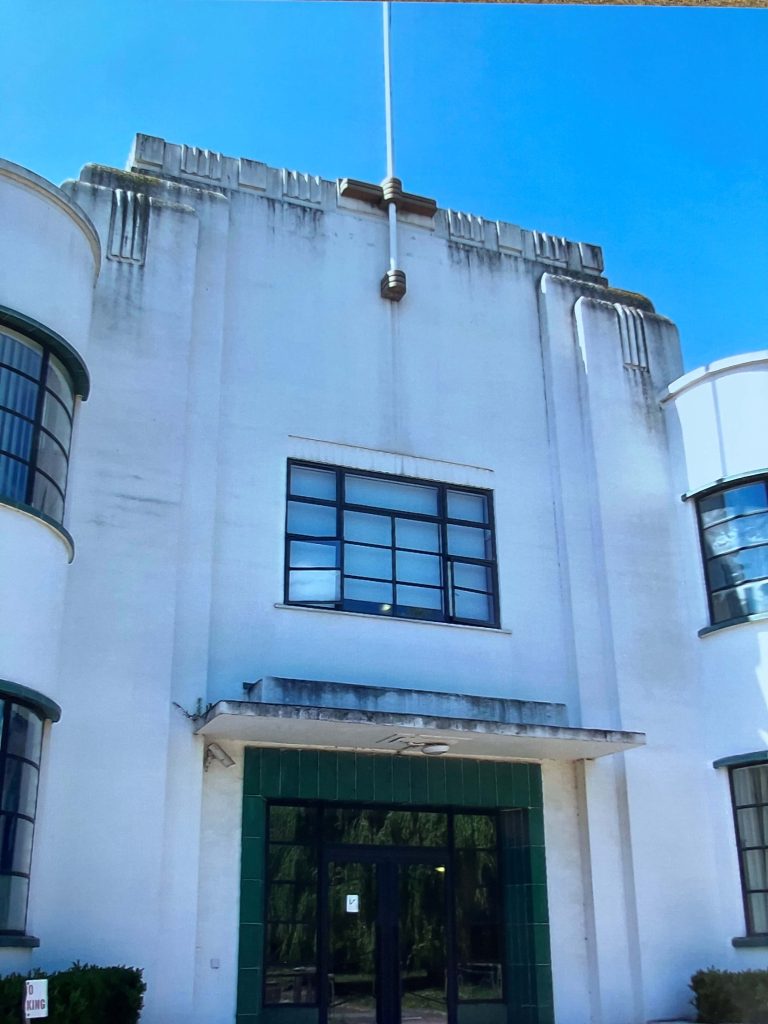
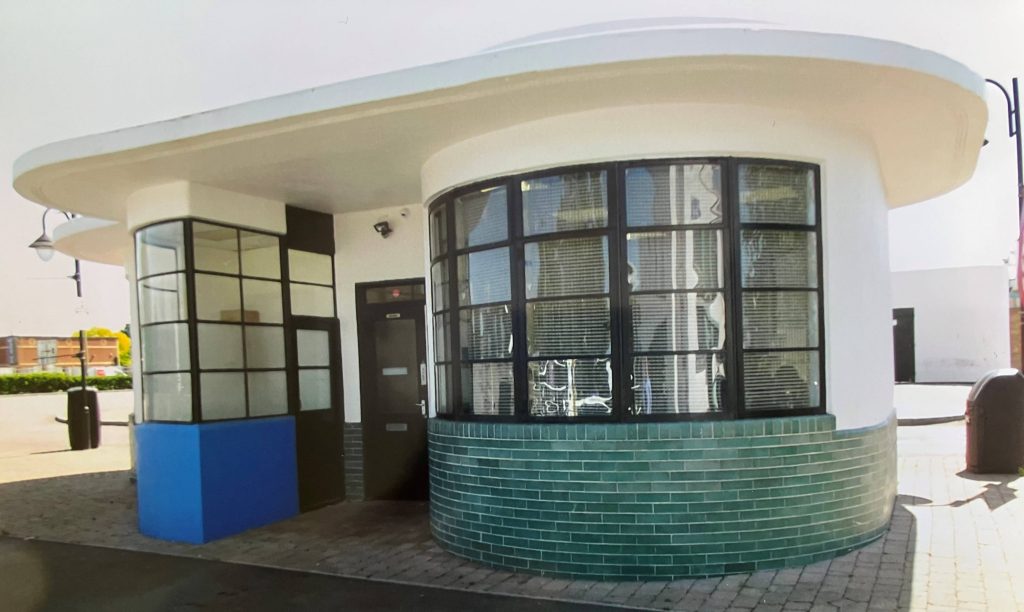
In its day, Hatfield Aerodrome was one of Britain’s finest examples of 1930s industrial Modernism. In 1934, an impressive Art Deco-style headquarters building (Administration Block) was completed, facing the Barnet Bypass (today’s Comet Way on the A1001). Designed by architects James M. Monro & Son, these iconic offices were built with a sweeping white facade, clean horizontal lines and steel-framed Crittall windows. Canteen, restaurant, and personnel blocks were opened alongside in a similar 1930s design. The Administration Block was itself an aerodynamic form. From its stylish wood-paneled boardroom, Geoffrey de Havilland oversaw a revolution in British aircraft manufacturing. Access to the de Havilland factory was regulated by a striking Art Deco gatehouse through which aircraft workers passed daily to workshops, hangars, and offices. The main aircraft produced at Hatfield in the 1930s was the DH 82 Tiger Moth (1931), the primary military trainer for the Royal Air Force (RAF). It entered service with the RAF in 1932. 1,975 Tiger Moths were manufactured at Hatfield and by Morris Motors Limited at Cowley, Oxfordshire (from 1941). A total of 8,800 were built up to 1944 and saw military service until 1952. Of these, 4,000 were produced in Britain. Others were manufactured in Canada, Australia, New Zealand, Portugal, and Sweden. By 1939, 1,378 Tiger Moths were operational. The production line at Hatfield also delivered 346 de Havilland DH 89 Rapides and its later military variant, the Dominie (between 1940 and 1942).
Beacon Innovation and Air Races
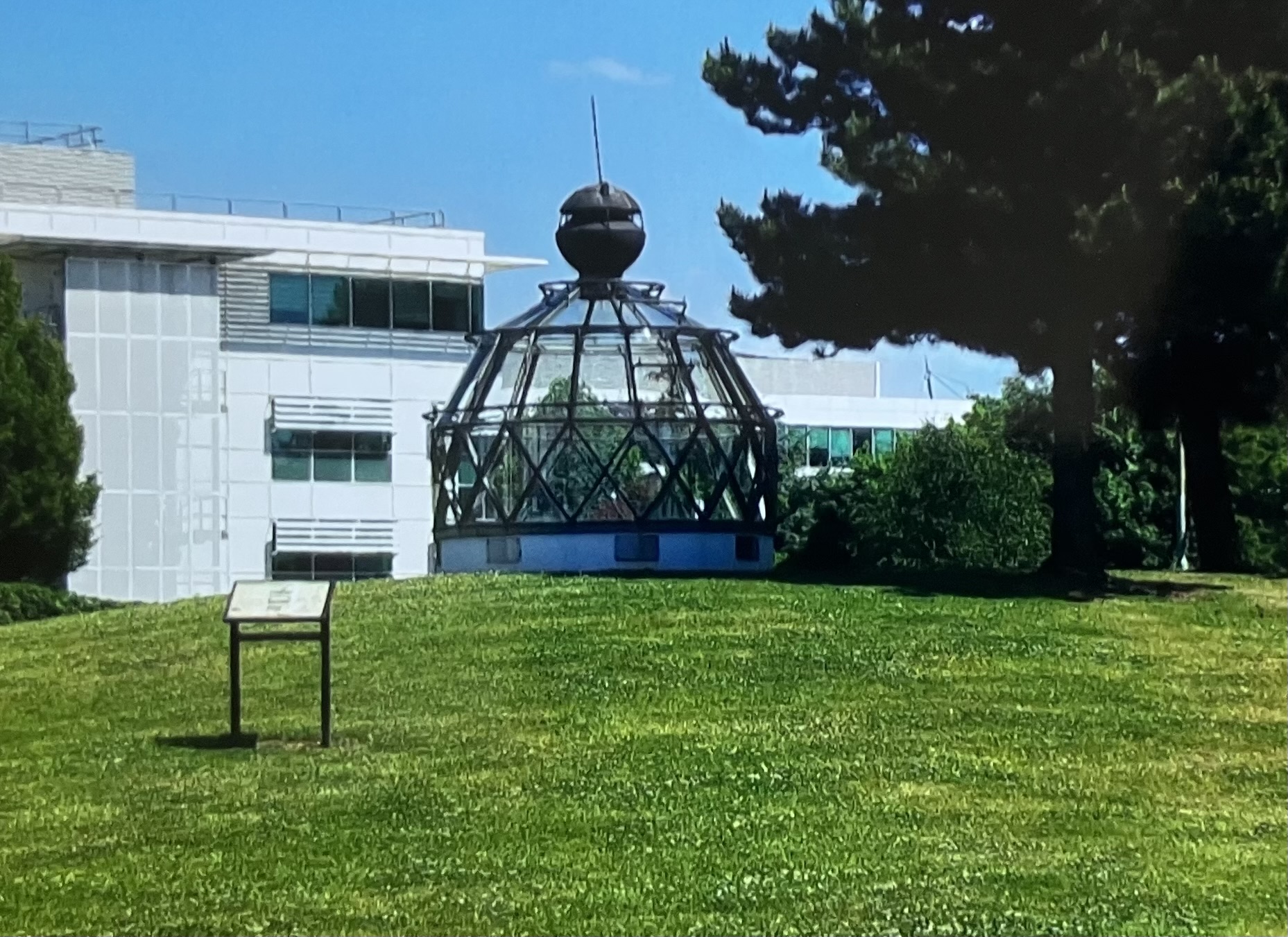
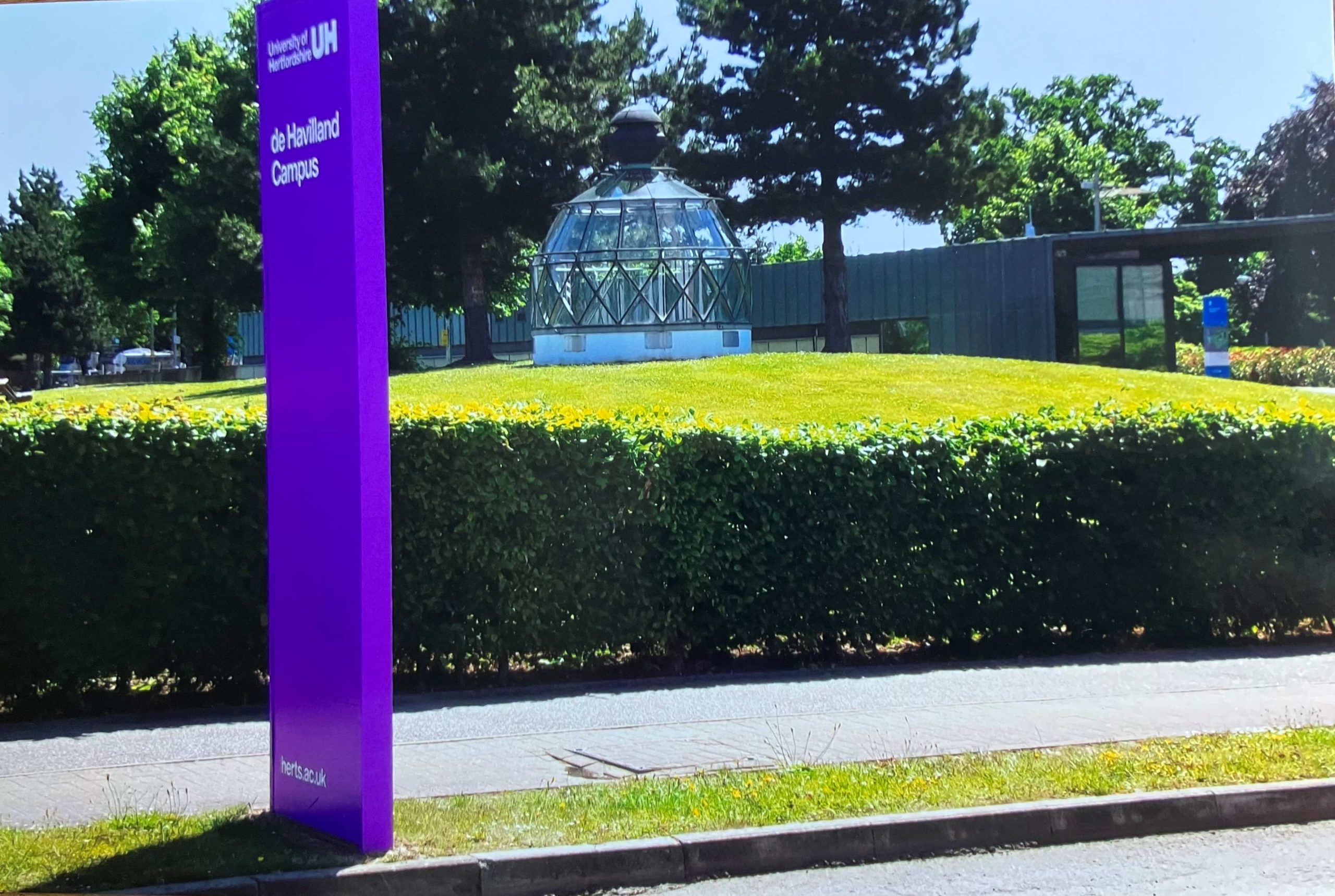
In 1934, at Hatfield, the London Aeroplane Club installed a state-of-the-art Airfield Navigation Beacon on its squash courts. The Beacon – a critical pilot safety instrument, pioneered in Britain at Croydon Aerodrome from 1920 – emitted a brilliant white flashing pulse lasting just under one second, repeating every five seconds. In fine weather conditions, pilots could spot the Beacon from around 38 miles out. In WWII, radar technology replaced visual beacons, although the Beacon remained a legacy fixture on the Aerodrome roof until 1988. In 2011, it was relocated in the grounds of the de Havilland campus of the University of Hertfordshire.
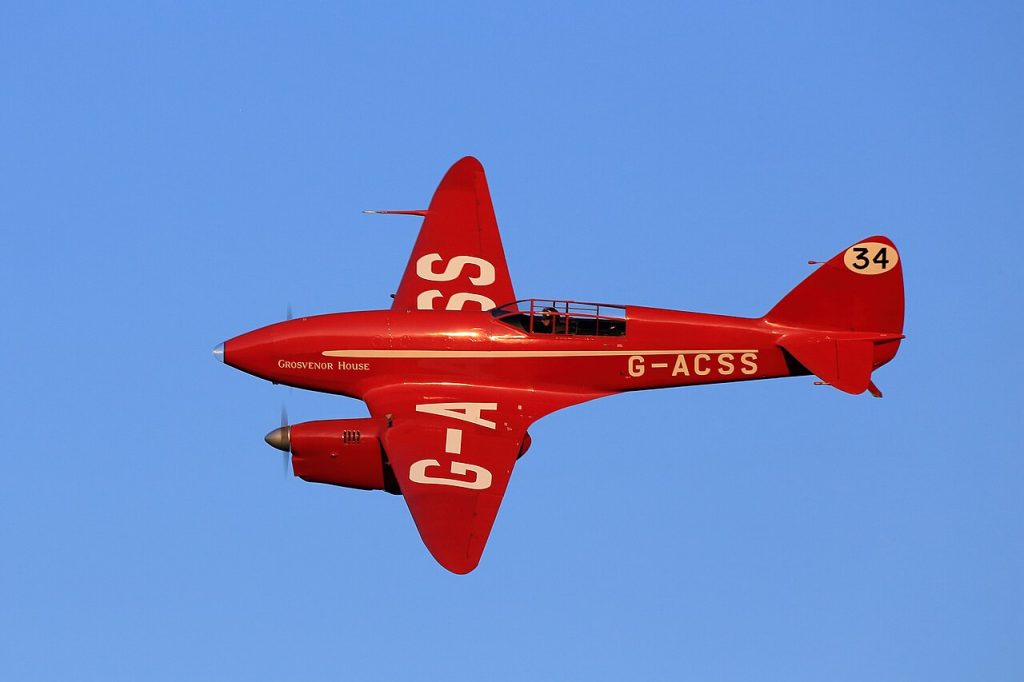
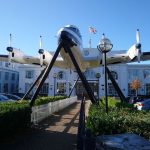
During the 1930s, Hatfield Aerodrome became world-famous for high-speed competitive air racing. The grass airfield regularly hosted prestigious (and wildly popular) national aviation open days, including the King’s Cup Air Race. This cross-country air race, run by the Royal Aero Club Records Racing and Rally Association from 1922, started and finished at Hatfield between 1933 and 1938. It regularly drew pilots, British royalty, and huge crowds thrilled by monoplanes competing at unprecedented speeds. In 1933, the King’s Cup was won by Geoffrey de Havilland himself, piloting a DH 85 Leopard Moth. Such air races also offered live testing conditions for de Havilland’s early high-performance models, such as the sleek DH 88 Comet. This beautiful twin-engined racer, purpose-built at de Havilland Hatfield for the 1934 MacRobertson Air Race from England to Australia, soon captivated the public. It flew at a maximum speed of 220 mph and was the first de Havilland aircraft with retractable landing gear. In 1934, the same year the Hawker Hurricane Mk 1 took its first test flight, a bright scarlet G-ACSS Comet named Grosvenor House, flown by pilots C. Scott and T.C. Black, won the England-Australia race. The flight time was 70 hours and 54 minutes. Today, the aircraft is kept airworthy by the Shuttleworth Collection in Bedfordshire. A small replica of Grosvenor House is also mounted on a carved pylon outside the Comet Hotel, Hatfield (1936), close to today’s University of Hertfordshire campus. Together with seaplane racing in the 1930s, the aviation design methodologies refined during these air races provided the technical foundation and testing for later military aircraft, including the Hawker Hurricane, Supermarine Spitfire, and de Havilland DH 98 Mosquito. Meanwhile, Hatfield was the haunt of many air celebrities. Regular visitors included air record breaker Amy Johnson (member of the London Aeroplane Club), actresses Olivia de Havilland, Joan Fontaine (Geoffrey de Havilland’s cousins), and actor Ralph Richardson (owner of a DH 60 Gipsy Moth).
Mosquito and Vampire Roost
At the outbreak of WWII in 1939, Hatfield’s de Havilland factory shifted entirely to military production. The white administration block was promptly repainted in camouflage colors. In 1940, Hatfield entered the Luftwaffe’s bomb sights. As a manufacturing center, it was an obvious target. On 3 October 1940, a single Junkers JU 88 bombed the site, killing 21 workers, injuring 70, damaging the factory, and disrupting assembly. The most important wartime British aircraft breakthrough at Hatfield was the DH 98 Mosquito fighter-bomber (maximum flight speed 400mph). Designed in secret at Salisbury Hall (four miles west of London Colney), to minimize enemy targeting, its final assembly and rigorous operational flight testing took place at Hatfield. Famously, the Mosquito, known as the “Wooden Wonder,” was built largely from balsa, plywood, and birch to conserve strategic metals. Powered by two 1,710-hp Rolls-Royce Merlin 76/77 V12 engines, it became one of the fastest and most versatile aircraft of the war. Workers at Hatfield built over 3,000 operational Mosquitos (4,700 others were built at other British sites and in Australia and Canada). The last production Mosquito was completed at Hatfield in 1949.
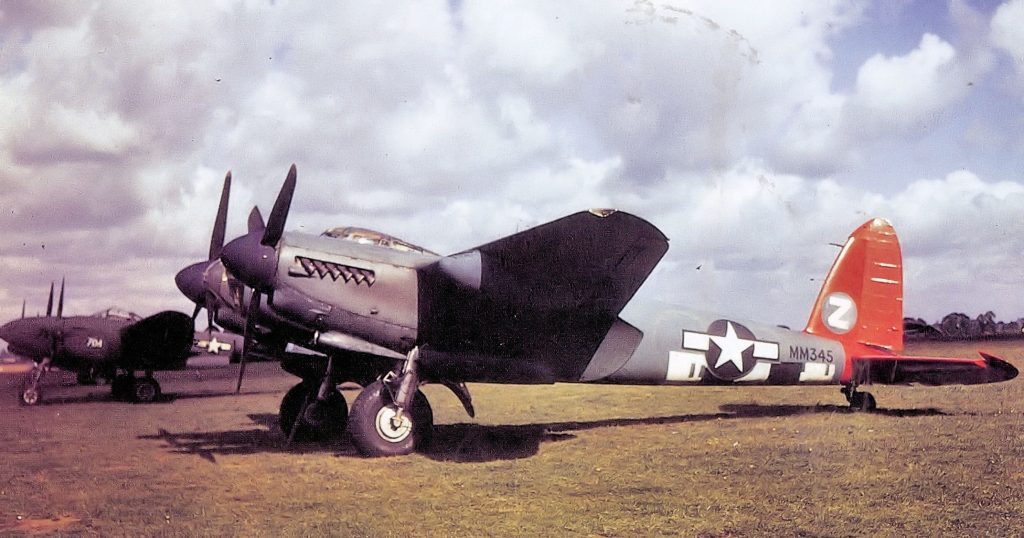
At Hatfield, the RAF operated its No 1 Elementary Flying Training School (formed in 1935). Here, over 3,000 pilots gained their wings from 1942 to 1947. Also based at Hatfield was Air Transport Auxiliary (ATA) unit No 5, whose female pilots flew newly built aircraft to operational RAF bases across Britain throughout the war. In 1943, Hatfield was the venue for the first test flight of the DH 100 Vampire twin-boom tail jet fighter, flown by test pilot Geoffrey de Havilland Jr. From 1944, the de Havilland Engine Company also tested and developed its Ghost turbojet engine at Hatfield (which later powered the de Havilland DH 112 Venom and prototype de Havilland DH 106 Comet airliner).
Jet Age and DH 106 Comet
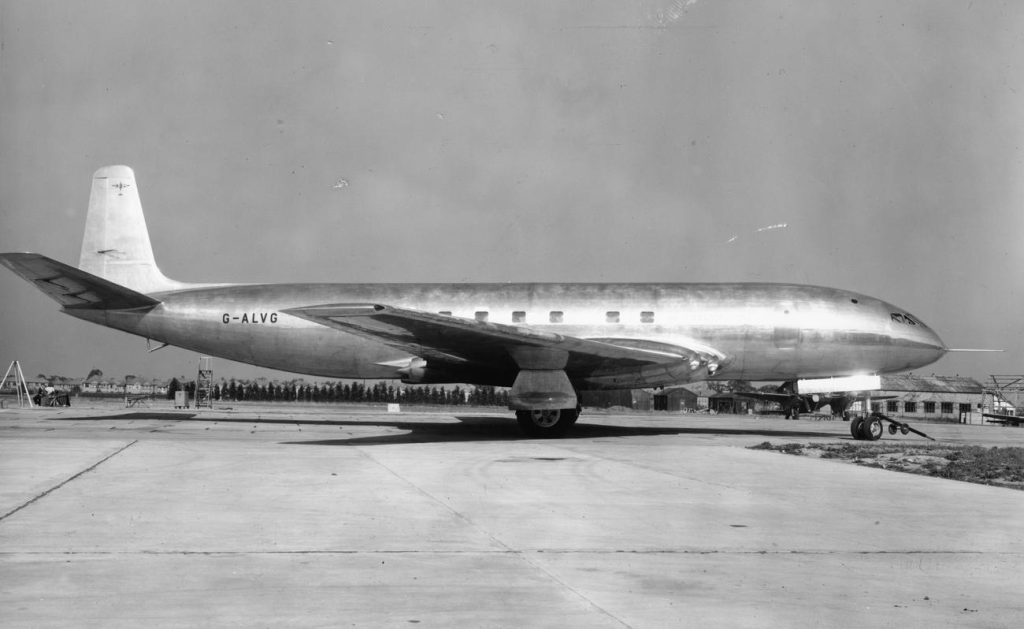
After WWII, Hatfield entered the Jet Age. In 1947, a new concrete runway opened to accommodate heavier aircraft. In 1948, chief test pilot John ‘Cat’s Eyes‘ Cunningham took off from Hatfield in DH 100 Vampire F.1 TG/278 to achieve a world record altitude of 59,446 feet. On 27 July 1949, Cunningham piloted a silver DH 106 Comet 1 from the Hatfield runway for its maiden flight. As the world’s first commercial jet airliner, the Comet revolutionized global travel by cutting flight times in half and introducing pressurized cabins for smoother, higher-altitude commercial flights. It entered service with British Overseas Airways Corporation (BOAC) in May 1952. The promise did not last. Metal fatigue tragedies during 1953-1954 grounded the Comet fleet, and it was superseded by the US-built Boeing 707 from 1958. Yet the failure of the Comet, the great hope of postwar British civil aviation, did not deter the engineers at Hatfield. The rigorous structural testing and subsequent redesigns conducted at Hatfield had established modern commercial aviation safety standards. The site expanded. A new design block and a revolutionary flight-test hangar, next to an integrated Control Tower and fire station, were opened at Hatfield in 1954. This new hangar was designed to house jet airliners under climate control and tight security. Measuring 200 by 300 feet, in 1954, it was the largest single aluminum structure of its type in the world. In the 1950s, Hatfield was among several British factories producing the successor to the Tiger Moth, the DHC1 Chipmunk RAF trainer (around 1,000 were built in the UK). The factory also produced the DH 110 Sea Vixen and DH 112 Venom twin-boom tail fighters and DH 114 Heron airliners. The de Havilland Aeronautical School (1949) at nearby Astwick Manor gave apprentices world-class aviation training. By the 1960s, Hatfield employed some 10,000 aviation workers.
Rocket and Missile Testing
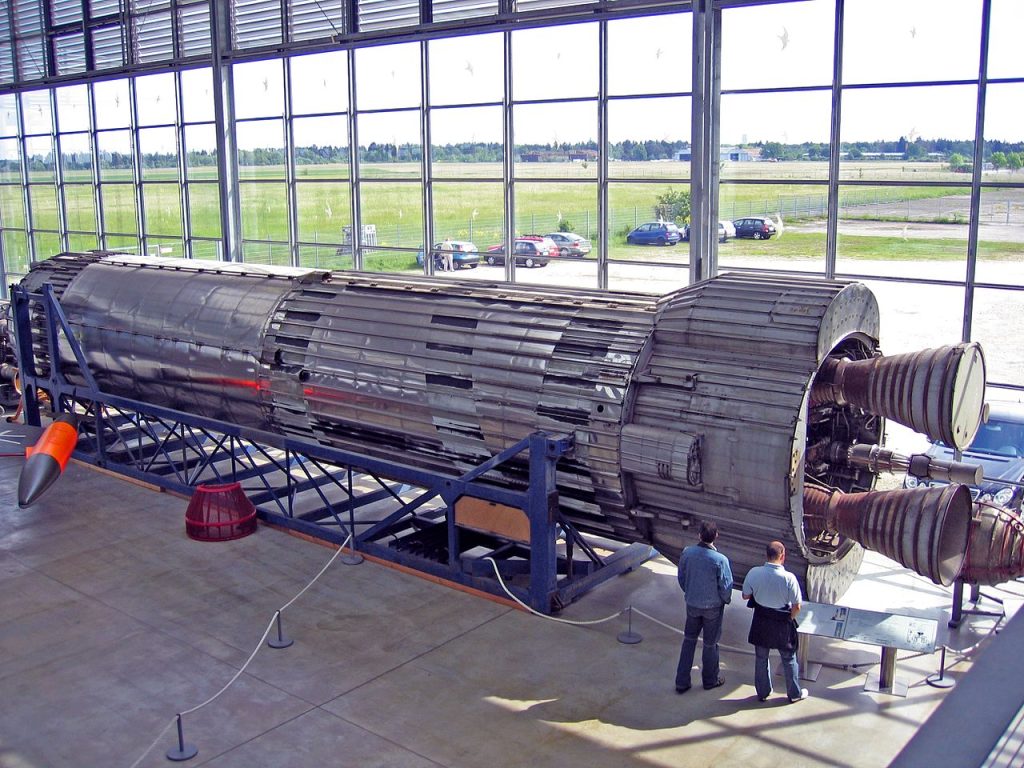
From 1952, the de Havilland Propeller Company began missile, engine, guidance, and space rocket exploration at Hatfield. At the Aerodrome’s northern end, a top-secret facility was developed for testing liquid-fueled rocket motors and guided weapons. Key projects included the Firestreak infrared air-to-air missile for DH 112 Venom aircraft in 1958, and development of the hydrogen peroxide and kerosene Sprite and Spectre rocket engines. From 1957 to 1960, the Blue Streak liquid oxygen and kerosene missile was tested, using aluminum rocket towers at Hatfield. It evolved into a component of early European satellite launch vehicles tested in Australia, but never became operational. The project was terminated in 1973.
Hawker Siddeley, British Aerospace, Closure
From 1960, corporate rationalizations transformed the British aviation market. de Havilland was absorbed into Hawker Siddeley Aviation, before merger into the nationalised company British Aerospace (BAe) in 1977. In 1965, Hawker Siddeley opened Europe’s largest wind tunnel at Hatfield to test Vertical Takeoff and Landing (VTOL) operations, including the prototype Hawker Siddeley Harrier. Among aircraft tested and produced at Hatfield in the 1960s and 1970s were DH 121 Trident airliners and DH 125 and HS 125 business jets (renamed BAe 125s from 1977). A total of 117 Tridents and 1,852 125s were built. Under BAe, Hatfield remained a hectic center of aviation production, serving as the primary design and final assembly point for the BAe 146 regional airliner (dubbed the “Whisper Jet” due to its four quiet turbofan engines). The BAe 146 was Britain’s most successful home-grown jet airliner. A total of 221 were built between 1983 and 1992. To support the 146 program, BAe constructed a large, bespoke final assembly hall at Hatfield in 1987. By the early 1990s, British Aerospace, Hatfield, employed around 15,000 skilled workers, serving as the dominant employer for the Hatfield new town area.
But market conditions, catastrophic financial losses, and industry restructuring in the early 1990s marked the end for British Aerospace at Hatfield. In February 1992, BAe announced it was transferring all future BAe 146 assembly to Woodford, Greater Manchester. It cut 47% of its UK workforce. In September 1992, BAe further announced that all design and manufacturing operations at Hatfield would cease. The factory shut in 1993, and the airfield officially closed its runways in 1994, bringing an end to more than six decades of historic aircraft operation and production. The local Hertfordshire community was the loser.
Hollywood Interlude: 1990s Filming
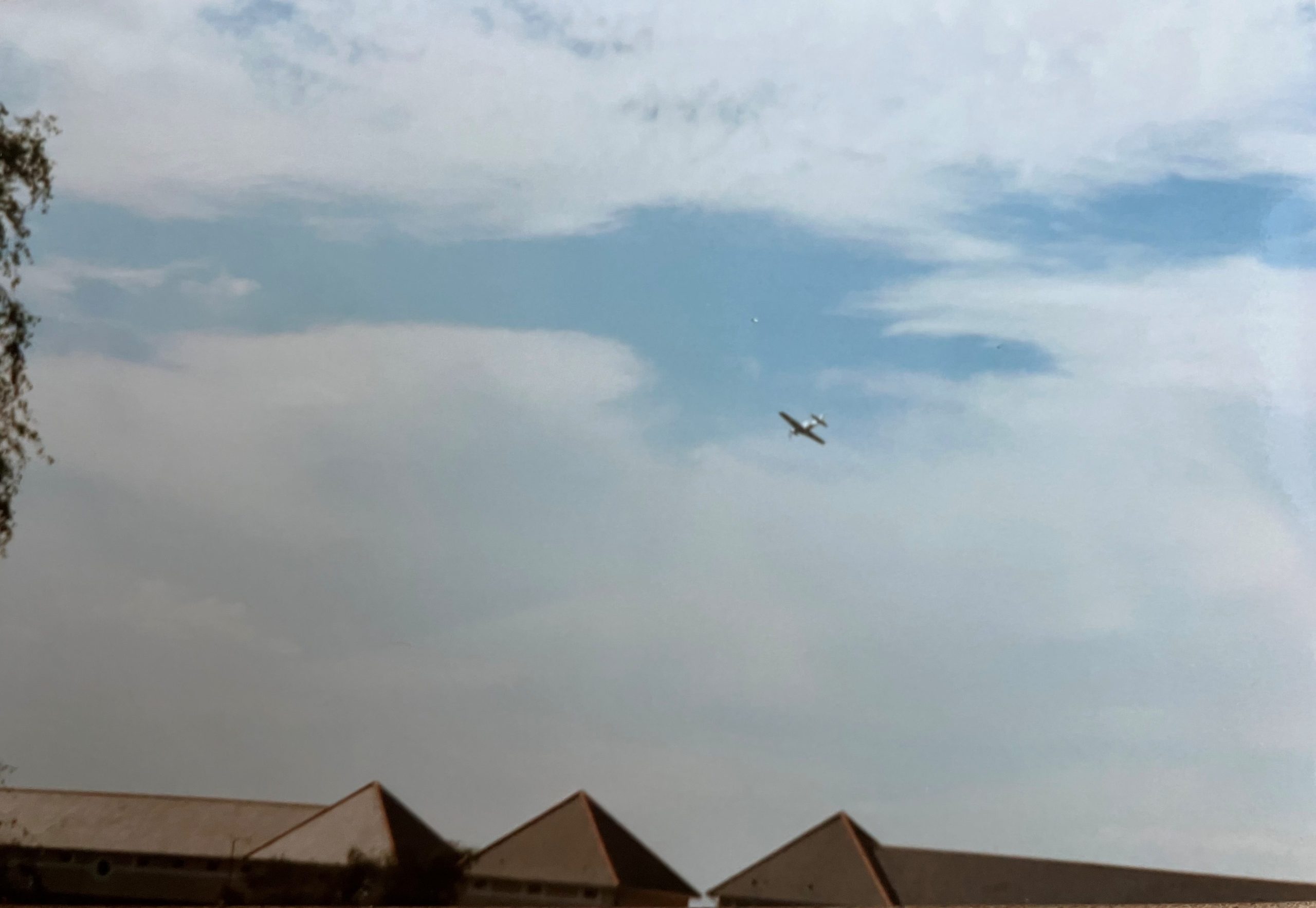
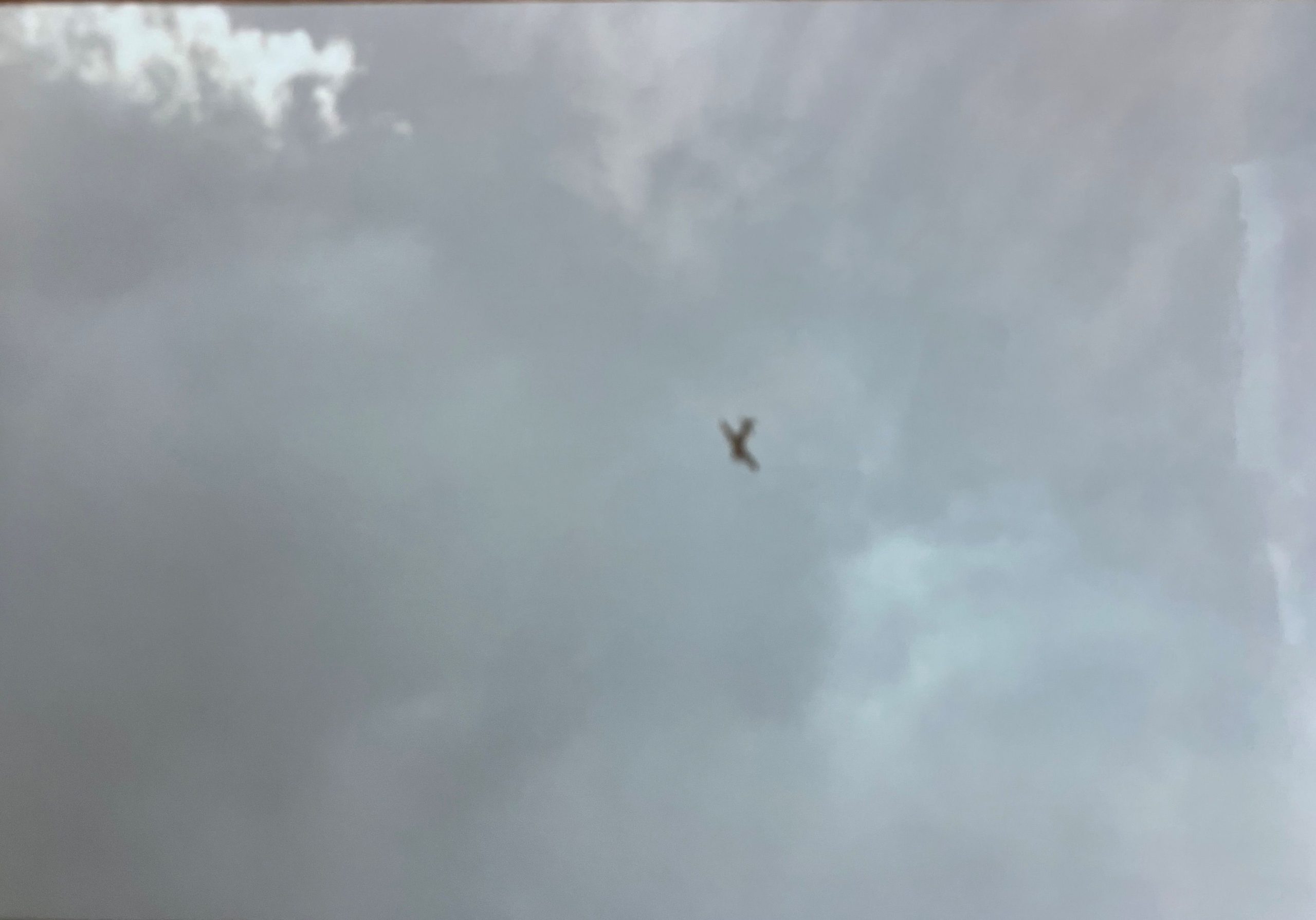
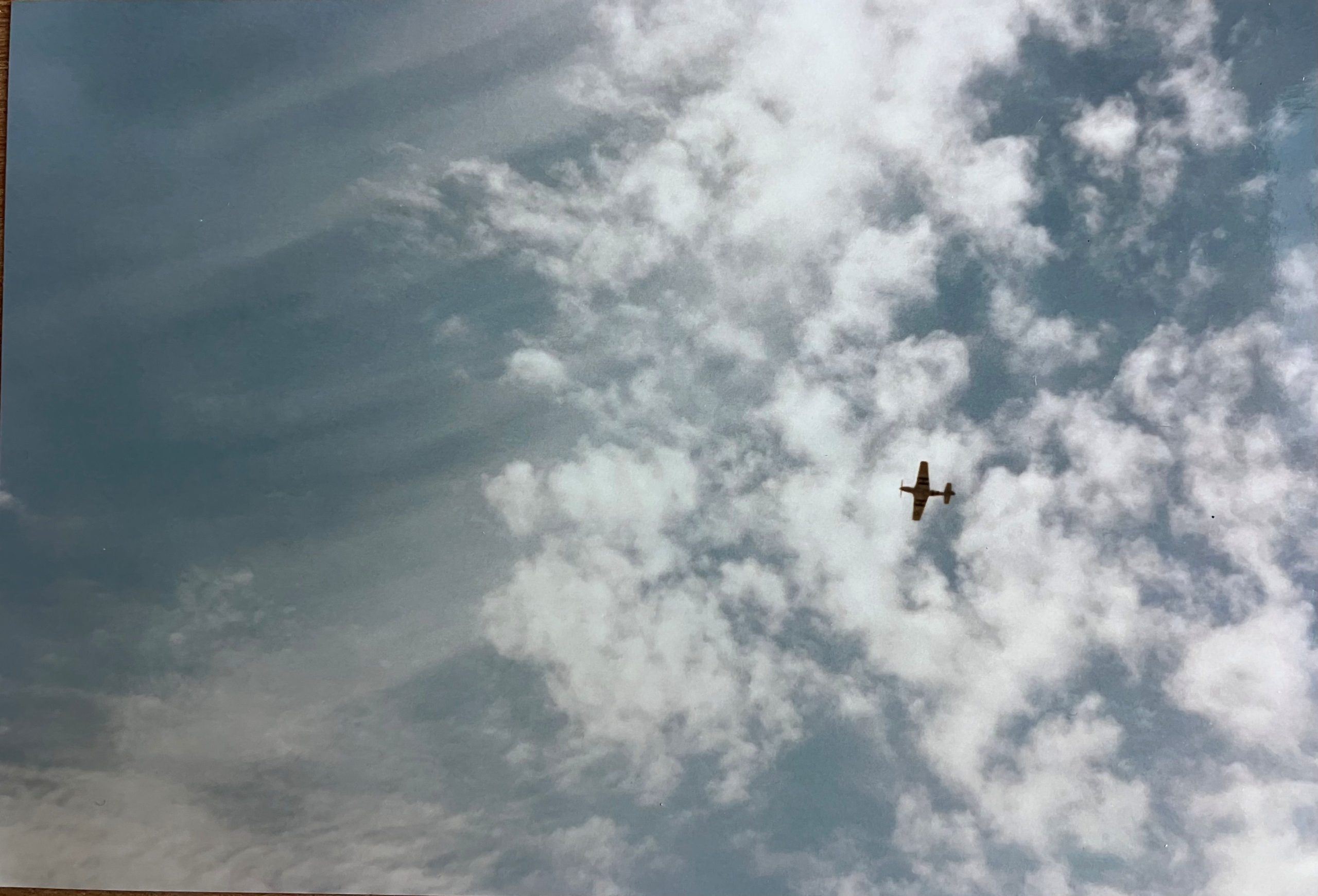
In its heyday, Hatfield Aerodrome provided filming locations for ‘The Sound Barrier‘ (1952), the British aviation drama directed by David Lean. After British Aerospace’s depressing Hatfield closure in 1994 and its redevelopment, silent runways and derelict hangars again caught the attention of Hollywood film directors. Director Steven Spielberg used the Hatfield site to film parts of Saving Private Ryan (1998). Production crews constructed a full-scale set of a fictional, bombed-out French town close to the old airfield taxiways. In summer 1997, local residents, including my own late father, Gareth Thomas, then a principal lecturer at the University of Hertfordshire, were treated to the spectacle of two P-51D Mustangs repeatedly diving low and banking sharply over Hatfield, as part of the film’s climactic sequences. The abandoned site was also used as a film set for the HBO miniseries, Band of Brothers (2001). Military camps, slit trenches, and European villages were constructed across the fields adjoining Smallford, close to the airfield.
Hertitage Trail
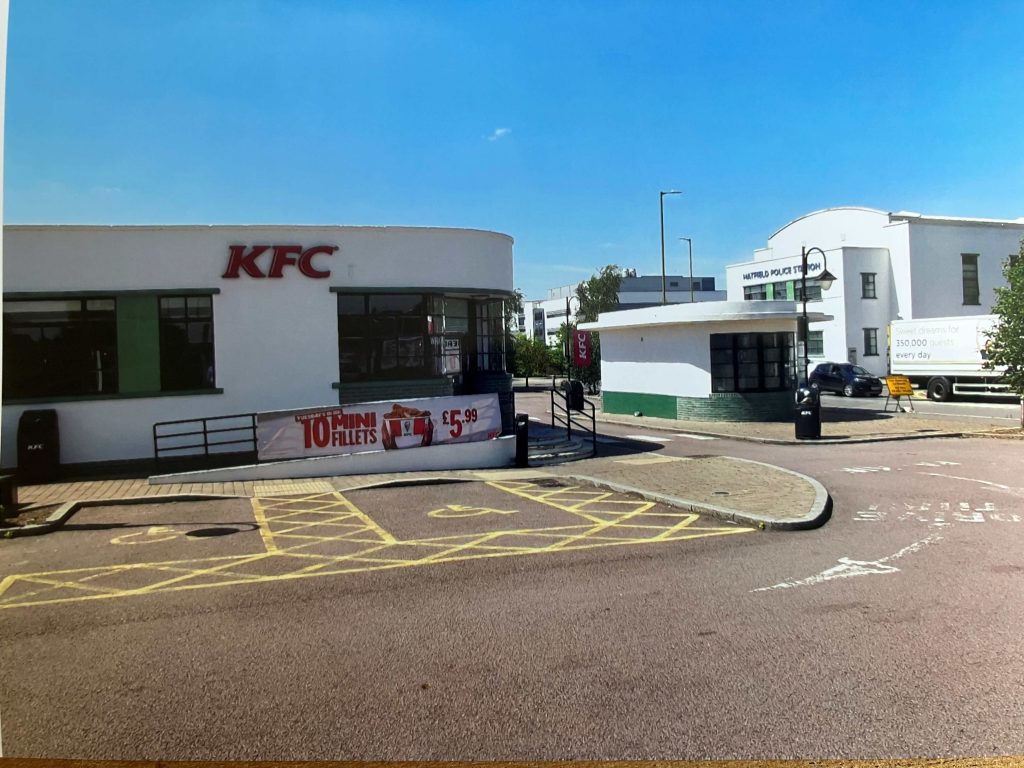
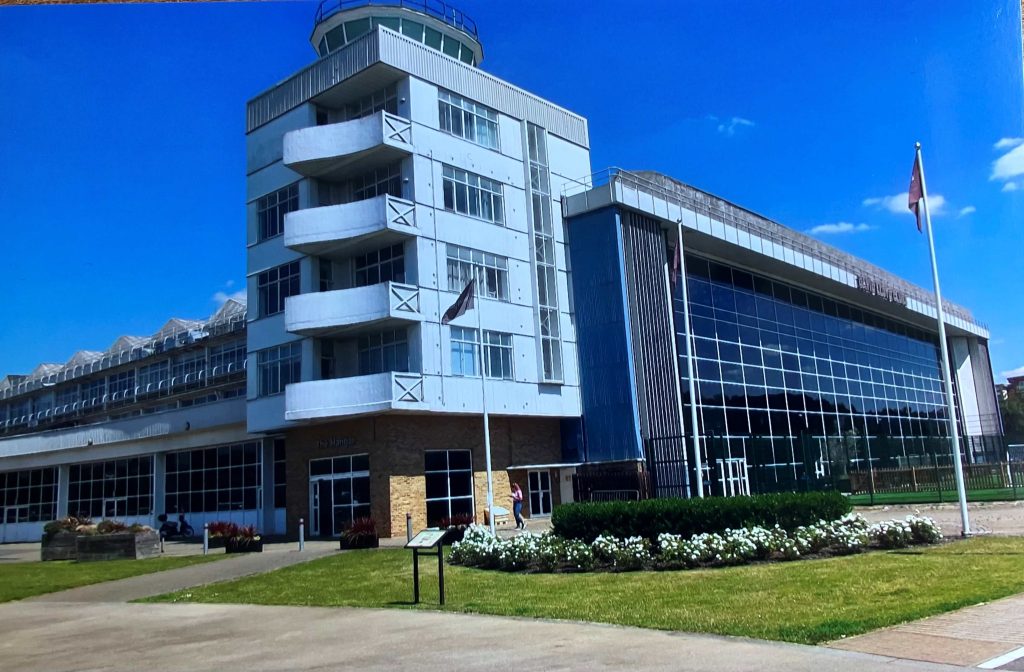
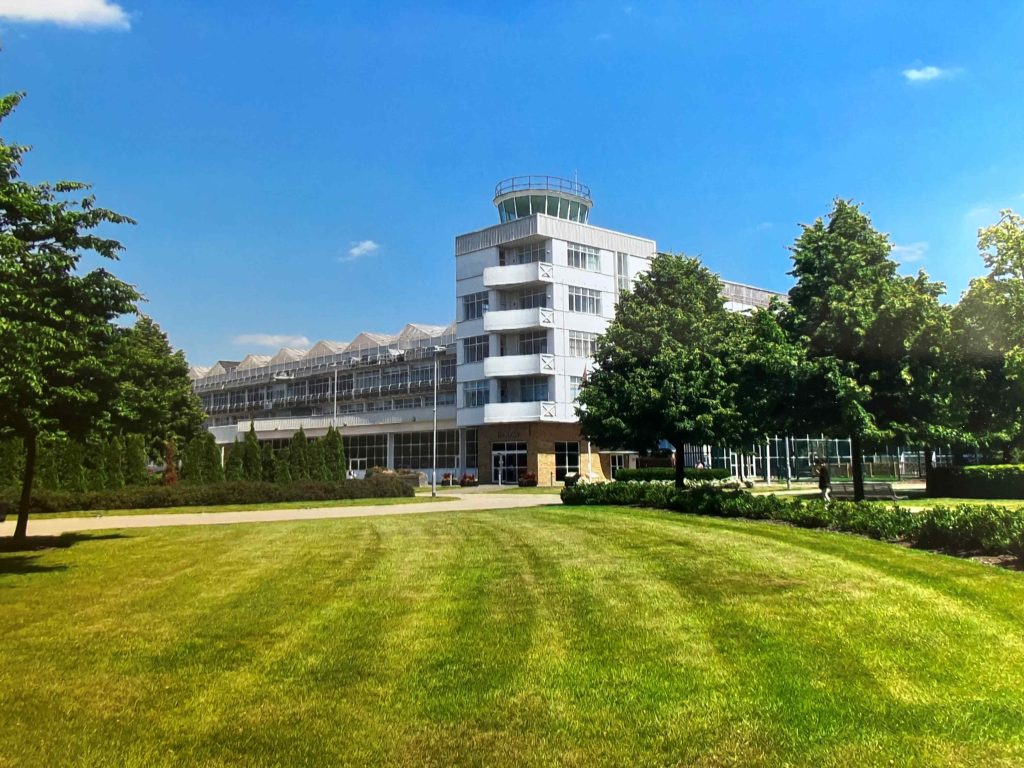
Today, the Hatfield Aerodrome Heritage Trail provides a self-guided walking journey across the campus, the local Ellenbrook Fields, and the airfield perimeter. The trail is four miles long and usually takes around 90 minutes to complete. There is also a shorter trail option covering the main locations. It begins at the University of Hertfordshire’s de Havilland campus (2003), marked by the fully restored, original 1934 Airfield Navigation Beacon, back in place since 2011. The trail has 10 detailed information boards, guiding walkers past the old runway positions, historic hangars, and rocket testing areas. In 2026, the site forms part of the Hatfield Business Park and Bishops Square office development. Local street names recall their de Havilland heritage, including Tiger Moth Way, Mosquito Way, Albatross Way and Comet Way. The 1950s Flight Test Hangar & Control Tower still remain (now a leisure center), giving an immediate impression of mid-century aero engineering and design excellence. Strikingly, Sir Geoffrey de Havilland’s Administration Block (now Grade II listed) and its canteen and restaurant blocks were repurposed in 2008 to become Hatfield Police Station, facing Comet Way. Its de Havilland boardrooms are still in use. Less happily, the former Art Deco-style gatehouse, through which thousands of aviation workers once streamed daily, is now a fast food outlet. A short ‘Walk of Memories‘ outside the Police Station details the many remarkable aircraft types produced in Hatfield over the decades. Hatfield’s surviving aviation structures bear proud testament to Britain’s extraordinary 20th-century air and engineering history. Their remarkable legacy offers much for visiting vintage aviation enthusiasts to appreciate. To read more about the Hatfield Aerodrome, click HERE.






I was one of the last employees to.leave the site on 24 December 1993. I worked in the wind tunnels and before that, on the RR test site. The tunnel and RR archives are at the Airfield Research Groups facility at Alconbury. Having written up the history of the tunnels, my long term project is to write up the history of the test site.
Thank you for this great article on a truly historic location!