






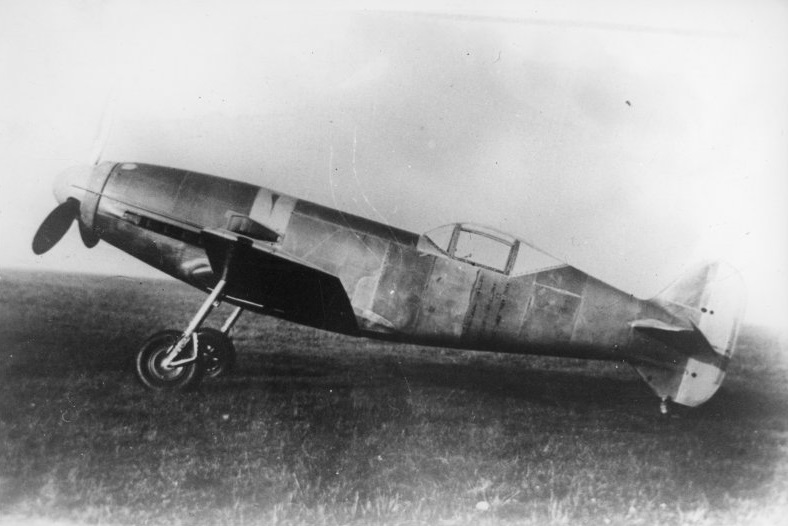

On this day in aviation history, 88 years ago (August 1, 1938), the Messerschmitt Me 209 took to the skies for the first time. This single-engined racing aircraft was a pre-war design, originating in Germany. The aircraft was originally designated as the P.1059 during its initial development phase, which began in 1937. The Me 209 was a brand new racer, not developed from earlier Messerschmitt designs. The focus of the Me 209 was to break international airspeed records.
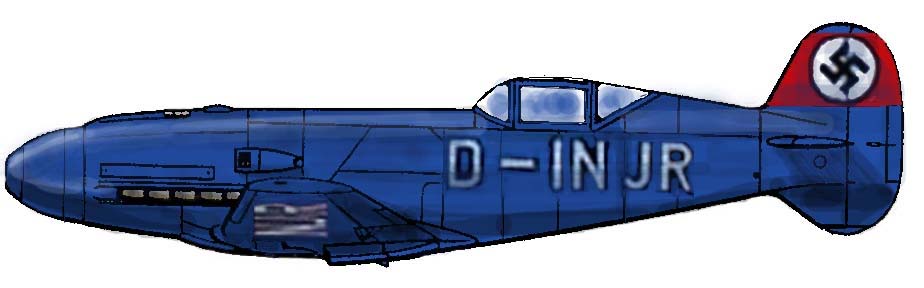
Messerschmitt utilized a compact design with the Me 209. Despite the military equipment ramp-up seen in Germany at the time, the Me 209 was designed without armament. The racer did feature a steam cooling system and an ingenious cross-shaped tail section. Following the first flight of the original V1 prototype, three additional Me 209s were manufactured. The first prototype broke the international speed record on April 29, 1939, with an airspeed of nearly 469 miles per hour. This record would not be officially topped until 1969.
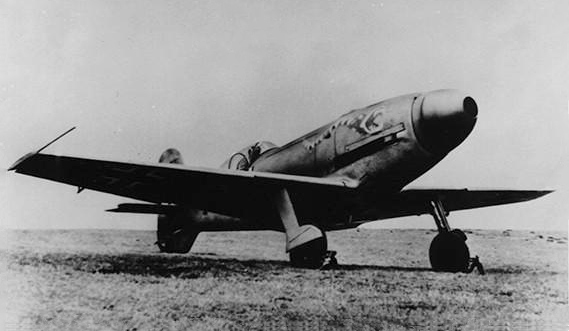
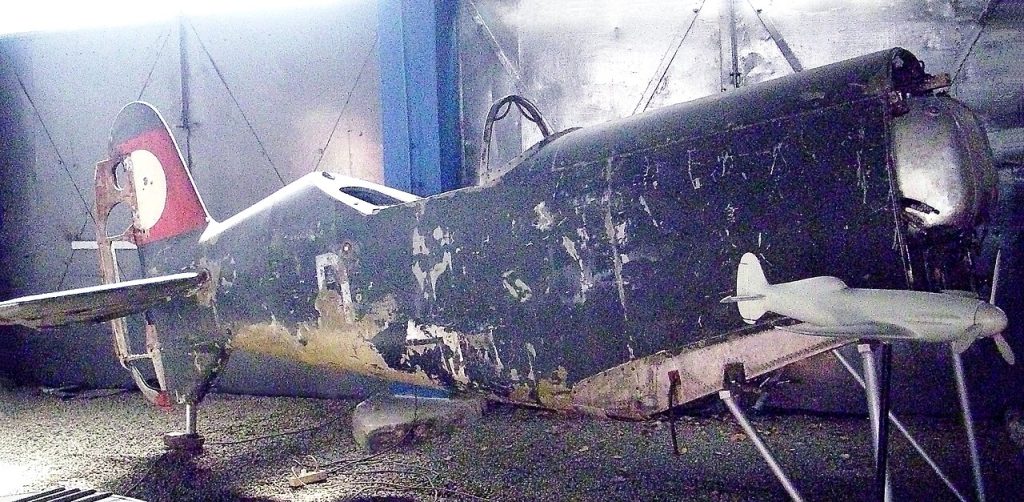
The impressive top-end speed of the Me 209 made the aircraft a lucrative propaganda tool, often being promoted in step with the Me 109 as a warning to those who might oppose the Luftwaffe. For propaganda purposes, the Me 209 was designated as the Me 109R. In reality, the Me 109 and Me 209 had little in common, despite using the same 1,775-horsepower Daimler-Benz DB 601ARJ inverted V-12 engine. A second Me 209 design would be developed closer to the end of WWII, but the only commonality between the early and later aircraft was the name and manufacturer. The “second design” was intended to be a fighter to replace the Me 109, and only four examples were built. The original Me 209 V1 had a wingspan of 25 feet 7 inches, was 23 feet 9 inches long, and stood 10 feet 6 inches tall. The fuselage of the first record-setting Me 209 V1 survives today and is currently on display at the Polish Aviation Museum in Kraków, Poland.






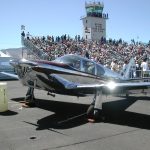
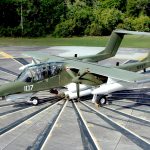
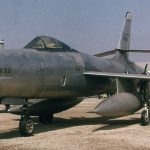


A Gloster Meteor F MK4 reached a speed of 606.4 mph on 14 November 1945. So the record only stood for 6 years and not the 31 years claimed.
“On 26 April 1939, this same aircraft established a new international speed record of almost 756 km/h (469 mph); this record was not officially broken by another piston-engined aircraft until 16 August 1969.”
https://histaviation.com/messerschmitt-me-209.html
Just how many propellers did the Gloster have?
Just how many propellers did the Gloster have?
I believe they are referring to piston-engine speed record, broke in 1969 in a modified Grumman F8F Bearcat
I believe the meteor was jet? 209 was piston.
Meteor is a jet dummie
The Grumman F8F set the new piston powered propeller driven speed record at Reno.
The altitude density at Reno is around 0.8 atmospheres (dependant on temperature).
It is common knowledge among aircraft engineers and enthusiasts that higher elevation equals lower friction equals higher speed. (That is exactly why airliners fly at 35,00 feet.)
This lower air density at Reno would have significantly reduced air friction.
Yes lower air density at Reno would also reduce power, but the super charger boost would have been adjusted to develop as much power as the engine could deliver – so atmospheric pressure would not be a factor in engine power output (for both the ME209 and the Bear Cat).
It would be interesting to see what speed the F8F could achieve at sea level.