






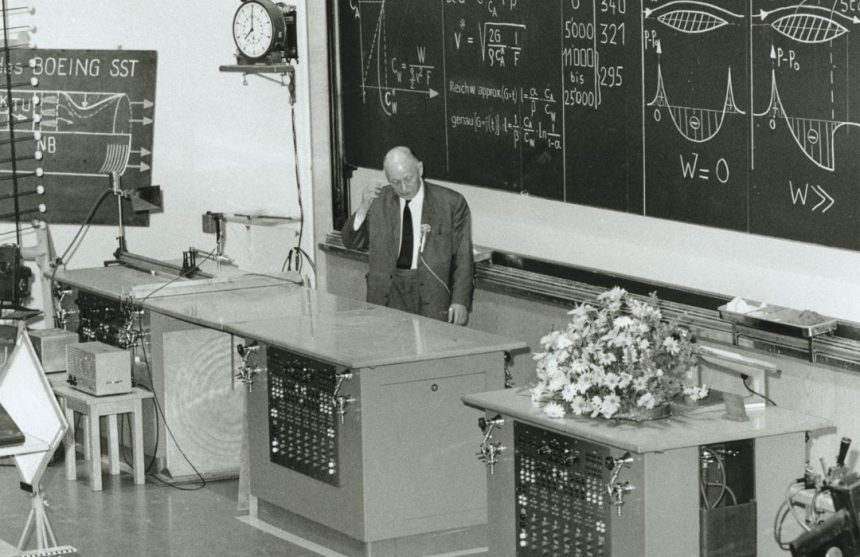

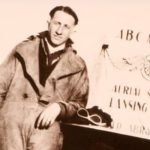
Today, the speed of missiles, rockets, spacecraft, and even aircraft is measured in terms of their respective Mach numbers. The categories, such as subsonic, supersonic, and hypersonic, are defined by the Mach number. But not many know the person behind the proposal of the Mach number. He was Jakob Ackeret, born in Zurich on March 17, 1898. In 1920, he graduated in mechanical engineering from ETH Zurich. In the autumn of 1921, he joined Professor Ludwig Prandtl in Göttingen, Germany, focusing on aircraft aerodynamics. In 1922, he took charge of aerodynamic testing while continuing his studies in mathematics and physics. From 1925 to 1926, he led the expansion of the Kaiser Wilhelm Institute for Flow Research, now the Max Planck Institute for Dynamics and Self-Organisation. He used the new facilities to study gas dynamics and cavitation, the creation of cavities. However, his main focus was on the challenges of flying at high speeds. Jakob Ackeret completed his PhD at ETH Zurich in 1927. In 1927, Ackeret returned to Switzerland and became the chief hydraulics engineer at the Laboratory of Hydraulics and Flow Machines at Escher Wyss AG in Zurich. Jakob Ackeret successfully used modern aerodynamics to design turbines.
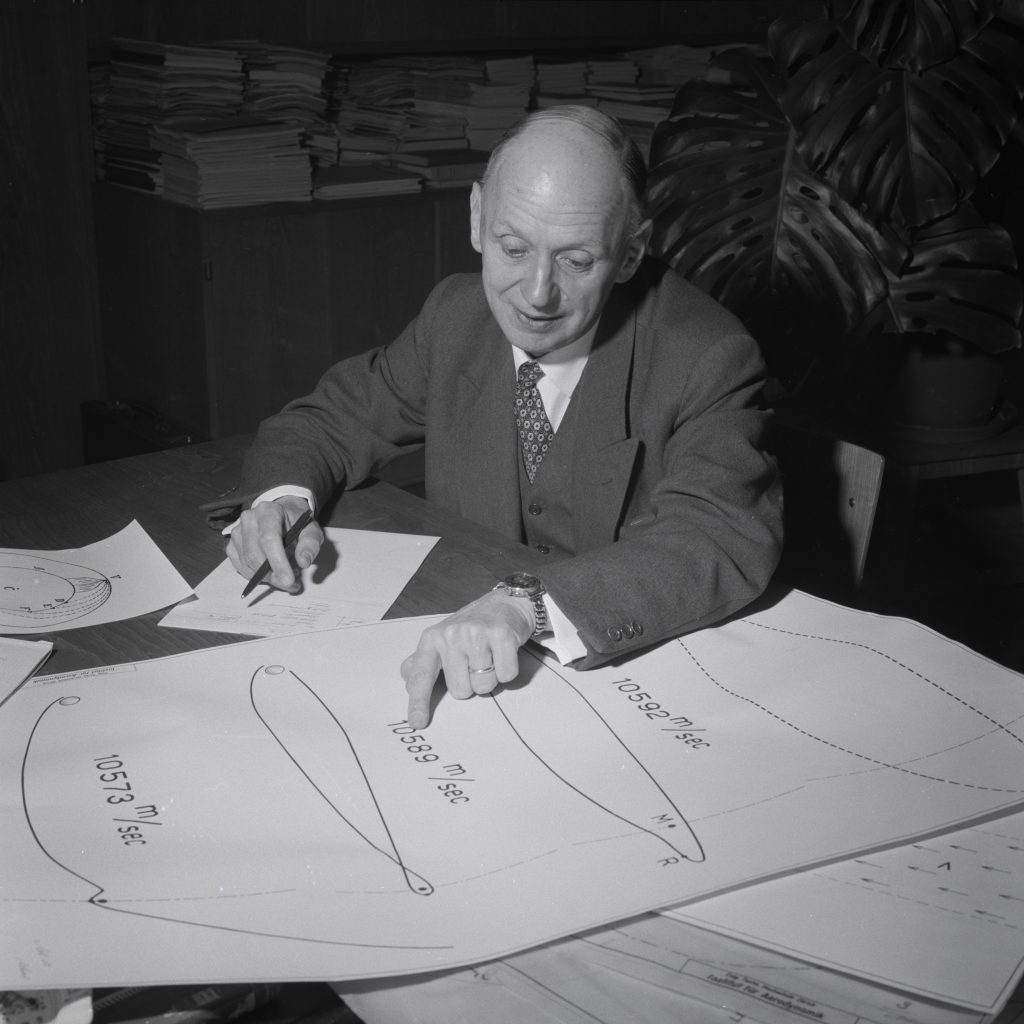
In 1931, Jakob Ackeret became a professor of aerodynamics at ETH Zurich, where Wernher von Braun was one of his students. Ackeret was an expert in gas turbines and focused on propellers and high-speed propulsion problems. While at ETH Zurich, he worked on practical engineering problems, including the design of variable-pitch propellers for ships and airplanes. His most important invention was a closed-circuit gas turbine, developed with C. Keller and known as the Ackeret-Keller gas turbine cycle. Jakob Ackeret made important contributions to the study of supersonic aerodynamics. He led early research on calculating lift and drag on a supersonic airfoil. He also suggested using the term “Mach number” to describe multiples of the speed of sound. He became a full professor at ETH Zurich in 1934 and also served as the dean of the newly constructed Institute of Aerodynamics. Under his guidance, the institute built the world’s first closed-circuit supersonic wind tunnel. Researchers used the facility to study the airflow around airfoils at speeds near the speed of sound. Jakob Ackeret and his team made important discoveries in aerodynamics and fluid physics.
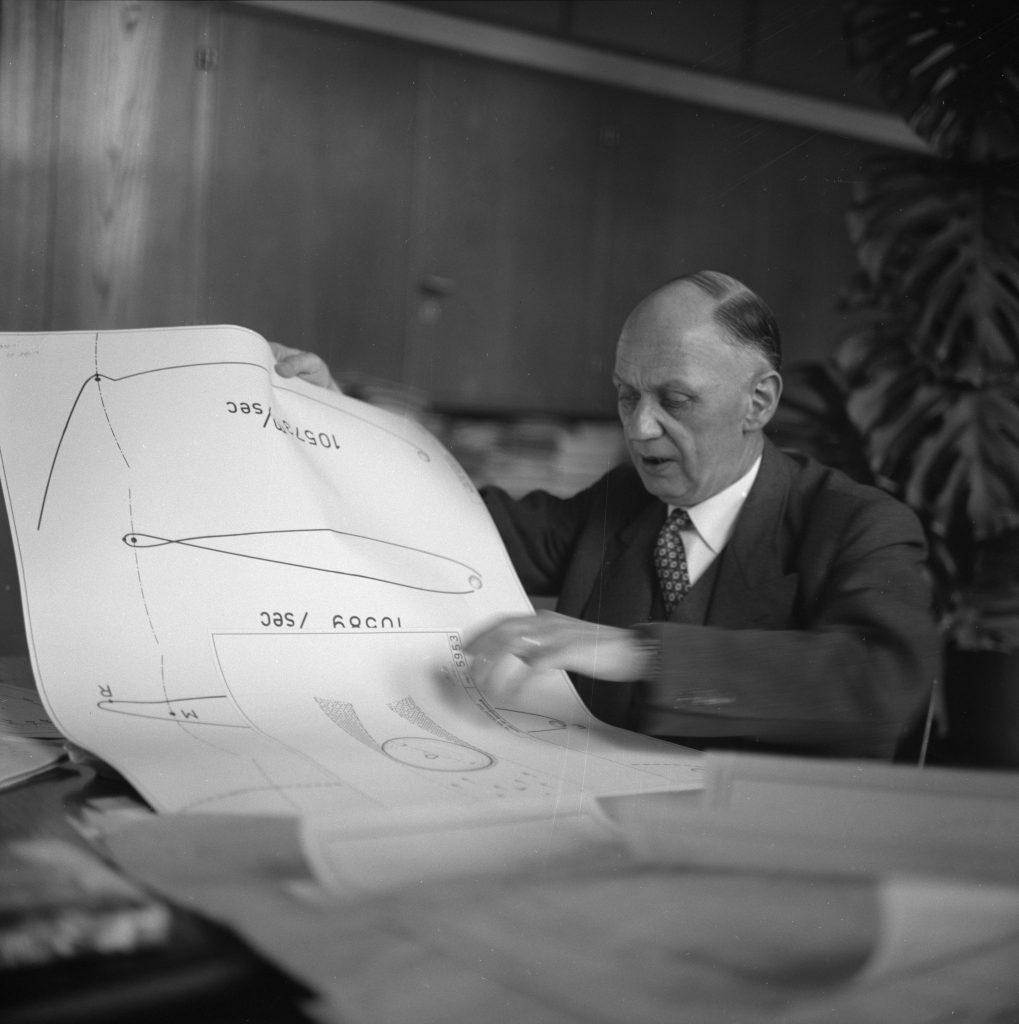
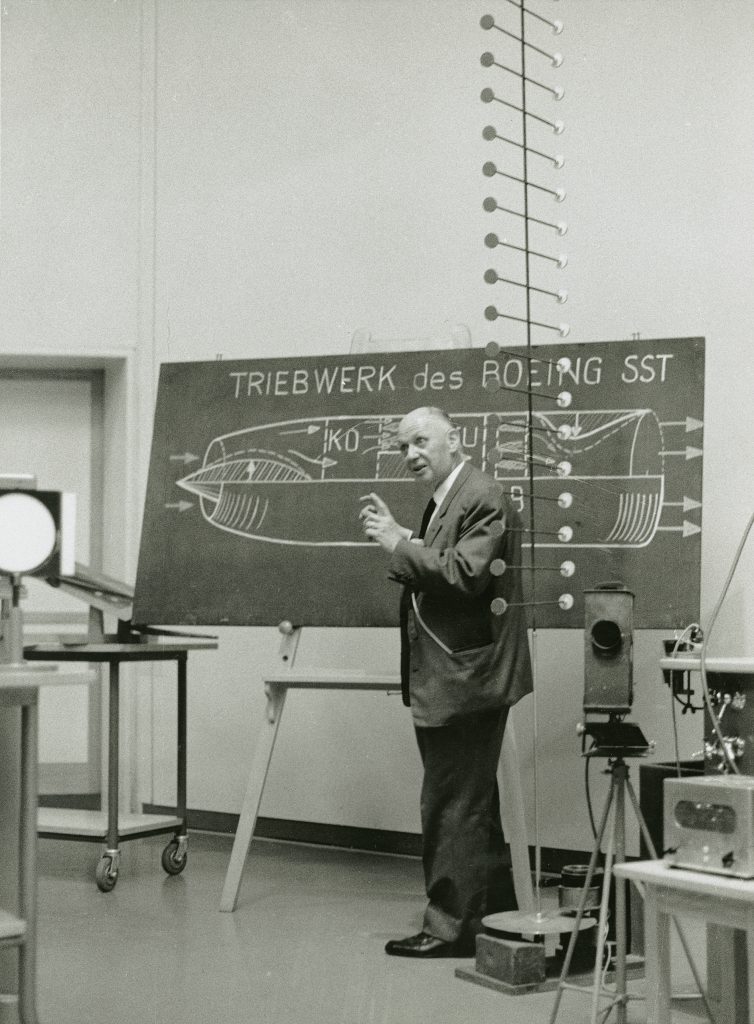
Professor Jakob Ackeret has published over 100 research papers, most of which are key contributions to fluid mechanics and aerodynamics. He also studied the role of air separation in causing wing vibrations on aircraft. In addition, he developed practical applications for suction and resolved many issues related to propulsion, including increasing thrust and creating reverse thrust. Ackeret developed important principles for studying wind forces on structures and for tunnel ventilation. In addition, Jakob Ackeret consulted for many aeronautical companies, the Swiss government, and the United States Air Force. He became an expert on the history of hydrodynamics. His achievements earned him international fame, along with awards and honorary degrees from Italy, Germany, Austria, the US, and Switzerland. Ackeret received the Ludwig Prandtl Ring from the German Society for Aeronautics and Astronautics in 1965 for his outstanding work in aerospace engineering. In 1976, Jakob Ackeret became a foreign associate member of the American National Academy of Engineering. Ackeret died on March 27, 1981, in Küsnacht. As one of the pioneers of aeronautical engineering, Jakob Ackeret made important contributions to the development of aerodynamics and fluid physics, helping aviation reach where it is today. Read more such stories HERE.








Reads like this was generated by AI…
It’s funny how now everyone is an AI expert…Kapil is a human being, an aerospace engineer and writes all these articles.