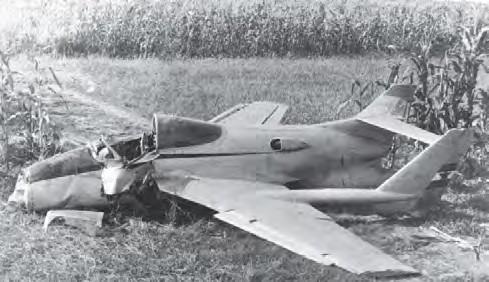
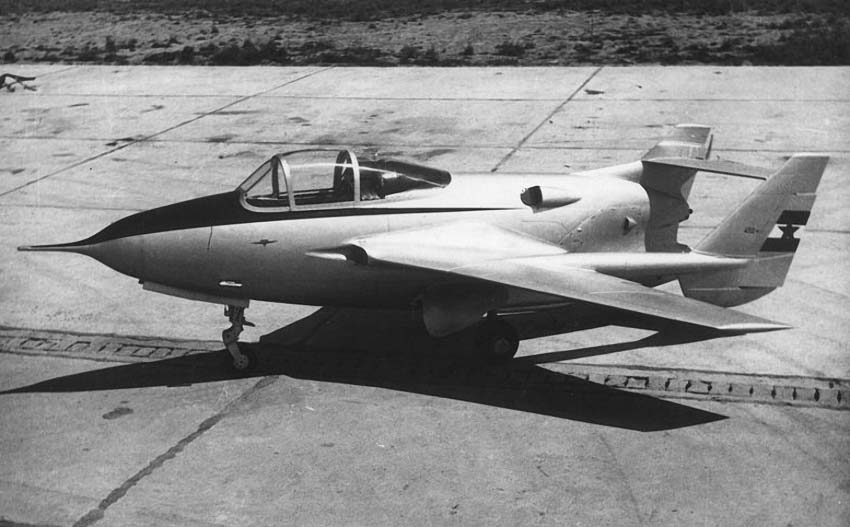


On this day in aviation history, 73 years ago (July 24, 1953), the first flight of the Ikarus 452M took place. Also known as the B-452-2, the Ikarus was an experimental swept-wing light fighter-interceptor jet. The 452M was the first of its type in Yugoslavia, designed by native aeronautical engineer Dragoljub Beslin. This light fighter concept was of all-metal construction, and its fuselage skin was sourced from a domestically produced light metal alloy. The Ikarus 452M had a retractable nose wheel, and the tail was a unique twin-fin design that resembled a V-shape. The 452M’s wing sweep was 36 degrees, and plans had been made to add leading edge slats for an increase in aerodynamic performance. Twin Turbomeca Palas 056A turbojet engines, each with 330 pounds of thrust, powered this Ikarus to a maximum airspeed of 466 mph. The 452M had an endurance of 1 hour and 15 minutes. Armament consisted of four 12.7mm M3 Browning machine guns, two on each side of the nose in ports.
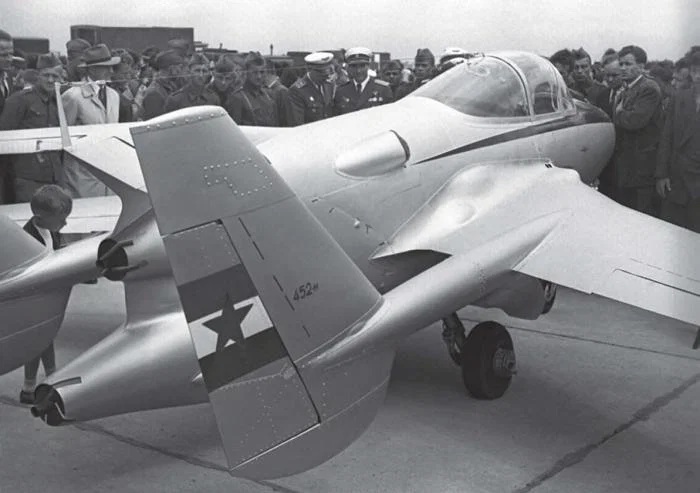
The Ikarus 452M was revealed to the general public on April 30, 1953. The first flight of the fighter on July 24 ended unfavorably with an emergency landing due to a fuel system malfunction. The aircraft received serious damage, and the test pilot was injured. The single test flight revealed that the 452M lacked thrust, so a new variant with three engines was proposed. The new Ikarus B-452-3 would also feature upgraded armament, but the aircraft would never pass beyond the design stage. A B-452-4 variant with more powerful Turbomeca Marbore II engines, a more robust airframe, and two 20mm cannons was also conceptualized. This variant would also have ground-attack capabilities, with the ability to carry high-velocity aircraft rockets (HVARs). Ultimately, the project was scrapped. However, the design of the 452M served as a template for the development of the Soko Galeb.