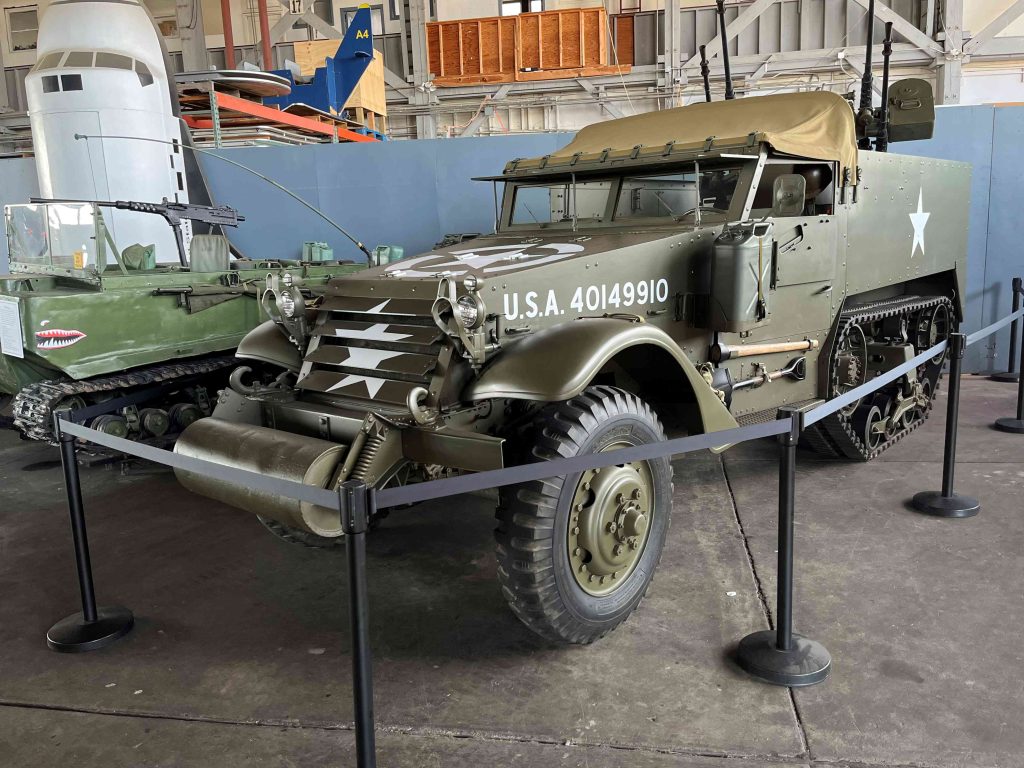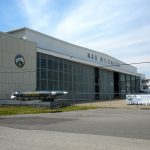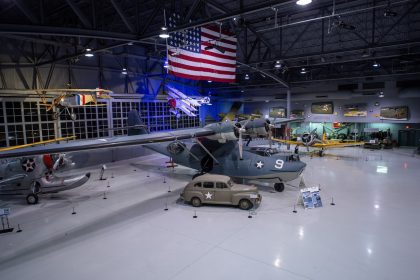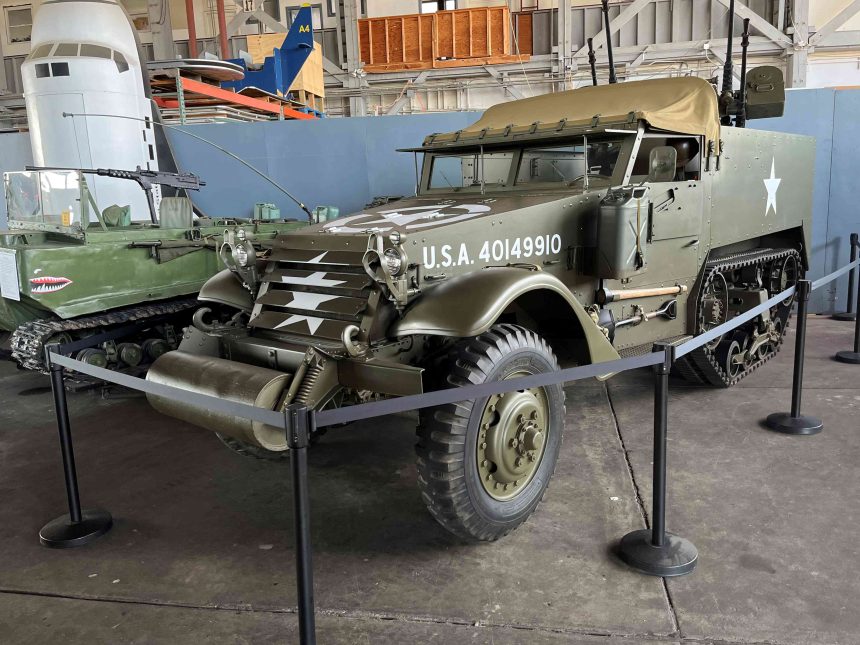

The NAS Wildwood Aviation Museum, Cape May Airport, Lower Township, NJ, has added an M16A1 Half-Track armed with four Browning M2 .50-caliber machine guns to its collection, with the WWII-era vehicle now on display inside Historic Hangar No. 1. The half-track, on loan from Burroughs Timberman, will remain at the museum through AirFest, scheduled for Sept. 3-6, while the full length of the loan has yet to be determined. Developed as a self-propelled anti-aircraft weapon, the M16 entered U.S. military service in early 1944 to protect troops, convoys, bridges, headquarters, and other key installations from low-flying enemy aircraft. The vehicle saw action in Italy and across Northwest Europe during WWII, with more limited service in the Pacific Theater, including operations on Luzon in 1945.
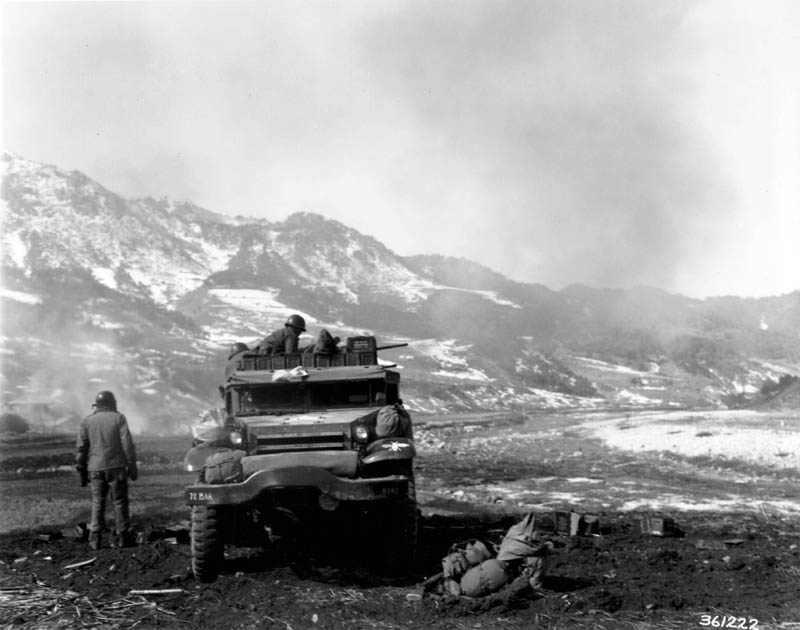
As Allied forces gained air superiority, the M16’s role evolved. Its four Browning M2 .50-caliber machine guns proved highly effective against enemy personnel, vehicles, and fortified positions, making the vehicle a valuable ground-support weapon. Members of the M16 family would later return to combat during the Korean War, again serving primarily in a ground-support role. Although the vehicle on display is an M16A1, it represents the broader family of M16 Multiple Gun Motor Carriages developed during WWII. Built on the M3 half-track chassis, the vehicle combined armored mobility with an electrically operated M45 Quadmount carrying four Browning M2 .50-caliber machine guns.
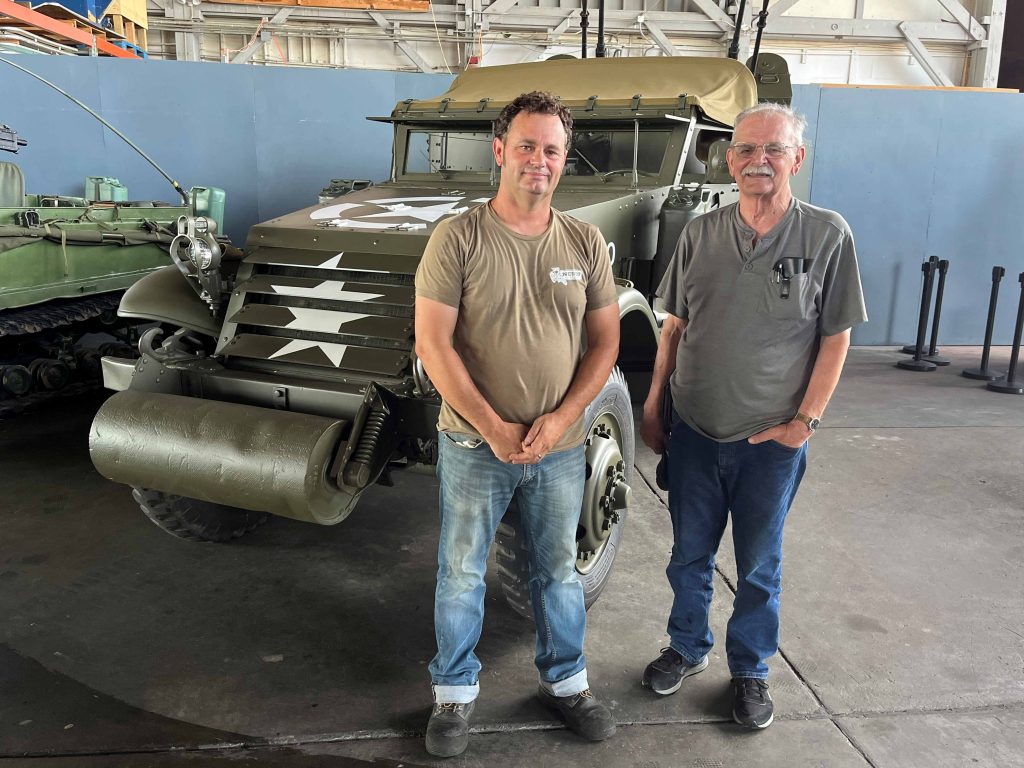
Together, the four guns had a theoretical combined cyclic rate of up to 2,300 rounds per minute, while the vehicle carried approximately 5,000 rounds of ammunition. Although all four guns could be fired simultaneously, crews often alternated between the upper and lower pairs to reduce barrel overheating. The vehicle’s exceptional firepower earned it the nickname “The Meat Chopper.” Another distinctive feature of the M16A1 is its unditching roller mounted to the front bumper. When crossing trenches or steep obstacles, the free-spinning steel roller could contact the opposite incline first, helping lift the vehicle’s front end until the tracks gained enough traction to continue forward. The M16A1 joins the museum’s collection of historic military aircraft and vehicles on display inside Historic Hangar No. 1 at Cape May Airport, where visitors can explore the history of American military aviation and the equipment that supported it on the ground. For more information and to support the NAS Wildwood Aviation Museum, click on this link: usnasw.org.