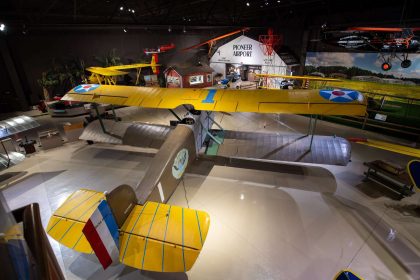
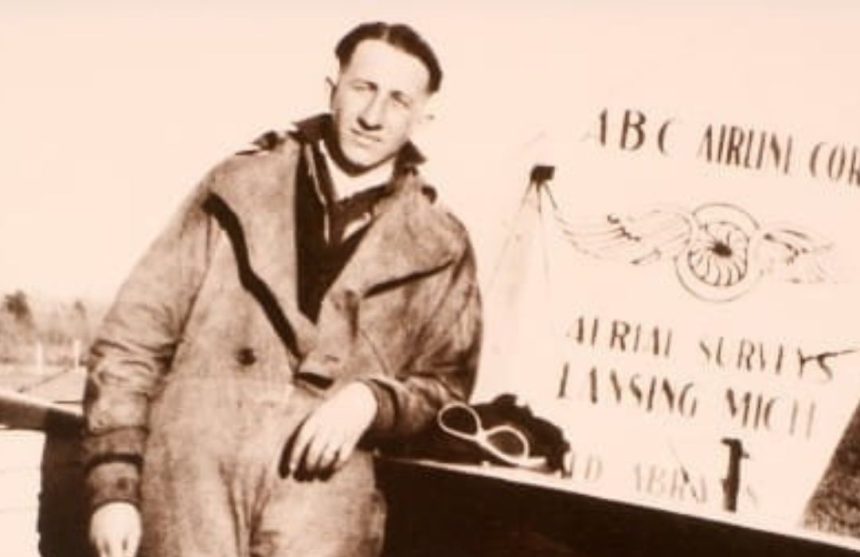

Aerial photography has now become an important part of modern aviation. It is widely used across mapping, environmental monitoring, precision agriculture, and infrastructure inspection. But very few know that the person behind aerial photography was Talbert “Ted” Abrams, an American photographer and pilot. Abrams was born in Tekonsha, Michigan. Abrams was 8 years old in December 1903 when his father came home with exciting news that “Those Wright brothers have flown an airplane.” It inspired him to dedicate his life to airplanes and all things related to flight. He learned to fly at the Curtiss Aviation School while also working as a mechanic there. He received pilot’s license number 282 from the Fédération Aéronautique Internationale. Later, he joined the US Marine Corps in 1917 and trained at the US Navy flying school in Pensacola. After WWI, his squadron took photos of rebel activities in Haiti, and it sparked his interest in aerial photography. In 1920, Talbert Abrams left the military and bought a used Curtiss JN-4 plane. He started a small airline called ABC Airline (Always Be Careful) but was more interested in photography.
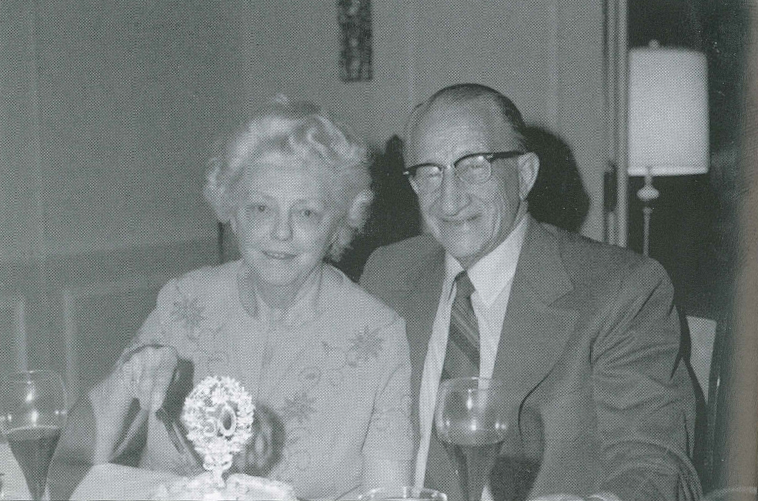
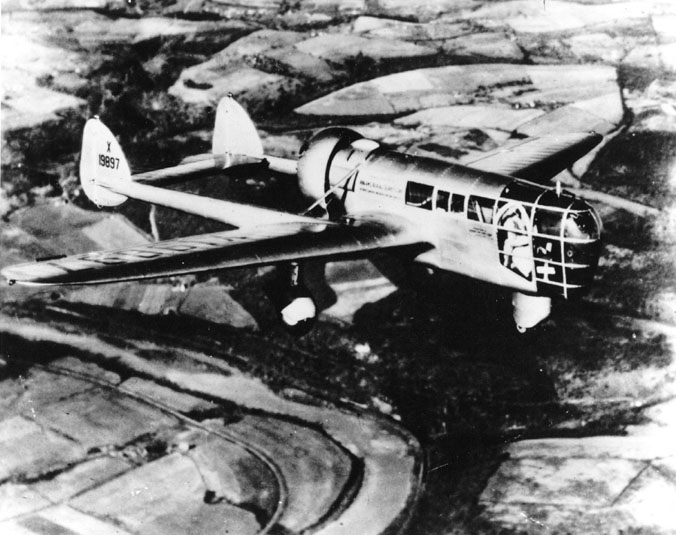
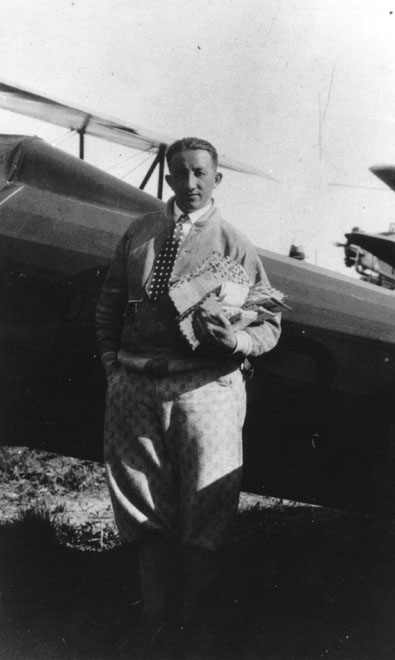
In 1923, Talbert Abrams bought a Standard J-1 plane, added cameras, and founded the Abrams Aerial Survey Corporation, which was sold to Aerocon in 2003. Over the next few years, he established the Abrams Instrument Corporation to make better cameras and tools for his work. In 1937, he formed the Abrams Aircraft Corporation to design special planes. Talbert Abrams earned his first income from aerial photography by taking a photo of a racetrack from his biplane for a newspaper. Later, he used stereo-plotters to create maps for highway design and construction projects. In 1937, he developed a new aircraft, “The Explorer,” the first plane designed specifically for aerial photography. During WWII, he started the Abrams School of Aerial Surveying and Photo Interpretation to teach the US military important skills. His company, the Abrams Instrument Corporation, made reconnaissance cameras for aircraft. In 1961, Curtiss-Wright bought the Abrams Instrument Corporation. In 1962, Talbert Abrams and his wife donated a large sum of money to Michigan State University to help build a planetarium, which was named in their honor. He passed away at a nursing home in Lansing, Michigan, on August 26, 1990.
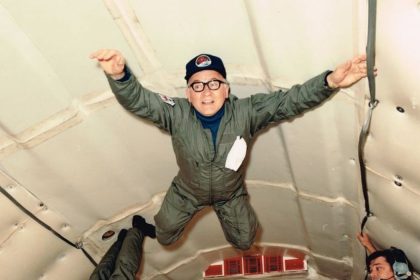
Before Talbert Abrams passed away at age 95, he had a diverse portfolio. He was a military pilot, a barnstormer, an aerial photographer, an inventor, a photogrammetrist, a businessman, an explorer, a commercial passenger, a world traveler, a teacher, a writer, and a philanthropist. People have called him the “father of aerial photography.” Talbert Abrams provided instruments for projects in places as cold as Antarctica and even in outer space. Each year, the American Society for Photogrammetry and Remote Sensing (ASPRS) presents the Talbert Abrams Award to an individual who has made an outstanding contribution to aerial photography and mapping. Mount Abrams in Antarctica is named after him, as is the Abrams Planetarium at Michigan State University. In the 1960s, Talbert Abrams took part in “Operation Deep Freeze” at the South Pole. Because of this, he became one of the few people in the world to have a mountain named after him. He was also awarded the Antarctic Service Medal. As one of the Pioneers of Aeronautical Engineering, Talbert “Ted” Abrams will be remembered for his work in aerial photography. Read more articles like this HERE.