






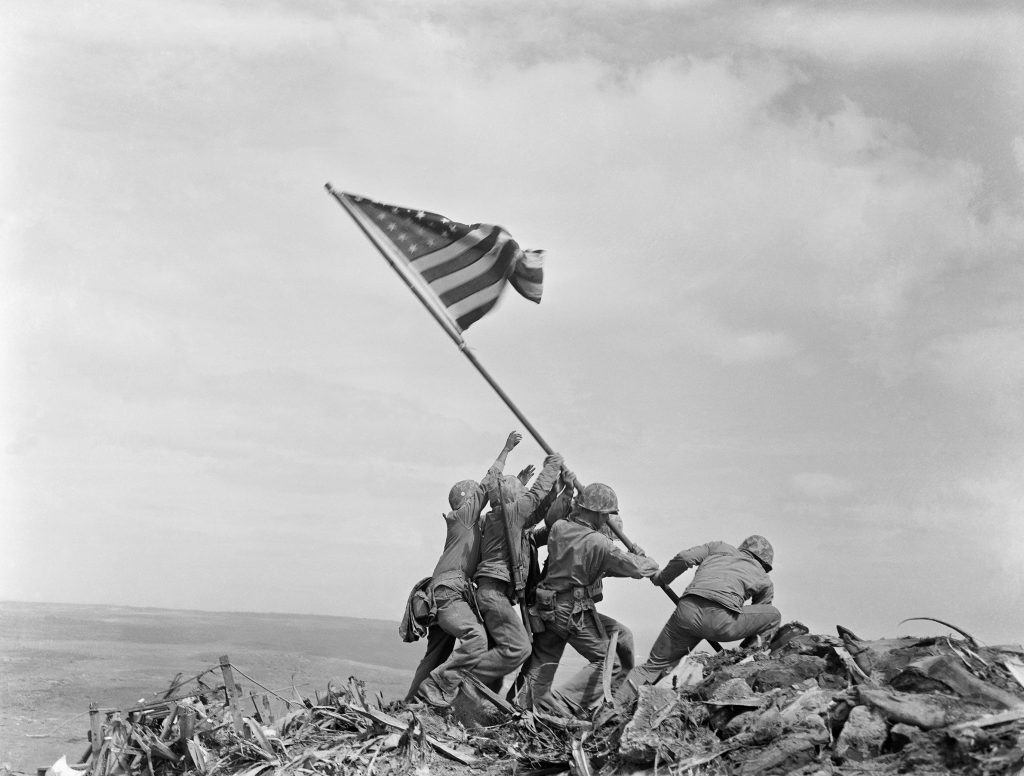
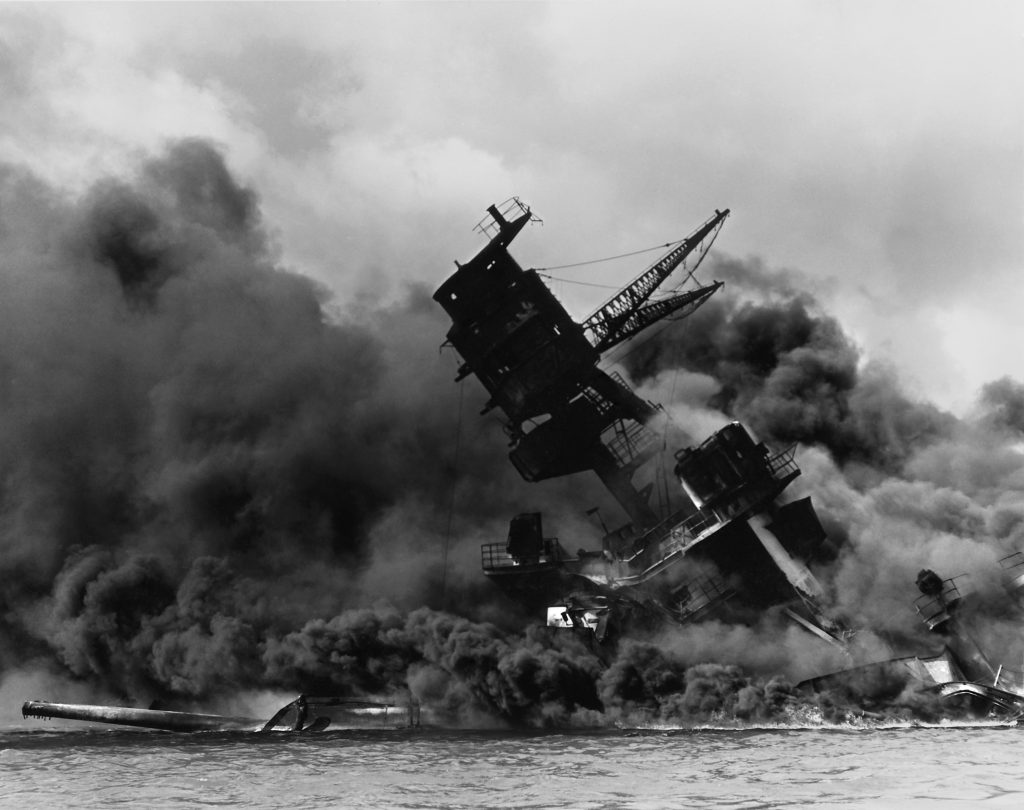
During the execution of the war in the Pacific, combat photographers, photojournalists, sailors, airmen, and Marines captured hundreds of thousands of photographs. From the tragedy of the Arizona burning at Pearl Harbor to the Marines raising the Stars & Stripes atop Mount Suribachi. Some of the most dramatic photographs, however, were not taken by a photographer at all, but by a camera mounted on the lower rear fuselages of USAAF medium bombers, predominantly B-25s and A-20s.
Perhaps the most famous images to be captured by that type of camera were on July 22, 1944, during a strike on the island of Kokas in the Dutch East Indies. The photos, four to be exact, show an A-20 Havoc, streaming what appears to be fuel, rolling into a diving right turn and impacting the water. The photos first appeared in YANK magazine and became known as “Death of a Havoc.” A morbidly catchy title that borders on dismissing the real tragedy of the photos. True, magazine editors needed words that would capture readers attention, and it is also true that the photos document the loss of an A-20 Havoc. The real tragedy playing in those four haunting seconds is the death of two brave, young Americans. A studious few might know the names of the crew, but the percentage is probably minuscule. So, who were they?
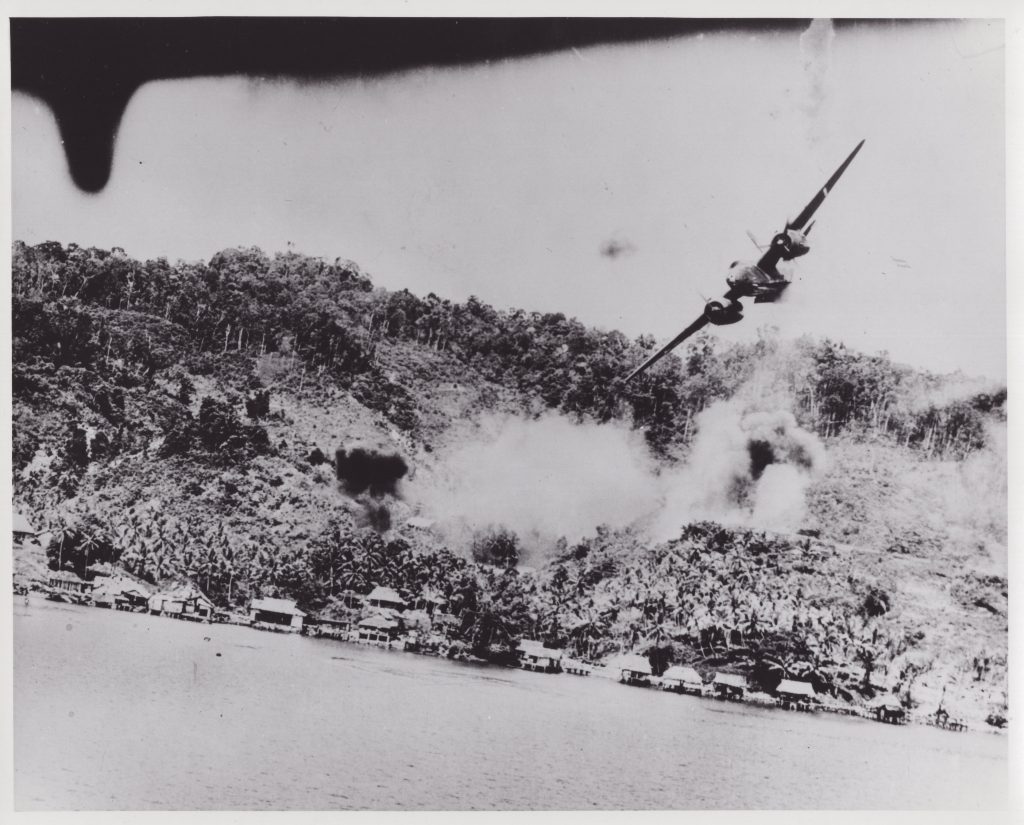
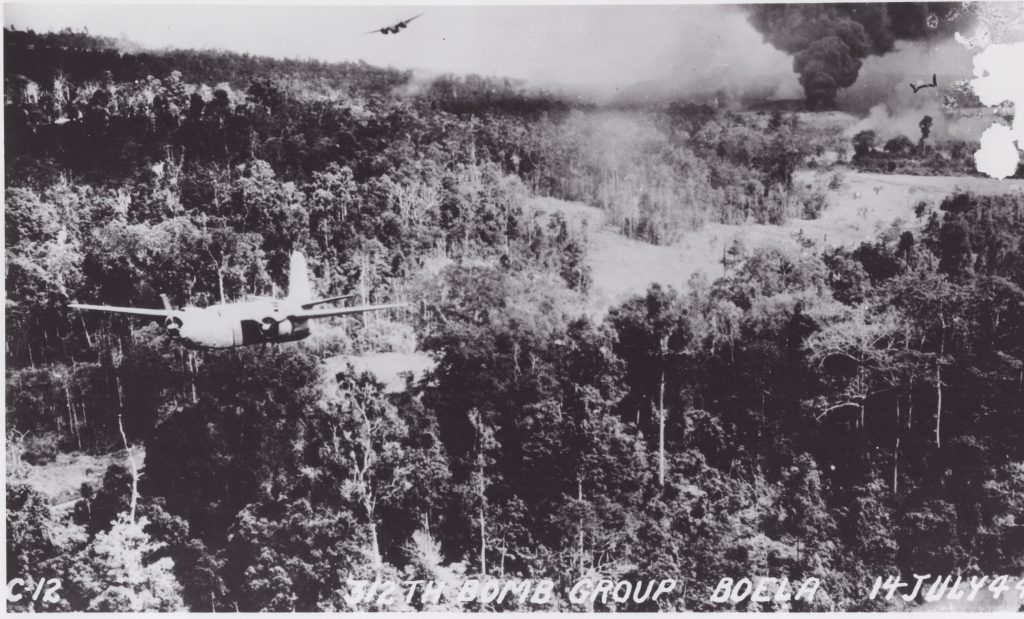
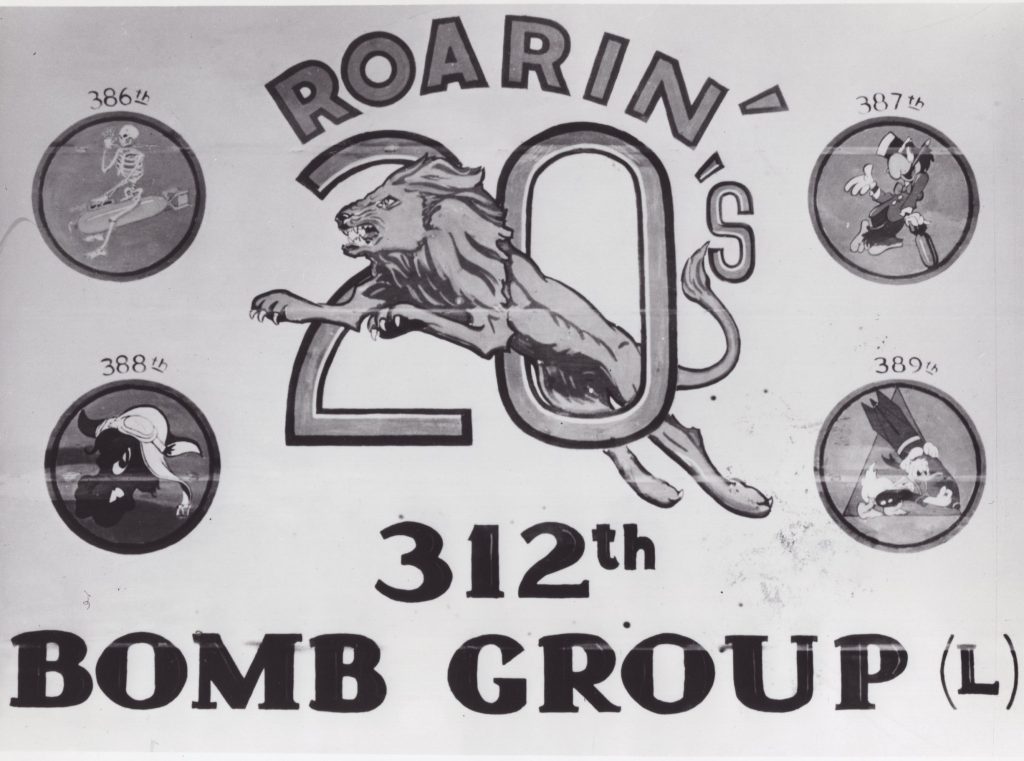
The strike was carried out by a dozen A-20Gs from the 312th Bomb Group/387th Bomb Squadron and was led by group commander Colonel (Col) Robert H. Strauss. The target that day was the Japanese seaplane base and barge landing at Kokas, Enga, Dutch New Guinea. Among the crews on the mission was Captain Jack W. Klein with 1st Lt. James L. Knarr and 2nd Lt. Melvin H. Kapson on his wing. The gunners in Klein and Kapson’s ships are a mystery, but flying with Knarr that day was Staff Sergeant Charles G. Reichley, who was on his 46th mission. Knarr was on his 70th and due to rotate home in a matter of weeks. They were flying A-20G-25-DO USAAF #43-9432, Bevo, which had been accepted by the USAAF on November 20, 1943. After a brief stint with the 417thBG, it was assigned to the 387th on March 20, 1944.
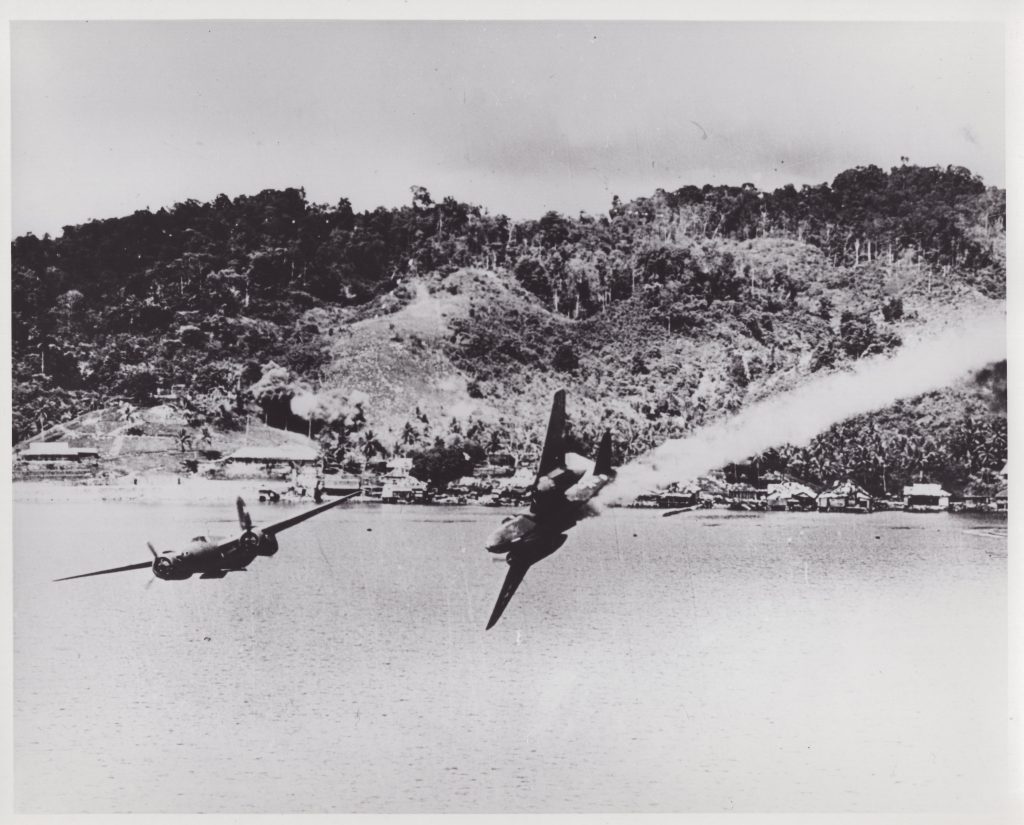
The Havocs approached the target inland, and upon clearing the hills overlooking Kokas, they dove steeply to low-level and dropped their 250-pound bombs on antiaircraft positions, buildings, and personnel areas. The appearance of the A-20 was sudden, but Japanese AAA gunners returned fire, striking several of the A-20s. Then as quickly as they appeared, they were gone. Disappearing into a hazy horizon.
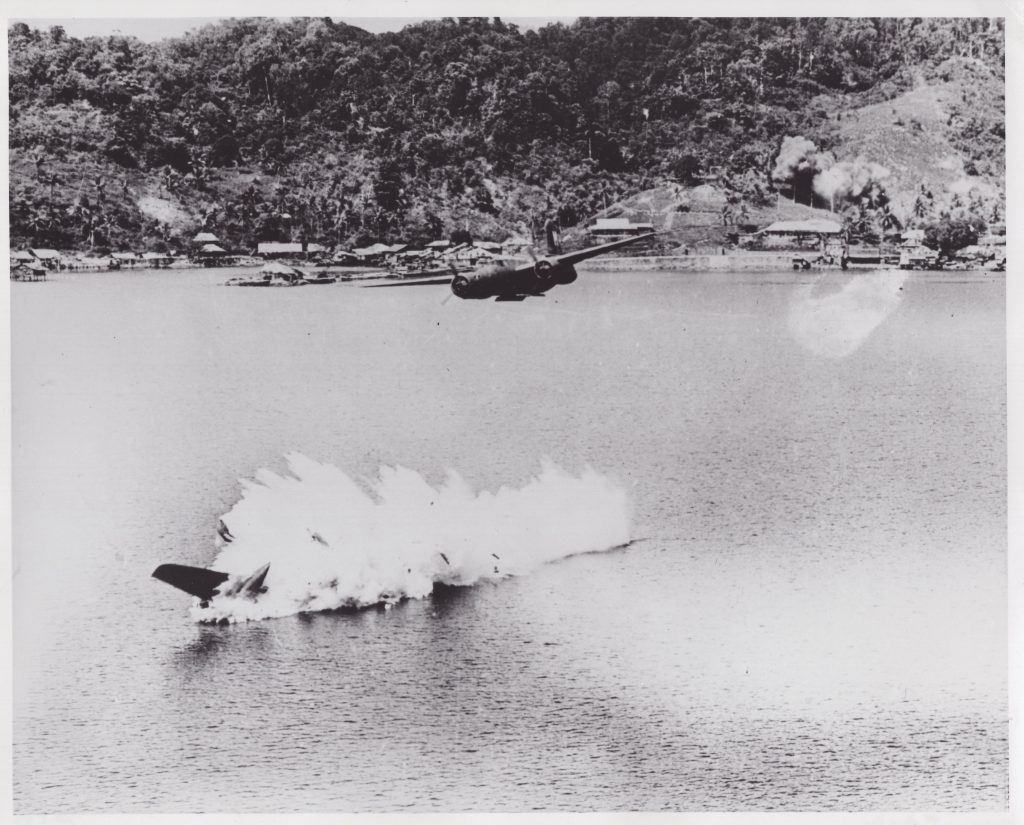
When Strauss reformed the squadron and asked if anyone had taken any damage. According to the book RAMPAGE OF THE ROARIN’ 20s: The Illustrated History of the 312th Bombardment Group During World War II, the damage was substantial: “Bursts of machine gun and antiaircraft fire shredded Kapson’s aircraft with 128 holes. Bistika’s aircraft had a blown cylinder in the left engine and a hole through the propeller shank. Additionally, a 20mm shell pierced the fuselage, near the gunner’s hatch, but failed to explode. Antiaircraft fire also damaged the hydraulic system of 1st Lt. James M. Horton’s aircraft. Horton and his gunner, SSgt. Robert H. Haas, made it home but crash-landed at Hollandia.”
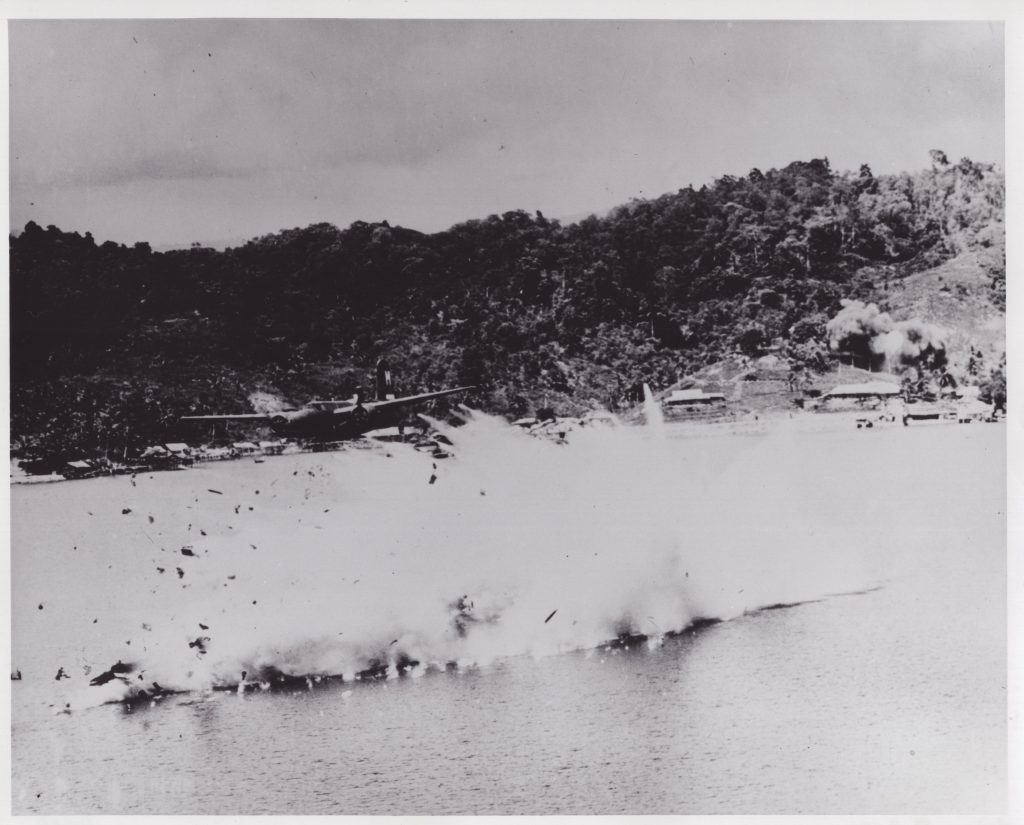
There was one aircraft missing, though: Knarr and Reichley. No one, not even the other A-20 in the photos, saw what happened to the crew. A few hours after the remaining eleven aircraft returned to Hollandia, the mystery was solved. The strike camera in Capt. Jack Klein’s A-20 captured the final horrifying seconds of Knarr’s A-20G diving into the water. Born in Luthersburg, Pennsylvania on February 4, 1918, James Lincoln Knarr graduated from Brady High School in 1936 and registered with Selective Service in 1940, while attending California State Teacher’s College. Two days before graduation, Knarr received his call to active service in the Army Air Forces. He trained at Shaw Field, South Carolina, and received his wings and commission at Spence Field in Moultrie, Georgia, on February 14, 1943.
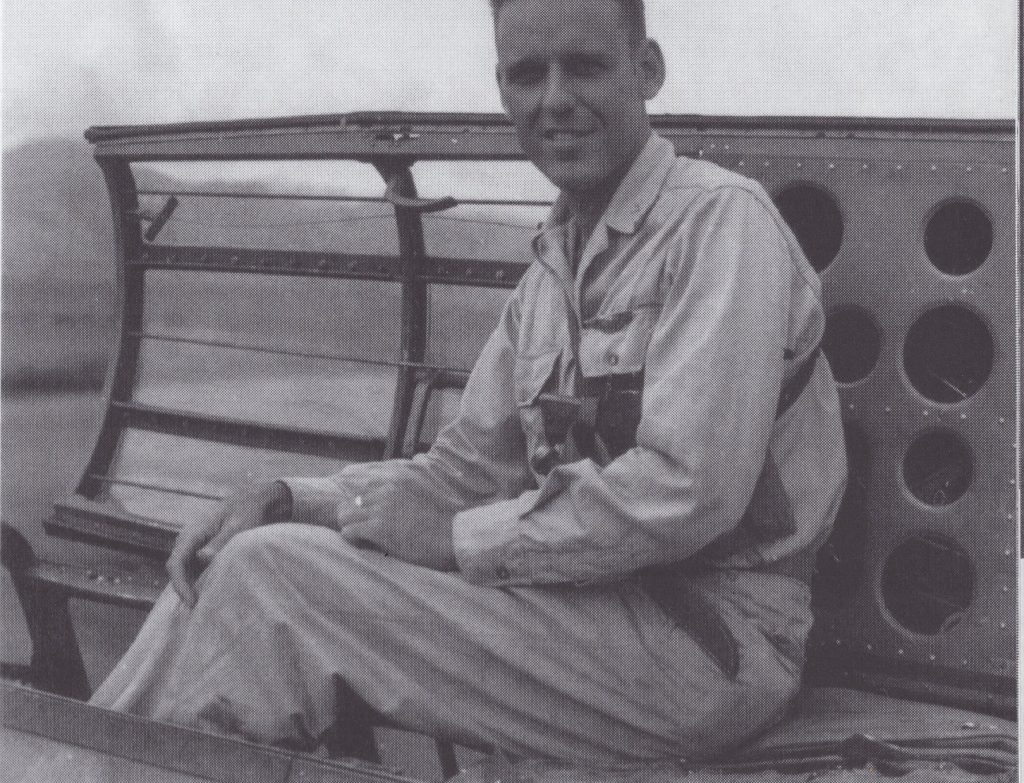
Also hailing from the Keystone State, Charles Grover Reichley was born on October 23, 1921, in Sunbury, Pennsylvania, just 130 miles west of where Knarr was born. He attended Sunbury High School, graduating in 1939. From the fall of 1939, Reichley studied diplomatic service at Georgetown University for a year before enrolling in the public-school music department at Susquehanna University, Selinsgrove in September 1940. He went to work at Graybar Electric Company in Philadelphia in 1941 and met and married Nancy Byrod on February 20, 1942. Reichley was called up on October 12, 1942, and reported to Keesler Field, Mississippi, followed by Radio School in Chicago and gunnery school at Tyndall Field, Florida, and Columbia, South Carolina. After spending a few precious weeks at home in the fall of 1943, Reichley was in New Guinea by Christmas. Whether Knarr and Reichley were paired together because they were both from Pennsylvania is unknown, but it is an interesting notion. As he approached his 40th mission, Reichley had told his parents to “watch the news of Biak”, but shortly thereafter, the letters to his parents and wife stopped. They all began to worry as the days of silence continued ceaselessly. On August 4, 1944, his parents and wife received the dreaded knock at the door, and when opened, they were handed the message from the War Department. Knarr, a survivor of “Black Sunday”, had also written home about his missions. His last letter to his parents, Mr. & Mrs. Homer Knarr, was written on July 15 where he described success against numerous Japanese targets and was looking forward to coming home. The Knarrs received their messages on August 5. In the coming months, both fliers would be memorialized. For Charles Reichley, it took place in October 1944 in Sunbury’s Zion Lutheran Church, where a large white banner with a single blue star was displayed. Inside the star was the number “272”, which represented the number of men of Zion’s congregation who were in the service. Reichley was one of five to die in the war up to that time. On V-E Day, the Sunbury Daily Item dedicated a full page to the young men of Sunbury (pop. 15,000+ in 1945) who had died in the war. The number was sixty-one, with four more months of carnage to come in the Pacific.
The memorial for James Knarr’s family occurred privately in the form of a letter from a friend of Jimmy’s. In the letter, Capt. Fred L. Newmeyer told his parents that their son was the most popular person in his squadron. At one point he said, “Several times enlisted men of his squadron told me what a fine guy Lt. Knarr was. That’s about the highest tribute that can be paid to an officer.” Newmeyer visited the squadron the morning after his loss, and he was stunned at the deep sorrow on the face of every officer and man in the squadron. In closing Newmeyer left the Knarr’s with a thought than every family who lost a loved one in the conflagration that was the Second World War, “In the years to come, when we have attained this free, new world your son gave his life to win, the heavy sorrow of now will be eased and the memory of Jim will be one of wonderful guy who made life just a bit finer…







From that I’ve read, Low-Level Ground Attack was one of the least favourite tasks assigned to Light/Medium Bombers & Fighters.
Apart from the AAA & AA, who had a nice Close Target, anyone with a Rifle could – and did – take a ‘Pot-Shot’.
And, if you were hit, travelling at Speed – ‘On The Deck’ – gave only seconds to react … and parachutes that low down were Not An Option.
All Our Schools should aim to impart the knowledge of the Debt We Owe, to the Fathers, Grand and Great Grandfathers, of the Navy, Army and Airforce. Men, who took the Risks and made the Sacrifices, to Gift Us Freedom.
The Kohima Epitaph
The Kohima Epitaph is the epitaph engraved on the Memorial of the 2nd British Division in the cemetery of Kohima (North-East India). It reads:
‘When You Go Home, Tell Them Of Us And Say,
For Your Tomorrow, We Gave Our Today.’
I wonder if anyone has returned there to try to recover their remains and bring them home for proper burial?