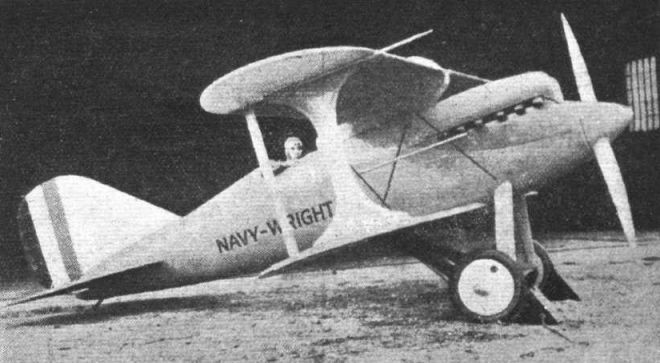
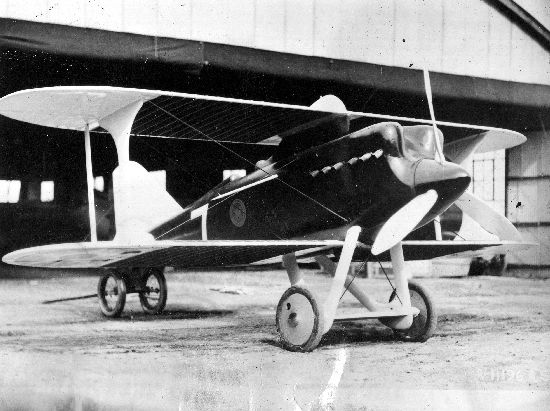


On this day in aviation history, 103 years ago (August 2, 1923), the first flight of the Wright F2W took place. The F2W was a purpose-built racing aircraft, requested by the United States Navy for competition in the 1923 Pulitzer Trophy races. The Wright Aeronautical Corporation developed the F2W, which was a biplane built primarily of wood with fabric covering. The F2W was powered by a 780-horsepower Wright T-3 Tornado V-12 engine (later designated as the V-1950 by the USAAC). Wright’s F2W held a 200-horsepower advantage over the competing Curtiss R-6 racer. Second Lieutenant Lawson H. “Sandy” Sanderson piloted F2W A-6743 on its first flight, from Curtiss Field in Garden City, New York. The fuel capacity of the F2W was a scant 31.7 US Gallons, just enough for the 124-mile Pulitzer trophy race. A second F2W, A-6744, was built with a larger fuel tank that could hold 60 US Gallons. The T-3’s engine radiators were located in the aircraft’s wings. The first F2W had a two-bladed prop, while the second was built with a three-blader.
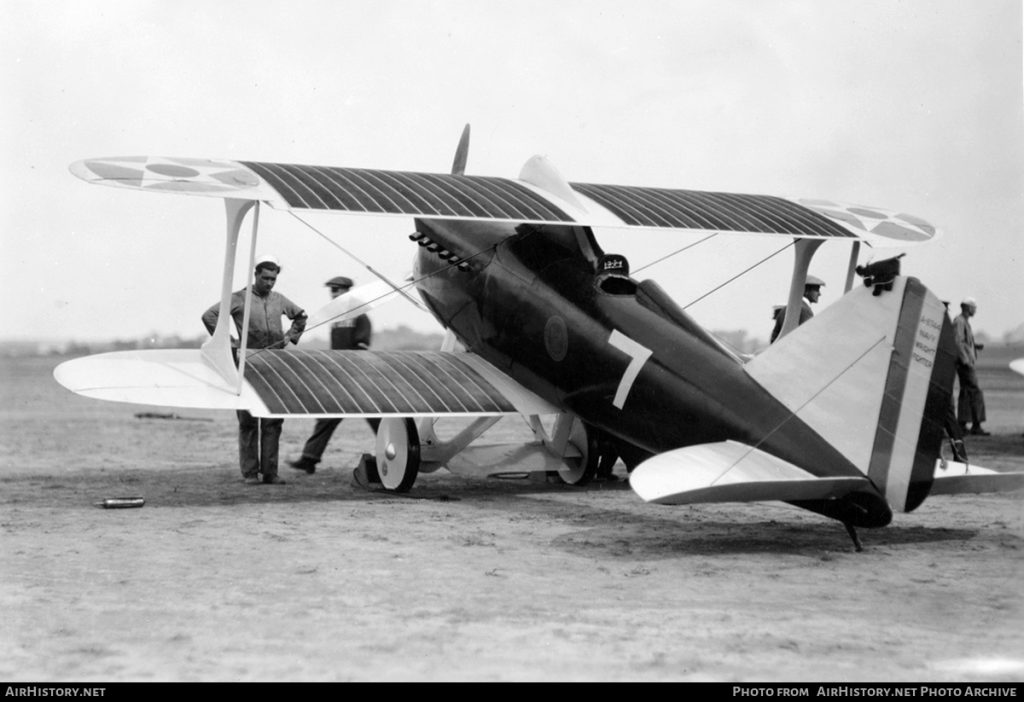
In the 1923 Pulitzer Trophy race, the re-designated F2W-1 was flown again by Sanderson. Painted with a red number 8, A-6743, the pilot attained an average airspeed of 230.06 mph over the course of four laps. This flight exhausted the F2W-1’s fuel, and a crash ensued, seriously injuring Sanderson. F2W “Number 7” (A-6744) was flown by Lieutenant Steve Calloway, and together they averaged exactly 230 mph over the course. Unfortunately, this was not enough to match the Curtiss R2C’s average speed of 243.68 mph. An attempt was made by Wright to modify A-6744 into a seaplane racer by adding floats. Re-designated as the F2W-2, the new seaplane racer would prove to be unstable. In early 1924, the sole F2W-2 would crash and be damaged beyond repair. Despite a valiant effort, Wright was not able to top Curtiss in the category of speed.