






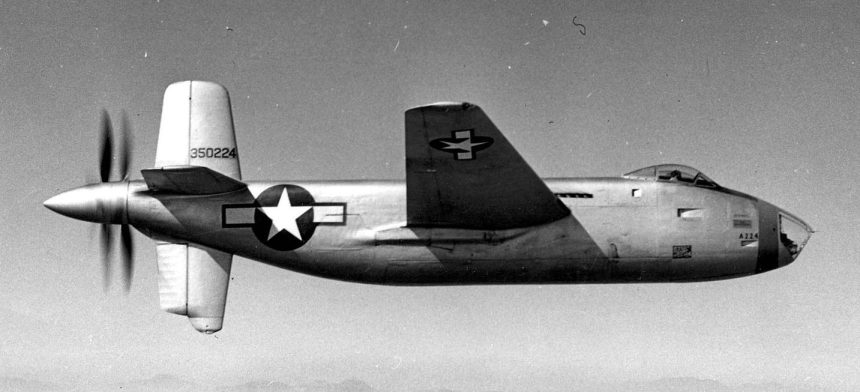

The development of the jet engine resulted in the cancellation of many fighters and bombers in the 1940s, especially after WWII. One such aircraft was the Douglas XB-42 Mixmaster. The XB-42 was first developed as a private project by Douglas Aircraft Company. In May 1943, the company submitted a proposal to the United States Army Air Forces (USAAF), resulting in a contract for two prototypes and one test airframe. The USAAF wanted the bomber because it needed an aircraft that could match the range of the Boeing B-29 Superfortress without being as large or as expensive. The Douglas XB-42 Mixmaster was powered by two Allison V-1710-125 liquid-cooled V12 engines, each producing 1,800 horsepower. The landing gear used a tricycle configuration, and the tail was a full cruciform with four surfaces. The tail included a ventral fin and a rudder, as well as a tailwheel to keep the coaxial propellers from hitting the ground. The pilot and co-pilot sat under twin bubble canopies, while the bombardier sat at the very front behind a plexiglass nose.
Design of Douglas XB-42 Mixmaster
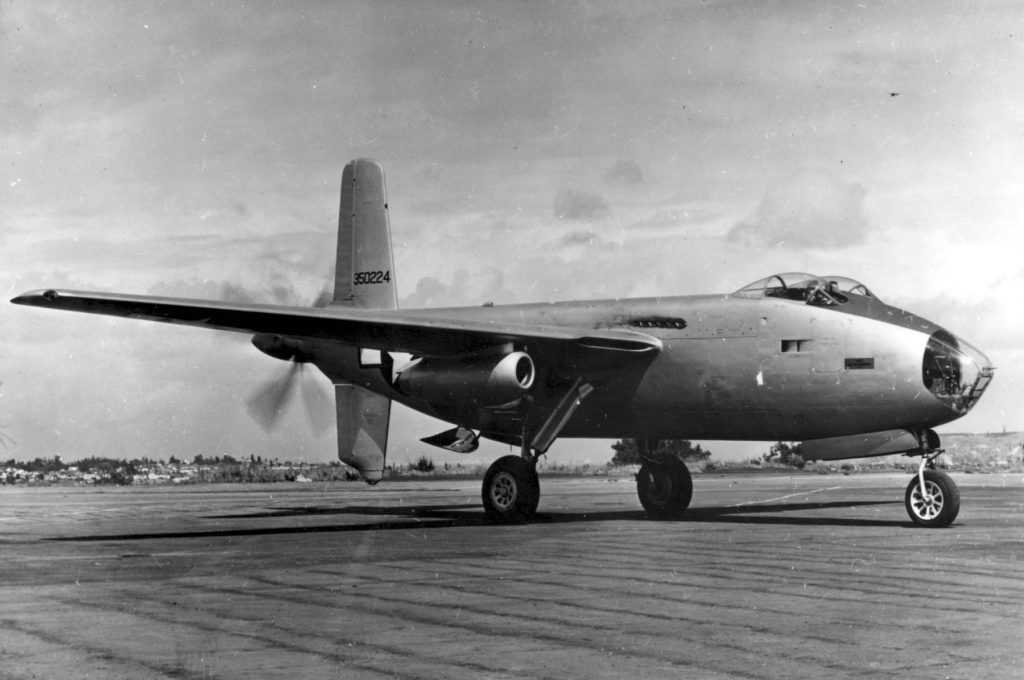
The first Douglas XB-42 Mixmaster aircraft flew for the first time in Palm Springs, California, on May 6, 1944. The aircraft was 53.8 feet long, 18.1 feet high, with a wingspan of 70.6 feet and a wing area of 555 square feet. The empty weight was 20,888 pounds, and the maximum takeoff weight was 35,702 pounds. The maximum speed of the aircraft was envisioned at 410 mph at 23,440 feet, with a range of 1,800 miles, a ferry range of 5,400 miles, and a service ceiling of 29,400 feet. The Douglas XB-42 Mixmaster could be armed with six 12.7 mm machine guns and 8,000 pounds of bombs. During the tests, the aircraft performed excellently, matching the speed of the de Havilland Mosquito B.XVI while also having defensive weapons and carrying twice the bomb load over short distances. However, the twin bubble canopies were not effective, as they disrupted communications. After the first flight of the second prototype, a single bubble canopy replaced them. Testing showed that the XB-42 had some stability issues. It experienced excessive yaw, propeller vibration, and poor engine cooling. After WWII ended, the USAAF had more time to develop new aircraft, and the leaders decided to wait for better jet bombers rather than continue the B-42 program.
The Cancellation
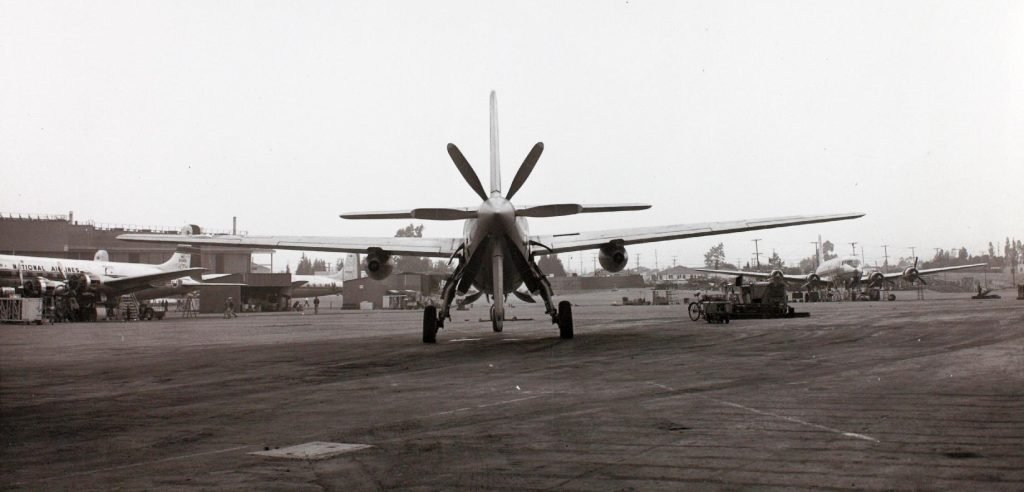
In December 1945, Captain Glen Edwards and Lieutenant Colonel Henry Warden set a speed record by flying the second prototype Douglas XB-42 Mixmaster. They flew from Long Beach, California, to Bolling Air Force Base in Washington, D.C. The flight covered about 2,300 miles in 5 hours and 17 minutes and achieved a speed of 433.6 mph. However, the record-breaking Douglas XB-42 Mixmaster prototype crashed on December 16 during a routine flight from Bolling Field. The aircraft had multiple problems, including the landing gear failing to extend, the left engine stopping, and, when coolant temperatures increased, the right engine also failing. Major Hayduck bailed out at 1,200 feet, Lt. Col. Haney at 800 feet, and the pilot, Lt. Col. Fred J. Ascani, who crawled back to detach the rear propellers, at 400 feet. All three men survived. The plane crashed in Oxon Hill, Maryland. Authorities had trouble explaining the crash. Witnesses said they saw an explosion, which they linked to fuel management problems. However, investigators never proved this theory. The remaining prototype was used for flight tests. During testing, the aircraft reached a speed of 488 mph. After 22 flights, the ventral fin and rudder were damaged in a hard landing in 1947. Although the Douglas XB-42 Mixmaster was repaired, it never flew again and was taken off the US Air Force inventory on June 30, 1949. The total cost for the program, which included the B-43 project, was $13.7 million. In the Grounded Dreams series, although the Douglas XB-42 Mixmaster aircraft continued to fly for years after WWII, shifting priorities sealed its fate, and the introduction of the jet engine offered a new way to achieve high speed. Read more Grounded Dreams articles HERE.
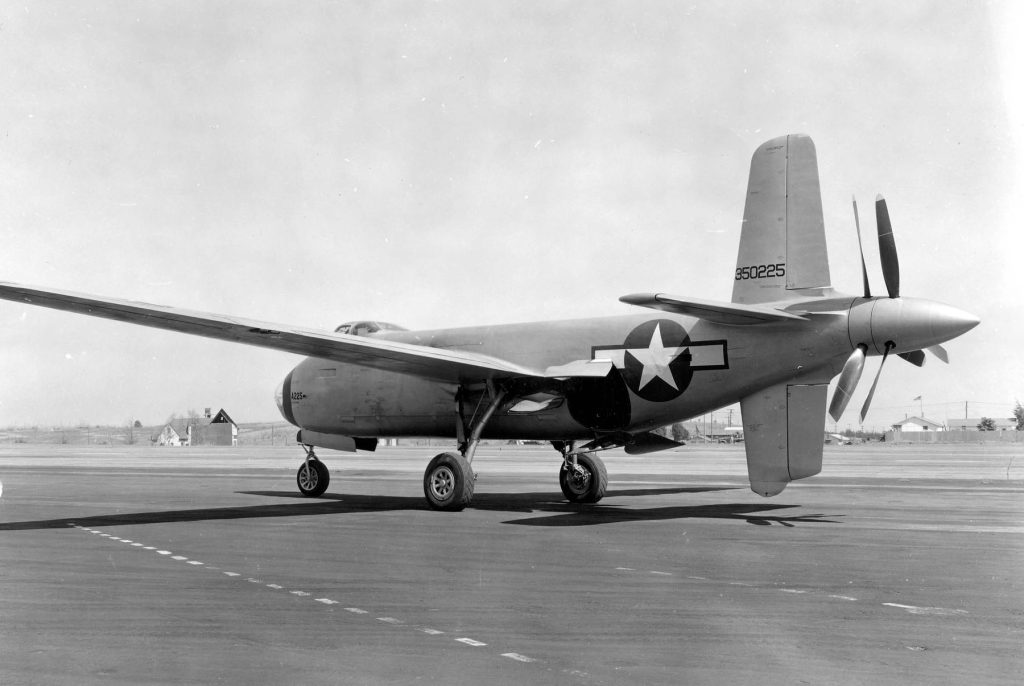
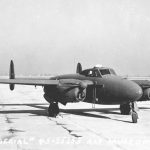


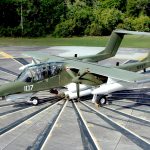
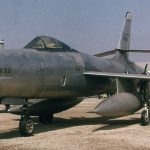



The second photo appears to show a jet engine under the wing.
😎 Well , it worked for the B-36 !
The XB-42 had a modest P/W ratio of only 1/10 , so there was plenty of room for improvement .
It does. That is the XB-42A, the new designation of the first XB-42 prototype after it had a pair of Westinghouse 19XB (later known as J30) turbojets added under the wings in 1947. It was in this configuration that it reached a speed of 488 mph.