







By Randy Malmstrom
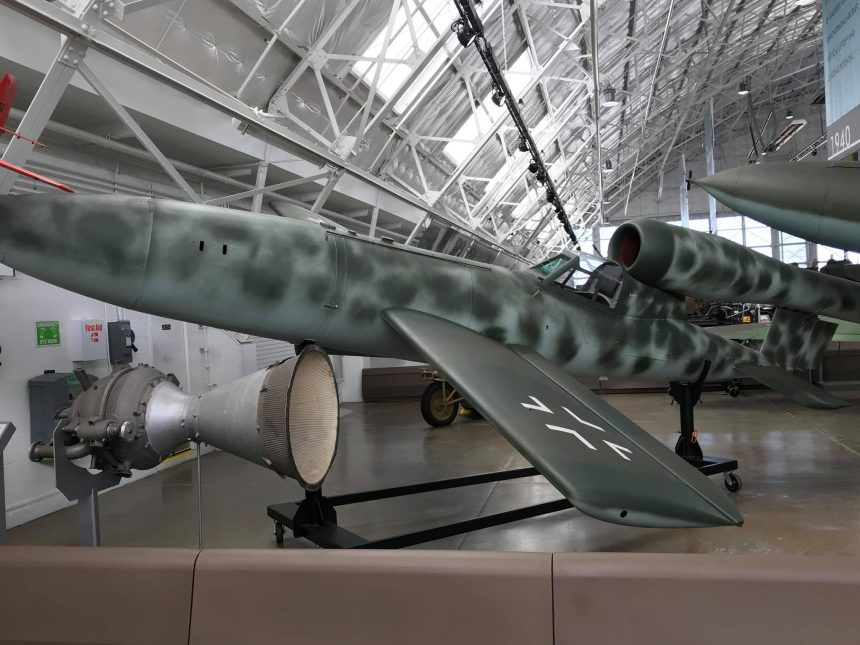
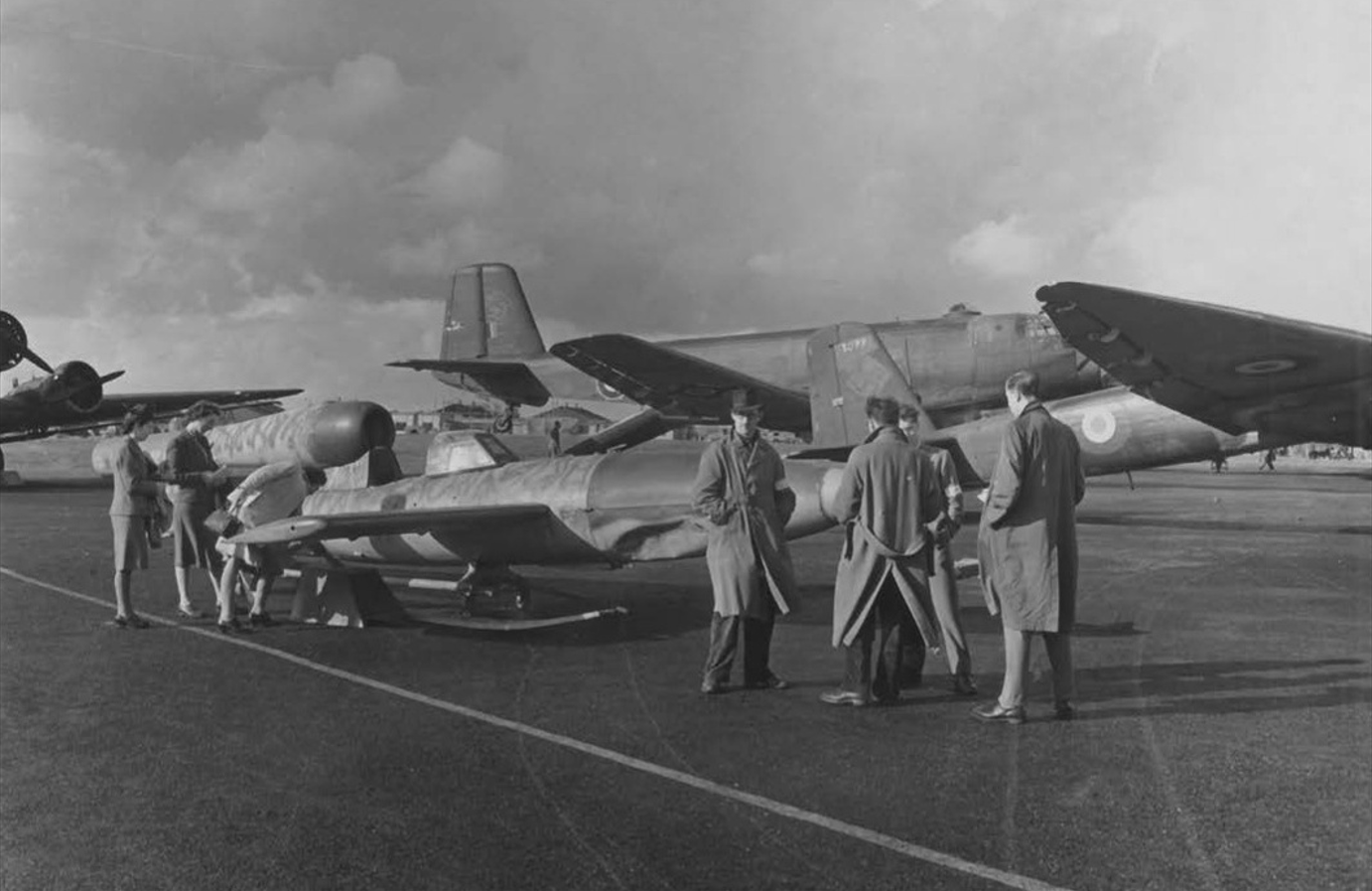
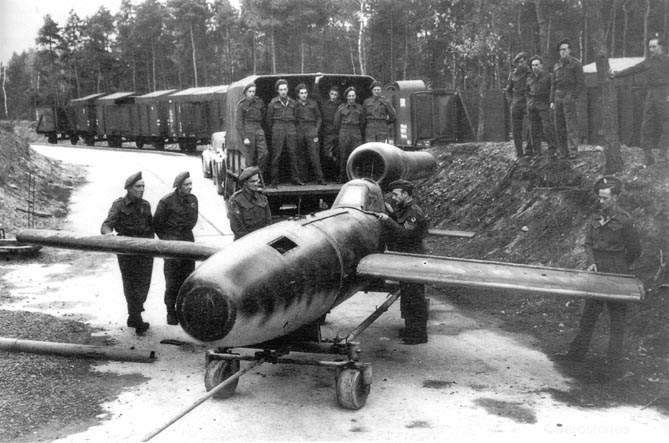
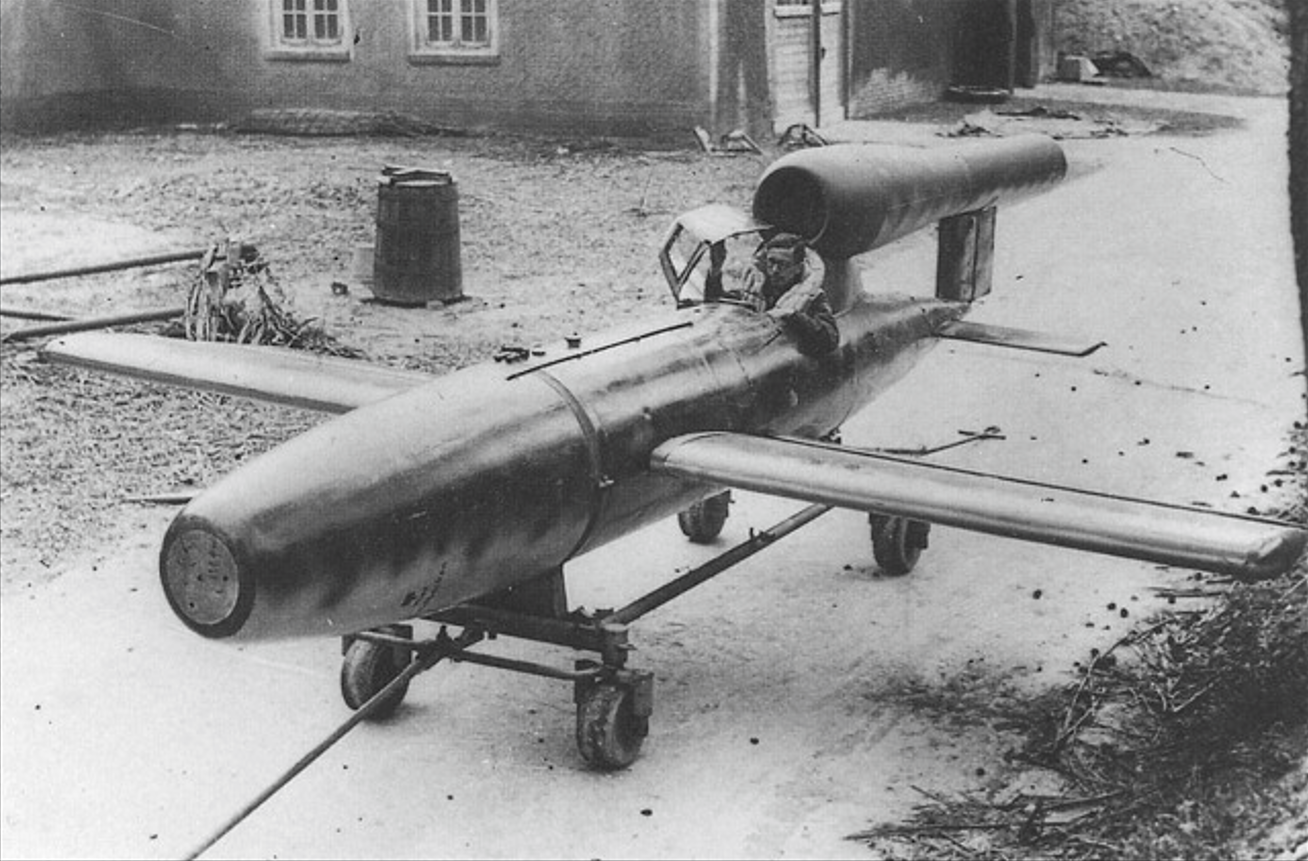
Fieseler Fi-103R-IV Reichenberg, Wk. NR. 44329. Built by “slave labor” (concentration camp inmates), not more than 10% of this particular rebuild now exists; it is one of six existing Fi-103R-IV aircraft and was found in an underground facility that had been covered over by the advancing Soviet army at the end of WWII. The Soviet Army occupied the Nordhausen area, and in 1948, they demolished the entrances to the underground missile factories. Almost half a century later, a new entrance was found into the caves, and these missiles were discovered there by restorers and enthusiasts. This aircraft was acquired in 2001 by Paul Allen or one of his entities and restored by Bavarian restorer Alexander Kuncze in Geisenhausen (near Landshut).
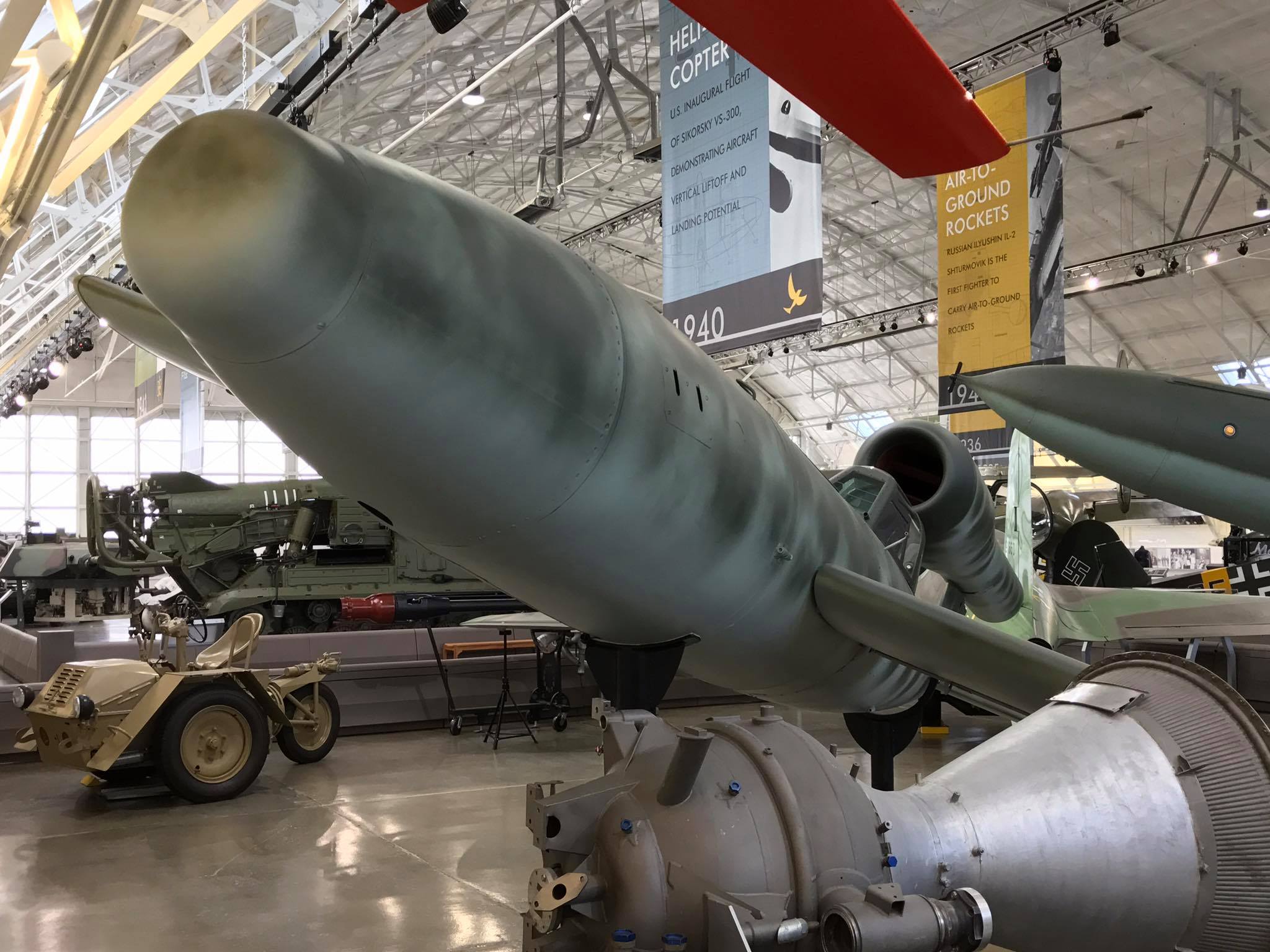
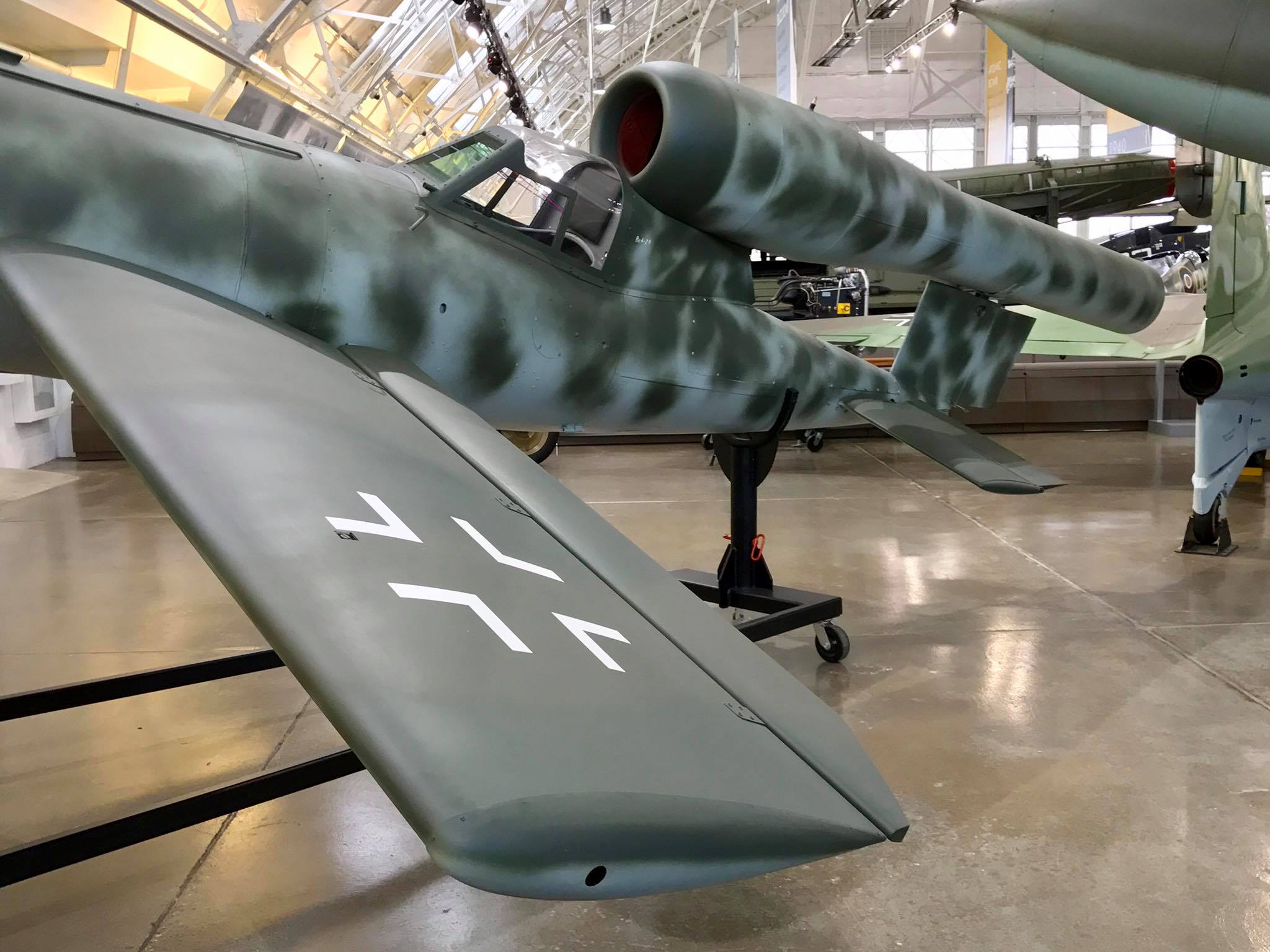
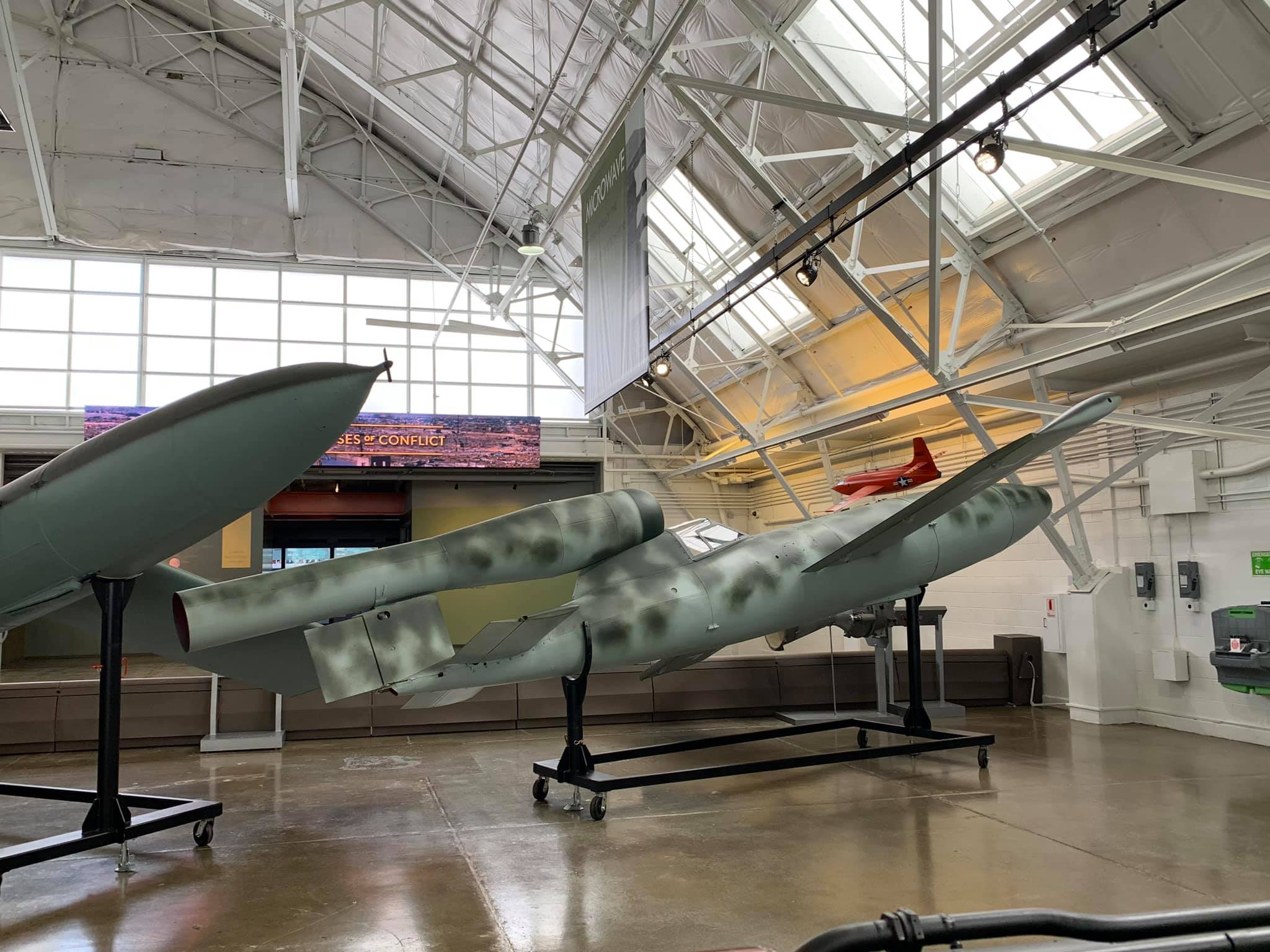
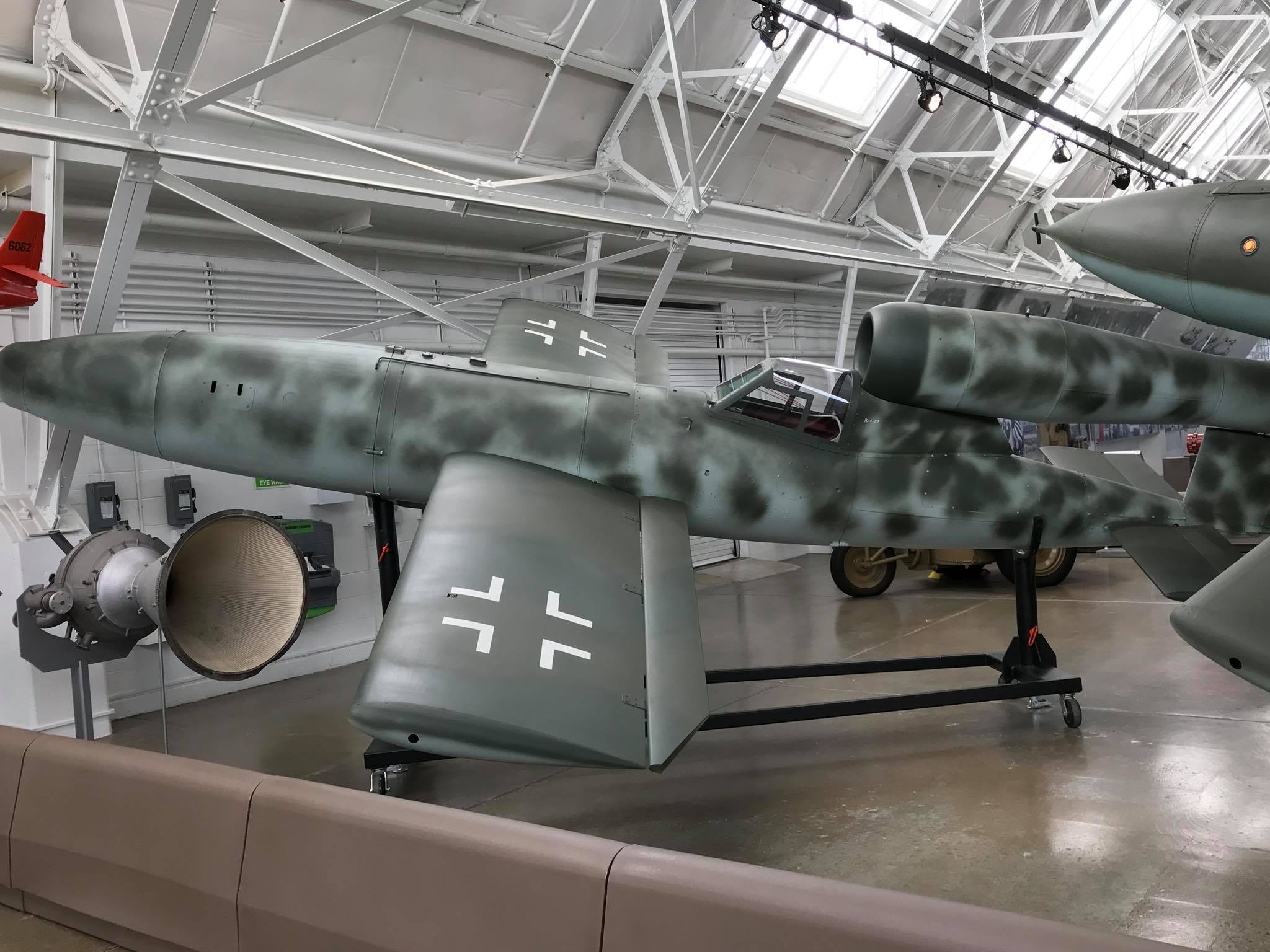
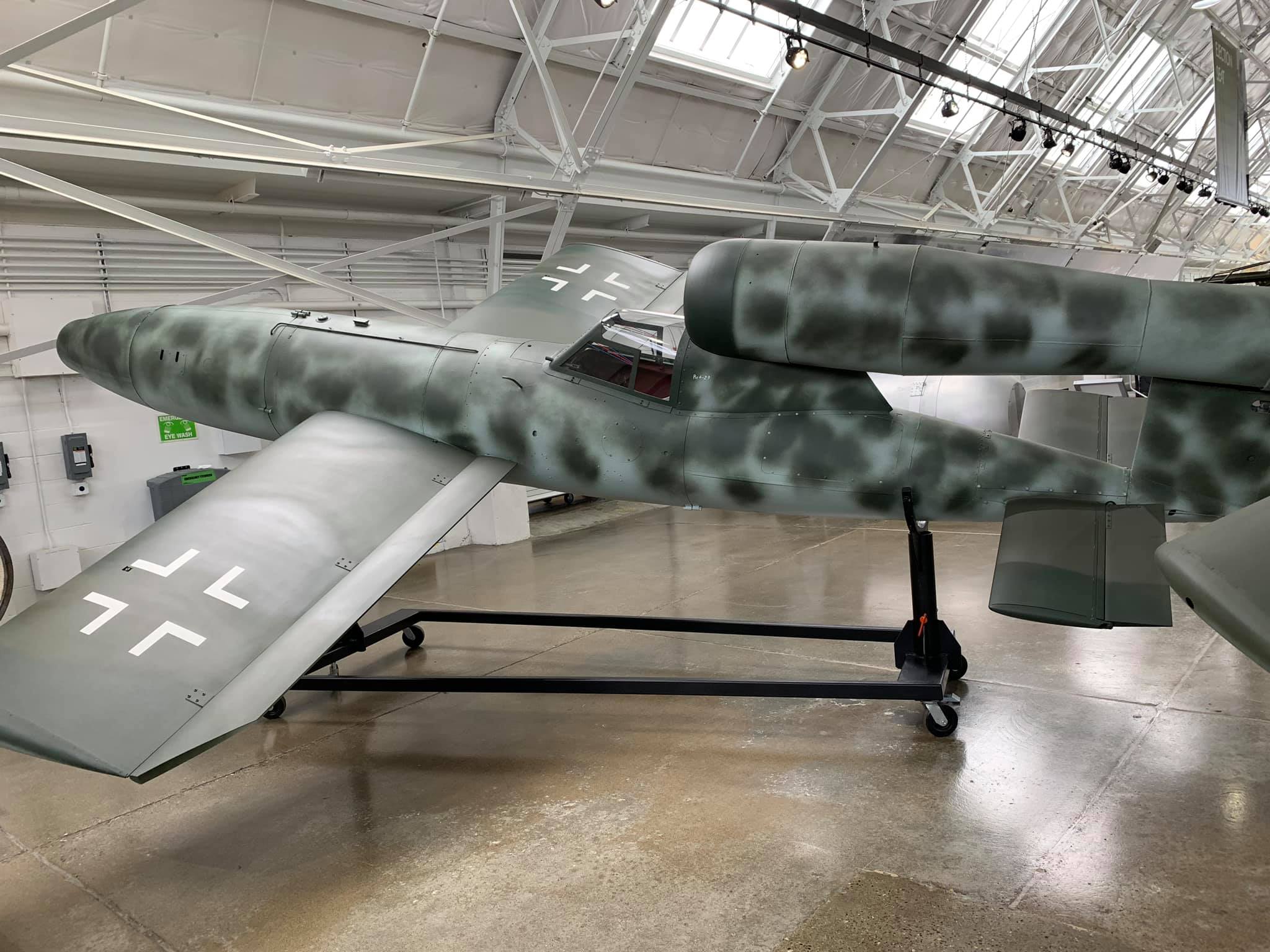
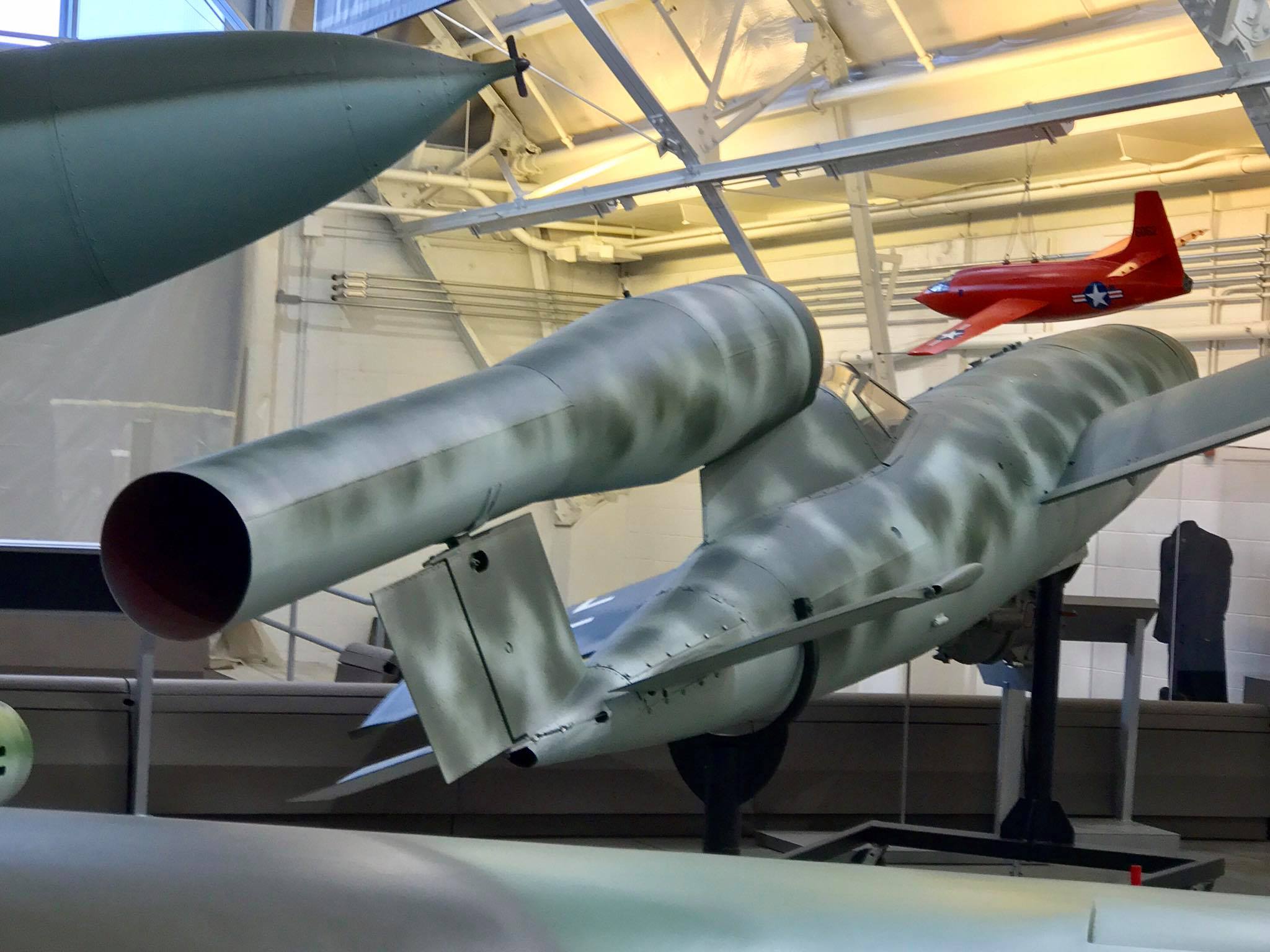
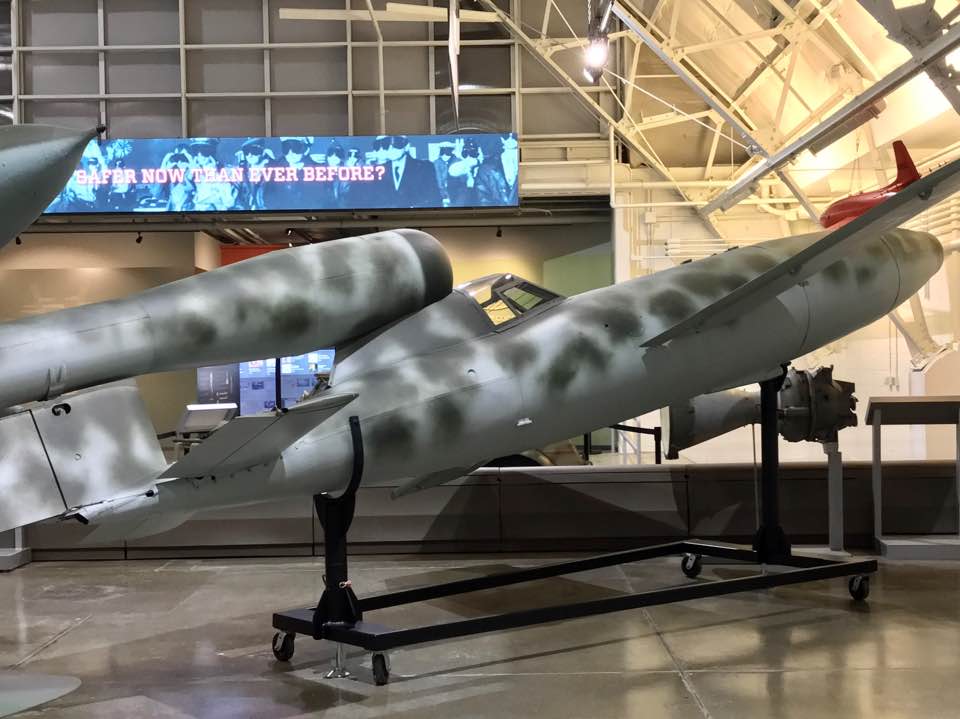
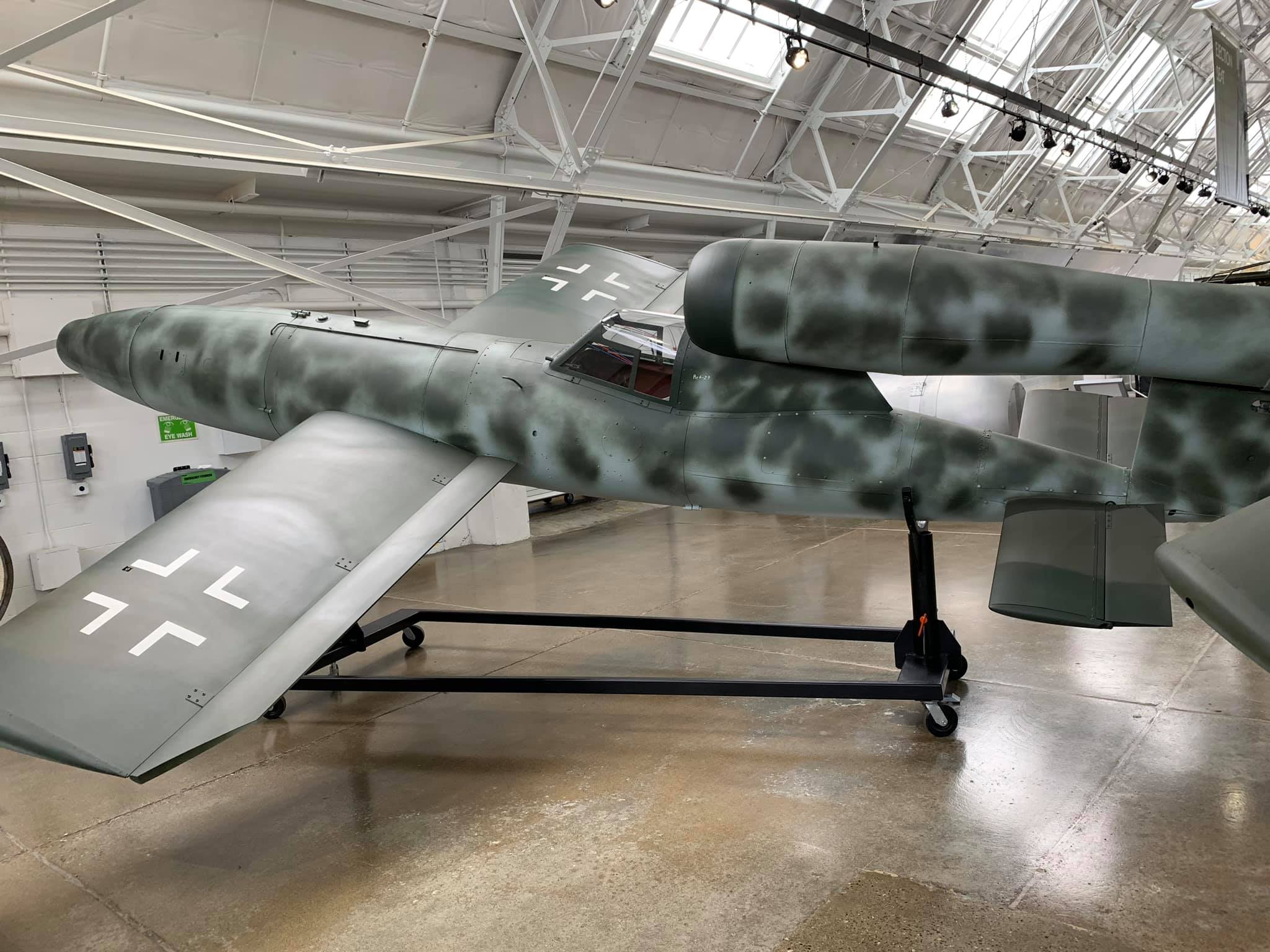
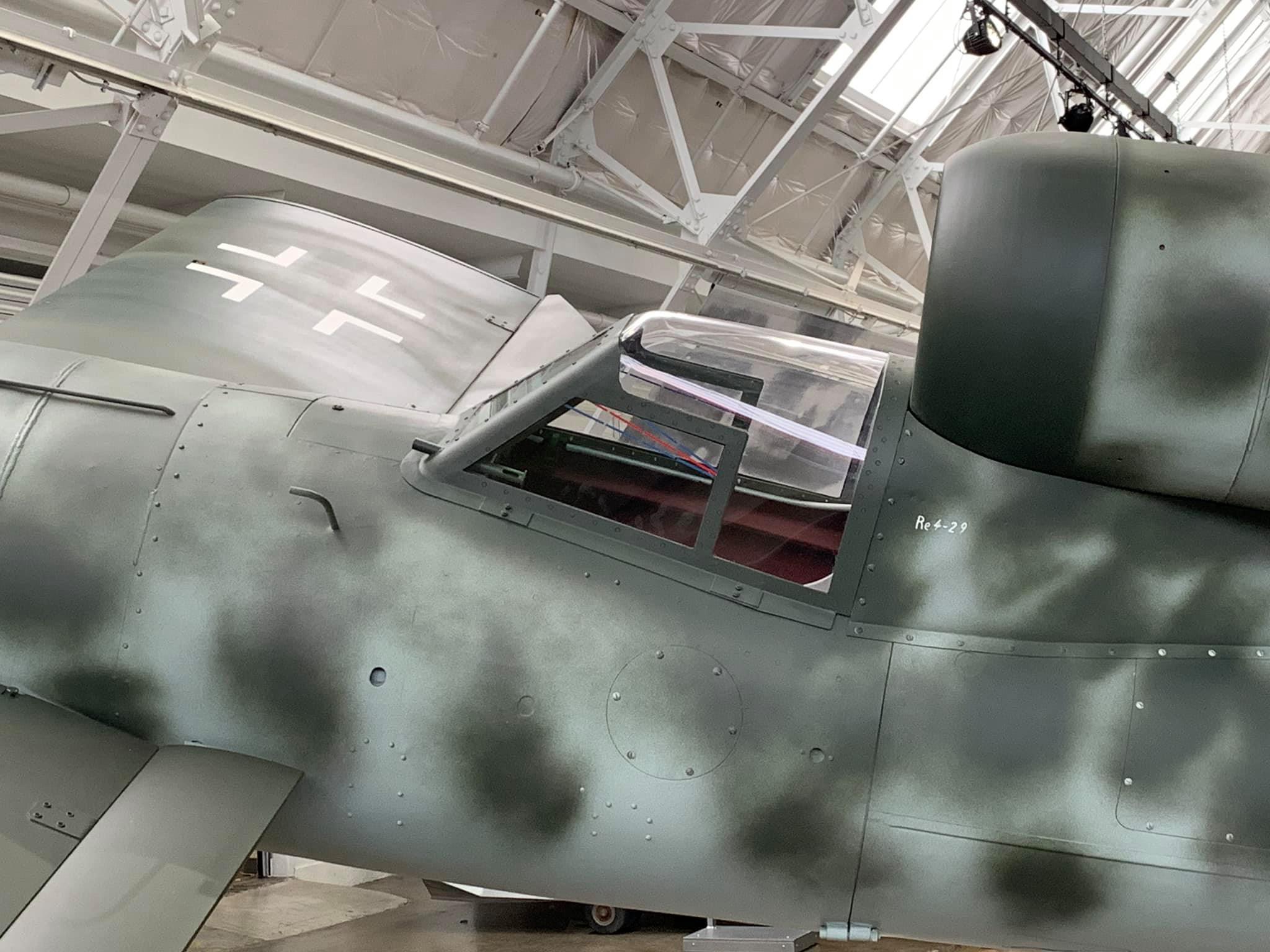
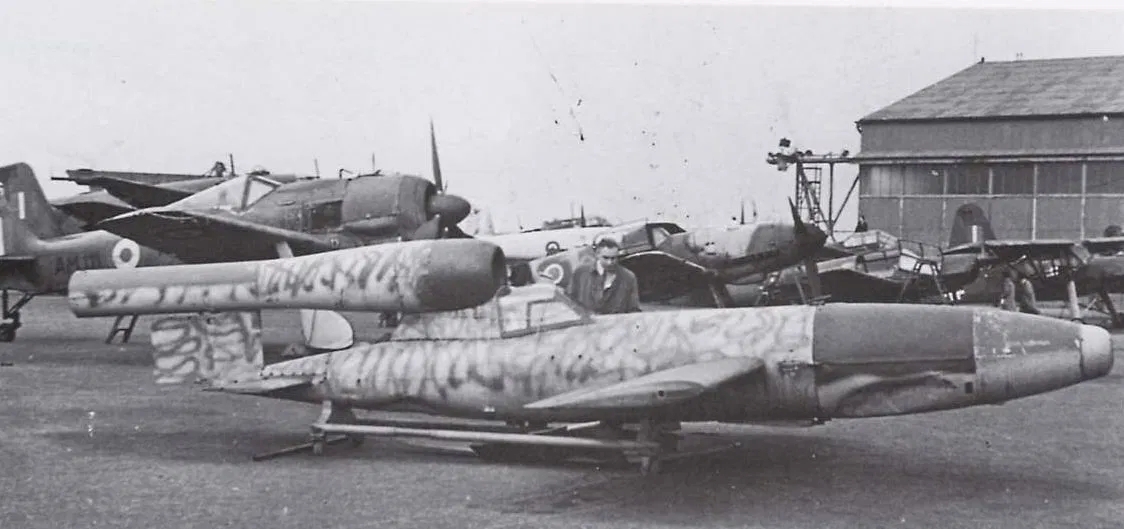
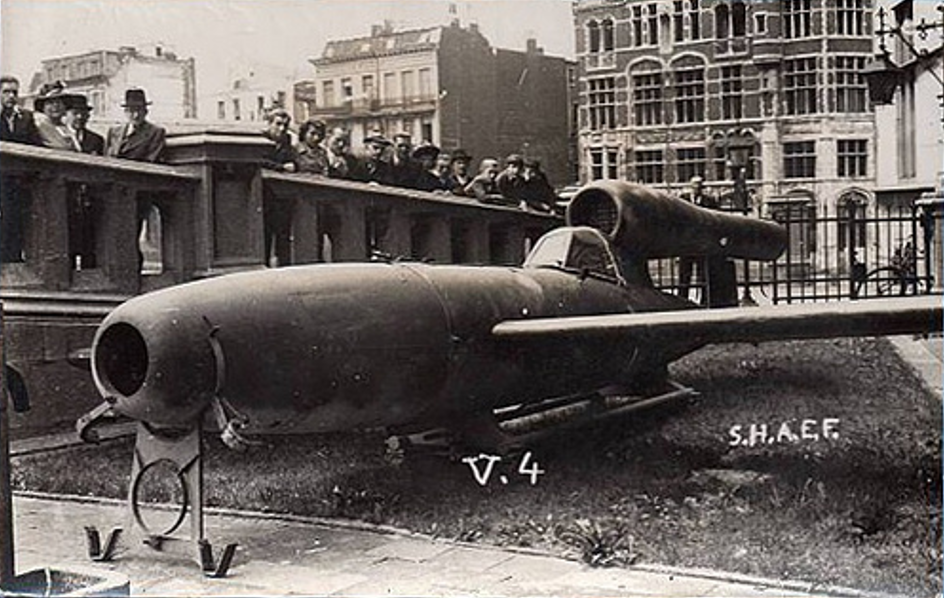
In the summer of 1944, the Deutsche Forschungsanstalt für Segelflug (DFS – German Research Institute for Sailplane Flight) was tasked with fitting the Gerhard Fieseler Werke Fieseler Fi-103 “V-1” Vergeltungswaffe (retaliatory/reprisal/vengeance weapon) flying bomb with a cockpit. It was given the codename “Reichenberg Geräte” (Reichenberg Apparatus) after the capital of the former Czech territory in the Reichsgau Sudetenland (now Liberec). Some Fieseler plants were located in Czechoslovakia. The aircraft was manufactured of sheet metal and plywood (the wing and nose cone). It was powered by an Argus AS 109-014 pulsejet (50 pulses per second), which was ignited by an automobile spark plug using a portable electrical power unit and (typically) acetylene gas.
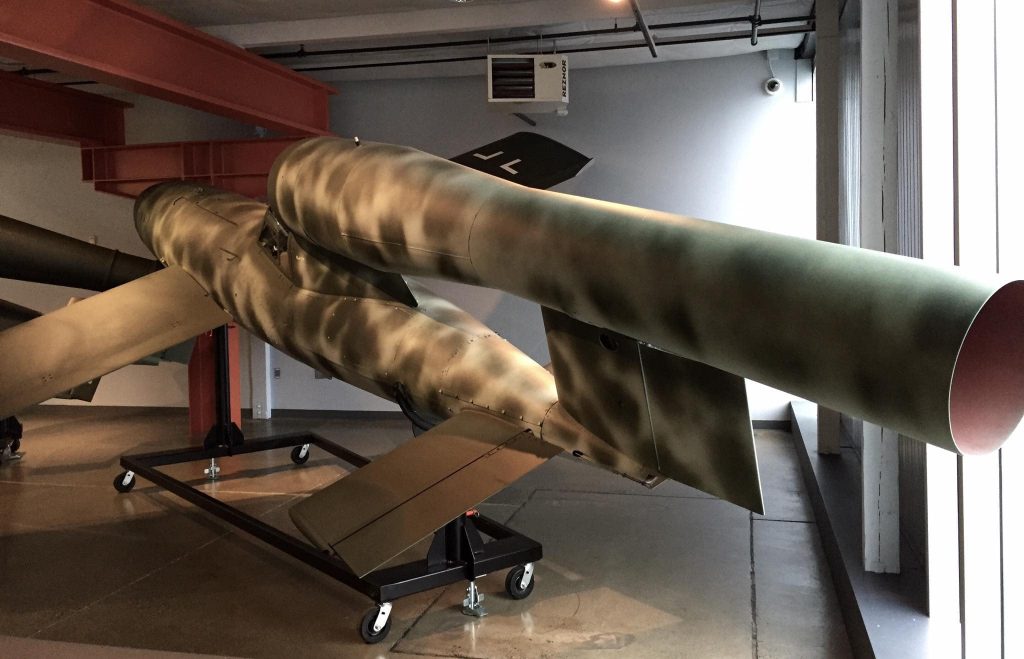
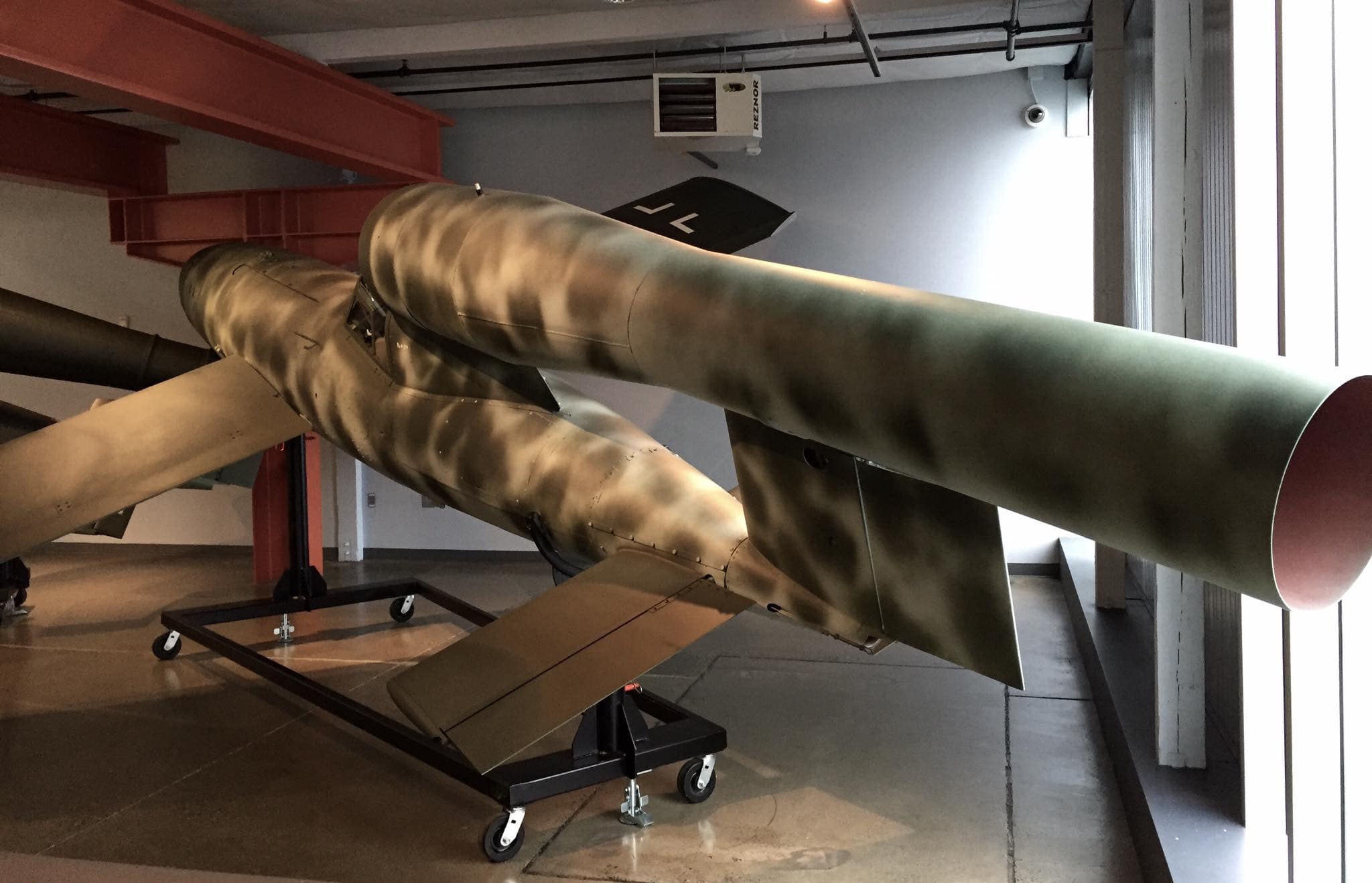
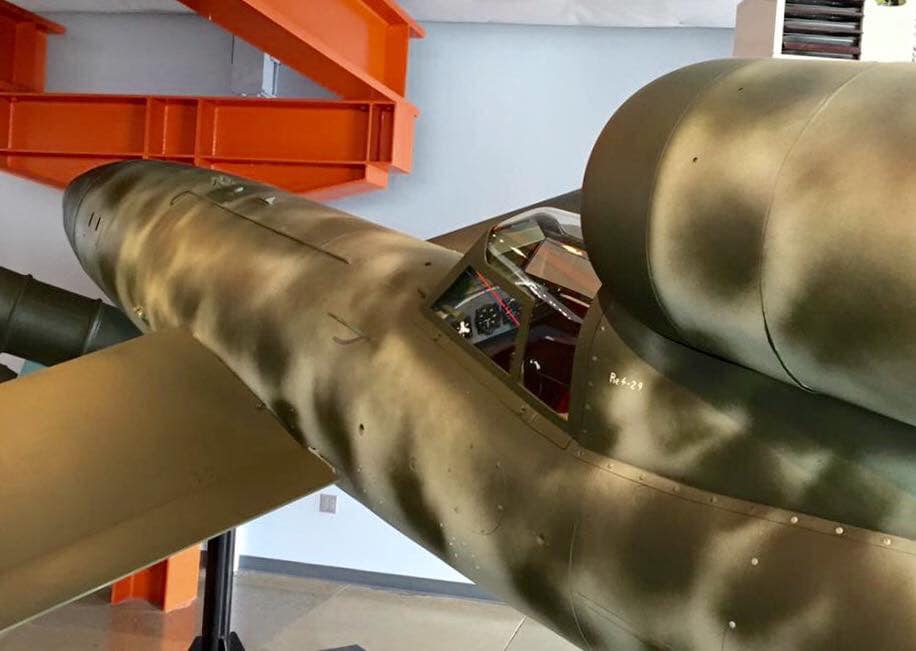
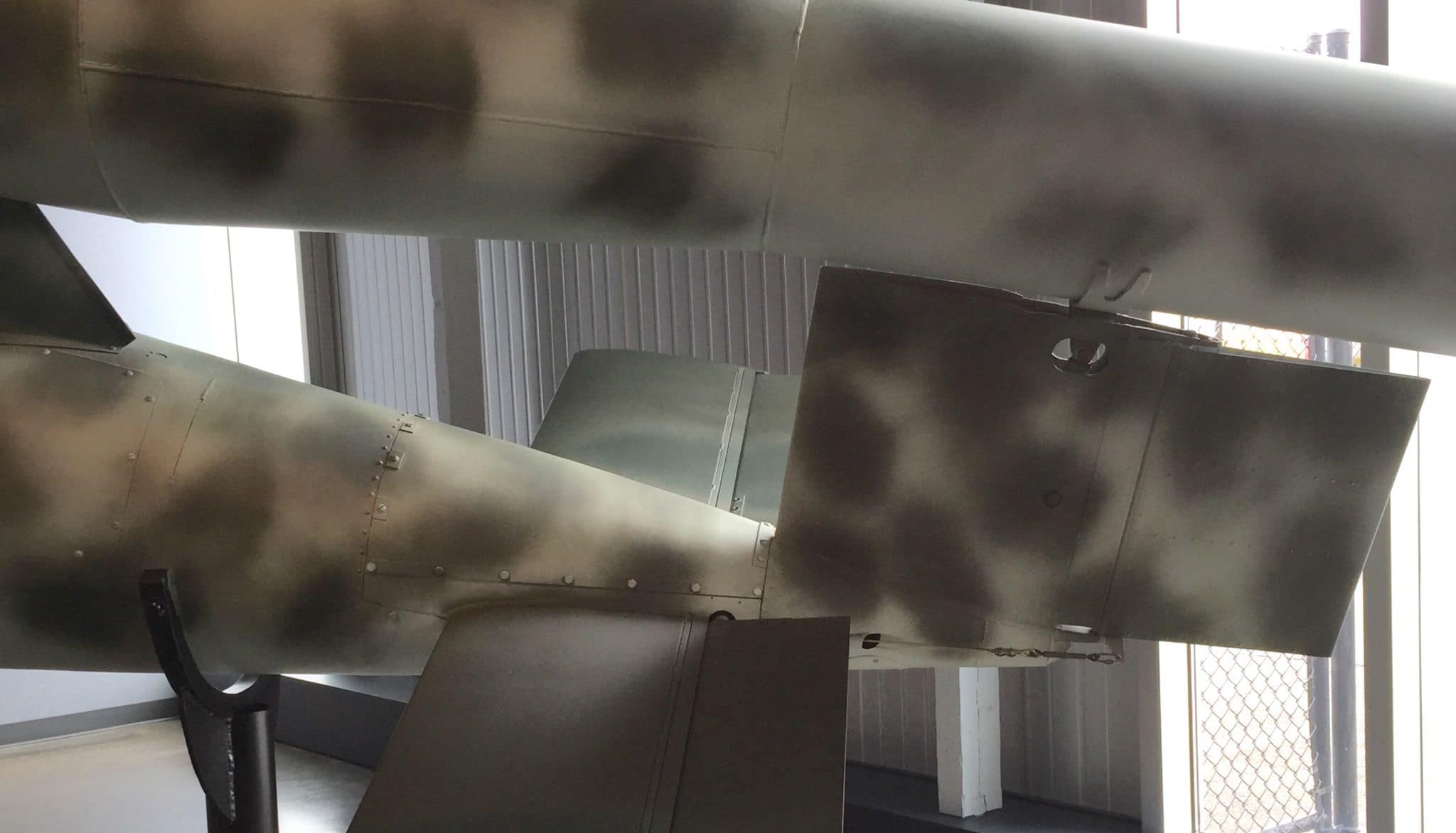
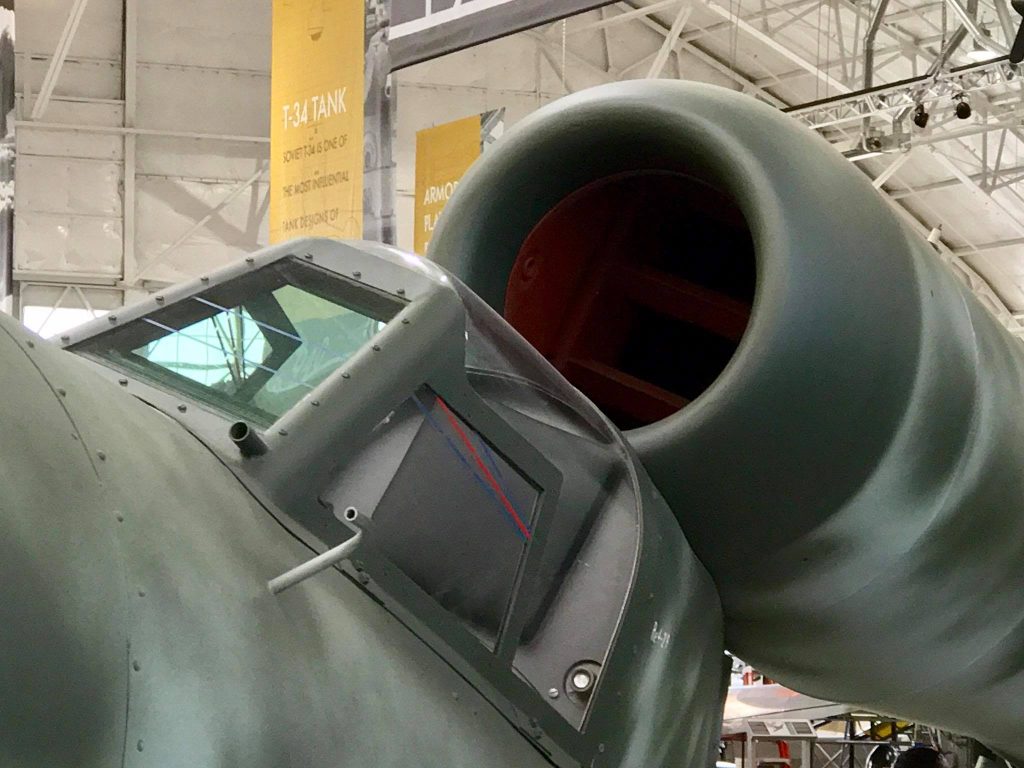
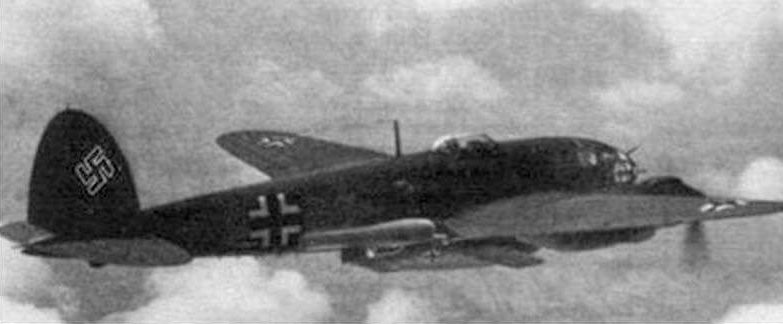
The engine used 75 octane gasoline, and once operational temperature was reached, the spark plug was no longer needed. It was fitted with an 850 kg Amatol 39 high explosive warhead in the nose cone. The cockpit was placed behind an armored front panel, and the instrument panel was comprised of a clock, speed indicator, altimeter, turn and bank indicator, gyrocompass, and a switch to arm the warhead. Some space was gained by removing the autopilot that the V-1 had and reducing the number of compressed-air cylinders from two to one. The side cockpit window had dive angles painted on it for the pilot to supposedly get a last-moment bearing before bailing out; the intent being that the pilot ejects and parachutes to safety once the target had been visually acquired. The leading edges of the wings were fitted with hardened edges to cut barrage balloon cables. It was planned that Heinkel He-111’s would carry and launch one or two Fi-103R-IV’s from under its wings.
Beginning in late 1944, a number of these were built and then tested by the Luftwaffe Leonidas Squadron of Kampfgeschwader 200 (KG 200, named after Leonidas I, King of Sparta, who is said to have led his 300 Spartans against the Persians at the Battle of Thermopylae, fighting to the last man), which was a squadron whose members were required to sign an agreement attesting to the assignment’s lethality. It bears noting that by the summer of 1944, individual German pilots had taken to ramming Allied aircraft; and in April 1945, Sonderkommando Elbe was formed to employ ramming tactics; but Selbstopfermänner (self-sacrifice men) tactics were only intended to be employed as a last resort, although Sturmgruppen (assault troops or aviation elite units) were required to take an oath that they would do so if needed and yet to ensure that every effort was made to escape. This applied to (at least) the Fi-103Rs, Me-163 Komets, and even Bf-109s and Fw-190s were lost in ramming tactics late in the war (it should be noted that particularly where the Fi-103R was concerned, the possibility of such an occurrence happening was remote, and the likes of well-known test pilots Hanna Reitsch and Heinz Kensche knew that the disclaimers were for public relations purposes).
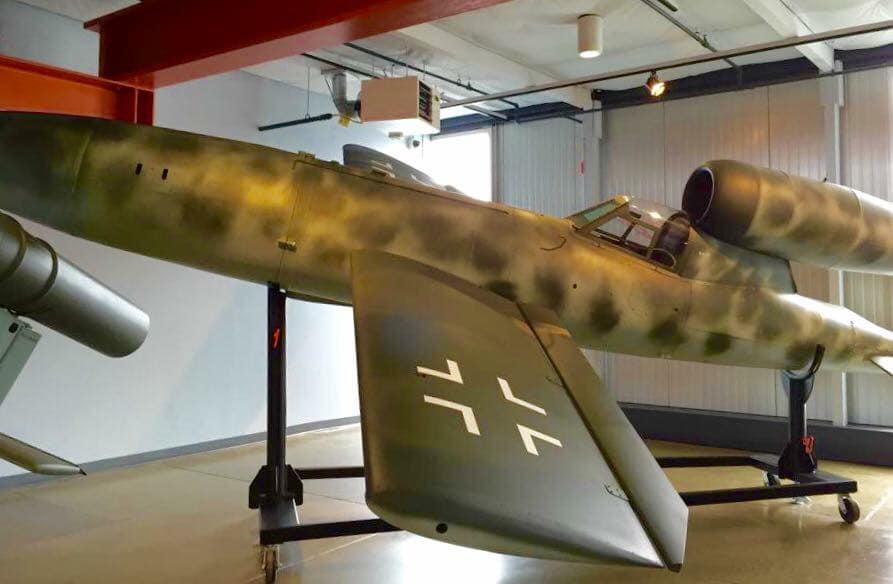
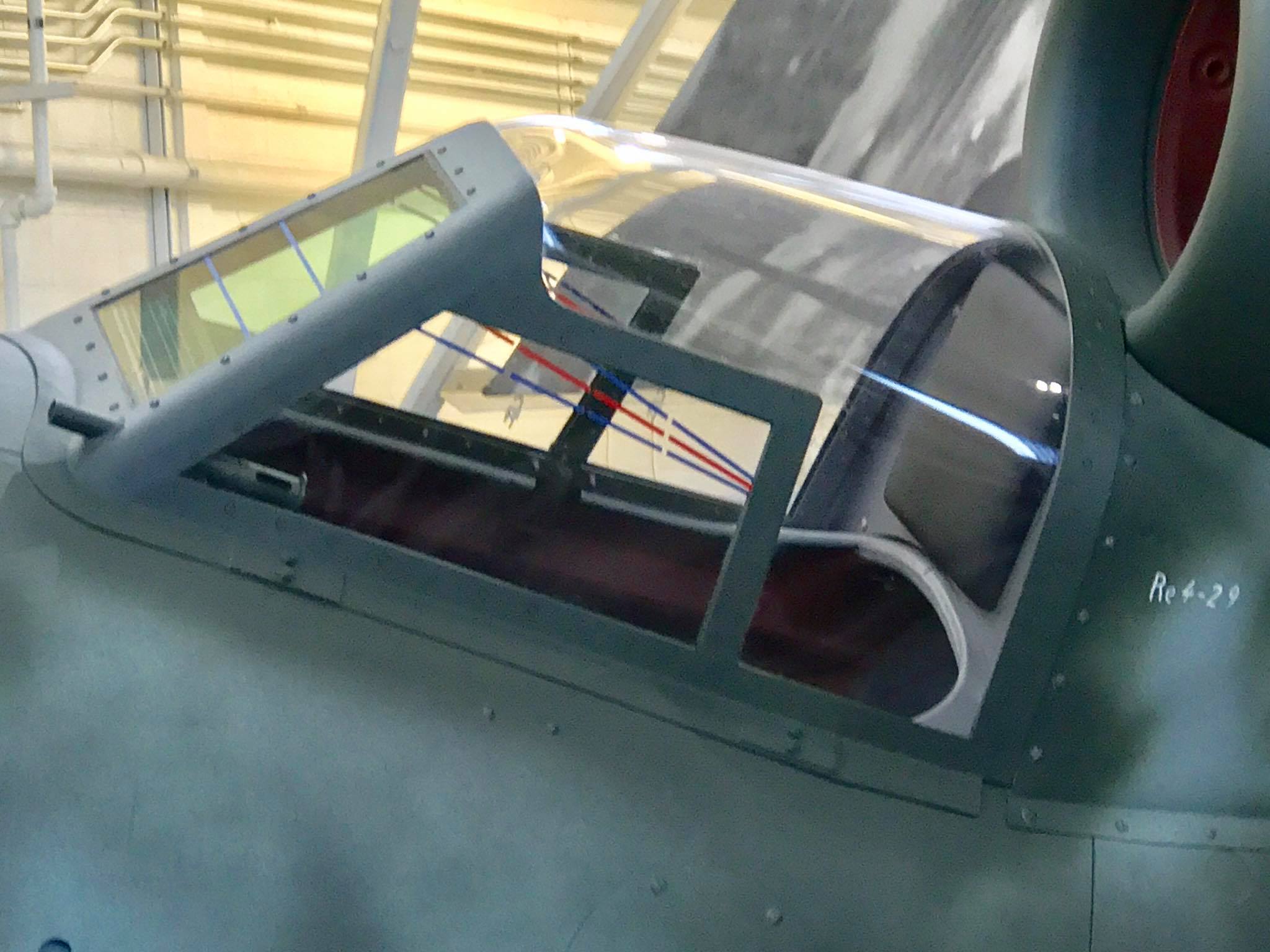
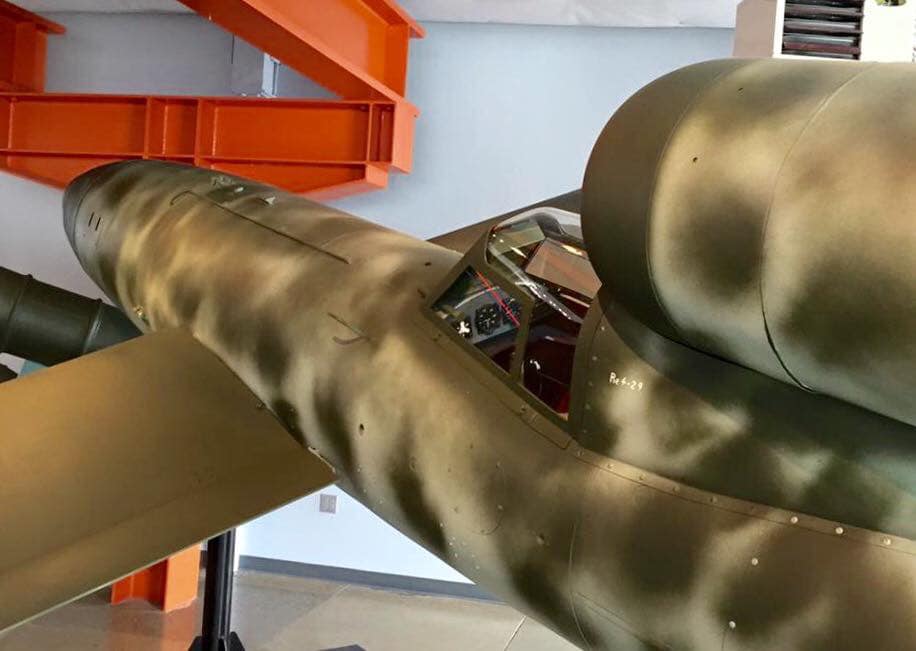
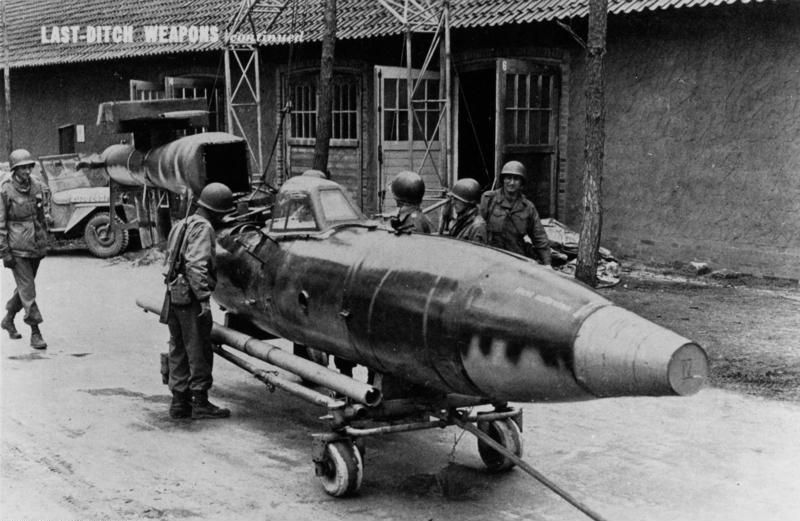
Approximately 70 pilots volunteered for duty. The other variant included the R-I, which was a single-seat glider version; the R-II, a two-seat glider; the R-III, a pulse-jet trainer; and the R-V, a trainer for the He-162. Those painted in green-gray Luftwaffe camouflage were “Wasserläufer” – intended to be used against shipping. Yet, Hanna Reitsch was supportive of the Fi-103R project, and successfully tested the aircraft, although not without injury. After successive failures, Werner Baumbach, the new KG 200 commander, convinced Minister of Armaments Albert Speer, and eventually Hitler, that the aircraft was a poor deployment of resources, and the squadron was disbanded on March 15, 1945. WWII ended before it could be flown in combat. Compare to the Japanese Yokosuka MXY7 “Ohka,” which was a piloted Kamikaze anti-shipping rocket. My photos – except, of course, for historical black-and-white photos and a cockpit photo courtesy of Alexander Kuncze, thanks – are at the Flying Heritage and Combat Armor Museum on Paine Field in Everett, Washington, and the link to my walk-around is below.
 About the author: Randy Malmstrom grew up in a family steeped in aviation culture. His father, Bob, was still a cadet in training with the USAAF at the end of WWII but did serve in Germany during the U.S. occupation in the immediate post-war period, where he had the opportunity to fly in a wide variety of types that flew in WWII. After returning to the States, Bob became a multi-engine aircraft sales manager and, as such, flew a wide variety of aircraft; Randy frequently accompanied him on these flights. Furthermore, Randy’s cousin, Einar Axel Malmstrom, flew P-47 Thunderbolts with the 356th FG from RAF Martlesham Heath. He was commanding this unit at the time he was shot down over France on April 24th, 1944, and spent the rest of the war as a prisoner of war. Following his repatriation at war’s end, Einar continued his military service, attaining the rank of Colonel. He was serving as Deputy Wing Commander of the 407th Strategic Fighter Wing at Great Falls AFB, MT at the time of his death in a T-33 training accident on August 21, 1954. The base was renamed in his honor in October 1955 and continues to serve in the present USAF as home to the 341st Missile Wing. Randy’s innate interest in history in general, and aviation history in particular, plus his educational background and passion for WWII warbirds, led him down his current path of capturing detailed aircraft walk-around photos and in-depth airframe histories, recording a precise description of a particular aircraft in all aspects.







Interesting weird wonder weapon – curious, with that massive intake directly above the cockpit, was the pilot expected to bail after the engine had stopped or was he instructed to dive, aim, stop the engine then jump?
Or was this proposed ‘routine exit’ another propaganda stunt?