

(Image credit: VAN)
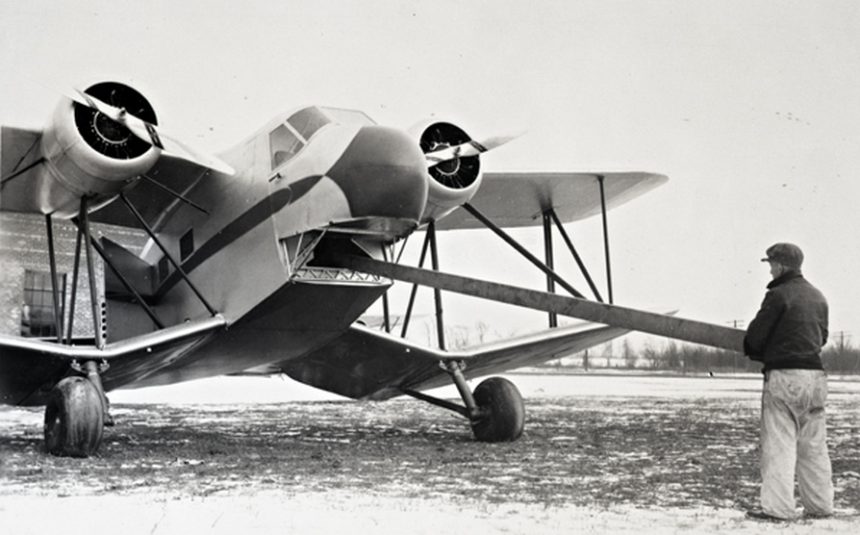
On this day in aviation history, 88 years ago (February 22, 1938), the first flight of the Fleet 50 Freighter took place. The Freighter was a twin-engined biplane that was designed by Canadian aerospace manufacturer Fleet Aircraft. Fleet’s Model 50 was developed as a general utility aircraft with the ability to take-off in short distances. Additionally, Fleet made the aircraft more friendly towards cargo handling, designing the airframe to be easier to load and unload. Development of the Fleet 50 began in 1936. The resulting design was a biplane, with an inverted-gull lower wing that had either conventional landing gear or floats attached beneath it. Mounted on the upper wings were the Freighter’s two 330-horsepower Jacobs L-6MB 7-cylinder radial engines. The Fleet 50’s fuselage was constructed of welded steel tubes and duralumin formers, and a semi-monocoque duralumin nose. The aircraft’s inboard wing panels were built from stressed-skin metal, while the outer panels were of fabric-covered wood beams and duralumin ribs.
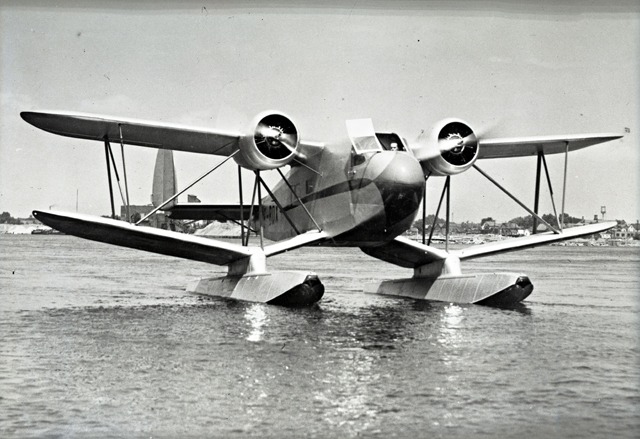
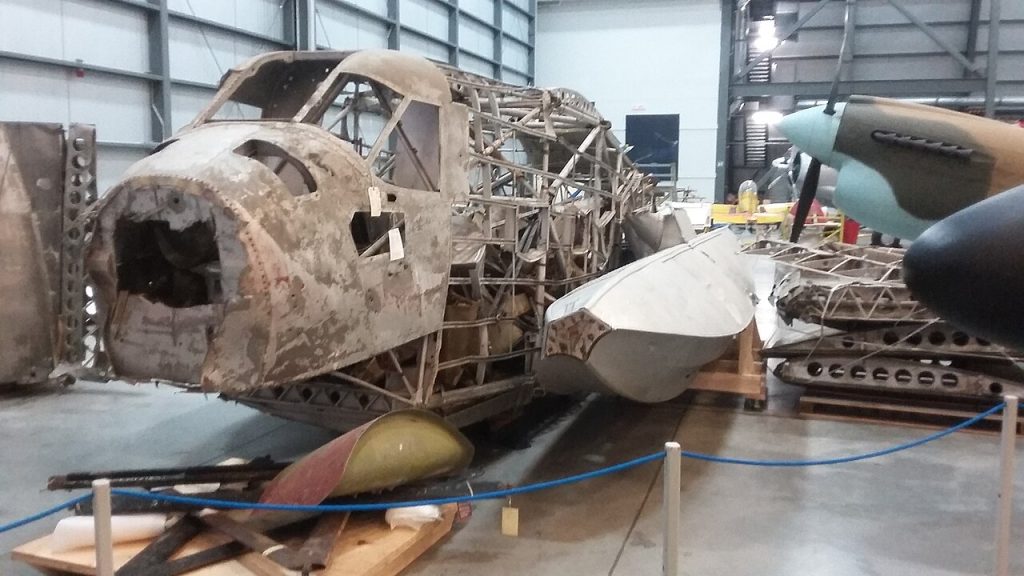
Fleet’s 50K landplane had a crew of two and a capacity for up to ten passengers or cargo. The Freighter featured large doors and a roof-mounted chain hoist that made loading and unloading cargo easier. The 50K had a maximum airspeed of 150 mph, a range of 560 nautical miles, and a service ceiling of 15,000 feet. During flight testing, the Fleet 50 proved to be underpowered. In the event of an engine loss, the aircraft could not maintain altitude with a single engine. Only 5 Freighters were ultimately built, and the remains of one of them survive today. The sole surviving Fleet 50 is on display “as is” at the Canada Aviation and Space Museum in Ottawa, Ontario.