







From an original update by Scott Thompson of AeroVintage.
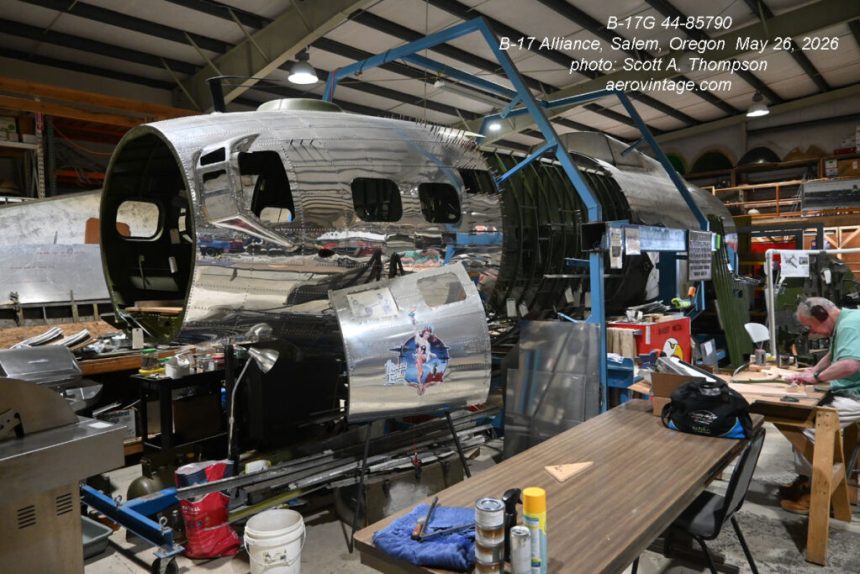
The restoration of Boeing B-17G Flying Fortress 44-85790, better known as Lacey Lady, continues to make steady progress at the B-17 Alliance facility in Salem, Oregon. During a recent visit to the restoration hangar by Scott Thompson of AeroVintage, significant advances were evident in the aircraft’s forward fuselage and engine nacelles, while ongoing efforts behind the scenes continue to support one of the most ambitious warbird restoration projects in the United States. The project remains under the leadership of restoration manager Lee Nielson, who oversees a growing team of volunteers dedicated to returning the Flying Fortress to airworthy condition. The active volunteer workforce has expanded to approximately 25 individuals, reflecting a focused effort to recruit and train new participants. A structured training and certification program ensures volunteers are qualified for the specific tasks assigned to them, an important factor in a restoration where both craftsmanship and regulatory compliance are equally critical.
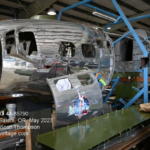
Rebuilding a historic aircraft involves far more than fabricating and installing components. Every part and assembly must be carefully documented throughout the process, meeting strict Federal Aviation Administration requirements that will ultimately be essential when the aircraft undergoes inspection for an airworthiness certificate. Among the most noticeable accomplishments over the past year has been the transformation of the cockpit section. Compared to its condition during a visit in 2025, the upper cockpit structure has advanced substantially. The internal framework has been rebuilt and installed, including the cockpit floor and interior sidewall assemblies.
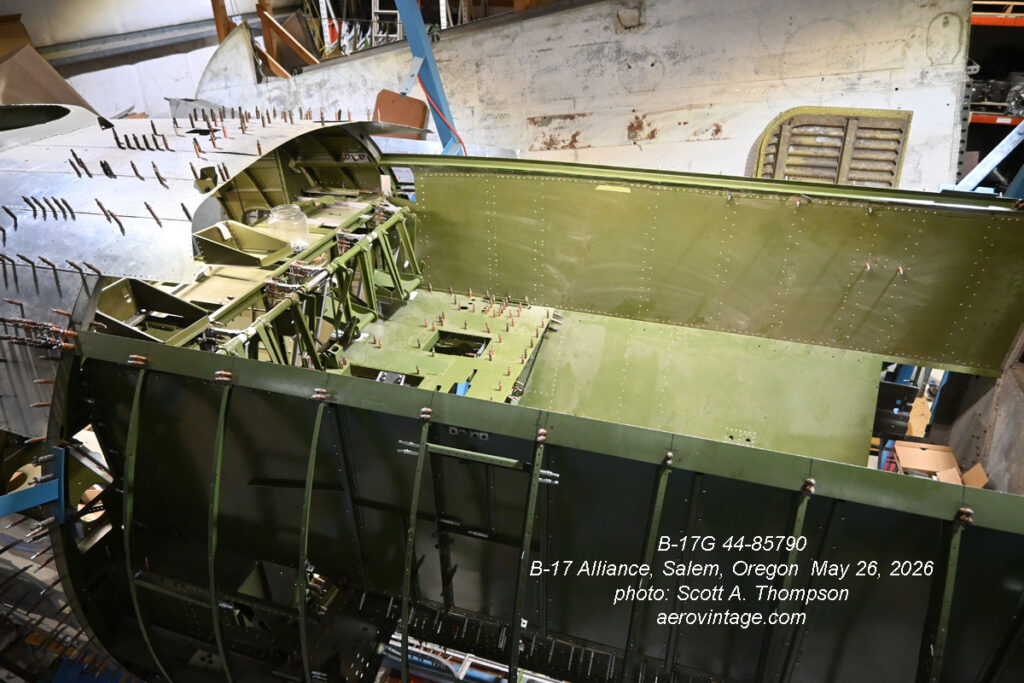
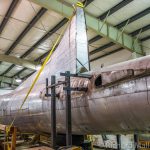
Two of the three primary structural longerons that connect the cockpit to both the nose section and bomb bay have been fabricated and fitted. In addition, all upper fuselage formers and stringers are now in place. The cockpit’s inner skin has been installed, along with the rudder pedal assembly. Station 3, which forms the forward cockpit bulkhead, is now structurally connected rearward to the point where it will eventually join Station 4, the forward bomb bay bulkhead. Restoration work is continuing on the lower cockpit section, where existing stringers and formers are being evaluated. Components that remain serviceable are being repaired, while those beyond restoration are being replaced. The third major longeron, located beneath the cockpit, will be replaced using a new component already acquired by the team. Preparations for the outer cockpit skin have also been completed. Restoration staff hope to begin installing the exterior skin panels by the end of this year. Once the skinning process is finished, the standard access panels on each side of the cockpit will permit installation of flight controls, fuel system components, and electrical wiring. Another major component currently under construction is a new turtledeck assembly. This structure incorporates the cockpit windows, top turret opening, and upper cockpit framework. B-17 specialist Ray Moore is fabricating the assembly at his facility in Asheville, North Carolina, with delivery anticipated early next year.
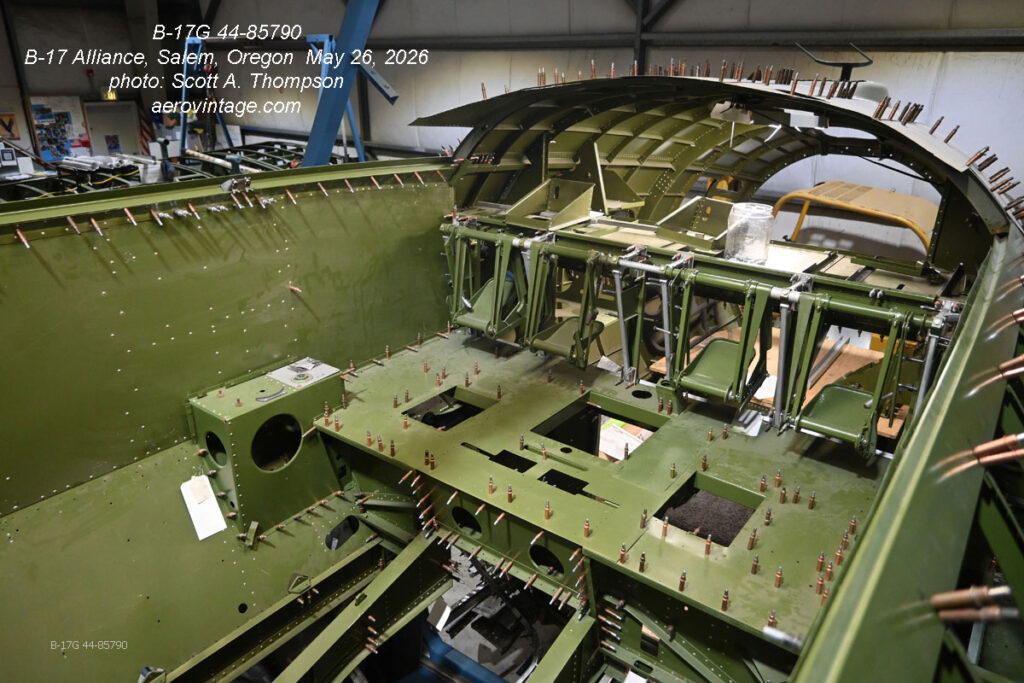
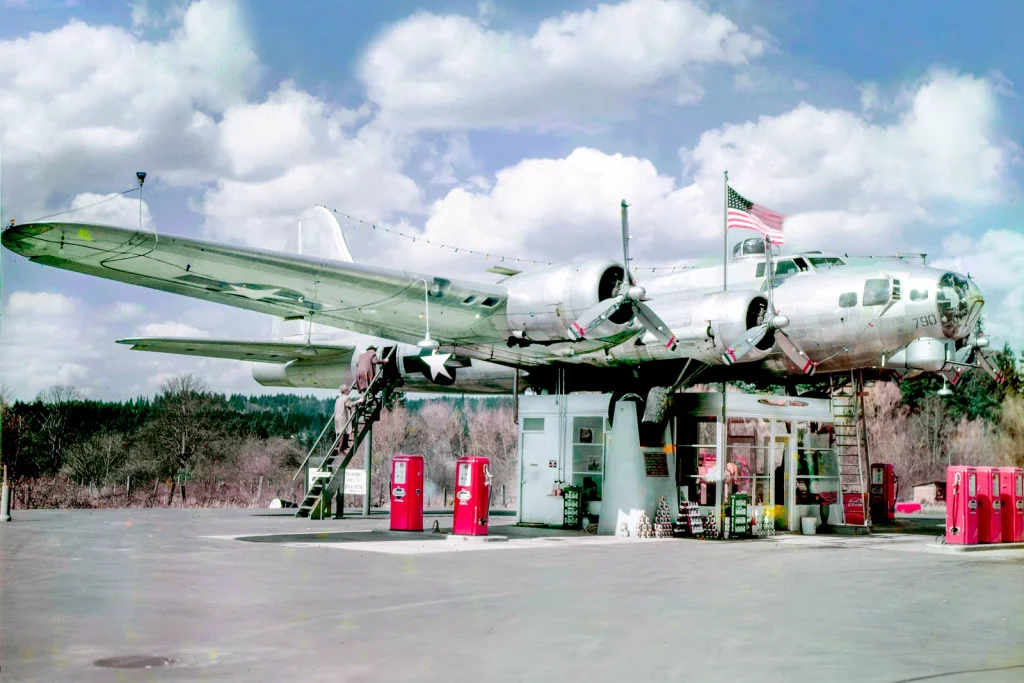
At present, the nose, cockpit, and bomb bay sections remain temporarily connected for alignment and fitting purposes at Stations 3 and 4. Permanent assembly will not take place until substantial restoration work on the bomb bay section has been completed. That phase is expected to begin once the cockpit restoration reaches a more advanced stage. While the project is unquestionably a team effort involving dozens of volunteers, one individual deserves special recognition. Volunteer Jack Redding has spent many years leading much of the work on the cockpit section. His involvement with Lacey Lady stretches back decades to the period when the aircraft was displayed above a gas station in Milwaukee and was first being disassembled for restoration. Progress is also evident on the aircraft’s No. 1 and No. 2 engine nacelles. When removed from the inner wing sections, all four nacelles suffered from significant deterioration. Restoration crews have salvaged and reused as much original structure as possible, but corrosion necessitated replacement of the entire exterior skin.
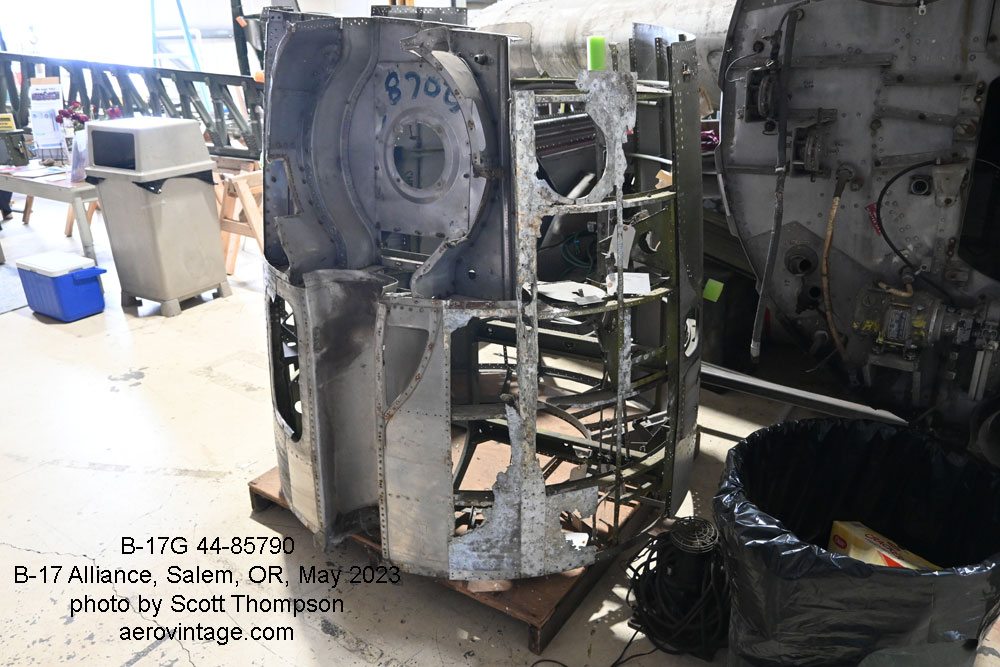
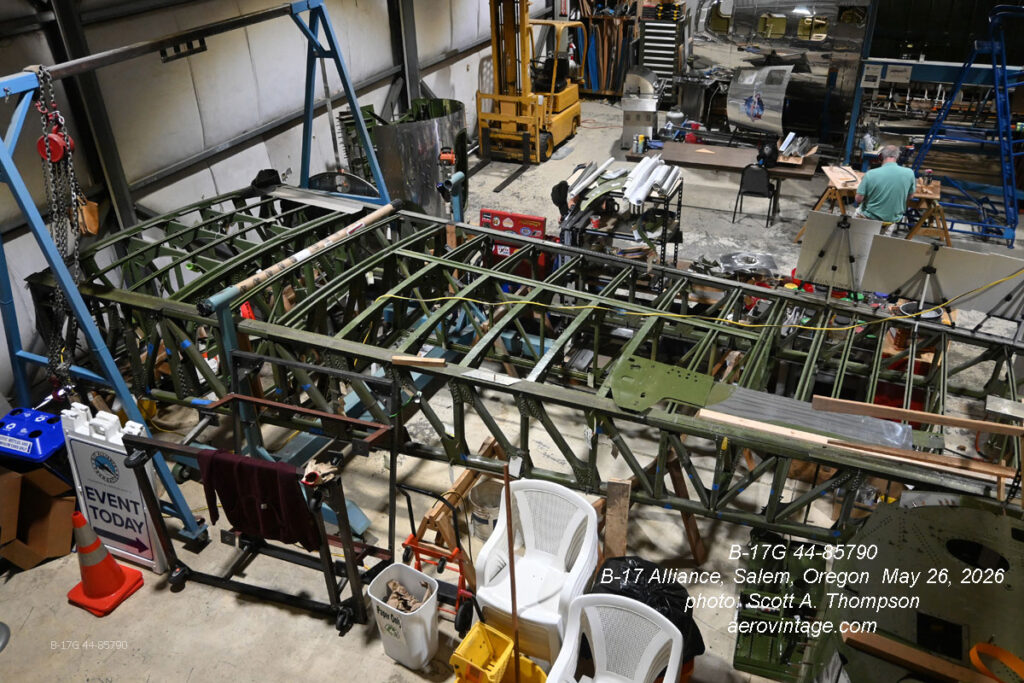
Today, both nacelles are approaching completion. The firewall for Engine No. 2 is ready for installation on the rebuilt nacelle. Although considerable work remains before the reconstructed left wing can accept these assemblies, the restoration team continues moving steadily toward that milestone. Work on the left inboard wing section has also advanced. The primary spars and ribs have been reassembled, and the next stage involves installation of the wing’s corrugated internal structure. Fortunately, many of the original corrugated panels removed during disassembly were found to be in exceptional condition thanks to the zinc chromate protective coating applied during manufacture in 1945. These components have been inspected, refurbished, reprimed, and are now ready for installation. Once complete, restoration crews can begin reskinning the wing. Several major airframe components still await restoration, including the right inboard wing section, both outboard wing panels, and the aft fuselage. The bomb bay section is expected to become the next major focus area, while work on the left inboard wing will continue simultaneously.
Beyond the physical restoration, the B-17 Alliance has achieved a significant organizational milestone. Earlier this year, the organization completed the purchase of the maintenance hangar that houses the project. The acquisition, which also includes the museum’s gift shop and office space, provides long-term stability and security for the restoration effort. The purchase was made possible through a year-long fundraising campaign. Documentation remains another essential aspect of the project. Every repair, fabrication, and installation is recorded in detail and continually reviewed by an FAA Inspector Authorized (IA) mechanic. When the restoration is eventually completed, the FAA will closely examine not only the aircraft itself but also the documentation trail supporting every aspect of the rebuild. To manage this process, the B-17 Alliance maintains both paper and digital records. Supporting the restoration is an equally important effort to provide accurate Boeing engineering drawings. Volunteer J.B. Leahy has developed a system to decode and organize thousands of technical drawings applicable to this particular Lockheed-Vega-built B-17 production block. Since individual parts, subassemblies, and assemblies each require their own engineering drawings, access to accurate documentation is critical.
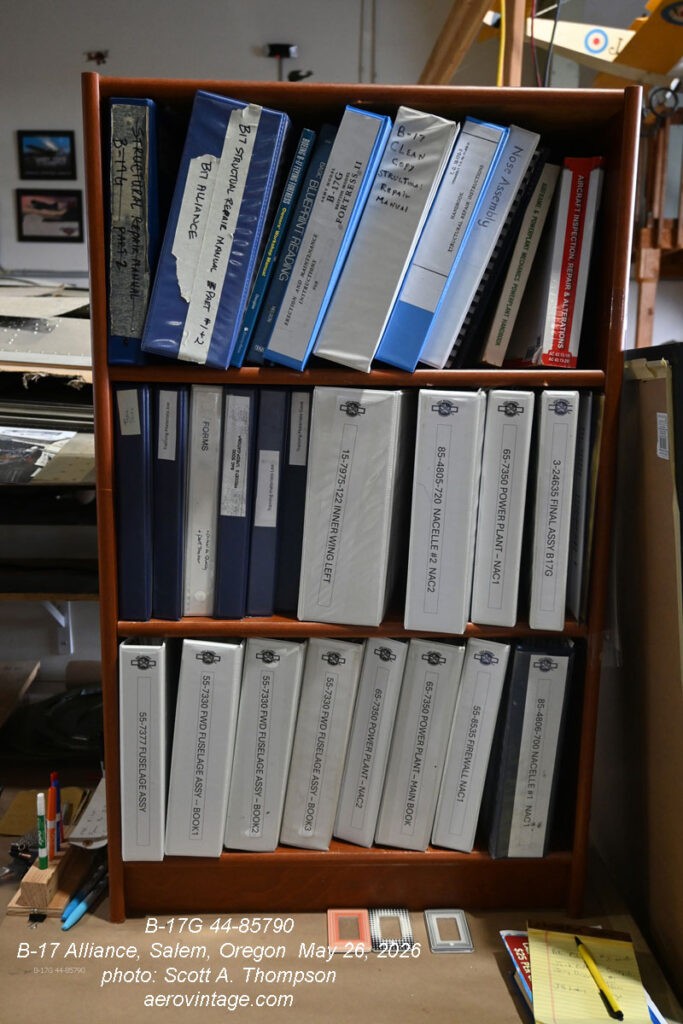
Using original microfiche records and specialized software, Leahy has successfully reconstructed complete drawings from fragmented source material. The resulting database allows restoration personnel to quickly locate and print full-size drawings as needed. Much of the documentation required for current work has already been completed, with additional drawing packages being prepared for future restoration phases. The B-17 Alliance continues to seek both volunteers and financial support. While the volunteer base has steadily grown, funding remains an ongoing challenge. Grant applications and fundraising activities are constant necessities for a project of this scale.
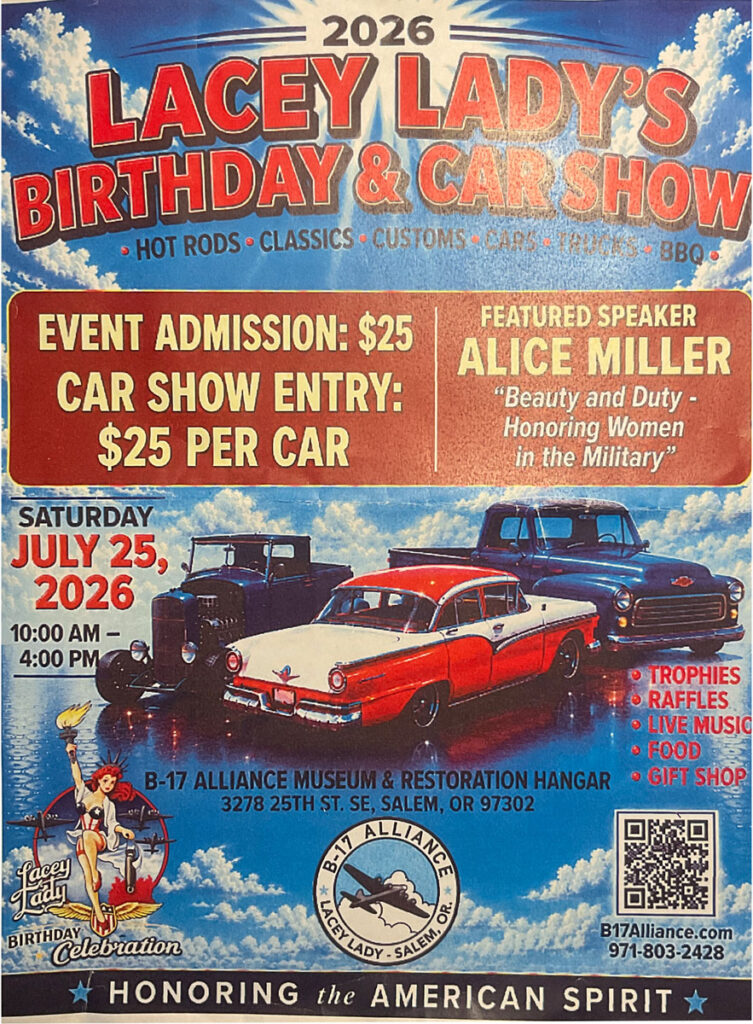
One of the organization’s major annual fundraising events, the 2026 Lacey Lady Birthday Celebration and Car Show, is scheduled for July 25 at the museum. The event offers supporters an opportunity to visit the restoration project, meet volunteers, and contribute to the aircraft’s return to flight.
As a registered 501(c)(3) nonprofit organization, the B-17 Alliance Foundation accepts tax-deductible donations, and museum memberships also provide valuable support for the restoration effort. The progress achieved to date stands as a testament to the dedication, technical skill, and perseverance of the volunteers and staff committed to bringing Lacey Lady back to the skies. While years of work still lie ahead, the restoration continues to move forward one carefully documented step at a time. Click HERE to donate and support this restoration. Many thanks indeed to Scott A. Thompson for allowing us to reproduce this article… his book, Final Cut: The Post-War B-17 Flying Fortress and Survivors as well as other titles are the gold standard when it comes to the airframe history it describes!









I’m a student of WW2 and a huge fan of the B-17. Hard to believe that over 35,000 were built and only a handful are still around. A B-17 used to be at an air show near me every year, but, no more. Wanted to take a flight but $450.00 for a half hour was too steep. I do regret it though. This is great news and can’t wait until it’s finished. I wish they were still dark green though.
Just amazing.
Always a pleasure to receive your emails! Thanks. My first visit to the airshows of the C.A.F. started in Harlingen, Texas, in 1980. This show is still the best airshow I ever saw….Now I am 80….Do you know if there was made a movie of (parts) of this airshow? Then I would be enormously pleased to know how to obtain that movie on DVD or on DVCAM (I have a Sony DVCAM recorder which can perform also in the USA-NTSC standard)
Friendly greetings from Hendrik Kleve, Amsterdam,Holland
Sometime in 1983, my CAP Group flew from SAT to Big Springs, Texas for a SAREX. It got rained out + high winds the next day.
Since we are pilots with time and energy on our hands, we flew over to Ft. Worth to visit a CAF museum. It included a B-17, don’t remember the series. We climbed all over it. I sat in the pilot’s seat for at least 10 minutes.
Other than a King nav-com and transponder, the panel looked original. Couldn’t see any damage to it; figured that was fixed years earlier.
I had seen other WW2 bombers, but this looked both big aircraft and small bomber. It had been rolled out of their hanger, so I guess it was just the perspective of it.