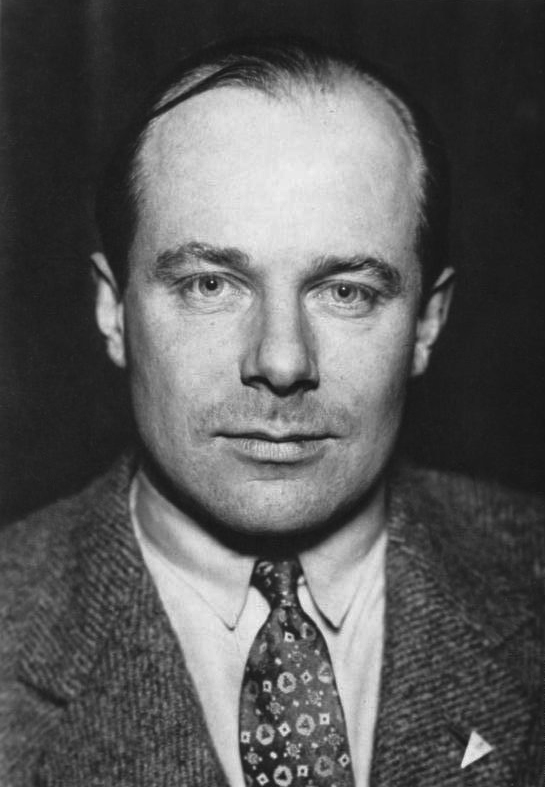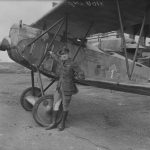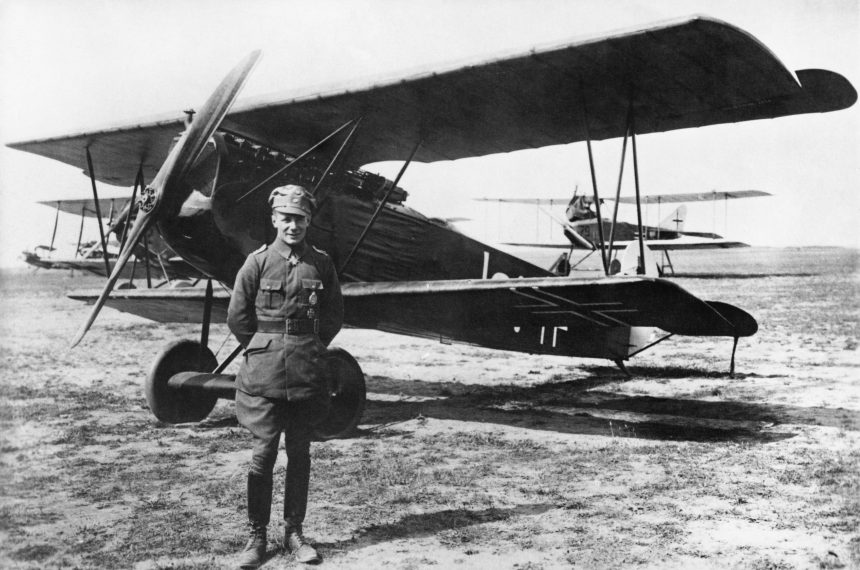

In WWI, Manfred von Richthofen, also known as the “Red Baron,” was the highest-scoring ace with 80 confirmed victories. But he couldn’t survive the war, and Ernst Udet, with a personal score of 62, became the highest-scoring German ace to survive WWI. Born on April 26, 1896, in Frankfurt am Main, Udet was interested in aviation from an early age and learned to fly at his own cost. After serving as a motorcycle messenger in the early days of WWI, he joined the German Air Force in September 1915 and became part of FFA 68, a fighter unit that later became Jasta 15. Ernst Udet flew a Fokker plane in this unit. Ernst Udet’s first confirmed victory came on March 18, 1916, when he shot down a Farman F40. His second victory came on October 12, followed by another in December to reach a personal score of three by the end of 1916. After scoring another victory in February 1917, he officially became an ace on April 24, 1917. He scored one more victory in Jasta 15 before transferring to Jasta 37 in June 1917. He flew an Albatros aircraft in his new unit and claimed three victories in August, four in September, and one each in October, November, and December, to reach a personal score of 16. In January 1918, he shot down three aerial targets, and one in February, bringing his score to 20.
Ace Journey of Ernst Udet
By now, due to his flying skills, Ernst Udet was invited to join the “Flying Circus,” Jagdgeschwader 1, an elite group of German fighter pilots led by Manfred von Richthofen. Richthofen made Udet the commander of Jasta 11, and from then on, Udet flew a Fokker D.VII fighter. With Jasta 11, Udet scored three victories in March 1918 and one more on April 6, after which he had to take some time off the front due to an ear infection. Meanwhile, Richthofen was killed in action in April 1918. After Ernst Udet returned, he joined Jasta 4 and scored one victory in May, followed by 12 in June, four in July, 20 in August, and two in September, bringing his personal score to 62. On September 28, 1918, Udet was injured in his thigh. He was still recovering from this wound on Armistice Day, November 11, 1918, when the war ended with Germany’s defeat. After the war, Udet faced a Communist attack while returning from a military hospital. He had mock dogfights with Robert Greim and helped start the first International Air Service between Germany and Austria, but his aircraft was taken away. He also performed in films and airshows, including stunts with Leni Riefenstahl. Later, Ernst Udet founded an aircraft manufacturing company, Udet Flugzeugbau. The company made small aircraft, including the U2 and U4, but he eventually left when it began making larger models.
WWII and Death
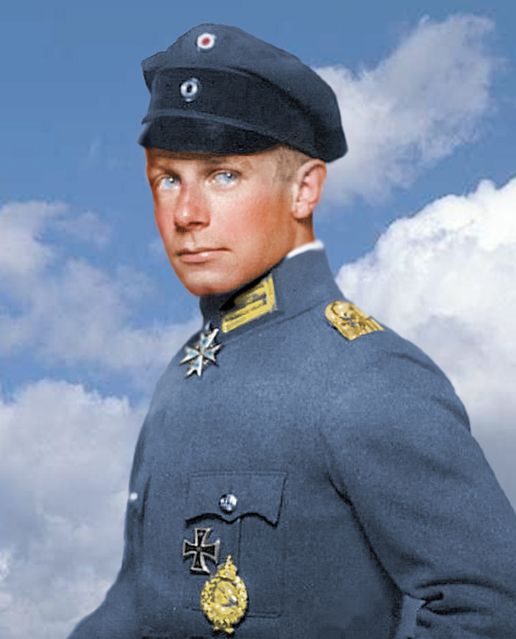
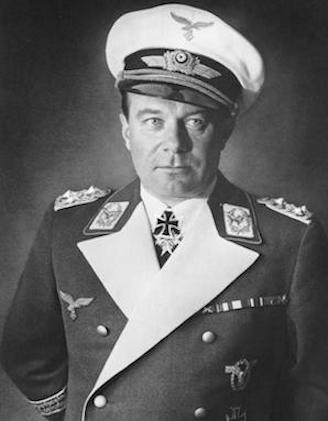
In 1933, Ernst Udet, who was not very interested in politics, joined the Nazi Party after Hermann Göring promised him two American-made Curtiss Hawk II biplanes. These planes later influenced Germany’s dive bomber designs, including the Junkers Ju 87 Stuka. Ernst Udet became a strong supporter of dive bombers in the Luftwaffe and, in 1936, the head of the Technical Office of the Reich Air Ministry. However, he had difficulties with the bureaucracy and began to rely on alcohol. In 1939, he became the Chief of Procurement and Supply for the Luftwaffe, overseeing aircraft production during WWII. However, Germany’s industrial and military limitations led him to fall deeper into despair. After Germany’s failed efforts in the Battle of Britain and during Operation Barbarossa, Ernst Udet realized that Göring hid many facts from Adolf Hitler and blamed Udet for production failures. As a result, Udet’s mental health suffered, and by late 1941, he had lost his influence in the Luftwaffe. Finally, on November 17, 1941, Ernst Udet died by suicide. However, the Nazi regime covered up the truth and claimed he died while testing a new weapon. According to Udet’s biography, he wrote a suicide note in red pencil. The note said, “Ingelein, why have you left me?” and “Iron One, you are responsible for my death.” “Ingelein” was his girlfriend, Inge Bleyle, and “Iron One” referred to Hermann Göring. In the Aces series, a great pilot like Ernst Udet didn’t receive the respect he deserved, nor the death he earned. Read stories about other aces HERE.