






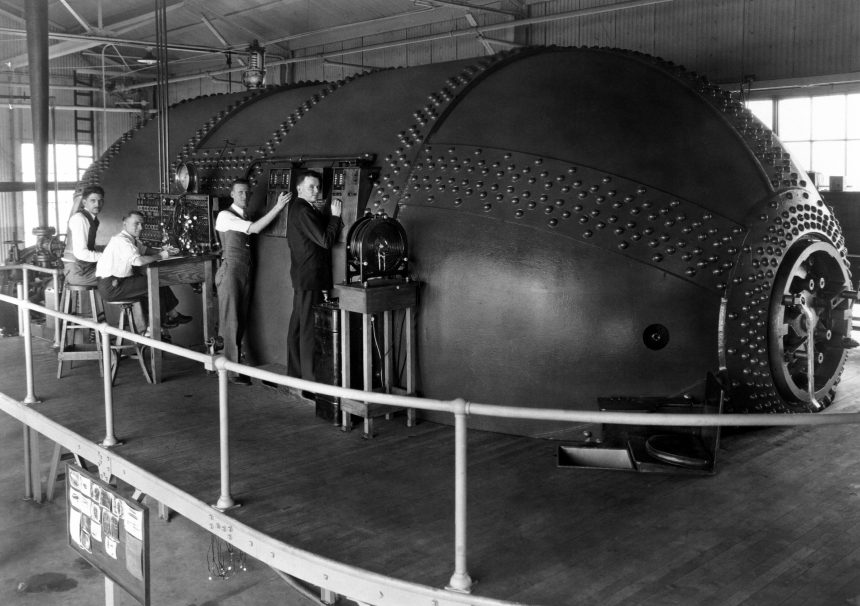

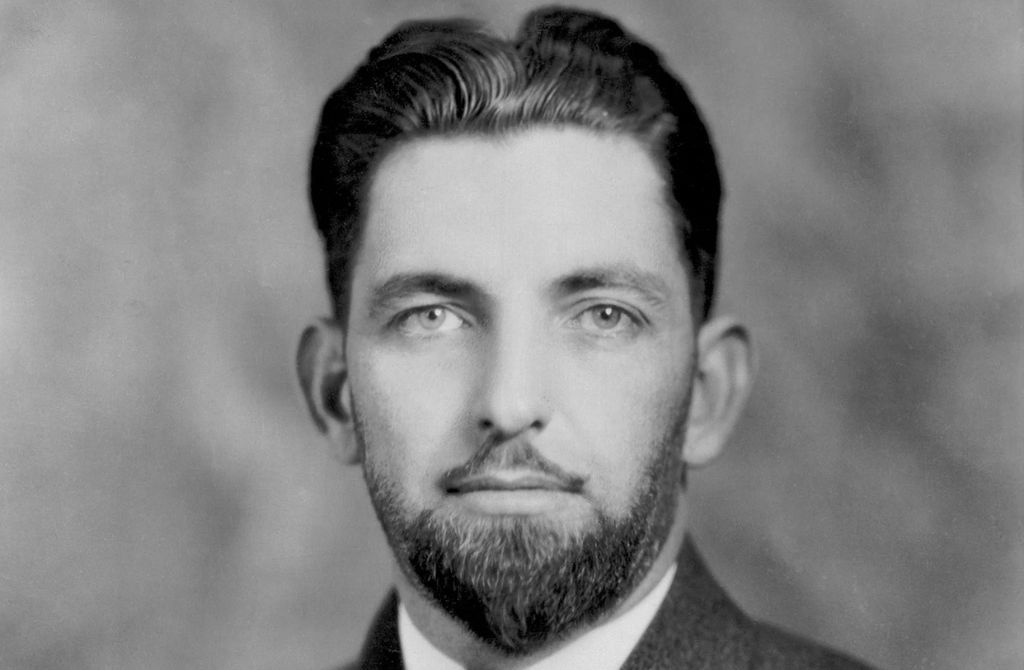
Imagine what modern aviation would look like if there were no advancements in airfoil design and wind tunnel technology. The person behind developing the better airfoil and wind tunnel, which proved very important in reaching modern aviation as we see it today, and even in designing one of WWII’s most influential aircraft, the P-51 Mustang, was Eastman Jacobs. He was also the engineer who helped with early studies focused on futuristic ideas such as jet propulsion and nuclear fusion. He started working at the Langley Memorial Aeronautical Laboratory in 1925 after getting a degree in mechanical engineering from the University of California, Berkeley. Jacobs was a part of the research group at the Variable Density Tunnel (VDT) from 1928 to 1939. The VDT helped engineers to conduct tests under pressurized conditions that better mimicked real flight than conventional atmospheric tunnels.
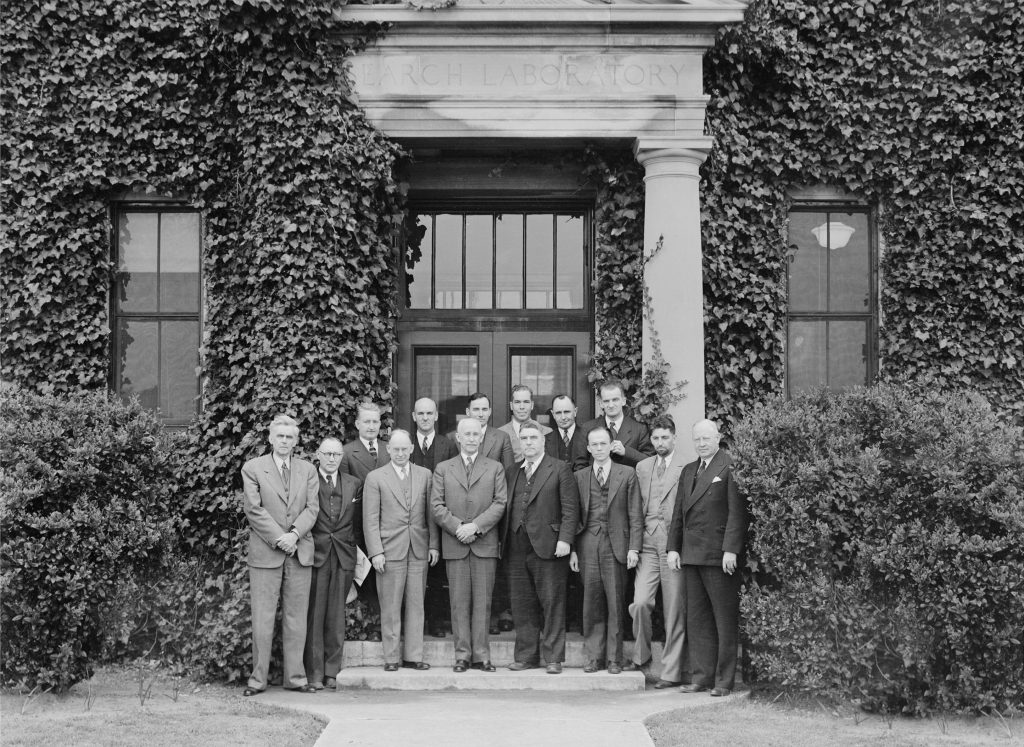
Eastman Jacobs understood that controlling the boundary layer was essential for achieving high lift at lower landing speeds. However, he found that active boundary-layer control systems would be too complicated. Instead, he focused on changing boundary-layer flows by shaping bodies to reduce drag and improve the lift-to-drag ratio of airfoils. His interest in low-drag airfoils directed him to develop methods to improve flight accuracy by reducing turbulence in the VDT. In 1935, he imagined a new wind tunnel designed specifically for low turbulence and started developing a program for low-drag laminar-flow airfoils while promoting this new tunnel. At first, Eastman Jacobs called it an “Icing Tunnel” to get funding, but it became the Two-Dimensional Low-Turbulence Tunnel in 1938 and then a more advanced pressure tunnel (LTPT) in 1941. With these tunnels, Eastman Jacobs developed the most important breakthroughs in aeronautics called the laminar-flow airfoil, which maintained laminar flow over much of its surface to reduce drag. His work influenced the design of US aircraft during WWII, including the P-51 Mustang and P-63 Kingcobra. Jacobs was awarded the Wright Brothers Award in 1933 and the Sylvanus Albert Reed Award in 1937 for his important research on the aerodynamics of wing sections. Throughout his career, he worked on high-speed wind tunnels. Eastman Jacobs helped in designing various tunnels, including the 11-Inch High-Speed Tunnel in 1928, the 24-Inch High-Speed Tunnel in 1934, and the concept for the 8-foot High-Speed Tunnel in 1936. In 1935, he spoke at the Volta aeronautical congress in Italy about his observations of shock waves using a technique called Schlieren photography. He also helped NACA shift its cautious approach to supersonic aerodynamics, leading to the construction of the 9-Inch Supersonic Tunnel in 1942. It was one of the first supersonic tunnels in the US.
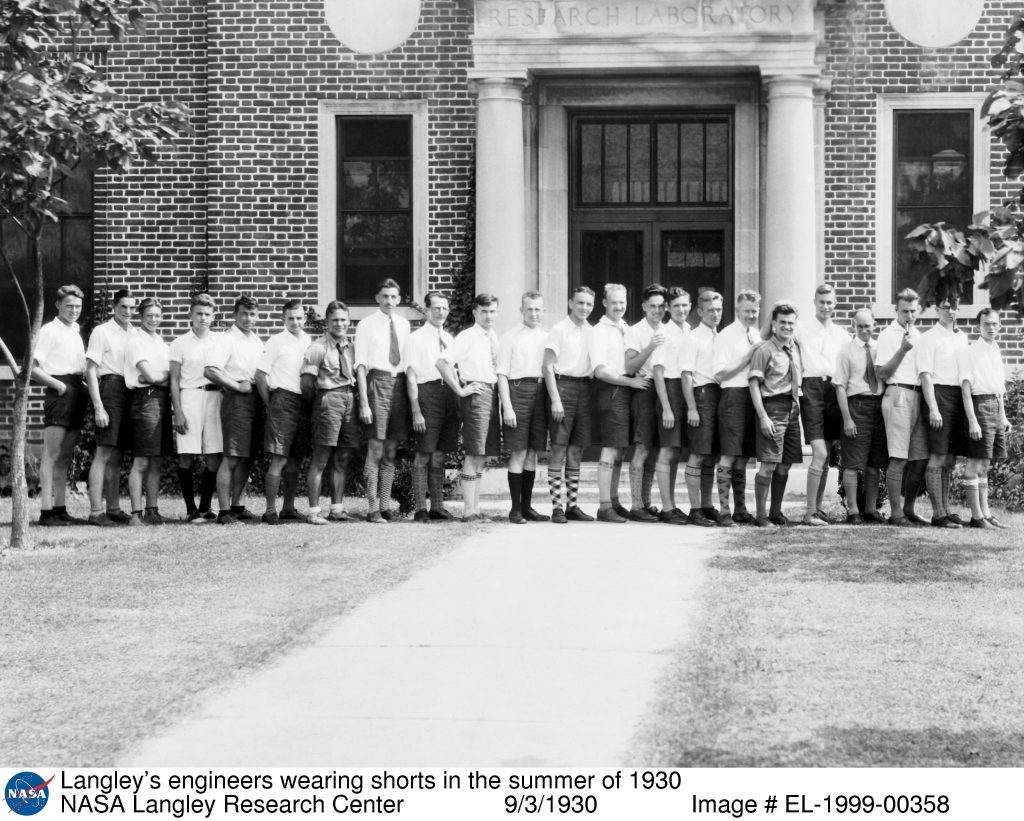
However, not all of Jacobs’s projects received backing from the administration. In 1938, Eastman Jacobs and a coworker at Langley started the first US experiment on thermonuclear fusion. However, they had to stop their work due to safety issues and NACA’s focus on aeronautics. He also looked into jet propulsion ideas from Italy’s Secondo Campini and began experiments in 1939. Initial tests at NACA in 1940 had problems with combustion in what are now called turbofan engines. Eastman Jacobs wanted to create a research airplane to showcase the concept, but the secrecy around turbojet developments in Europe led to the project’s cancellation. In 1944, Langley closed his Air-Flow Research Division and spent a few months at the Aircraft Engine Research Laboratory in Cleveland, Ohio, as a special assistant. He continued to work on jet propulsion without official approval. At 42, he retired from NACA after a 19-year career. After leaving AERL, Jacobs and his mother moved to a 73-acre ranch in rural Malibu, California. He worked as a consultant for the military, mainly at Naval Air Station Point Mugu. Eastman Jacobs built an airplane and an airstrip on the property. In 1956, he opened a gas station, a real estate office, and a restaurant called “Panorama Pacific at Solimar.” After a robbery at gunpoint, he sold the restaurant, which later became “Neptune’s Net” in the 1970s. The restaurant remains popular with surfers, motorcyclists, and celebrities. Eastman Jacobs passed away in 1987. As one of the Pioneers of Aeronautical Engineering, Eastman Jacobs was an expert in aerodynamics and engineering who made important improvements in flight technology. Stay tuned to read more Pioneers of Aeronautical Engineering stories.







I do so love an article with a blatant typo in is headline.
Historically, some research facilities were dedicated specifically to testing wing sections and were occasionally referred to as wing tunnels or wing test tunnels.
Great article! You must have a 1st grader as the editor. Wing Tunnels?
Sometimes we have 1st graders like you reading these articles so we try to keep them simple. Historically, some research facilities were dedicated specifically to testing wing sections and were occasionally referred to as wing tunnels or wing test tunnels.
Don’t you mean ‘Wind’ tunnels?
Historically, some research facilities were dedicated specifically to testing wing sections and were occasionally referred to as wing tunnels or wing test tunnels.