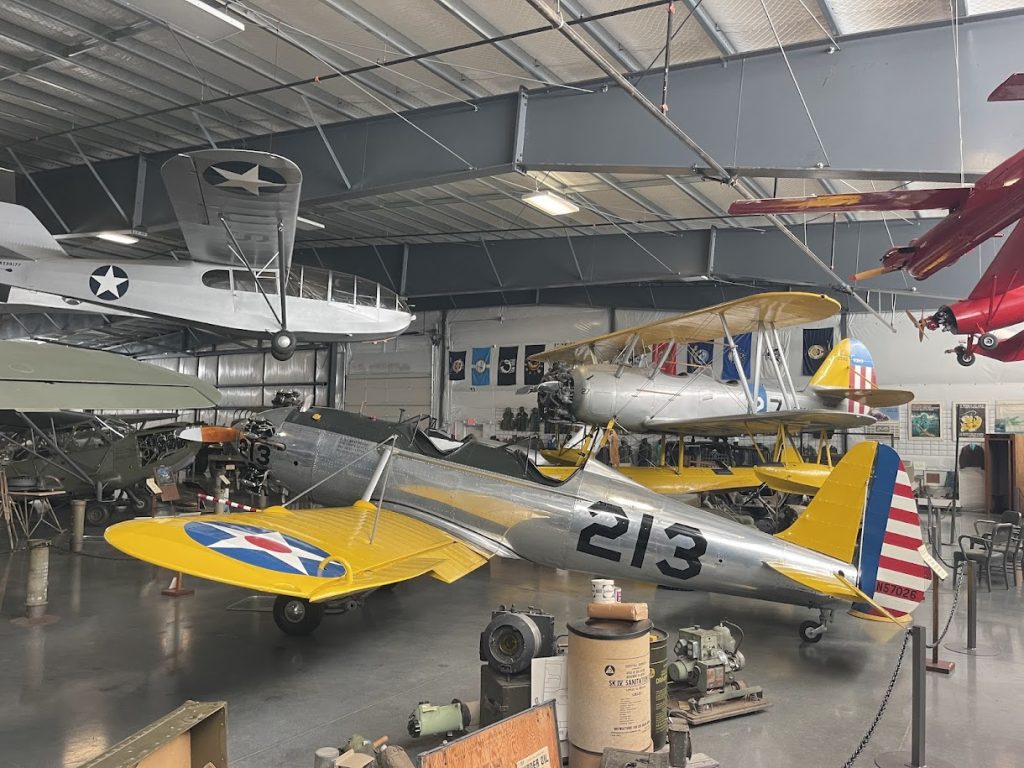
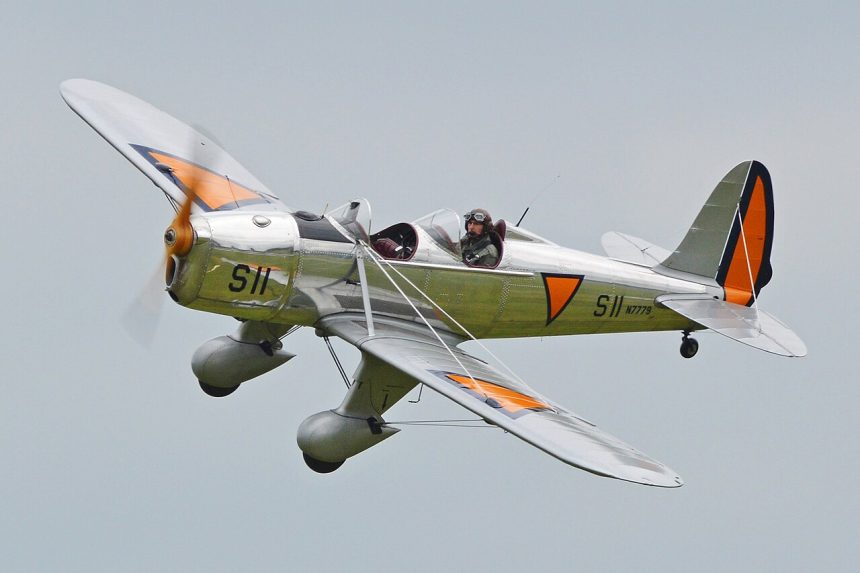

On this day in aviation history, 92 years ago (June 8, 1934), the first flight of the Ryan ST took place. Short for Sport Trainer, the ST was a single-engine, low-winged monoplane that was developed for flight training purposes. Noted aviation designer T. Claude Ryan was the mastermind behind the ST, and it was the first aircraft to grow within his new Ryan Aeronautical Company. Development began in 1933, a year before the first flight of the trainer’s prototype. The Ryan ST was open-cockpit with tandem seating – for instructor and student. The fuselage and wings were constructed of metal, some areas using a hybrid of aluminum skin and steel tubing. The wing panels had wooden spars and aluminum ribbing. Alclad covered the leading edges, while fabric provided coverage to the rest of the airfoil’s surface area. The Sport Trainer is known for its distinctive look, defined by the flying wires that braced the outer wings and the landing wires that connected the fixed gear to the fuselage.
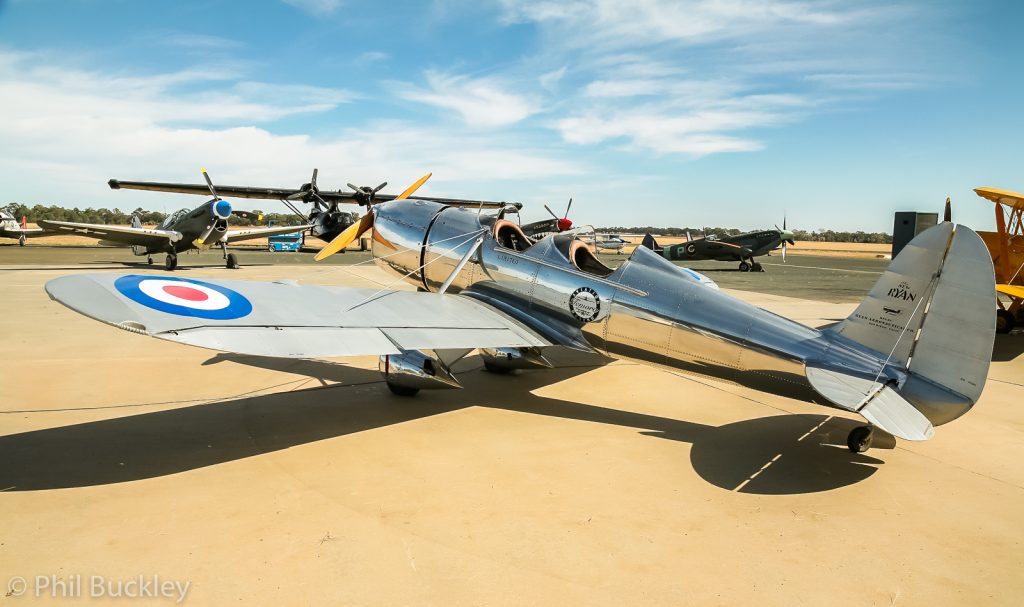
Several variants of the Sport Trainer were created. The original aircraft was powered by a 95-hp Menasco B4 engine, while an ST-A (Aerobatic) variant featured a more powerful 125-hp Menasco C4. Perhaps the most distinguishable variant of the Sport Trainer was the PT-22 Recruit, a military variant that was powered by a 160 hp Kinner R-54 series engine. 1,048 Recruits were built by Ryan during WWII, and they served a vital role in Cadets’ Primary Flight Training during the conflict. The Ryan ST-A can cruise at 127 mph and attain a maximum airspeed of 150 mph. The ST-A will stall at 42 mph. A range of 300 nmi and a service ceiling of 17,500 ft are within the Sport Trainer’s capability. This primary trainer is no slouch, as it can climb at a rate of 1,200 fpm. Of the 1,568 STs and 1,048 PT-22s manufactured by Ryan in the late 1930s and early 1940s, a decent number still survive and fly today.