






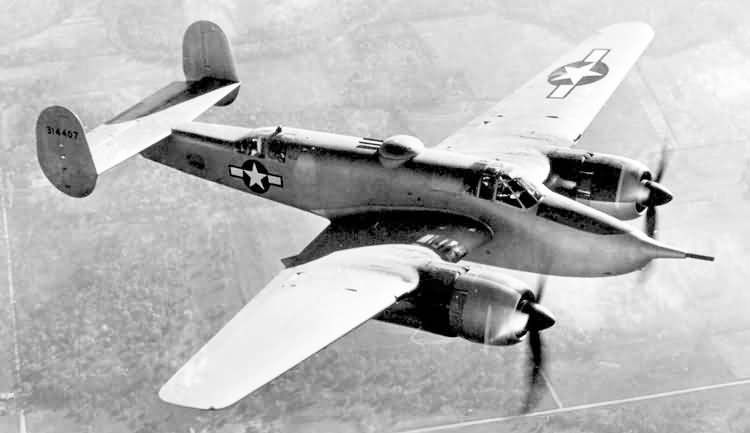

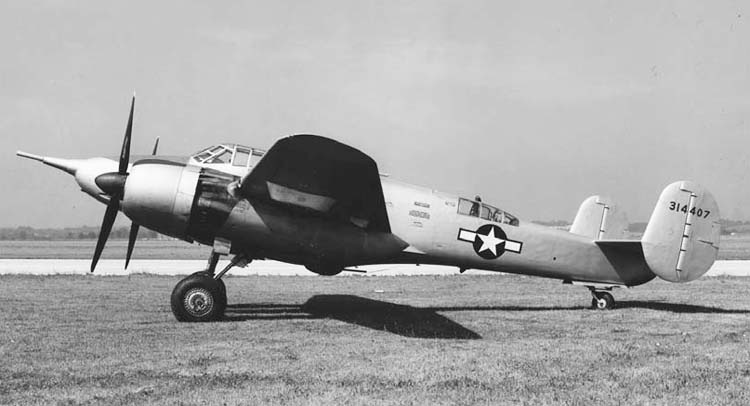
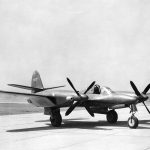
During WWII, the US Army Air Force (USAAF) wanted a ground-attack aircraft capable of attacking armored targets, such as tanks, and other targets, such as bunkers. At the same time, Beech Aircraft Corporation had developed the Model 28 as a bomber-destroyer. In late 1942, the USAAF awarded Beech the contract to develop two prototypes of the Model 28, not as a bomber-destroyer but as a ground-attack aircraft, designated Beechcraft XA-38 Grizzly. The aircraft was intended to replace the Douglas A-20 Havoc. On May 7, 1944, test pilot Vern Carstens flew the XA-38 for the first time from Beech’s airfield in Wichita, Kansas.
Design of Beechcraft XA-38 Grizzly
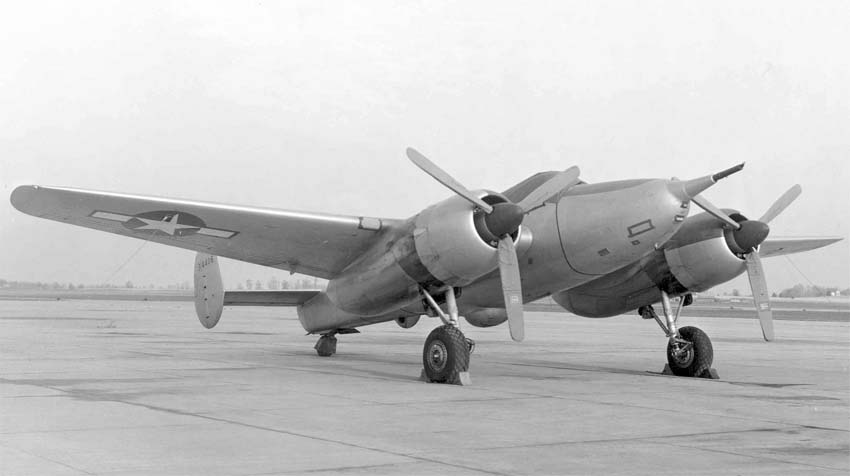
With a crew of two, including a pilot and an observer/gunner, the Beechcraft XA-38 Grizzly was 51.9 feet long, 15.6 feet high, with a wingspan of 67.4 feet and a wing area of 626 square feet. The empty weight of the aircraft was 22,480 pounds, and the maximum takeoff weight was 35,265 pounds. The Beechcraft XA-38 Grizzly was powered by two Wright R-3350-43 air-cooled radial engines, each producing 2,300 horsepower. The maximum speed of the aircraft was 370 mph, with a range of 1,625 miles, a service ceiling of 29,000 feet, and a rate of climb of 2,600 feet per minute. To penetrate armored targets, the aircraft was envisioned to be equipped with a T15E1 75 mm cannon with 20 rounds mounted on the nose and six 12.7 mm M2 Browning machine guns, including two forward-facing, two in a ventral turret, and two in a dorsal turret. During testing, several USAAF pilots flew the XA-38 prototypes, and the first prototype used wooden mock-ups instead of real weapons. In July 1944, the 75mm cannon was installed on the aircraft for testing. The XA-38 passed all tests successfully and was transferred to the USAAF Research Center in Eglin, Florida, for testing on August 14, 1945. It was officially designated “Destroyer,” but service officials preferred to call it by its unofficial nickname “Grizzly.”
The Cancellation
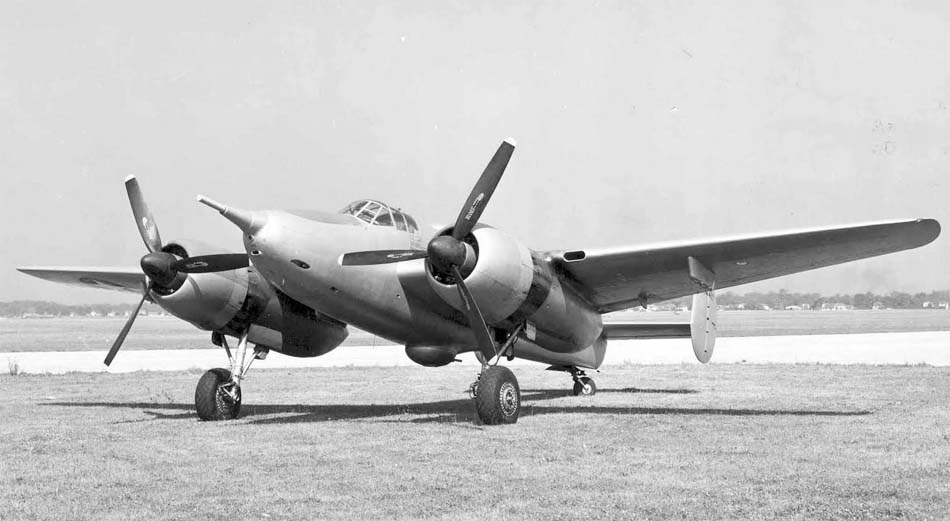
The aircraft even exceeded some expectations, particularly in top speed. Some reports also mentioned that the Grizzly could “outrun” a P-51B Mustang. American Army pilots and maintenance personnel tested the XA-38 prototypes and found the aircraft reliable and easy to service. The Grizzly was very maneuverable and could take off and land in much smaller spaces than aircraft of a similar size would need. The armament was also very effective. The second prototype of Beechcraft XA-38 Grizzly flew on September 22, but by then the Army Air Corps had lost interest in continuing the program as it was expected not to be ready for the planned invasion of Japan. The delay was caused by a shortage of engines, as the B-29 had priority for the Wright R-3350 engines at the time. By the time enough engines were available, the war was almost over, and production was not ordered. One prototype was scrapped, and the other, meant for the US Air Force Museum, has an unknown fate. In the Grounded Dreams series, if military priorities had not changed, the Army would likely have ordered the Beechcraft XA-38 Grizzly aircraft into production by 1944. If the war had continued, the Beechcraft XA-38 Grizzly’s speed, firepower, and strong design would likely have made it the Army’s most important support aircraft. Read more Grounded Dreams articles HERE.









Fascinating articles about grounded dreams. Is there a book available? If not, there should be. If there is, where can I purchase one? Thanks in advance for your response
The real father of the A-10 Warthog.
I mean, 75mm rounds delivered in a plunging trajectory with precision? Jesus. Just one aircraft could destroy an armored column. Almost sorry this didn’t go to production.
I’d love to of seen flying noise alone.
I’d love to of seen one flying noise alone.
There was no USAAF Reserch Center at Eglin Field, at the time that the XA-38 was being tested. Instead,the USAAF transferred both airframes to the Air Proving Ground Command.