







Overshadowed by icons such as the Sabre and the Shooting Star, the rugged Thunderjet quietly carved its place in aviation history. While it rarely captured the spotlight, the F-84 played a crucial role in modernizing postwar air forces around the world, including Denmark, where dozens of F-84s served faithfully during the tense early years of the Cold War. Now, after years of silence, one of these historic machines is preparing to come back to life once again.
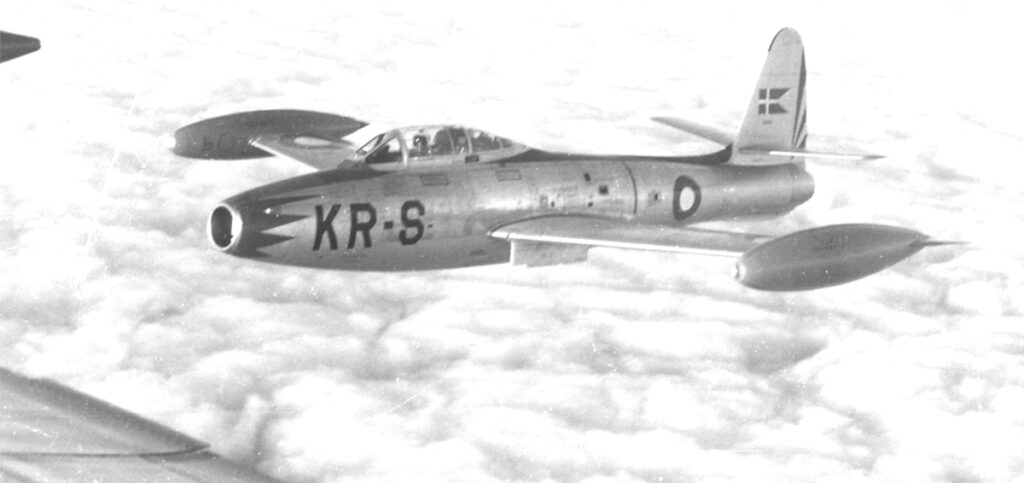
The Republic F-84 Thunderjet was the true workhorse of the U.S. Air Force at the dawn of the jet age. As the first postwar American fighter to enter mass production, 4,457 “straight-wing” F-84s—spanning the B through G variants—were built between June 1947 and July 1953. Despite a somewhat troubled career, largely due to its temperamental Allison J35 engine, the Thunderjet proved invaluable as a stepping stone in the development of future jet fighters that would go on to serve with the U.S. military.
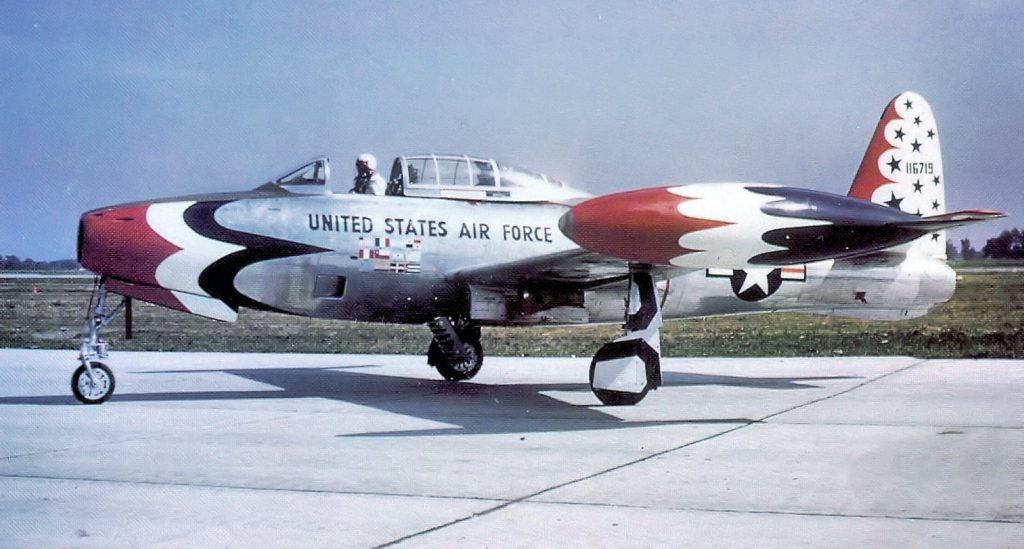
The F-84 distinguished itself as the first American production aircraft capable of aerial refueling and the first fighter able to carry a nuclear weapon. These innovations, combined with its extensive combat service over Korea, made the Thunderjet a cornerstone of USAF interdiction and tactical strike operations during the early 1950s despite its well-known deficiencies. Equally significant, though often overlooked, was the aircraft’s role in strengthening America’s Cold War alliances. Alongside the Shooting Star family, the F-84 was among the earliest U.S. jets exported in large numbers under the Mutual Security Act, with approximately 60 percent of all Thunderjets produced by Republic Aviation earmarked for allied air forces.
Danish Wings
One such nation was Denmark, which, due to its critical role in policing the Baltic Sea and the North Sea—two of the Cold War’s most volatile front lines—received priority from the U.S. government in acquiring the aircraft. The first Danish Thunderjets, six F-84Es, entered service in August 1951. In 1952, the first examples from a batch of 100 F-84Gs began arriving at Royal Danish Air Force (RDAF) units. During the following years, a steady stream of F-84s enabled the establishment of five fully equipped Thunderjet fighter-bomber squadrons within the RDAF (ESK 725, 726, 727, 728, and 730), along with a composite photo-reconnaissance flight, ESK 729, equipped with the RF-84G variant.
During their operational service in Denmark, which lasted until 1962, the F-84s served not only as front-line fighter-bombers and reconnaissance aircraft but also as symbols of the RDAF’s rebirth following the trials of WWII. As a result, the Thunderjet acquired considerable sentimental value within the service, helping elevate the status and morale of a branch of the Danish Armed Forces that had previously been considered secondary within the nation’s overall defense structure.
A Slow Start
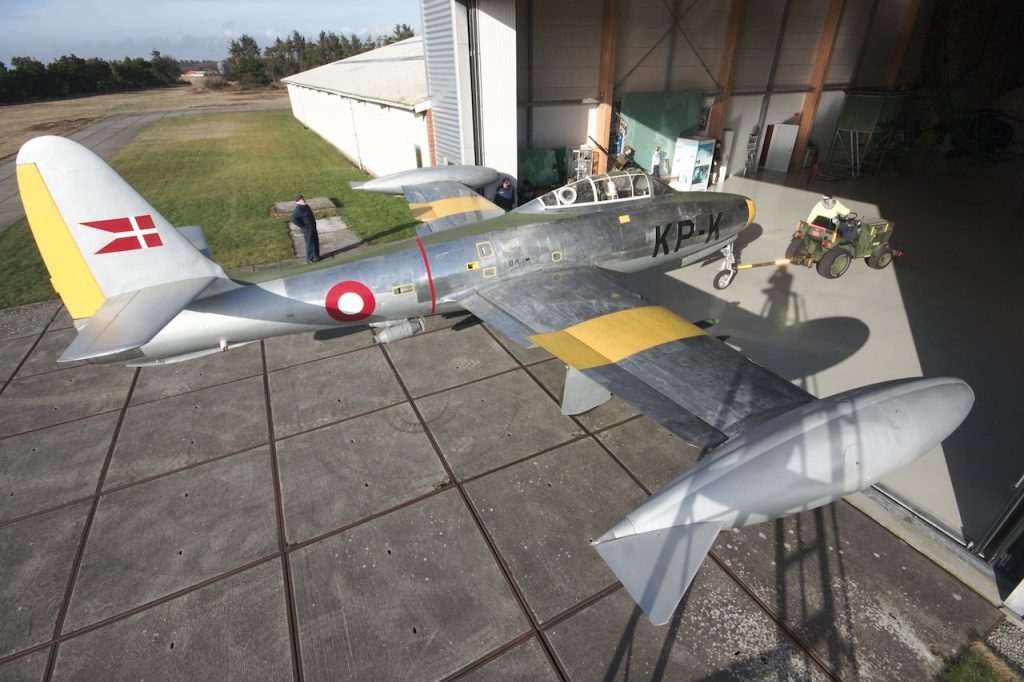
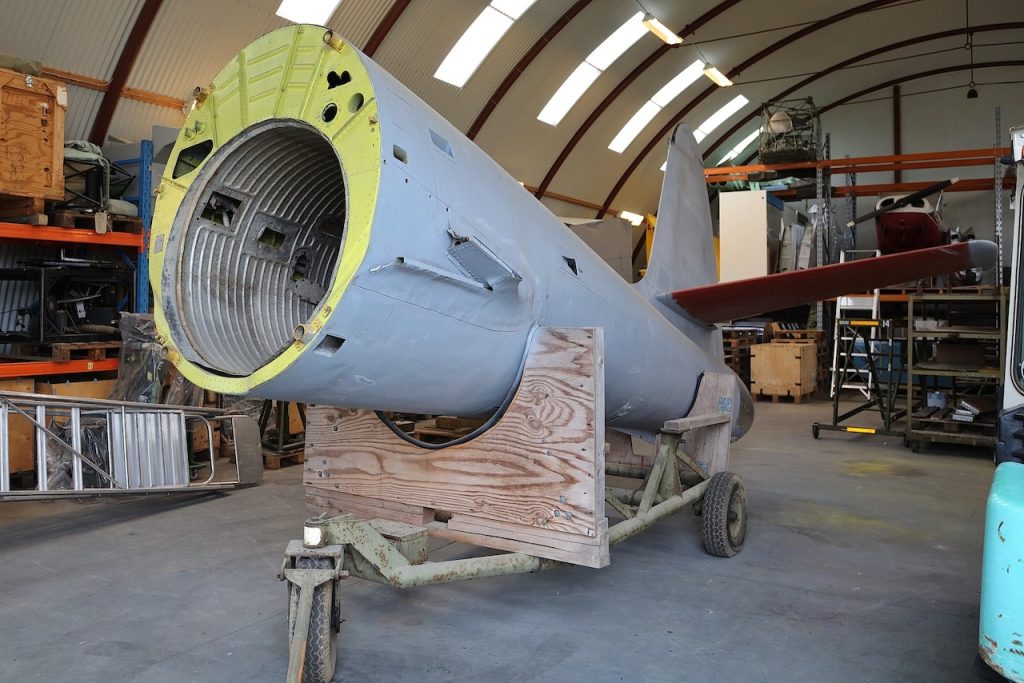
Of the 242 Thunderjets that passed through RDAF service, only eight complete airframes remain today, and they survive in varying states of preservation. To help preserve the F-84’s legacy in Denmark and expand the number of surviving examples, Danmarks Flymuseum, through its “Jagergruppen Stauning” (Fighter Group Stauning), has dedicated itself in recent years to restoring one of these aircraft. The project began with KP-X, serial number 52-3057, a standard F-84G that, after being retired in the early 1960s, served as a gate guardian at Danmarks Flymuseum. As years of exposure gradually took their toll, the aircraft was finally removed from display in 1997 and selected for a major restoration with the goal of becoming part of the museum’s indoor collection.
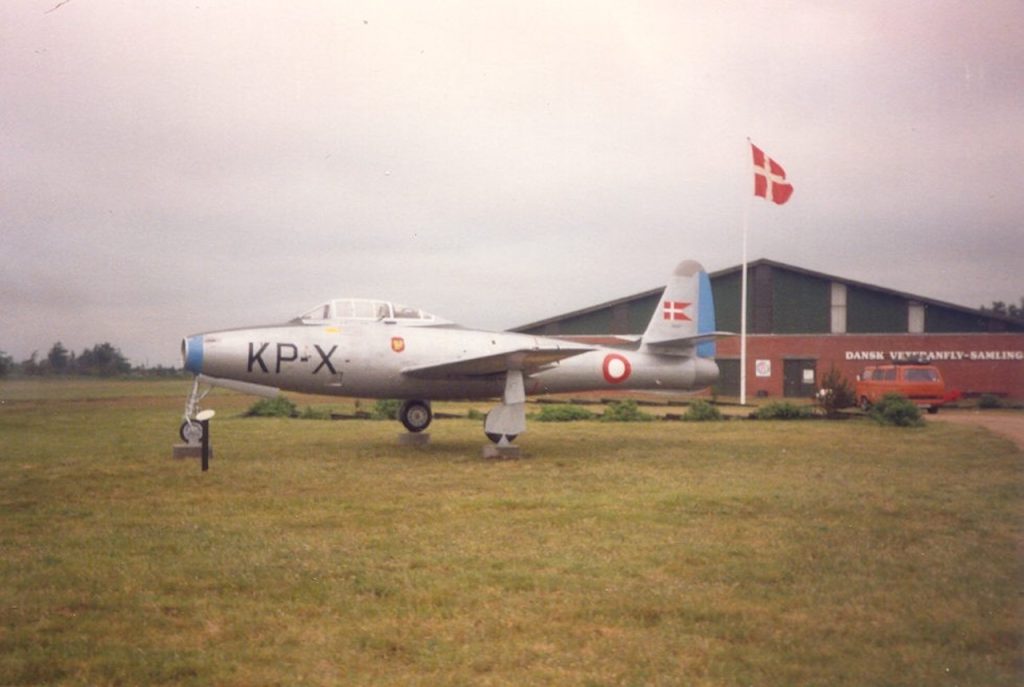
However, little progress was made during the next two decades. “We got started on dismantling the aircraft back in 1998 so that we could restore it from the inside out,” recalls Bent Laursen, vice chairman of Danmarks Flymuseum and spokesperson for the restoration project. “But the program was far from being a straightforward restoration, as every time we moved forward with KP-X, a more important or urgent task appeared.”
On the Right Track
The restoration’s intermittent pace during its early years was also due to other factors. A detailed examination of the dismantled KP-X revealed that the aircraft was in far worse condition than initially believed. The most critical section was the forward fuselage, which had suffered extensive damage from years of exposure to the elements and was deemed beyond repair. Laursen recalls that the team spent the next two decades searching throughout Denmark for the components needed to rebuild the Thunderjet. “Most of the retired F-84s were later used for target practice or as static displays at the entrances to air bases, which explains why there are so many Thunderjets in Denmark in poor condition. Luckily, my team had free access to recover spare parts from these aircraft, visiting air stations in Aalborg, Karup, and Skrydstrup in the process.”
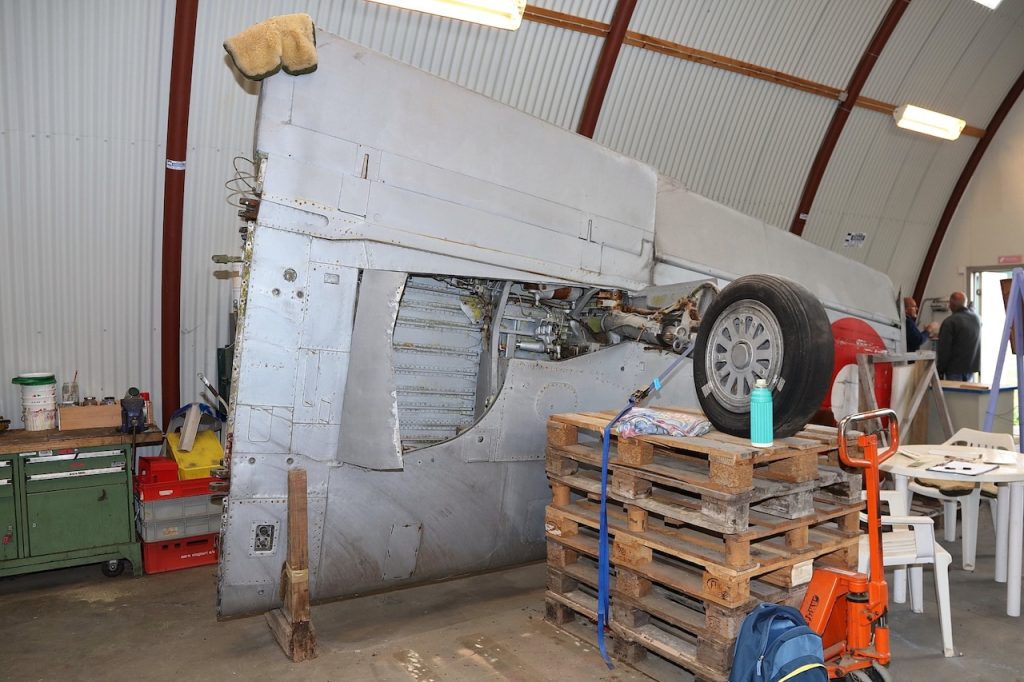
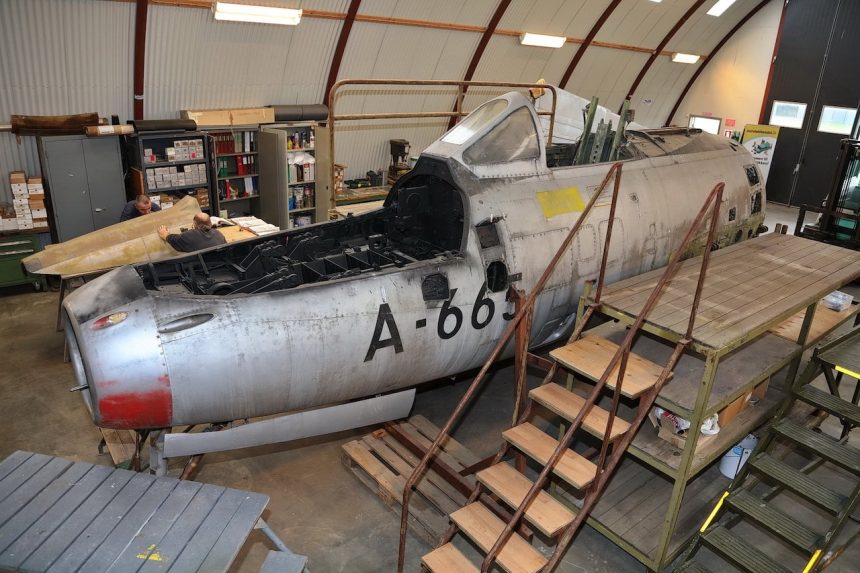
In 2021, the long search finally came to an end, and the restoration project gained new momentum. The aircraft now being rebuilt incorporates components from several former RDAF Thunderjets. Most significant are KP-X (52-3057), which supplied the wings and rear fuselage, and A-665 (51-16665), which provided the replacement forward fuselage. “We were fully aware that our F-84 would be built from several different aircraft,” said Laursen. “It is a shame that so many original parts had to be scrapped due to their poor condition, but on the other hand, this allowed us to essentially assemble a brand-new aircraft.” Among the many developments surrounding the project, the acquisition of A-665 proved especially significant.
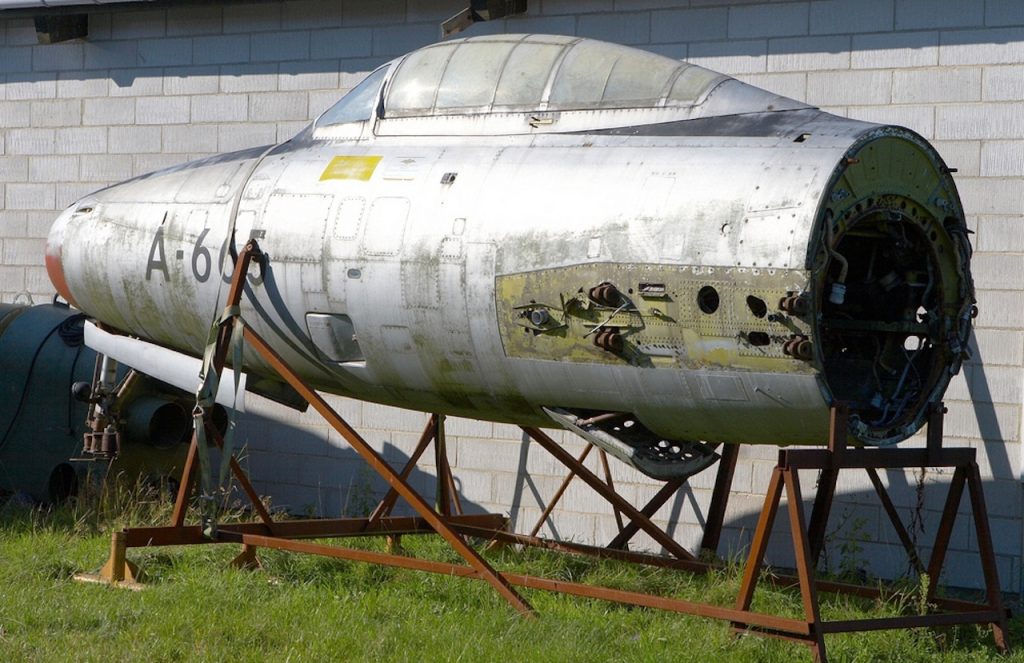
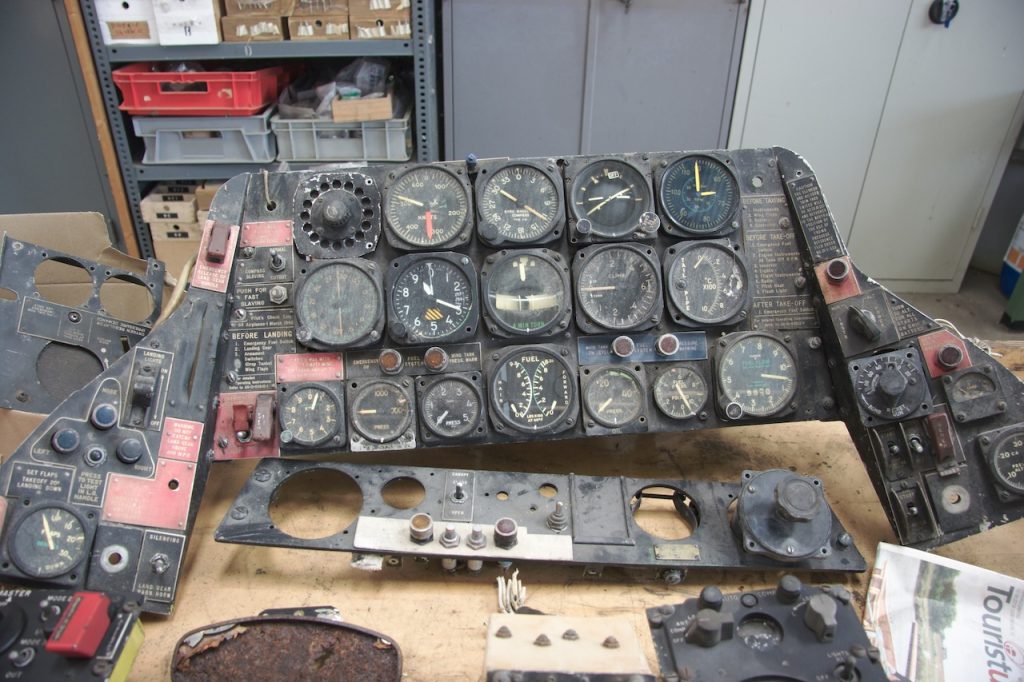
This aircraft was one of only nine reconnaissance-configured RF-84Gs operated by the RDAF and had been specially adapted for photographic missions with cameras optimized for high-speed, low-level reconnaissance work. With all the major components finally assembled, the Stauning team devoted itself between 2022 and 2025 to more detailed restoration work, including reassembling the landing gear, completely refurbishing the canopy glazing, and reconstructing the cockpit and avionics suite, all of which are expected to be permanently installed in the aircraft in the near future.
Present and Future
According to the Danmarks Flymuseum representative, the primary goal for the second half of 2026 is to prime the forward fuselage, rear fuselage, and wings in preparation for painting, which is scheduled to begin this year. Laursen notes that the aircraft’s color scheme will be unique among Danish Thunderjets, as the completed aircraft will be restored as RF-84G KA-C. “Since we cannot polish the fuselage to the traditional natural-metal finish, we opted for a camouflage scheme with petroleum-blue undersides. While researching Royal Danish Air Force records, we found that KA-C was the only reconnaissance aircraft painted in these colors, so we felt it was appropriate to assign this code to our aircraft.” In addition to the aircraft’s appearance, the team is also working on restoring one of the RF-84G’s defining features: its camera installations. In its original configuration, the aircraft carried its primary camera in the fuselage behind the nose wheel, while a secondary set was housed in a modified pod installed in the left wingtip. To replicate this arrangement, the Stauning team has acquired a period-correct tip tank from a T-33—the same model used on the RF-84G—which will be rebuilt to the aircraft’s original reconnaissance specifications.
Although significant challenges remain, Laursen emphasizes that the team is already preparing for what could become the most important phase of the restoration in 2027. Planned work includes joining the forward fuselage to the rest of the airframe, assembling the wing structures, and completing the cockpit installation. Under the most optimistic projections, the restored RF-84G KA-C could be formally delivered to Danmarks Flymuseum in 2028. To follow updates on the RF-84G KA-C restoration project, visit the official Danmarks Flymuseum Facebook page: https://www.facebook.com/danmarksflymuseum









My brother, Ed Jones, flew F-84G’s for the 9th FB Squadron, 49 FB Group ftom Taegu (K2), South Korea. For about 30 missions, he bombed and straffed trains and truck convoys in the north. He and a few of his buddies were pulled back to Nagoia,Japan to fly several G’s that were on the northern island of Japan . These planes each had a single atomic bomb and their target was Vladovostoc, Russia, should Russia get involved in the U.N. “police action” in Kores. He left the air Force in ’54 and went to work for TEMCo in Dallas where he test flew G’s that were being refurbished and given to US allies.