






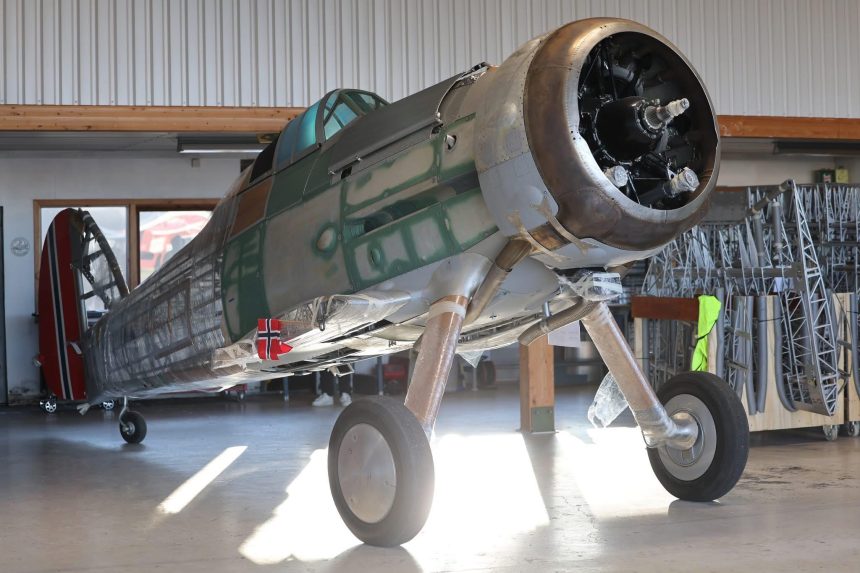

In Norway’s darkest hour, the Gloster Gladiator stood alone against the storm. Flown by a small cadre of Norwegian pilots against the full might of the Luftwaffe assault in the spring of 1940, the Gladiator became a national symbol of defiance against overwhelming odds. Today, one of these battered warriors is rising from the ashes, carrying on its wings the legacy of an intrepid generation of Norwegian flyers. “In Norway’s aviation history, the Gloster Gladiator takes center stage ahead of the Blériot that Tryggve Gran used to cross the North Sea in 1914 and the Spitfire employed by RAF Norwegian volunteers in 1941.” This is how renowned Norwegian aircraft historian Cato Gühnfeldt refers to the importance of the Gladiator in the history of the Luftforsvaret, the Royal Norwegian Air Force (RNoAF). Such significance, however, may not be commensurate with the small number of Gladiators that actually served with the RNoAF. Of the twelve aircraft delivered before WWII, just seven were still airworthy when German forces launched Operation Weserübung in early April 1940. Forming the Jagevingen, Norway’s only fighter squadron, these machines posed the sole obstacle to the Luftwaffe’s air supremacy over the country. The heroic stand of Norway’s Gladiator pilots was to be critical in the battle to come, but also costly, as all the machines would be lost to enemy action or mechanical breakdowns within a span of two weeks. Despite this, the Gladiator’s legacy would never fade from the RNoAF’s records, with an unexpected call in 1990 rekindling the flame of this powerful symbol: diver Jan Harald Torvund reported to local authorities around Lake Vangsmjøsa that he had found the remains of an unidentified biplane while on a recreational dive at the site. Torvund, in an interview with the Norwegian state broadcaster NRK in early 2026, mentioned that he still remembered how surprised he was by the aircraft’s excellent condition, with the original markings still clearly visible on the fuselage.
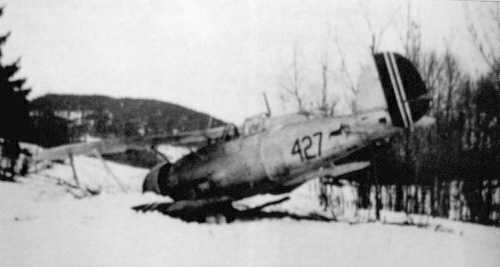
The Angel of Oslo
With the Norwegian Armed Forces Museum leading the salvage operation, the first task was to identify the wreckage, which was quickly attributed to one of the Gladiators lost in action in the spring of 1940. It was aircraft number 423, one of the six Mk I models received by the RNoAF in 1938. This specific machine took part in the first aerial battle of the Norwegian campaign when, alongside six other Gladiators, it intercepted a formation of 70 German bombers and fighters over Oslo on April 9, 1940. Piloted by Lt. Dag Krohn, 423 performed well that day. According to RNoAF historical registers, the plane scored hits on a Heinkel He 111 and a Messerschmitt Bf 110, later claimed as probable kills. But not even this magnificent display of skill and courage could save the RNoAF, which within a few weeks was down to just a couple of operational planes, among them 423. However, the end of this valiant machine would come on April 21, when Sgt. Per Waaler crash-landed the plane on Lake Vangsmjøsa after an engine malfunction. This impressive history marked the beginning of the Norwegian Armed Forces Museum and Royal Norwegian Air Force’s ambitious project to restore this very special aircraft.
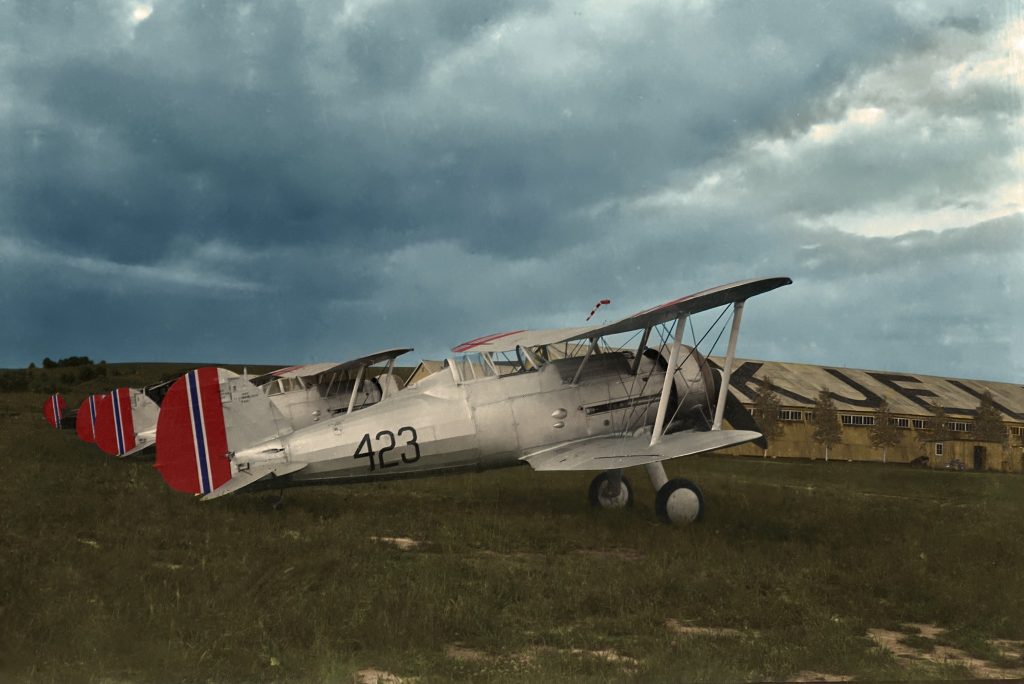
Extensive restoration work
After an early fundraising campaign, the aircraft was shipped to Retro Track & Air Ltd., a UK-based company specializing in the restoration of vintage warbirds. Among other projects, Retro was at that time working on a Gladiator Mk II for a British client, allowing both projects to proceed alongside each other. The Norwegian Defence Museum also stated that the project’s original objective was to restore 423 to static-display status only, something that facilitated the deal. But it didn’t take long for the project to stall due to financial strains in different parts of the program. To save 423, the Norwegian Defence Museum made room for other organizations to take the lead, the main one being the newly formed Gloster Gladiator 423 Foundation (GG423), established in 2012 by a veteran aviation community composed of the Kjeller Flyhistorisk Forening (KFF), the Veteranflygruppa, and Kjellervenner, under the leadership of former RNoAF pilot Finn Terje Skyrud. The KFF, nicknamed “Norway’s little Shuttleworth,” has restored several vintage aircraft to airworthy condition, mostly biplanes and trainers, but the Gladiator posed a unique challenge for the team. In a pragmatic move, Finn and GG423 once again turned to Retro, this time with the goal of transforming the project into a fully airworthy aircraft. Energized by these new prospects, the project gained momentum once again, with Retro focusing on rebuilding the aircraft while KFF concentrated primarily on a new fundraising campaign and obtaining original parts for the restoration. But as Finn explains, the process did not go smoothly: “The foundation struggled financially for most of the project’s early years. This was partially solved only when the Directorate for Cultural Heritage accepted the aircraft as a pilot project in 2018, providing us with a substantial sum for the restoration of the 423’s tail section. Later, the Sparebank Foundation also donated funds for the restoration of a wing. Following this, the Olav Thon Foundation made a significant contribution toward the restoration, and finally, in 2020–2021, the GG423 Foundation received several million NOK in public grants through the state budget.” But even these contributions were not enough, especially given the ambitious goal of getting Gladiator 423 back into the air. According to Finn, it wasn’t until the fall of 2024 that the project finally achieved financial stability, when the Ministry of Defence allocated NOK 8 million to the restoration program.
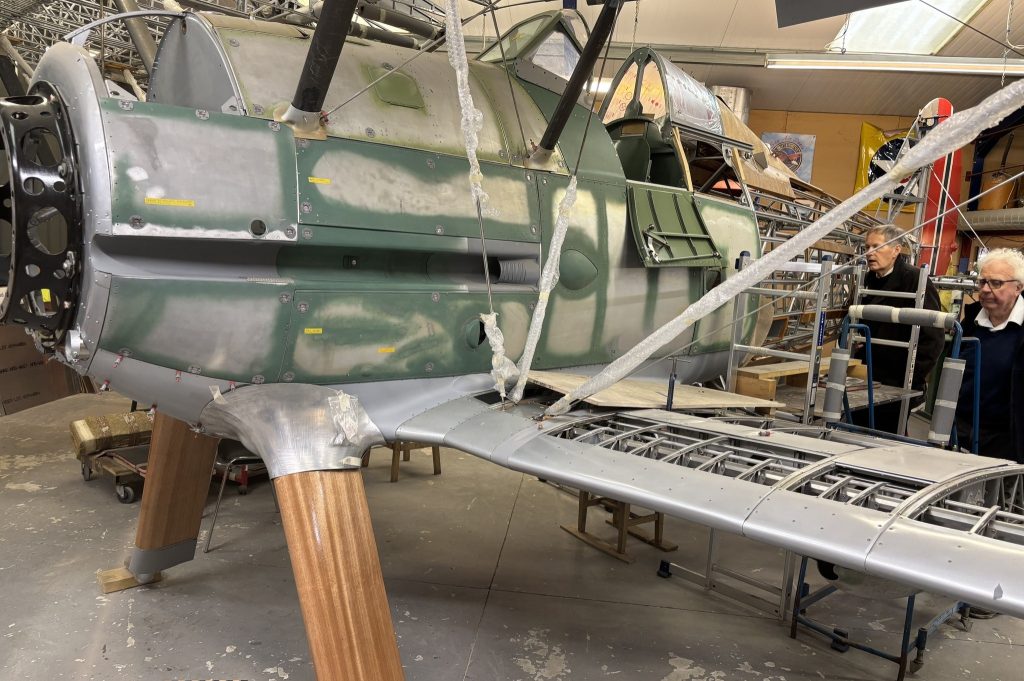
Steps towards completion
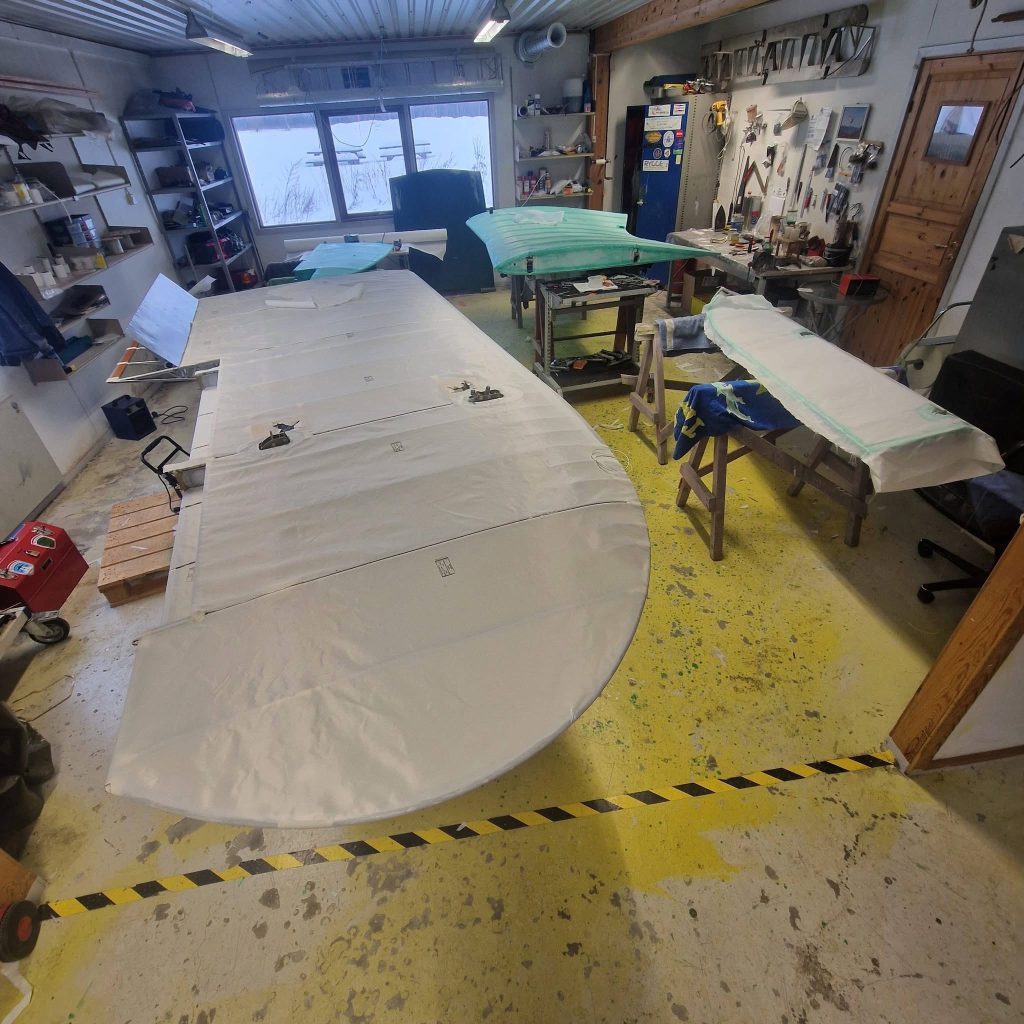
Most of the restoration was carried out at Retro’s facilities in Upthorpe, UK, while KFF regularly monitored the project’s progress. Work proceeded rapidly, with the company completely rebuilding the aircraft’s wings, fuselage, and hydraulic systems, while the instrumentation and controls were refurbished using original Gladiator parts. Through this intense pace, Retro completed its part of the aircraft’s restoration in September 2025, meeting the deadline previously agreed upon by KFF and GG423. However, the plane’s official repatriation had to be postponed until October of that year due to delays in transport, which was specially carried out by an RNoAF C-130 Hercules. But the aircraft’s arrival on Norwegian soil did not mark the end of the project, as Finn explains: “The agreement between Retro and us stipulated that the final phase of the restoration would be carried out here at Kjeller. So most of the electrical system, including the radio assembly, the canvas covering, and the painting, are all going to be done in our hangars.” He continues by saying that KFF is currently working on the delicate process of gluing, sewing, and reinforcing the canvas on the wings, tailplane, and fuselage. Regarding the electrical system, which will come next on 423’s “to-do” list, Finn explains that this will be another challenge: to receive an airworthiness certificate from Norwegian authorities, the machine will be adapted to include certain modern amenities, such as a Trig package encompassing a VHF radio and transponder. Due to the model’s rarity (only 378 Mk Is were built), Finn explains that there has always been a chronic shortage of original parts for the project. As a result, KFF had to scrape the bottom of the barrel, so to speak, salvaging parts from other Gladiators lost in Norway during 1940, including machines that belonged to RAF No. 263 Squadron. In other words, the project became a major puzzle, according to Finn: “We needed a lot of reconstruction and reverse engineering to get close to an airworthy airplane. You must remember that originally, 423 was built as a Mk I, but even before operational use, field upgrades were made. During the reconstruction phase, the Foundation chose to make some new upgrades. In other words, due to time, money, available parts, and the working drawings we had on hand, 423 will look more like a Gladiator Mk II than anything else.” But this will in no way detract from the aircraft’s historical significance. After its completion, expected sometime in 2027, 423 will become the third airworthy Gladiator in the world, and the only one outside the British Isles. To keep updated about the restoration of Gladiator 423, go to: https://www.facebook.com/GlosterGladiator423










An interesting project for a survivor of the short, hard fought Campaign of 1940. It will be good to see this particular Gladiator flying again.