






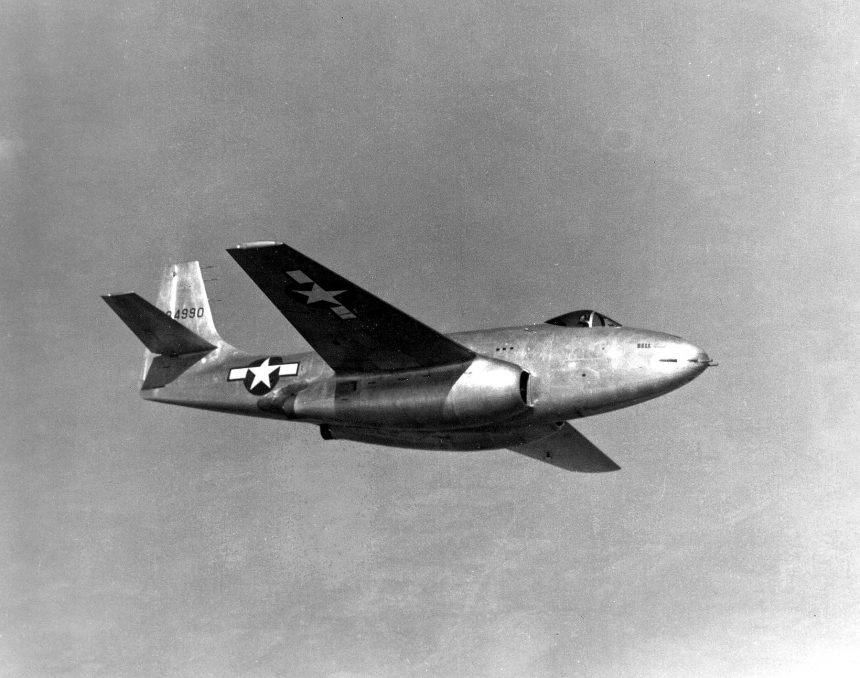


During WWII, the US military needed a capable aircraft fitted with jet engines. But early jet engines were not mature enough to provide sufficient range or endurance due to high fuel consumption. As a result, in mid-1944, the US Army Air Forces (USAAF) tasked Bell with developing a long-range escort fighter fitted with jet engines. At the time, Bell was working on the design of the “Model 40” interceptor in 1943. Considering the USAAF’s requirements, it was redeveloped as a long-range escort fighter while retaining the layout of the P-59 Airacomet, designated Bell XP-83. At the same time, Lockheed was also developing the XP-80, which would later become the P-80 Shooting Star (redesignated F-80 in 1948).
Design of Bell XP-83
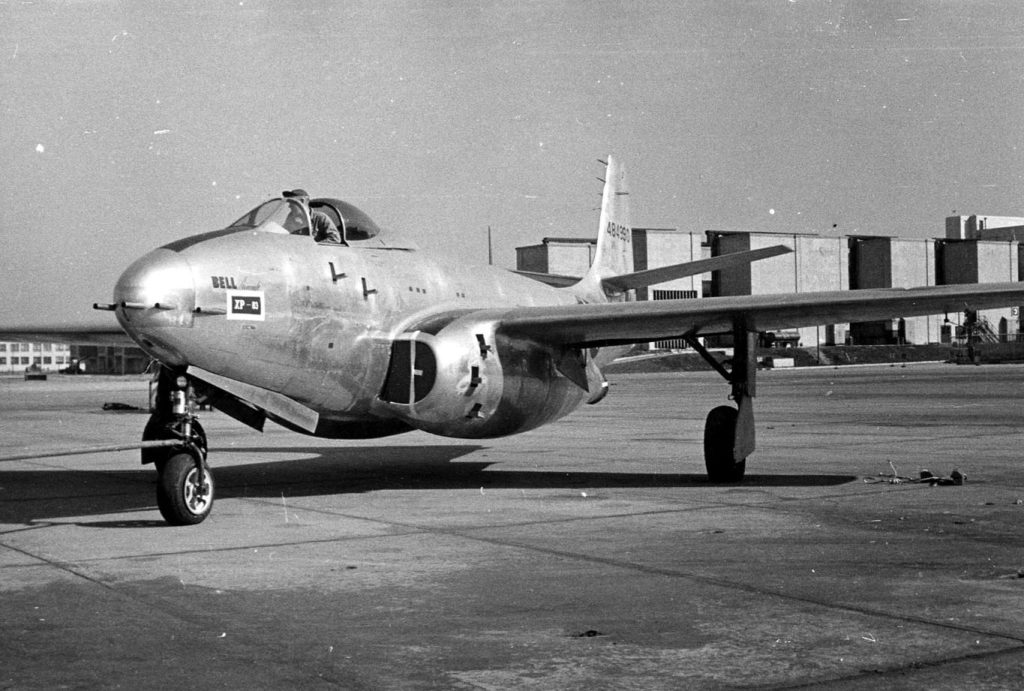
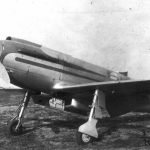
The Bell XP-83 was ready by early 1945. The aircraft was 44.10 feet long, 15.3 feet high, with a wingspan of 53 feet and a wing area of 431 square feet. The empty weight of the aircraft was 14,105 pounds, the gross weight was 24,090 pounds, and the maximum takeoff weight was 27,500 pounds. The Bell XP-83 was powered by two General Electric XJ33-GE-5 centrifugal-flow compressor turbojet engines, each producing 4,000 pounds of thrust. A fuel capacity of 1,154 US gallons was estimated to provide a range of 1,730 miles to the aircraft. It also had provisions for two additional 300 US gallons drop tanks, which would have increased its ferry range to 2,050 miles. The maximum speed of the aircraft was envisioned to be 522 mph at 15,600 feet, with a service ceiling of 45,000 feet and a rate of climb of 5,650 feet per minute. The engines were mounted at the base of each wing to make space for a large, bulky all-metal fuselage. The cabin was pressurized and featured a small, low bubble-style canopy. The Bell XP-83 was envisaged to be armed with six 12.7 mm M2 machine guns and two 1,000-pound bombs. Early wind tunnel reports identified a problem with directional stability. However, the solution, which involved a larger tail, was not ready in time for flight testing. The first prototype of Bell XP-83 flew on February 25, 1945, with Bell’s chief test pilot, Jack Woolams, at the controls. He found that the plane had good flight characteristics but was underpowered. The expected instability was also present, but spins were intentionally avoided until a larger tail fin was added. The second prototype had a modified tail and a system to boost the ailerons.
The Cancellation
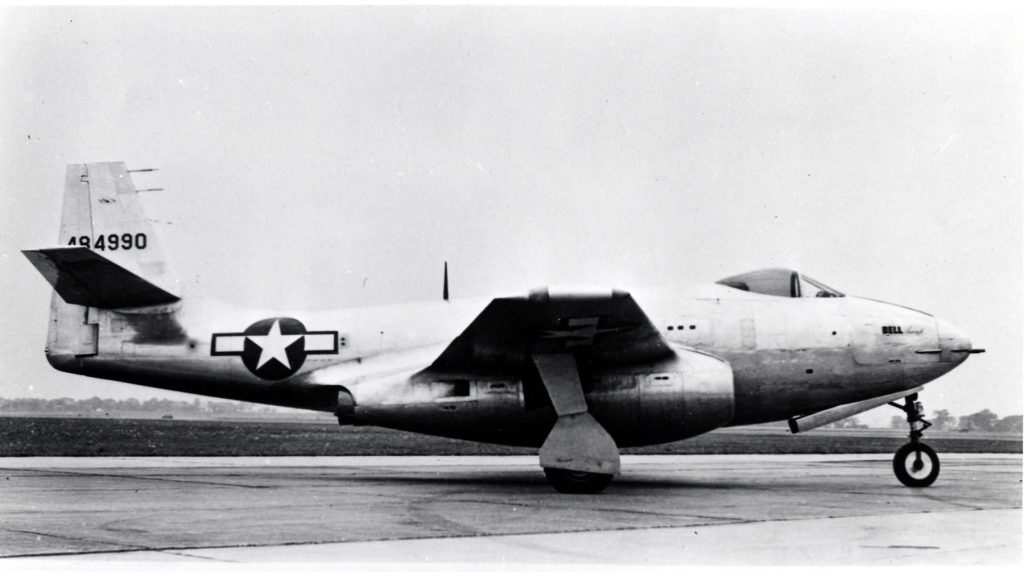
The Bell XP-83 had very high landing speeds because it didn’t have drag brakes, had a sleek design, and required high minimum thrust settings typical of early jet aircraft to prevent engine flame-outs. Because of these factors, test pilots had to approach the runway in a stable manner, resulting in long, flat landings. The first prototype was used in 1946 as a testbed for a ramjet engine. An engineer’s station was located in the fuselage behind the pilot. On September 14, 1946, one of the ramjets caught fire, which forced the pilot and engineer to bail out. The second prototype flew on October 19 and was scrapped in 1947. Besides its range, the XP-83 was not as good as the Lockheed P-80 Shooting Star, which led to the cancellation of the XP-83 project in 1947. In addition, after WWII, jet technology advanced quickly. As a result, the XP-83 was quickly overshadowed by newer designs and never went into production. Later, the P-80 Shooting Star became the first American aircraft to fly faster than 500 mph in level flight, and also the first American jet plane to be produced in large numbers and to see combat. Even after the Bell XP-83 was canceled, it provided the company with valuable experience across various aspects. Bell Aircraft used information from the XP-83 prototype, such as high-speed aerodynamics and advanced engines, to help design future aircraft. Read more Grounded Dreams articles HERE.
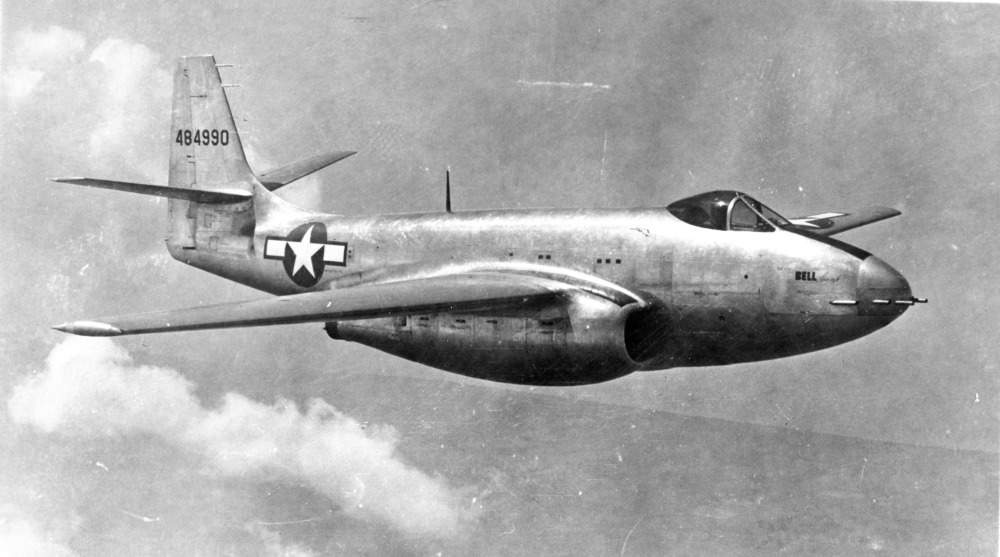







Seems like it was missed opportunity it could have made a nightfigher. Or and strike fighter. Just add radar and speed brakes. It seemed to all ready have room for a second crewman.