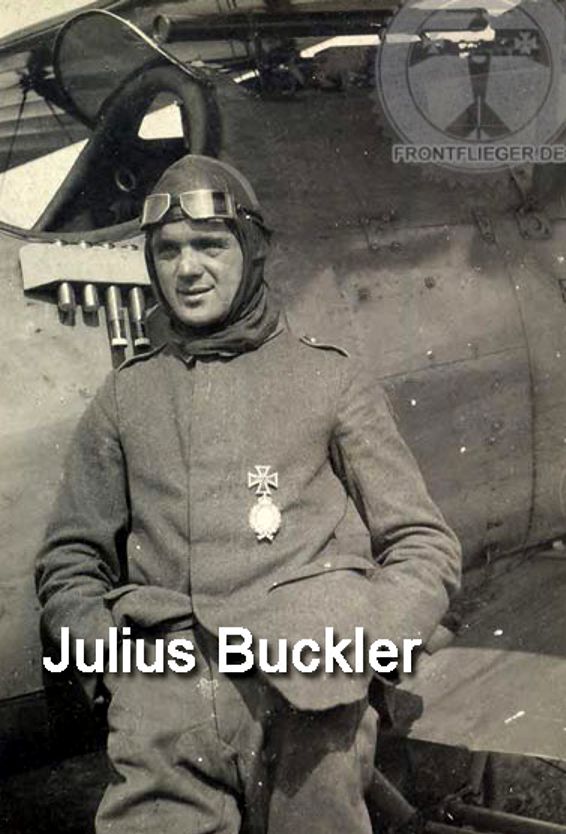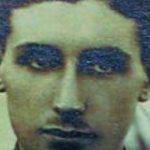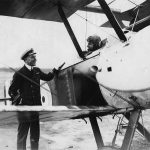
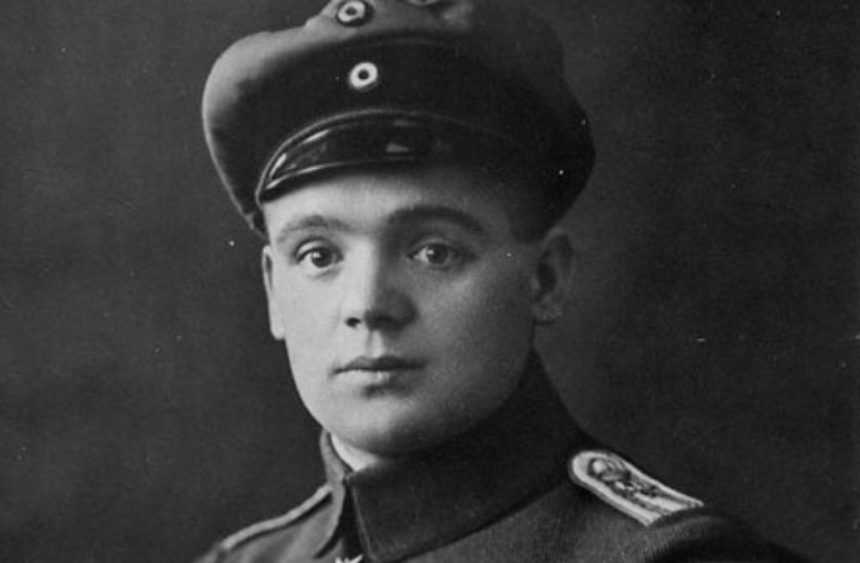

In WWI, different aces had different passions before becoming pilots. Born on March 28, 1894, in Mainz-Mombach, Germany, Julius Buckler was interested in architecture. At 15, Buckler began working for aircraft designer and manufacturer Anthony Fokker, and joined the Infantry Life Regiment 117 in 1913. He was injured on the Western Front and later transferred to the German Air Service. By the summer of 1915, he was flying missions as an aerial observer with Flieger-Abteilung (Artillerie) 209 before training to become a pilot. On March 21, 1916, he was preparing to attack a French Voisin when a Fokker Eindekker intervened and shot it down. The Eindekker followed Buckler and his observer back to their base, where the pilot introduced himself as Oswald Boelcke. Meeting the top ace of the war inspired Buckler to become a fighter pilot.
Ace Journey of Julius Buckler
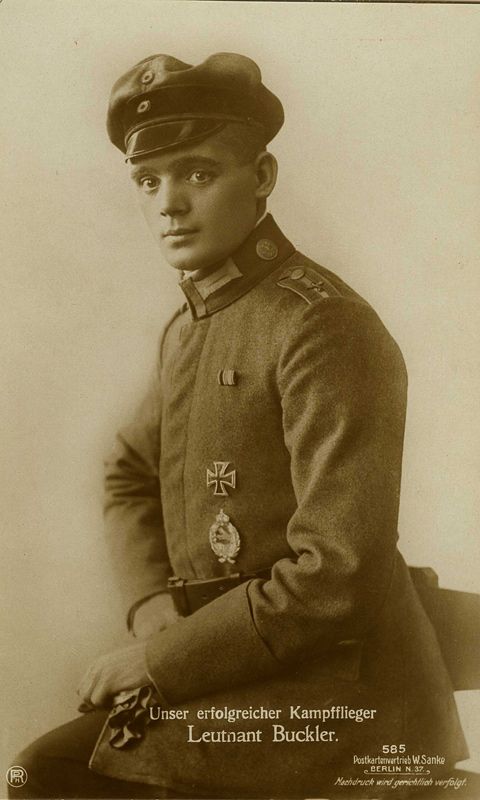
In November 1916, Julius Buckler joined a fighter squadron called Jagdstaffel 17. He flew the Albatros D.II in this squadron. His first victory came on December 17, 1916, and was his sole victory that year. His next victory came in February, the month in which he shot down two aircraft. After destroying another aircraft on April 15, he officially became an ace on April 16, when he downed a Nieuport. He claimed one more victory in April. In the following months, Buckler destroyed one aerial target in May, four in July, two each in August and September, nine in October, and six in November, bringing his personal score to 30. On November 18, Julius Buckler was promoted to Leutnant. He was wounded on November 30, 1917, injuring both his arms and chest when his aircraft crashed, breaking both arms completely, and he had to lie under the wreckage for hours until German infantry attacked and rescued him. While recovering from his injuries, he received the Pour le Mérite award on December 4, 1917. His injuries kept him out of action for several months, and he could not join his squadron Jagdstaffel 17 by April 1918. His next victory came on April 16, 1918, followed by another victory on April 21, bringing his personal score to 32. After shooting down a balloon on May 3, Julius Buckler was wounded again on May 6, 1918, this time in his left ankle. The injury kept him out of combat for several months, and his last three victories came in October, bringing his score to 36. Among all his 36 victories, seven were R.E.8s, five were Sopwiths, three each were Nieuports, Caudron aircraft, and Bréguet 14s, one each were SPAD, F.E.2d, B.E.2, D.H.5, Bristol F.2b, A.W.F.K.8, Salmson 2A2, and EA aircraft, and seven were Balloons.
WWII and Legacy
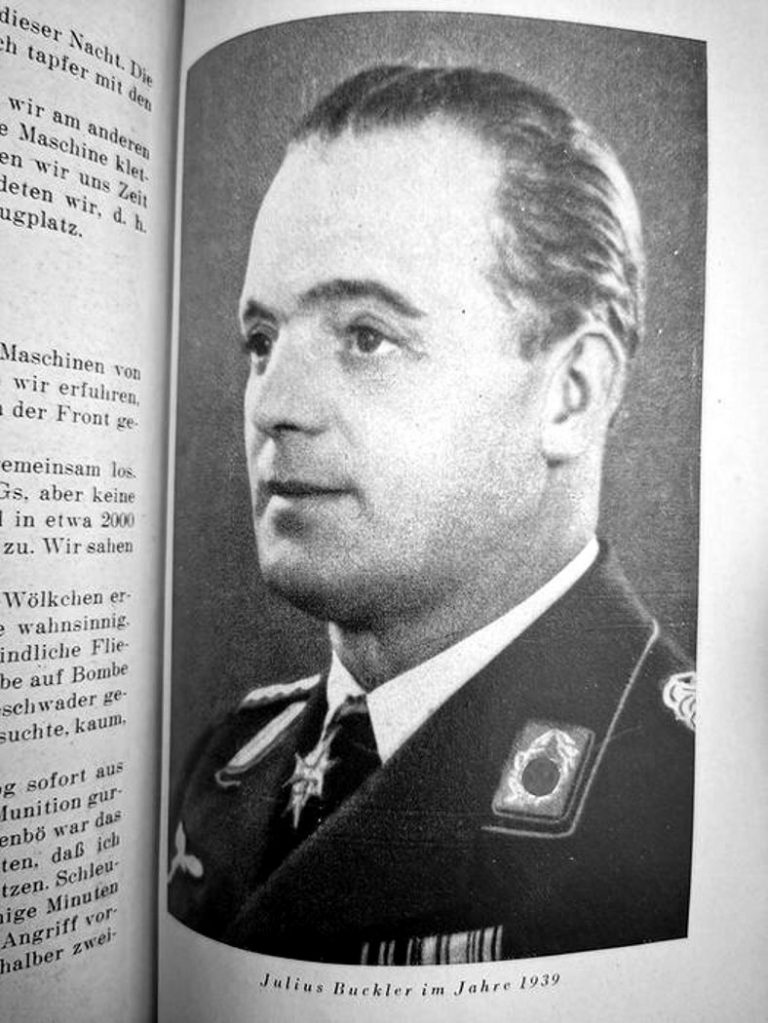
In WWI, Julius Buckler was awarded the Prussian Pilot’s Badge, Iron Cross, 1st and 2nd class, Ehrenbecher für den Sieger im Luftkampf, Warrior Decoration in Iron (Hesse), Gold Military Merit Cross (Prussia), Knights Cross with Swords of the House Order of Hohenzollern, Pour le Mérite, Golden Wound Badge, and The Honour Cross of the World War 1914/1918. Buckler is thought to be the only German fighter pilot to receive the Golden Wound Badge. The badge was awarded during WWI only for wounds that caused permanent damage or disfigurement. After finishing his military service, Buckler worked in the auto industry. Soon after, Julius Buckler became a flight instructor and stunt pilot at the German Aviation School in Staaken, where he stayed until 1928. On April 1, 1936, Buckler rejoined the military to become a first lieutenant in the reserve air force of the Wehrmacht. In August 1939, he was promoted to captain, then to major on August 27. When WWII began in September 1939, he was appointed to the Werneuchen fighter pilot school. By March 1940, he was an essential operator, and in 1942, he took command of the Strausberg Air Base. As an Oberstleutnant in the Reserve, Buckler is believed to have also served in the Staaken Air Base Command and led the Air Base Command. On March 18, 1945, during Germany’s final battle, he was reportedly in charge of air base command in Neuruppin. After the war, he was taken prisoner by the Western Allies and released in 1945 or 1946. In the post-war years, Buckler ran a successful construction company. After surviving both wars, Julius Buckler died on May 23, 1960, in Berlin or Bonn. In the Aces series, Julius Buckler was a brave and talented ace who served in both world wars, even after sustaining injuries, demonstrating his commitment to his military service. Read stories about more aces HERE.