

(Image credit: VAN)
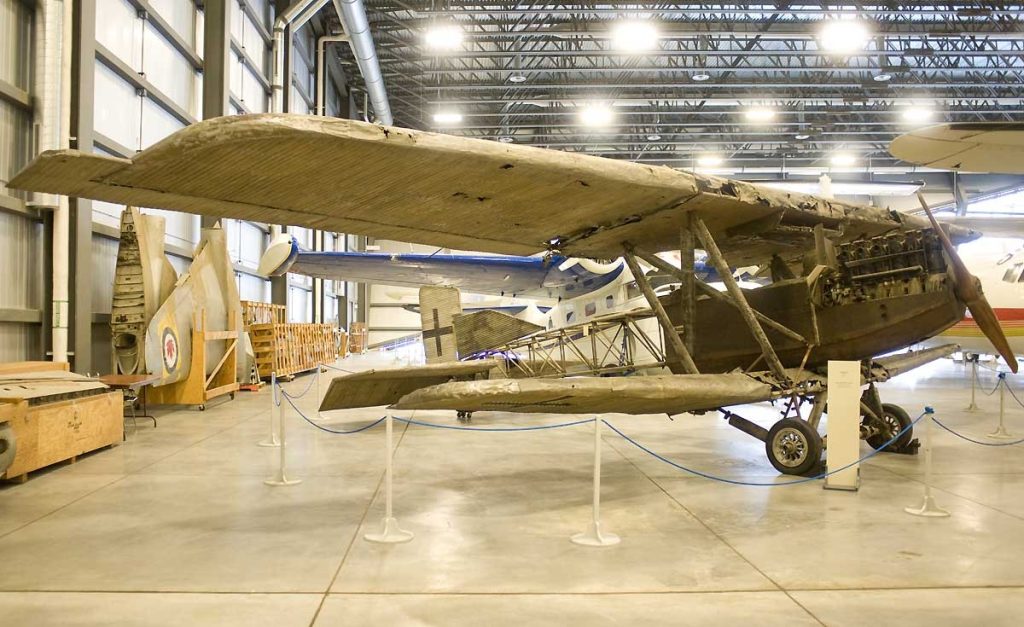
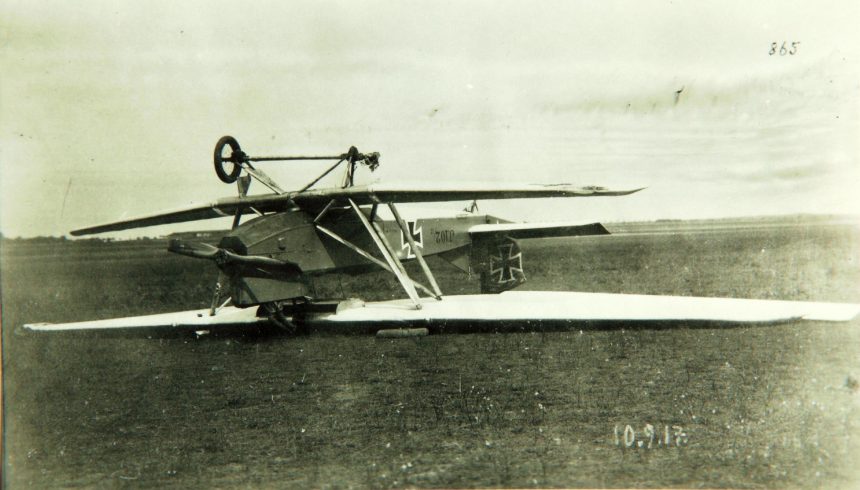
On this day in aviation history, 109 years ago (January 27, 1917), the first flight of the Junkers J.I took place. Referred to internally by aircraft manufacturer Junkers as the J 4, the J.I was a German J-class biplane (sesquiplane) of the First World War. Germany’s J-class designation was introduced in 1917. These WWI aircraft were armored dual-role aircraft, serving in both liaison and ground-attack roles. The Junkers J.I was specially designed for low-level ground attack, observation, and army co-operation, hence the additional armor. Development of the Junkers J.I culminated with an advanced aircraft, considering the period. The J.I was the first all-metal aircraft to enter mass production. From behind the propeller to the rear crew position, a large single-unit steel “bathtub” was used, which served as armor for the aircraft and crew. The engine cowling had additional armor, the same 0.20-inch thickness as the rest of the airframe’s protected areas. Also protected were the fuel tanks and radio equipment. Flight controls were driven via push-rods and bellcranks, a departure from the traditional steel-cables and pulleys of the period. This was done with durability in mind, as these newer controls were less vulnerable to ground fire.
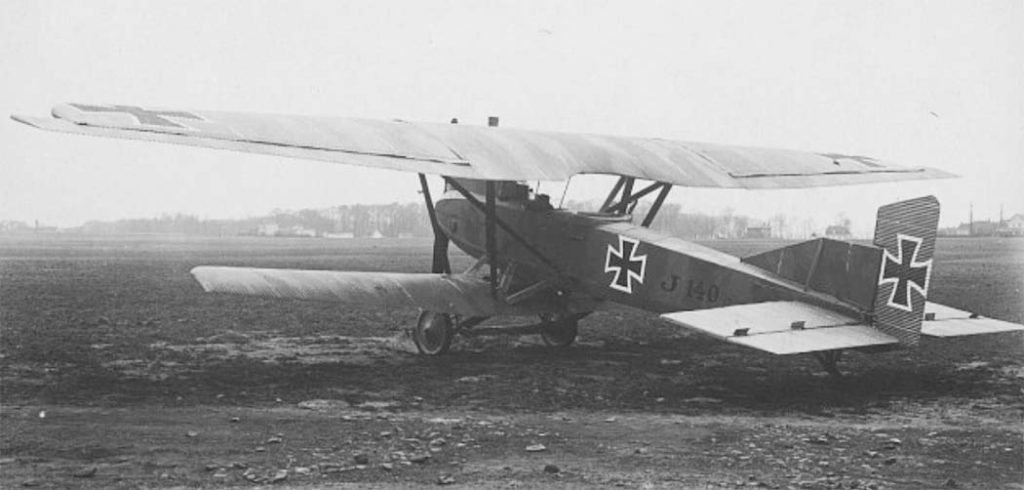
The Junkers J.I had wings of notable size difference between the upper and lower surfaces. The J.I’s upper wing had an area of 386.3 square feet, which was over twice that of the lower wing’s 147.3 square feet. This J-class sesquiplane was powered by a 200-horsepower Benz Bz.IV engine, which allowed the J.I aim to attain a maximum airspeed of 97 mph. Junkers’ J.I had a range of 168 nautical miles and a service ceiling of 13,000 feet. Armament was provided by one flexible 7.92 mm Parabellum MG14 machine gun. The J.I primarily served on the Western Front during the German spring offensive of 1918. Between 1917 and the end of the Great War, Junkers built 227 J.Is in total. Only one original aircraft exists today, with the German military serial number J.I 586/18. This Junkers was originally built in 1918 and was sent to Canada in 1919 as a war trophy. The Canadian War Museum had possession of the J.I until transferring the aircraft to the Canada Aviation and Space Museum in 1969. J.I 586/18 is currently on display at this museum, located in Ottawa, Ontario. Additionally, a flying replica J.I is currently being built in Hungary.