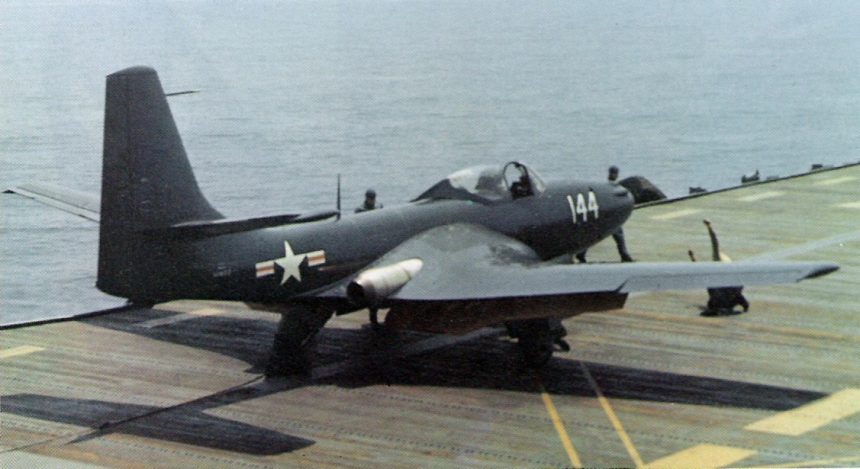


(Image credit: VAN)
On this day in aviation history, 81 years ago (January 26, 1945), the McDonnell FH Phantom flew for the first time. The FH Phantom was a twin jet-engined carrier-based fighter aircraft that was designed and flown towards the end of the Second World War. This first-generation fighter jet was the first operational military jet to land aboard an aircraft carrier. The British de Havilland Sea Vampire had already made the first jet carrier landing overall in December 1945, but that aircraft was still considered experimental at the time. The FH was also the first jet aircraft deployed by the United States Marine Corps.
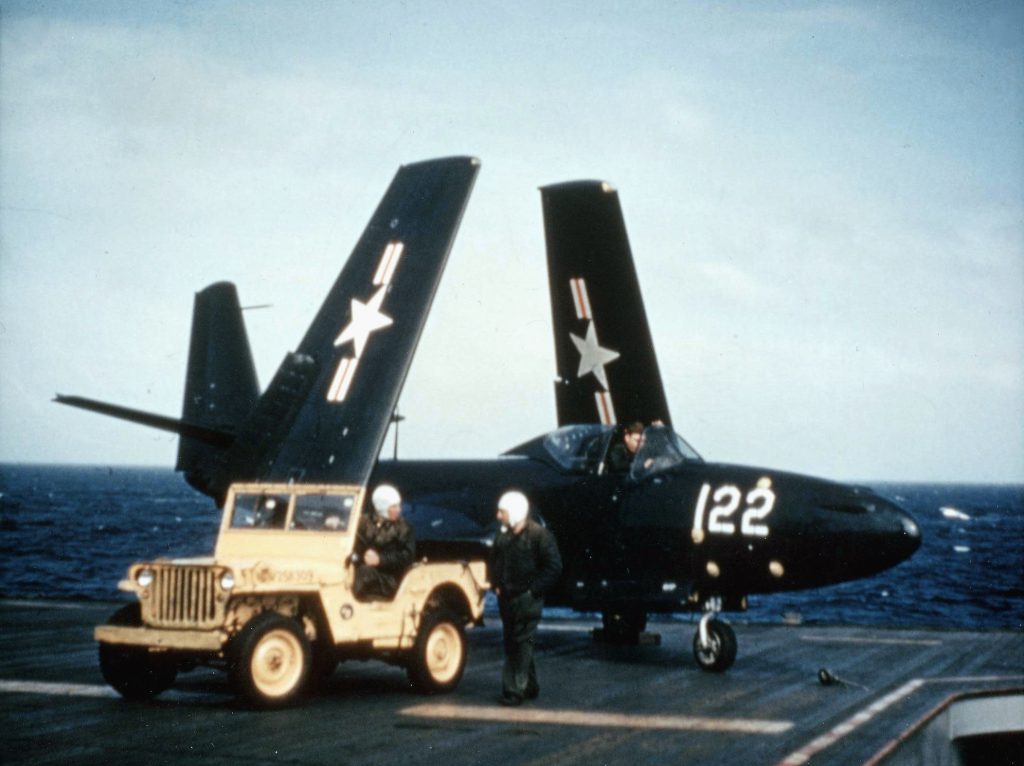
McDonnell Aircraft’s ingenious XP-67 Moonbat long-range interceptor project from 1943 caught the attention of the United States Navy. The ingenuity of McDonnell was recognized, and the Navy requested that the company design a shipboard jet fighter to be powered by turbojet engines under development by Westinghouse. On August 30, 1943, three prototypes were ordered under the designation XFD-1. The engines were placed in the middle of the airframe, behind the FH’s center of gravity. This arrangement placed the bubble-canopy ahead of the wing, which in turn offered the pilot exceptional visibility. The Phantom featured un-swept folding wings, a conventional empennage, and an aluminum monocoque structure – with flush rivets.
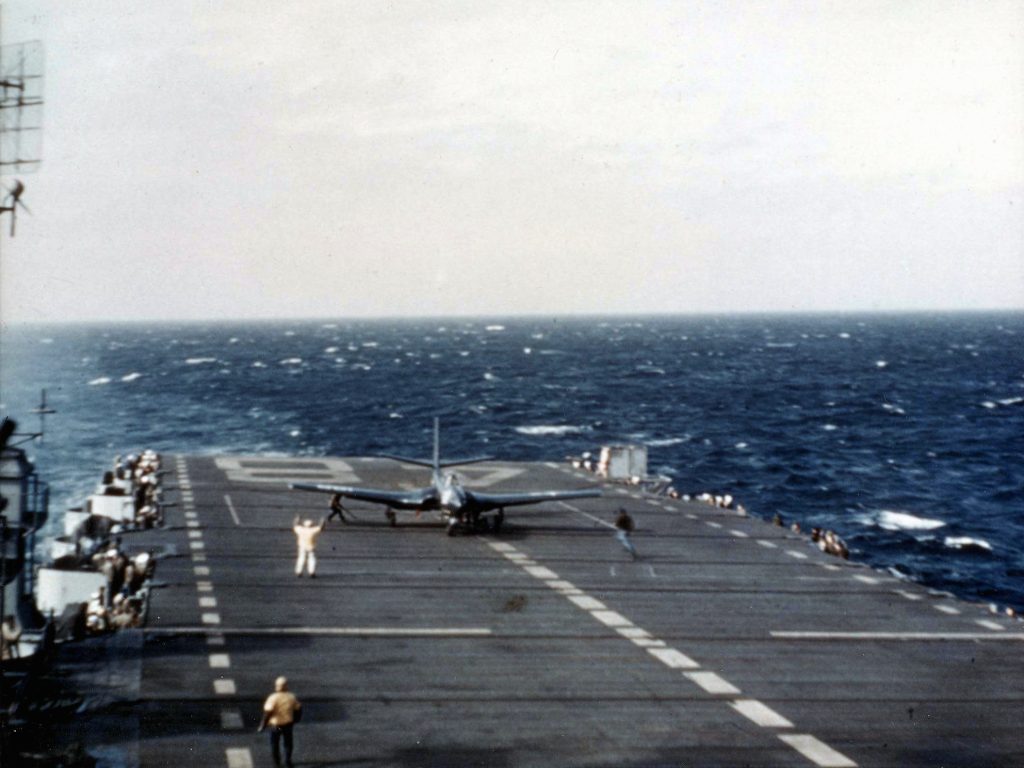
The FH Phantom utilized split-flaps, which assisted with low-speed landing performance. Also, the aircraft had provisions for rocket-assisted takeoff (RATO) under the wings, to assist with the short carrier runway length. Two Westinghouse J30-WE-20/J30-P20 turbojet engines, with 1,600 pounds of thrust each, powered the FH. Phantoms could attain a maximum airspeed of 505 mph, cruise at 248, and land at 80. During combat operations, the aircraft had a range of 600 nautical miles, coupled with a 41,100-foot service ceiling and a 4,230-foot-per-minute rate of climb. Four .50 calibre machine guns in the nose, and eight 5-inch High Velocity Aircraft Rockets (HVARs) provided the FH Phantom with a means of armament.
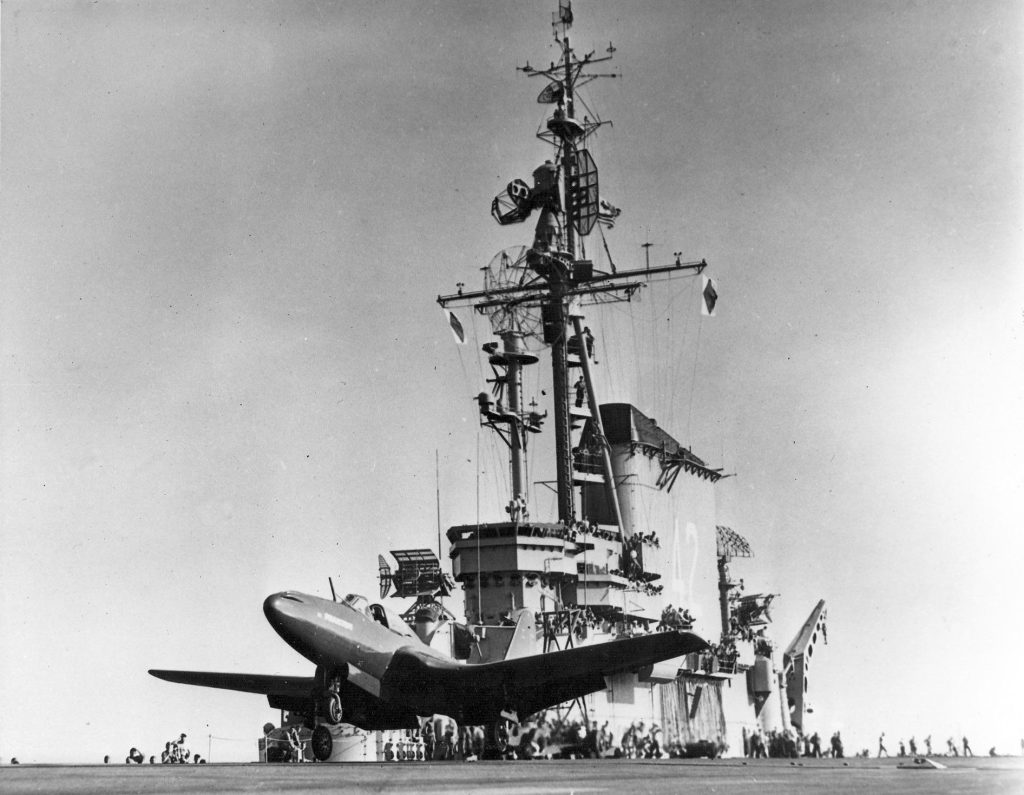
McDonnell built only 62 FH-1s, but the aircraft helped prove the viability of carrier-based fighter jets. As an early success, the FH-1 would be further developed into the McDonnell F2H Banshee, which is another carrier-based fighter jet built in greater numbers and that contributed during the Korean War. Three FH-1 Phantoms are known to survive today in the United States. FH-1 BuNo 111759 is currently part of the Smithsonian National Air & Space Museum’s collection in Washington, D.C. This aircraft served with Marine Fighter Squadron 122 (VMF-122), and was retired in April 1954.