






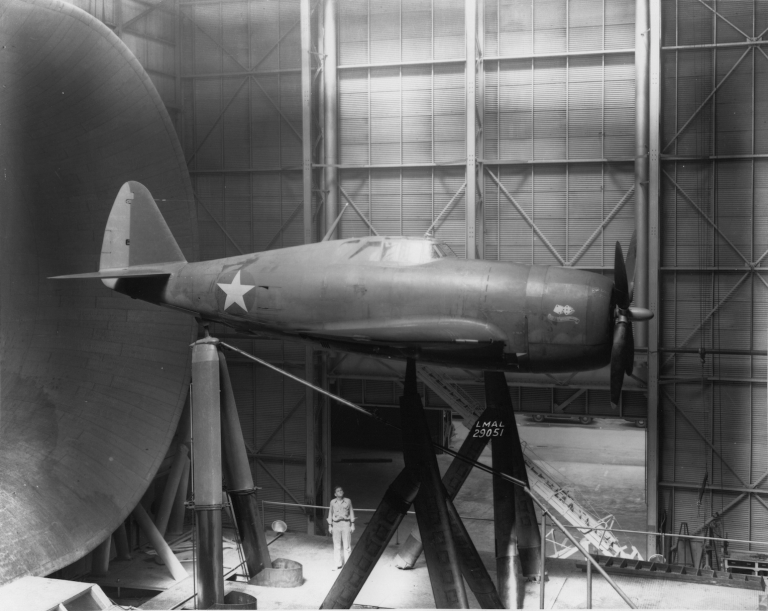

By Peter Linsky
After reading Vintage Aviation News’ recent article, Inside the Engineering of the Republic P-47 Thunderbolt, I was encouraged to share a personal connection to the famed “Jug.” My father, David Linsky, was employed as a structural wing designer at Republic Aviation’s Farmingdale, Long Island, facility during World War II, where he played a direct role in the aircraft’s development. What follows are my recollections and the stories he shared with me about his work on one of the most formidable fighters of the war.
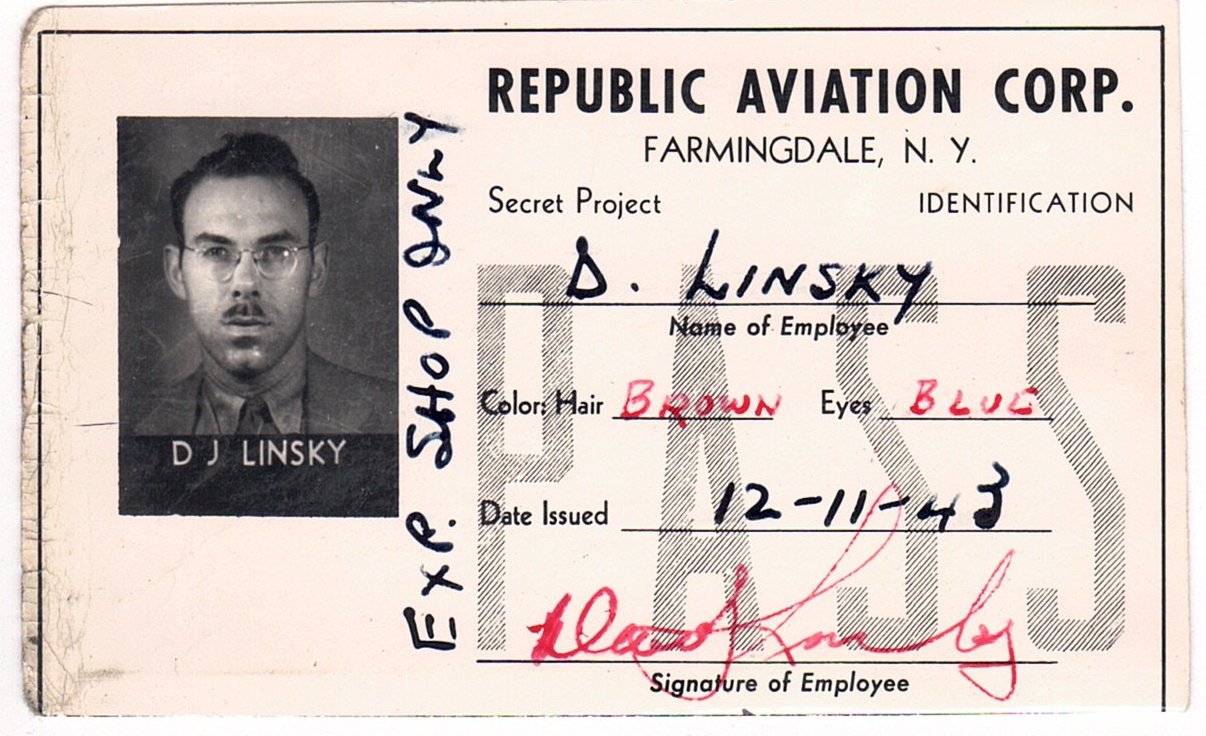
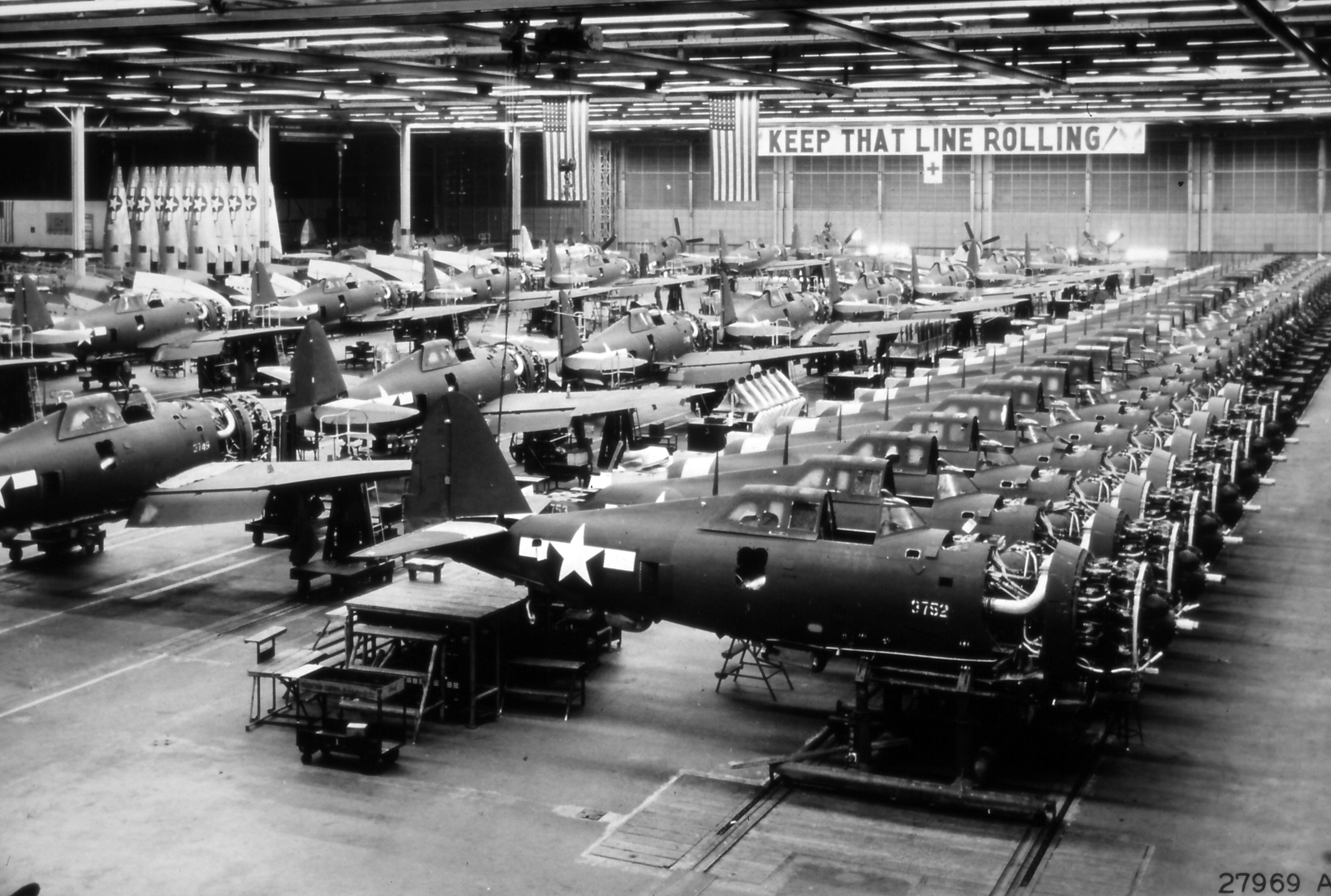
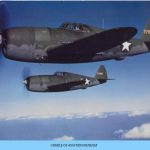
As a kindergarten-aged child living with my parents and older sister in the New York City borough of Brooklyn during most of the Second World War, I was much too young to understand what my father, David, did for a living. Only after we relocated to the West Coast a few years later did he mention that he had been employed by Republic Aviation at Farmingdale, Long Island, and was deeply involved in helping build the famed P-47 Thunderbolt, the most powerful and heaviest single-seat fighter ever produced for the Army Air Forces. David Linsky graduated from Cooper Union night school with an engineering degree in 1936 and soon found work on the upstate New York Aqueduct project. When war broke out, he was classified 4F for the draft because of his nearsightedness, for which he was eternally grateful. He told me that otherwise the Navy would have grabbed him and made him an officer in the Seabees, a virtual death sentence, as Seabee officers were prime Japanese sniper targets in the Pacific. Instead, he took a position in the defense industry, which led him to Republic Aviation. His background in bridge construction placed him in the P-47 wing design unit, where his contributions helped make the “Jug” such an effective weapon.
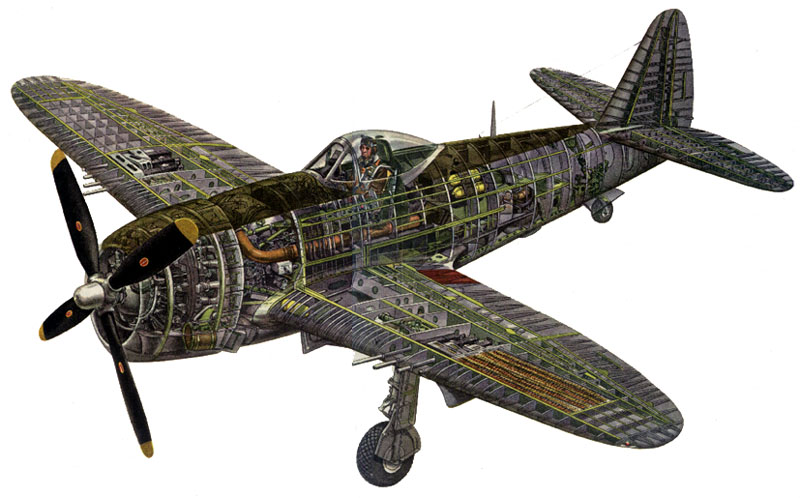
As I grew older, I encouraged him to share his memories of his work, and he related many stories about the design and construction of this wonderful airplane. He said the Thunderbolt’s wing was inspired by the lovely elliptical wing of the Supermarine Spitfire, which he much admired. As a bridge engineer, he was familiar with beam construction. He told me that the original design of the P-47’s wing ribs specified a single-thickness rib shaped in a shallow, vertical “U,” with chamfered lightening holes cut out where needed. When these early “Razorback” P-47s were fitted with their quadruple Browning .50-caliber machine guns, each with its own magazine feed tray, firing range tests quickly revealed that the feed belts would jam while trying to pass through the ribs. This was because the guns and feed tray mounts were all staggered, but the holes through those ribs were not. Back to the drawing board they went, and my father’s team soon remedied the problem. At the same time, the wing designers determined that the wings needed to be stronger to carry range-extending external fuel tanks and, later, bomb and rocket packages. Again, David’s bridge engineering lessons kicked in, and he suggested “doubling” the rib structure so that two ribs riveted back-to-back created what we would now call a vertical “I-beam,” far more robust than the original single-thickness design. While this increased gross weight, the wings never failed, and the “Jug” became a fearsome ground-attack asset.
When he left Republic at the war’s end, David kept numerous publications and a few spare parts, which came into my possession many years later. I devoured a profusely illustrated USAAF Pilot’s Operating Manual (blue-covered and marked “Confidential”), which not only discussed the plane’s combat capabilities (it could out-dive anything the Germans had), but also its weaknesses (it could not climb particularly well). One passage that has remained with me over the years instructed pilots who might be forced to make a belly landing due to damage at low altitude to stick with the plane and ride it into the ground wheels-up, because that huge Pratt & Whitney Twin Wasp radial would act like a bulldozer blade and smash through anything in its path. Of course, we have all seen photos of the P-47 that chased a German aircraft down to ground level, smashed through a forest, and returned to base with a bent propeller and tree branches jammed into the cylinders.
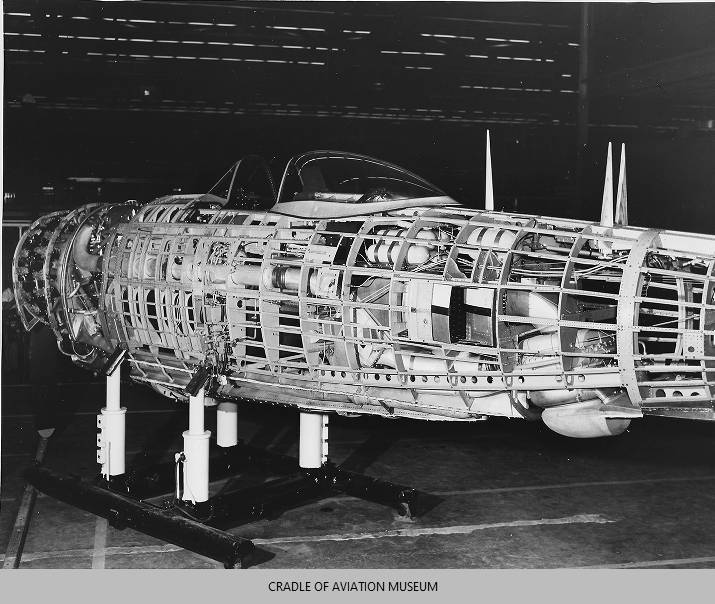
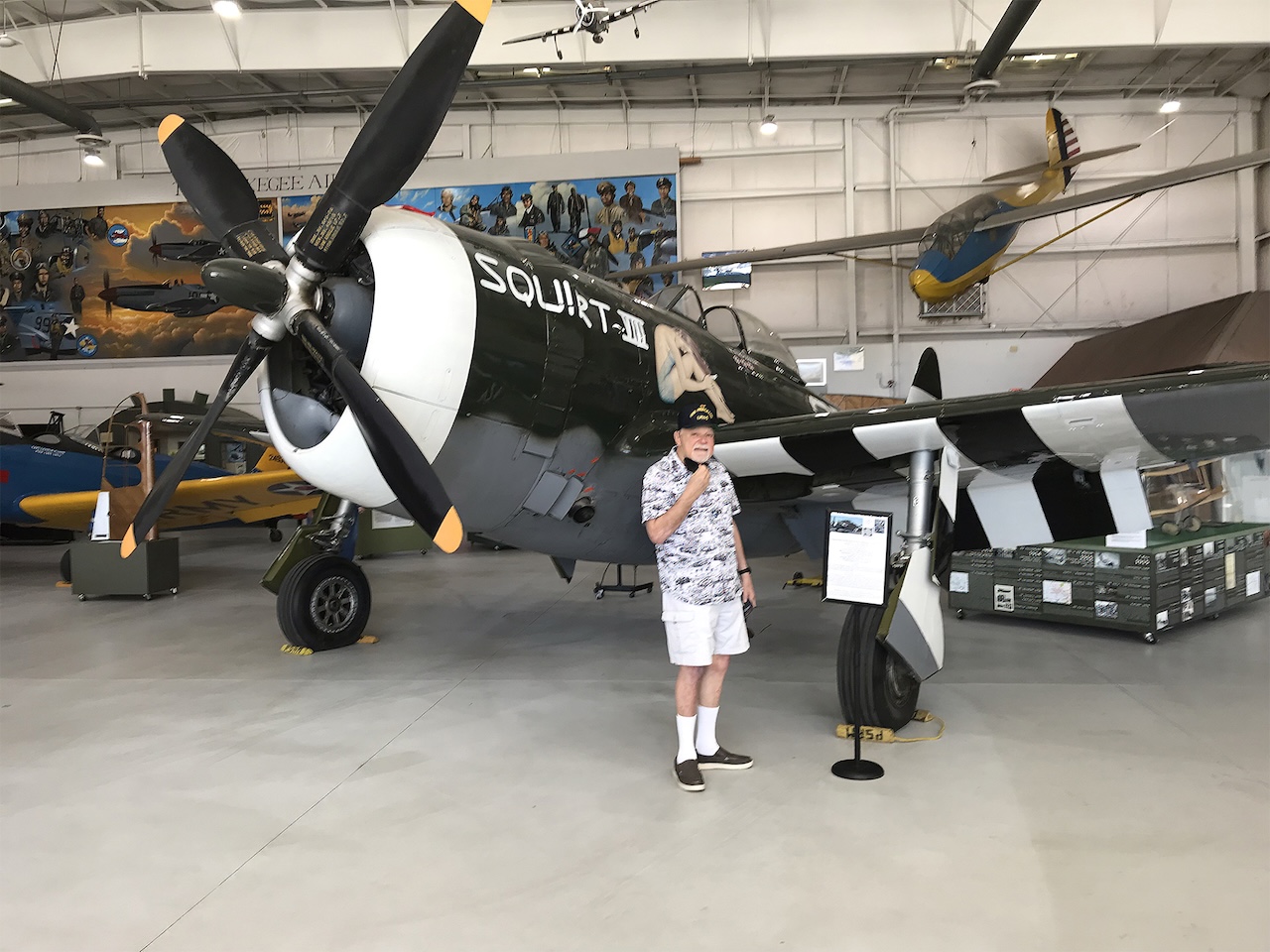
Not everything went well at Republic. David recalled coming home from work one evening after having been part of an accident investigation team. A P-47 had gone straight in somewhere on Long Island during a test flight, and there was nothing left but scattered debris and a deep hole in the ground. “There was nothing to see,” my father said. He was very badly shaken by that experience. On the other hand, he had kept a company employee newsletter that described an Eighth Air Force Jug whose pilot dove to escape a German fighter high over the English Channel. As mentioned, the Thunderbolt could out-dive anything else, but in this case, the pilot’s controls froze, and he could not pull out of the dive. Within a few moments, the German gave up the pursuit, but as his Thunderbolt plunged toward the Channel, the American pilot knew he was going to smash into the water and die. By some miracle, his elevators suddenly responded to the stick, and the plane pulled out of the dive barely a thousand feet above the Channel. Badly shaken, the pilot was able to bring his plane home. When mechanics examined the aircraft, they found the airspeed indicator bent against the stop needle, and most of the painted-on identification numbers had been peeled off the fuselage and wings. They estimated that the plane had exceeded 600 mph on the way down. The story quickly made its way back to Republic and was published in the company newsletter. As an adult, I have tried to visit as many West Coast air museums as possible that retain P-47s on display. I donated the Pilot’s Manual, parts catalog, and a couple of hard parts my father had kept to the Evergreen Aviation Museum in McMinnville, Oregon (which unfortunately later sold its example), and to the Palm Springs Air Museum. The Mustang has its fans, but to my mind, the Jug is the greatest American fighter of all time—and unlike the Mustang, its wings never came off.






Thanks for sharing. My family was also from the Brooklyn/Queens area. After the Pearl Harbor attack, my father tried to enlist, first with the Army, and then the Navy, but he was rejected because he was color blind. Somehow the Seabees took him and he was made a cook in the officer’s mess for the duration.
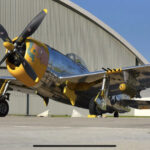
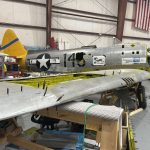
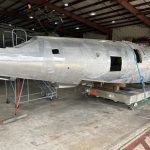
I visited a restoration center at Colorado Springs about 10 years ago. They had 3 p47s in various states. One was flyable, one was skeletonized while being restored, one was just pulled from a south Pacific jungle and corroded beyond restoration. The 3 depicted quite a bit about the type.