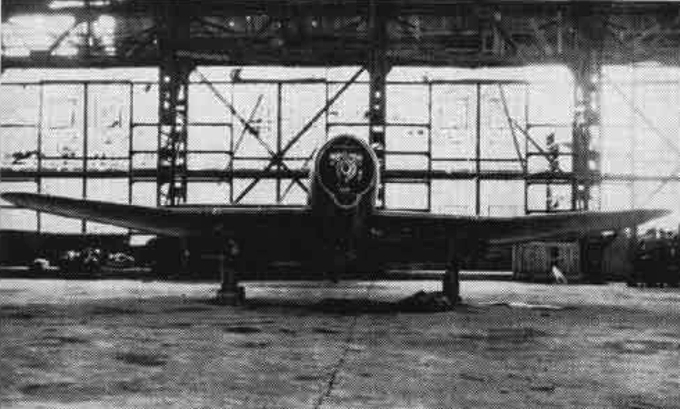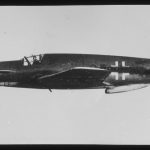
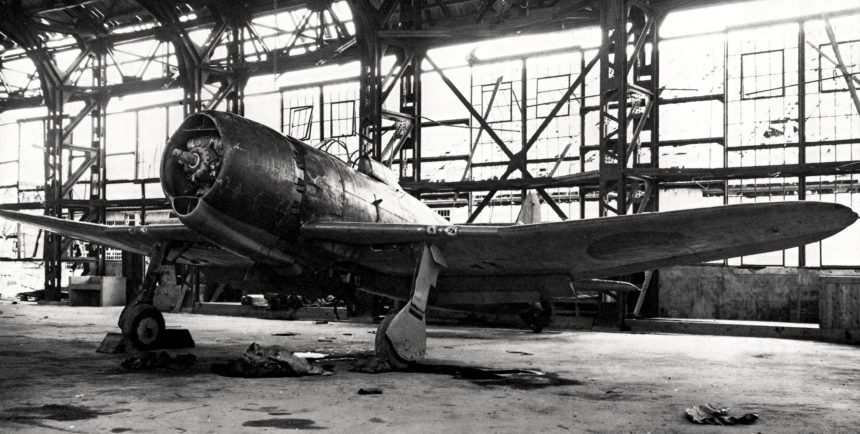

On this day in aviation history, 82 years ago (May 6, 1944), the Mitsubishi A7M Reppū flew for the first time. Japanese for Strong Wind, the Reppū was a carrier-based fighter that was planned to be the successor to the Mitsubishi A6M Zero. Development of the A7M began in late 1940 at the request of the Imperial Japanese Navy, which planned to release specification 16-Shi in 1941, which sought the A6M’s eventual replacement. Specification 16-Shi called for a carrier-based fighter that could achieve improved overall performance over the Zero, including superior maneuverability, speed, climb, diving, and armament. Work on the A7M was halted in January 1941 while resources were directed in favor of the A6M3 and the 14-Shi interceptor, the Mitsubishi J2M Raiden. Work re-commenced on the new fighter in April of 1942, under the designation of Navy Experimental 17-shi Ko (A) Type Carrier Fighter Reppū. The Imperial Navy issued its specifications for the new fighter. The A7M would have to fly faster than 345 knots (397 mph), above 6,000 m (20,000 ft), climb to 6,000 m (20,000 ft) in less than 6 minutes, and have two 20 mm cannons with two machine guns. Furthermore, the Reppū would need to retain the maneuverability of the A6M3. As the A7M progressed through development, the selection of a proper engine proved to be a chore. The required 2,000 horsepower was planned to come from two engines still in development at the time, the Nakajima NK9 (Ha-45/Homare) or the Mitsubishi MK9 (Ha-43). The larger MK9 engine proved to provide wing loading issues. The NK9 was a better fit, but could not help the A7M reach the specification’s required maximum speed.
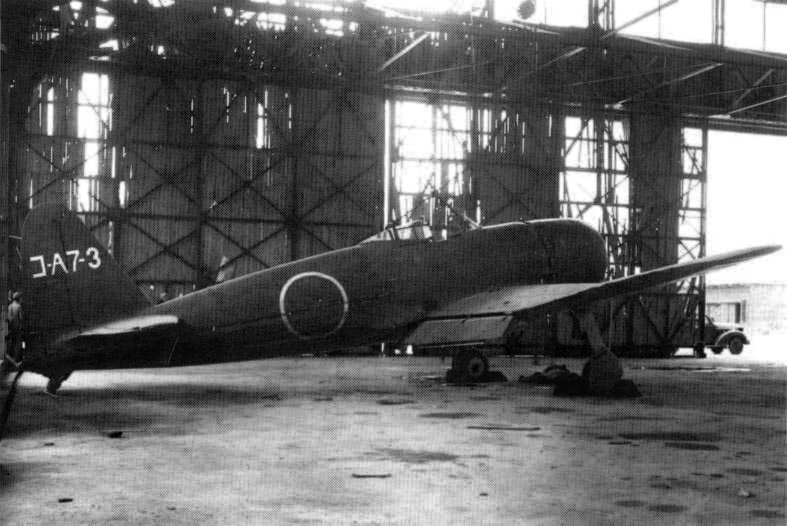
The first Reppū prototype, the A7M1, was powered by the 2,000-horsepower Nakajima Homare 22 engine. The first flight in May of 1944 occurred 4 years after development began; however, flight testing revealed the Imperial Japanese Navy’s patience to be a virtue. The A7M1, although underpowered, demonstrated exceptional handling and maneuverability. The aircraft’s top speed was similar to the A6M5 Zero, not good enough in the eyes of the IJN brass, but a solid start. The Navy ordered the A7M’s development to be halted, but Mitsubishi obtained permission to continue testing the aircraft using the Ha-43 engine. The upgraded A7M2 first flew on October 13, 1944. The A7M2 proved to have a higher maximum airspeed of 390 mph with the 2,200-horsepower Mitsubishi Ha-43 18-cylinder radial engine up front. This performance, coupled with the pre-existing excellent maneuverability of the upgraded Reppū, led the IJN to change its mind. The A7M was adopted; however, Japanese industry limitations near the end of the war prevented the aircraft from entering mass production. The A7M was never deployed for active duty service. In total, 9 Reppūs were built, between the A7M1, A7M2, A7M3, and A7M3-J variants.