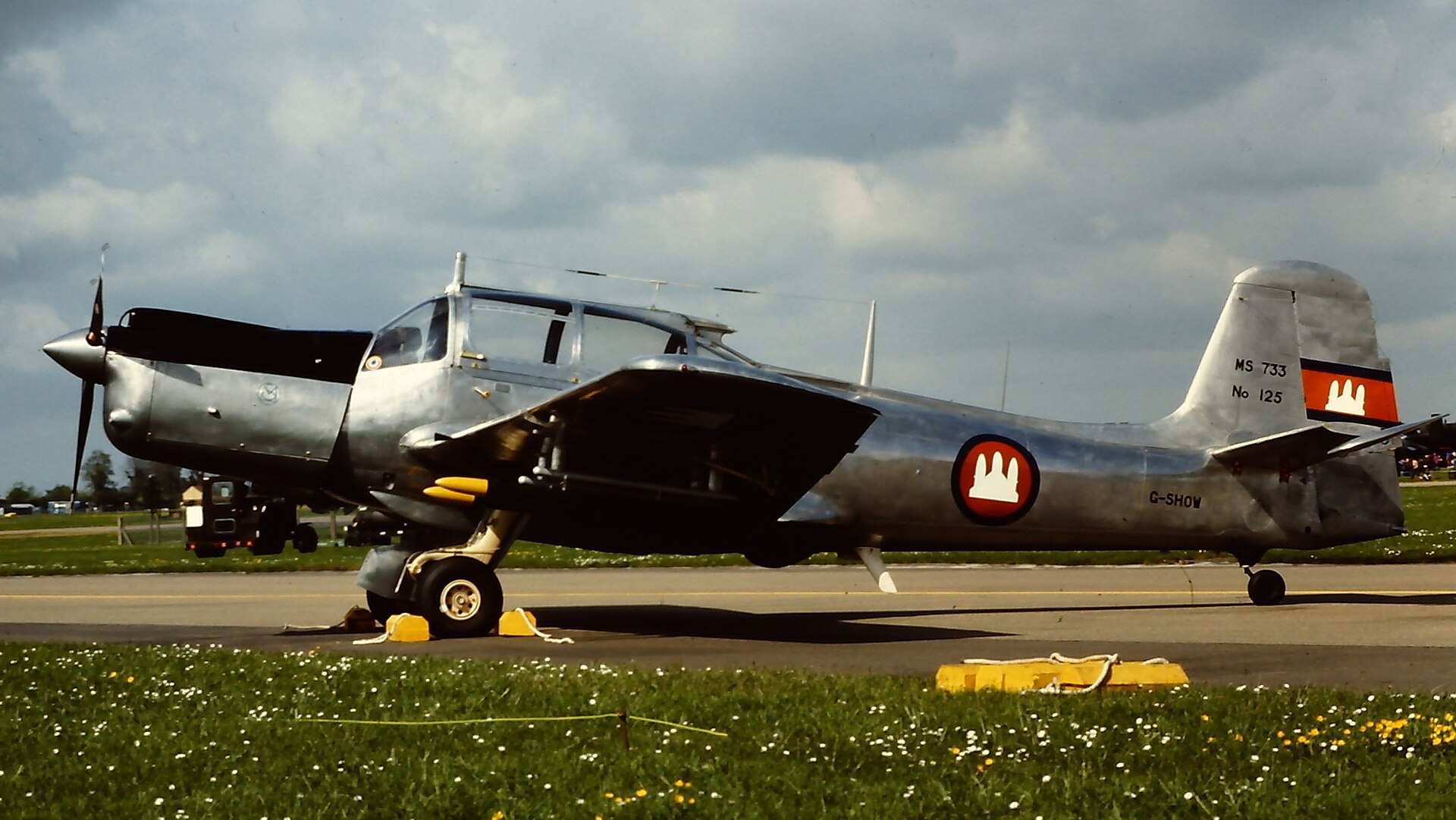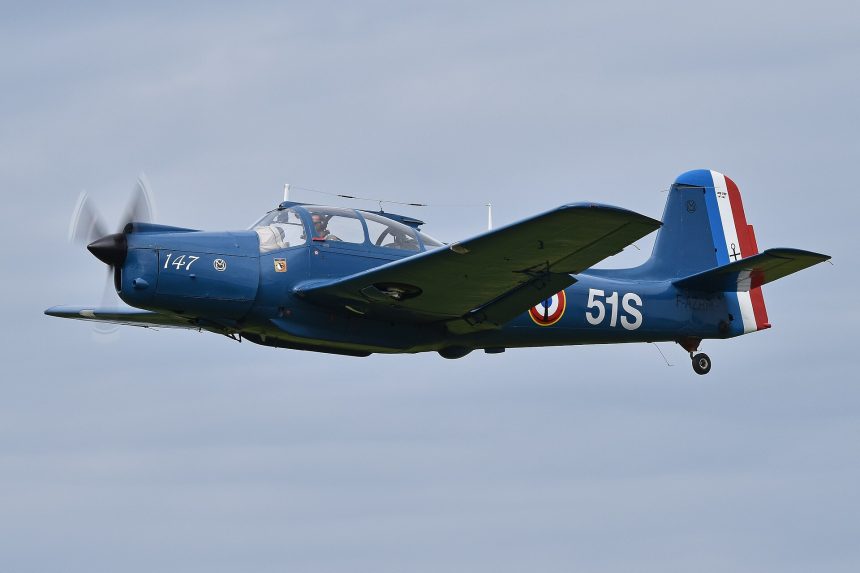

On this day in aviation history, 75 years ago (April 16, 1951), the Morane-Saulnier MS.733, s/n MSA.733.01, flew for the first time. The MS.733 was the production variant of the Alcyon, designed and built by French aircraft manufacturer Morane-Saulnier. The Alcyon was a basic training aircraft, capable of seating 2 to 3 occupants. Development of the aircraft began with aims as a basic trainer for the French military. The prototype MS.730 first flew on August 11, 1949. The MS.730 was a low-wing monoplane with fixed landing gear, powered by a 180-horsepower Mathis 8G.20 inverted V8 engine. This powerplant was soon swapped with a 240 hp Argus As 10 (of German war-surplus), and the prototype flew again in November of 1949, re-designated as the MS.731. In 1951, two additional prototypes were manufactured and flown, named the MS.732. These variants were powered by the Potez 6D 02 engine, and they now featured retractable landing gear.
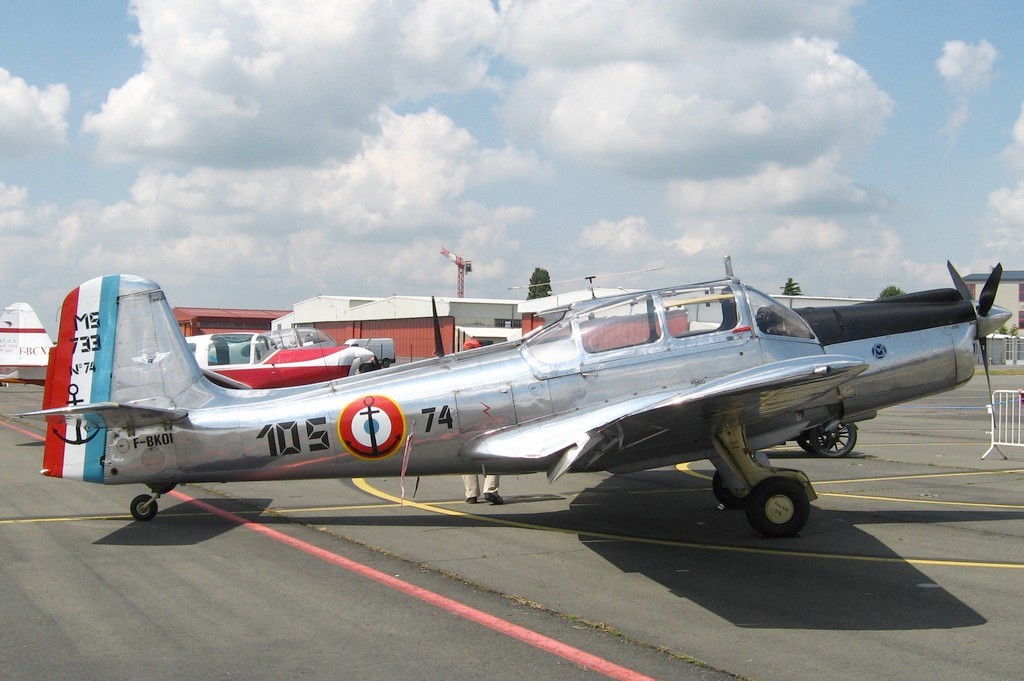
The MS.733 was soon released as the main production variant of the Alcyon. A total of 5 pre-production aircraft were built, along with 200 production airframes. Added to the 3 prototypes, a grand total of 208 Alcyons were manufactured by Morane-Saulnier. The French Navy received 40 aircraft, while the French and Cambodian Air Forces received 145 and 15, respectively. The French Air Force added machine guns to 70 MS.733 airframes for gunnery training. A portion of these aircraft was later converted for counter-insurgency operations and redesignated as the MS.733A. They were to be used in Algeria. After the war in Algeria, some Alcyons were sold to Morocco.
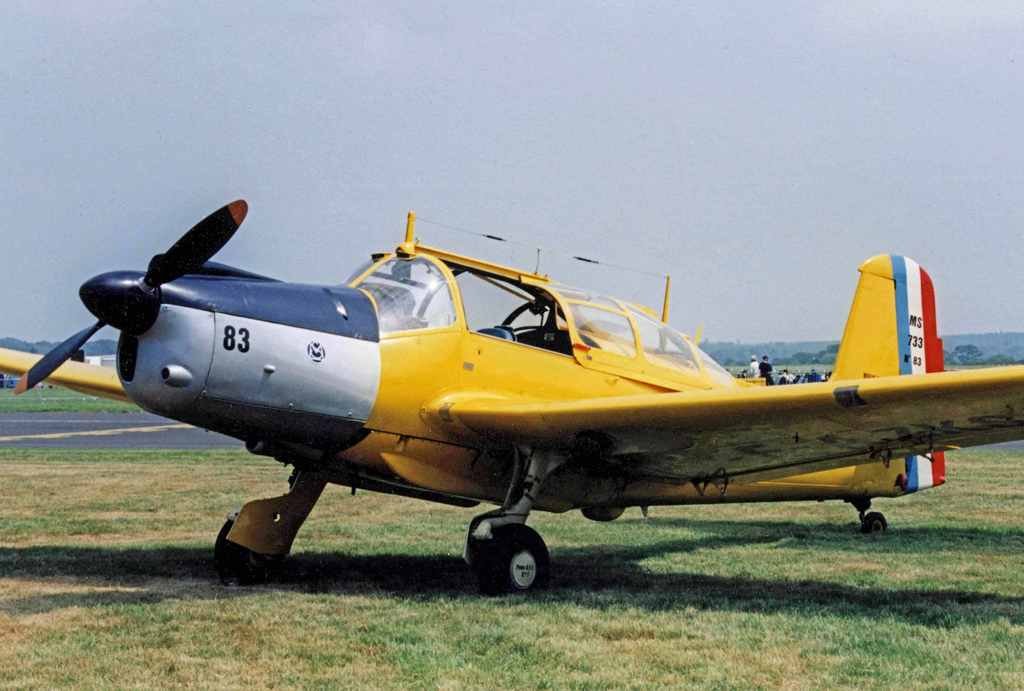
Morane-Saulnier’s MS.733 was powered by a 240-horsepower Potez 6D.30 inverted inline engine. The aircraft was able to cruise at 143 mph and could attain a maximum airspeed of 162 mph. The Alcyon had a range of 497 nautical miles, an endurance of 4 hours and 40 minutes. MS.733’s had a service ceiling of 15,750 feet, and could climb at a rate of 985 feet per minute. When armed, the Alcyon could carry two 7.5mm MAC 1934/M39 machine guns on hardpoints underneath the wings. The Alcyon proved itself as a successful trainer, one that could handle basic aerobatic maneuvers quite well. MS.733s proved to be popular with French flight schools, and even with Air France as a training platform. Several still fly today, in the hands of private owners.