
(Image credit: VAN)
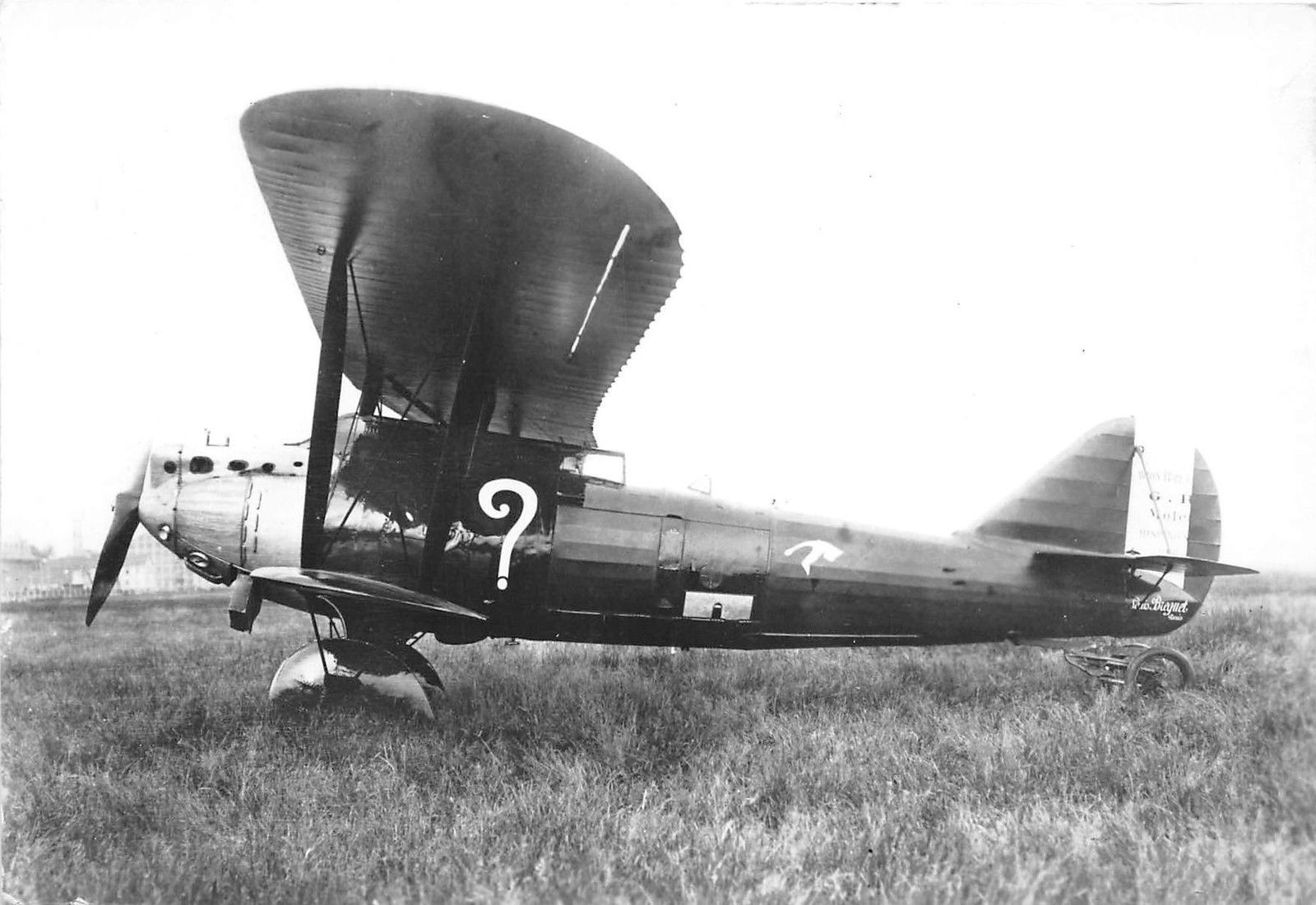
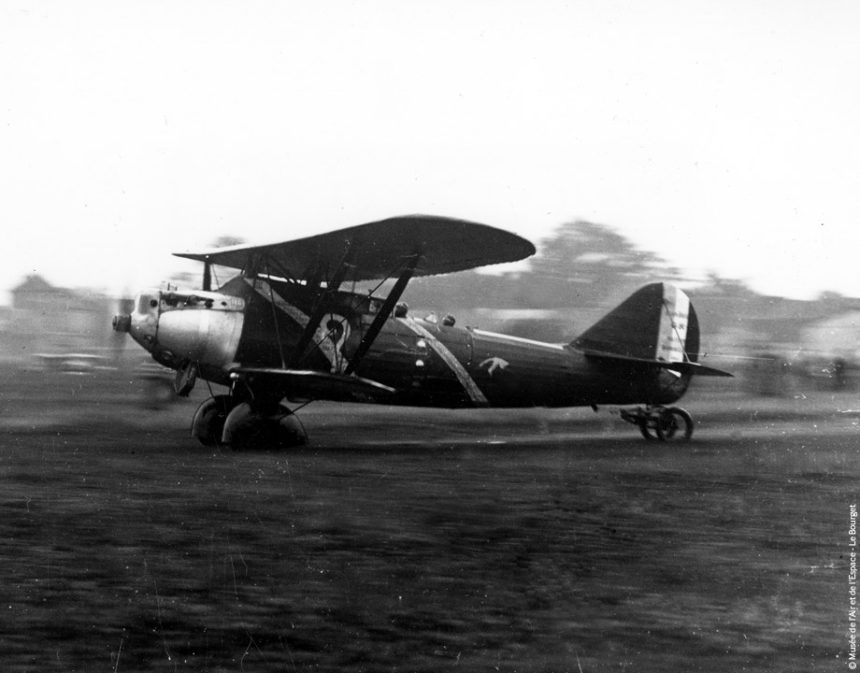
On September 2, 1930—95 years ago today—the first nonstop flight from Europe to the United States was successfully completed. French aviators Captain Dieudonné Coste and Maurice Bellonte made history when they landed on American soil after more than 37 hours in the air. The pair departed Paris–Le Bourget Airport on September 1, 1930, at 10:54 a.m., flying a specially modified Breguet Br.19 TF Super Bidon named “Point d’Interrogation” (“The Question Mark”). The aircraft’s unusual name reflected the secrecy of one of its financial backers—the Coty perfume company. Painted bright red with a question mark emblazoned on the fuselage, the Br.19 was originally designed as a dual-role reconnaissance-bomber.
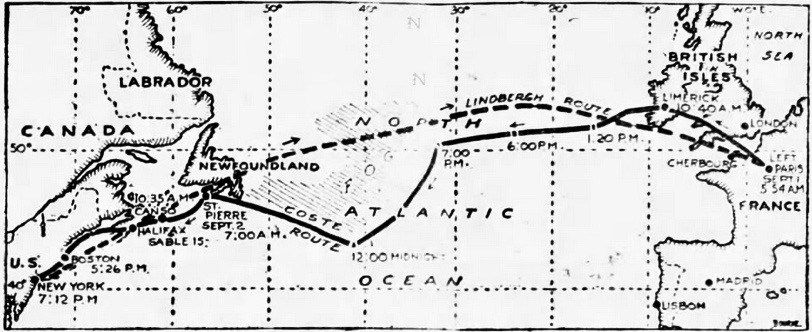
Powered by a 450-horsepower Lorraine 12Ed Courlis W-12 liquid-cooled engine, the Br.19 could reach a top speed of 133 mph, had a service ceiling of 23,600 feet, and in standard configuration carried a range of armament, including a forward-firing Vickers machine gun and twin Lewis guns mounted in the rear. For the transatlantic attempt, however, the aircraft was modified to extend its endurance. On September 2 at 6:12 p.m. Eastern Time, Coste and Bellonte brought Point d’Interrogation down at Curtiss Field in Valley Stream, New York. More than 25,000 people, including famed aviator Charles Lindbergh, gathered to witness the historic arrival. The flight lasted 37 hours, 18 minutes, and 30 seconds, covering 3,193 nautical miles.
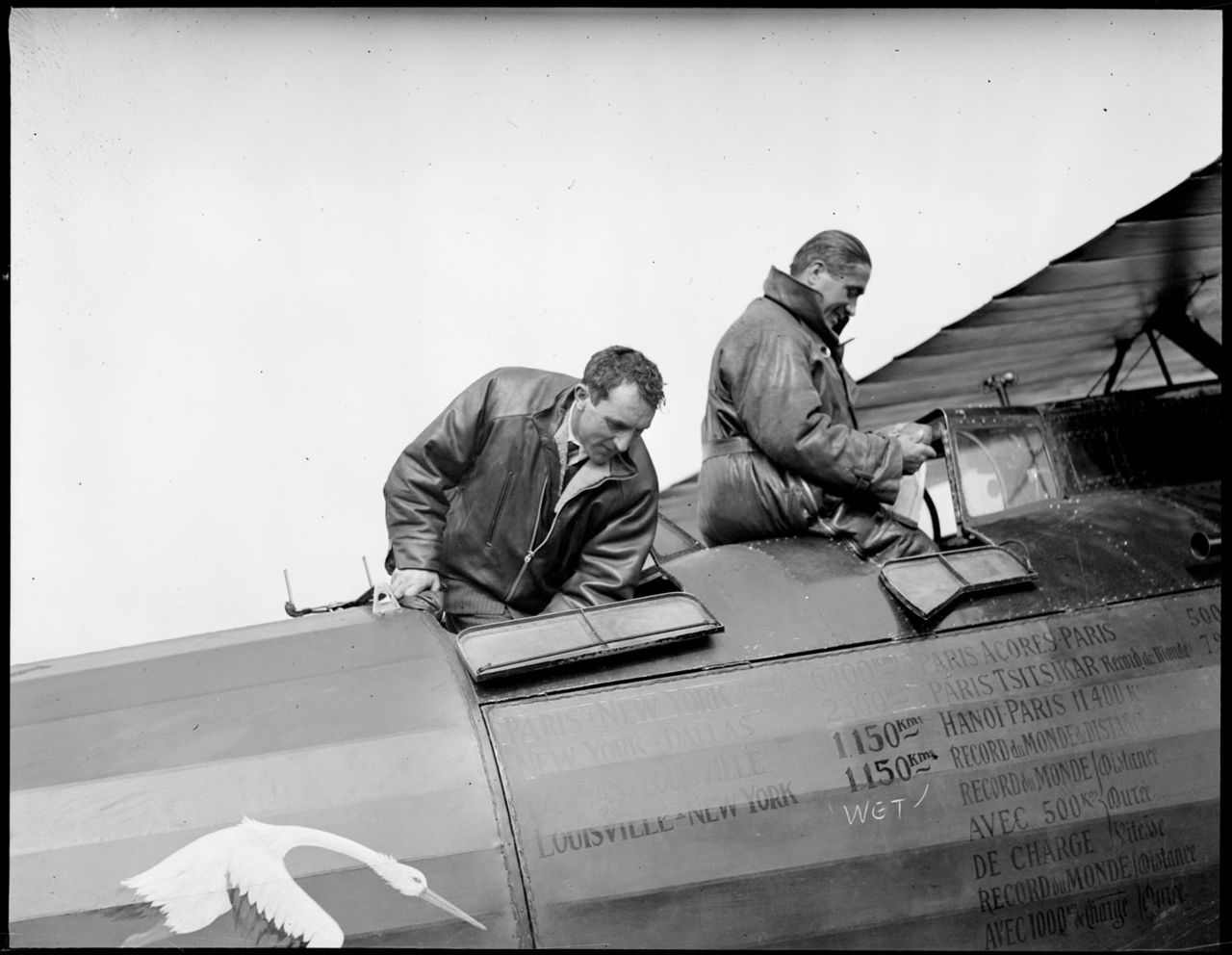
The achievement was hailed worldwide. U.S. President Herbert Hoover sent a congratulatory letter to French President Gaston Doumergue, writing: “I join with the people of the American nation in rejoicing over the brilliant exploit of your distinguished aviators Captain Dieudonne Costes and Mr. Maurice Bellonte in successfully completing for the first time in history a nonstop flight from France to the United States. France has established a glorious record. I hope that in the future many others of your citizens will come to us in this manner. I extend to Your Excellency and to the people of France my heartiest congratulations.” This milestone flight not only strengthened Franco-American ties but also marked a new era in transatlantic aviation, proving that the westward crossing of the Atlantic could be accomplished nonstop.