

(Image credit: VAN)
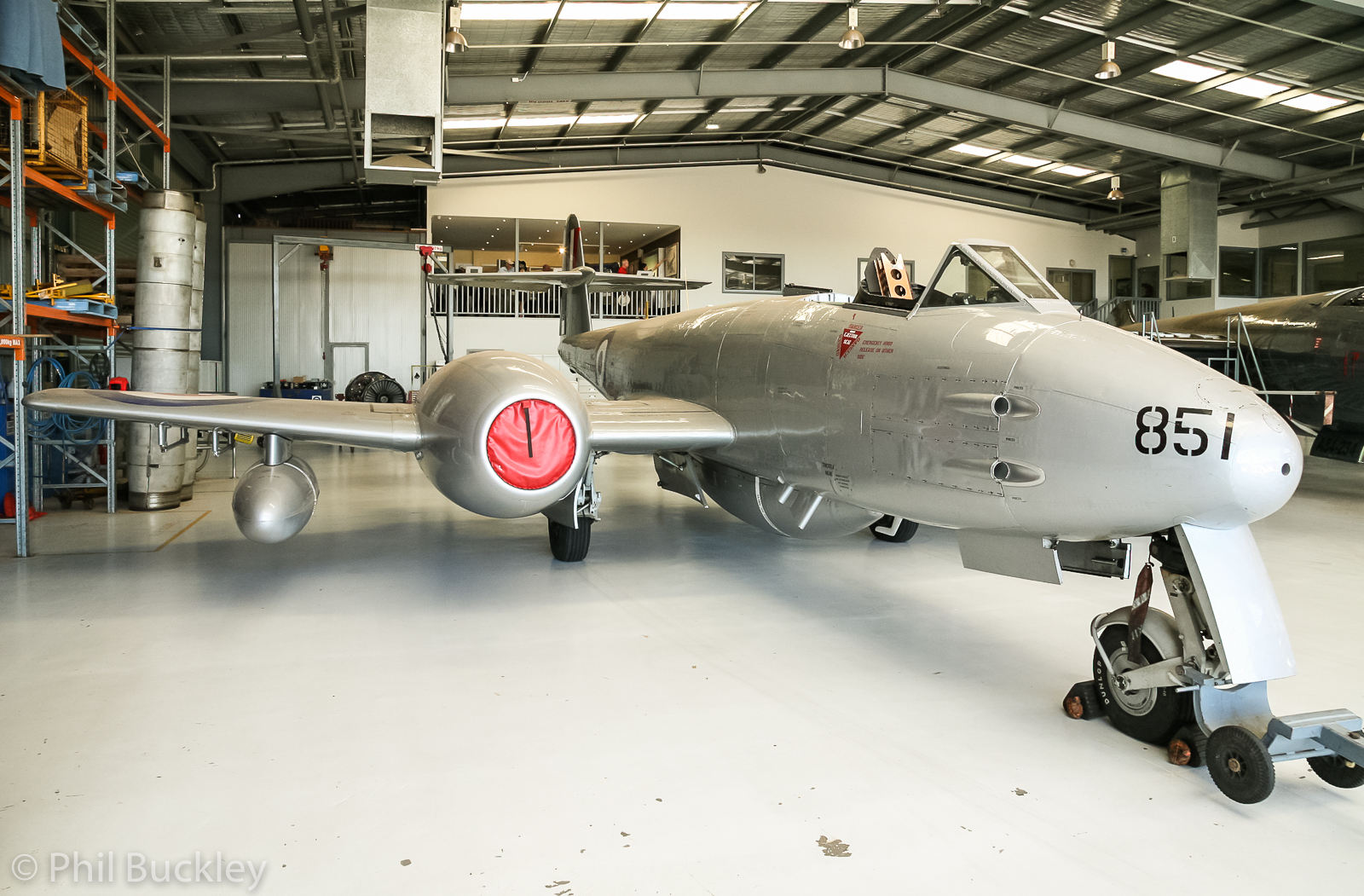
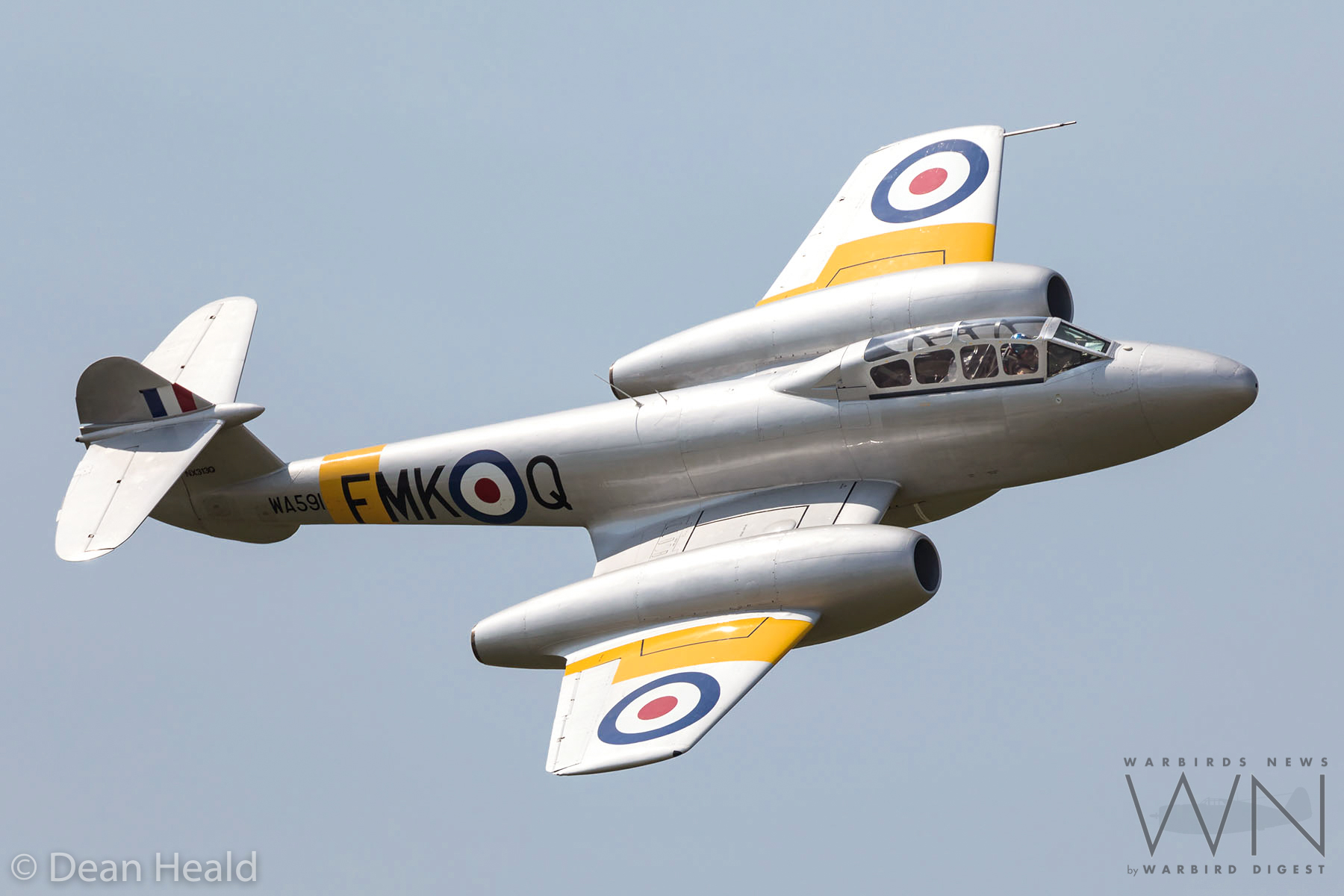
On this day in aviation history, 80 years ago (November 7, 1945), the Gloster Meteor became the first jet-powered aircraft to set the world speed record. Royal Air Force Wing Commander Hugh Joseph Wilson was the pilot in command for the historic flight. Wilson was also Commandant of the Empire Test Pilots’ School. On the day of the speed-seeking sortie, Wilson was flying a Gloster Meteor F Mk.IV, EE454. The Meteor was Britain’s first jet fighter, and the only Allied jet to participate in combat operations during World War II.
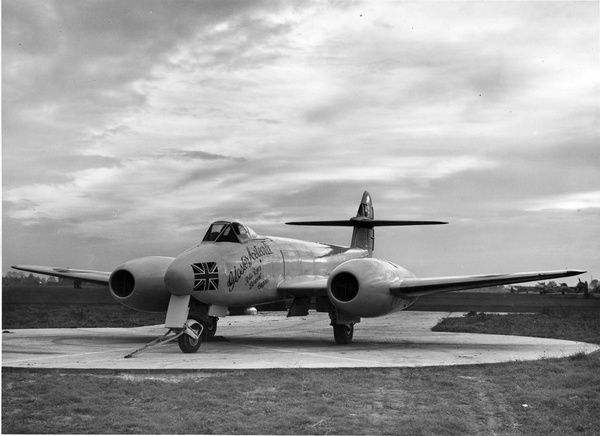
The airspeed record attempt was made by flying an 8-mile straight-away course bordering the south coast of the Thames Estuary. The course lay between Herne Bay Pier and Reculver Point. Months of planning were undertaken in a joint venture by the Royal Air Force and Gloster Aviation Co., Ltd, to assure the complete success of the attempt. Part of this partnership’s process involved modifying two Meteor F Mk.IIIs (EE454 and EE455) into a new upgraded Mk.IV variant. Months of flight testing bolstered the confidence of both the RAF and Gloster.
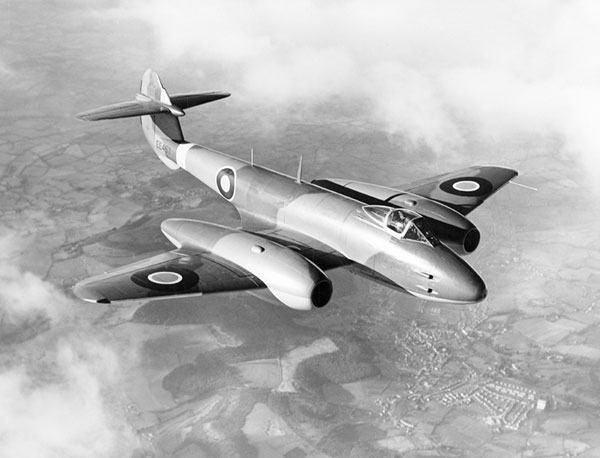
On the day of the record-seeking flight, the weather was marginal VFR. A common British cold and overcast day presented, yet the attempt was still made – despite visibility of 7 to 12 miles. Wing Commander Wilson flew four passes over the course in Meteor EE454, notching airspeeds of 604, 608, 602, and 611 miles per hour. An hour after his test runs, test pilot Eric Stanley Greenwood overflew the course, attaining speeds of 599, 608, 598, and 607 miles per hour. Wing Commander Wilson and the Gloster attained an average airspeed of 606.26 miles per hour, higher than Greenwood’s attempt of 603.122. Both Wilson and Greenwood were credited with official FAI world speed records for their joint effort.
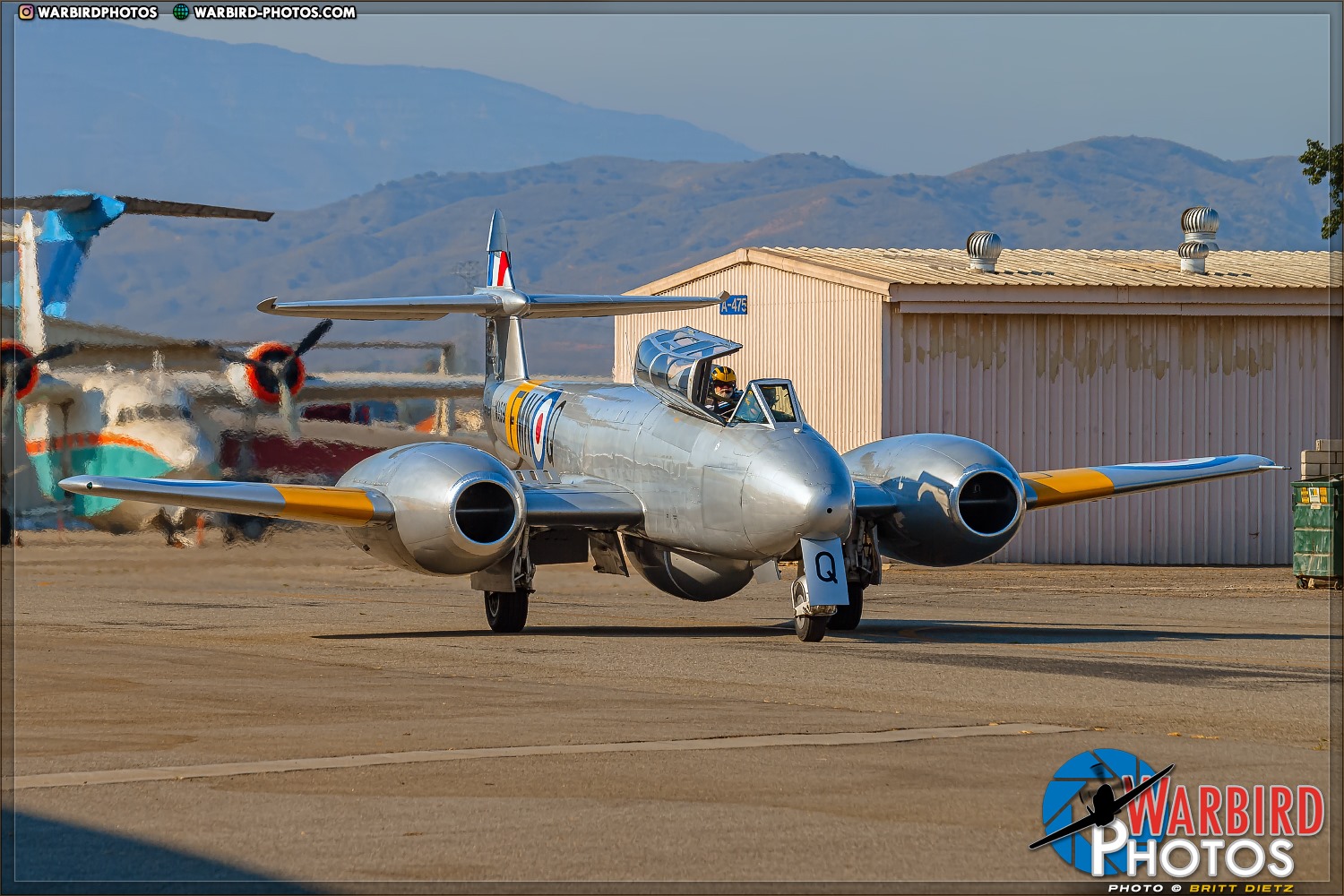
Britain’s Meteor F.8 variant, a further development on the airframe, was powered by two Rolls-Royce Derwent 8 turbojet engines – each with 3,600 pounds of thrust. The F.8 could reach a maximum speed of Mach 0.82 – 600 miles per hour. This Meteor variant had a range of 520 nautical miles and a service ceiling of 43,000 feet. An F.8 could climb at a rate of 7,000 feet per minute. Armament for the Meteor was provided by four 20 millimeter Hispano MkV cannons, up to sixteen RP-3 rockets (or eight 5-inch HVAR rockets) under the wings, and two 1,000-pound bombs.