

(Image credit: VAN)
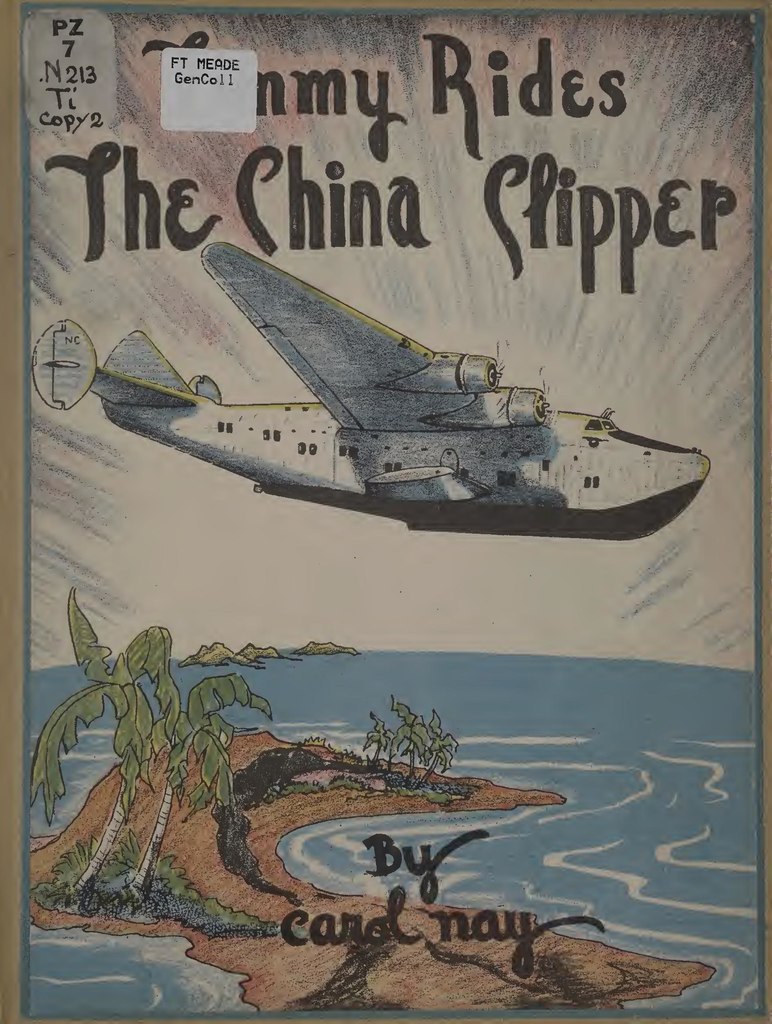
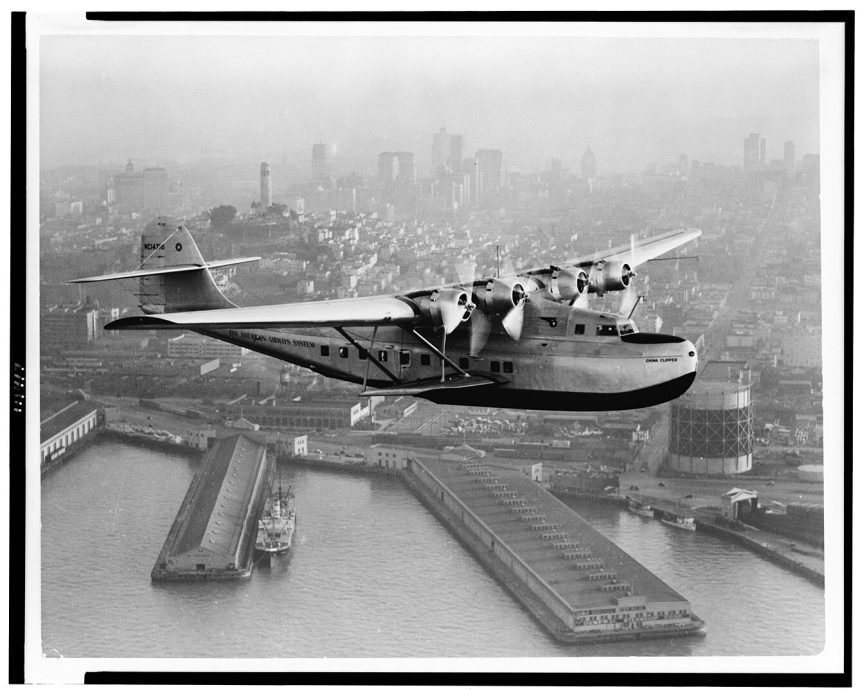
On this day in aviation history, 90 years ago (November 22, 1935), Pan American Airways commenced the first airmail service to span the Pacific Ocean. The inaugural flight departed from Alameda, California (an island in San Francisco Bay) at 3:46 p.m. on Friday, November 22, 1935. China Clipper was the aircraft used to fly this historic jaunt, a Martin M-130 carrying the registration NC14716. The next day — Saturday, November 23 — at 10:39 a.m., China Clipper arrived in Honolulu, Hawaii. This completed the first leg of the five-day total flight that would end up in Manila, the Philippines.
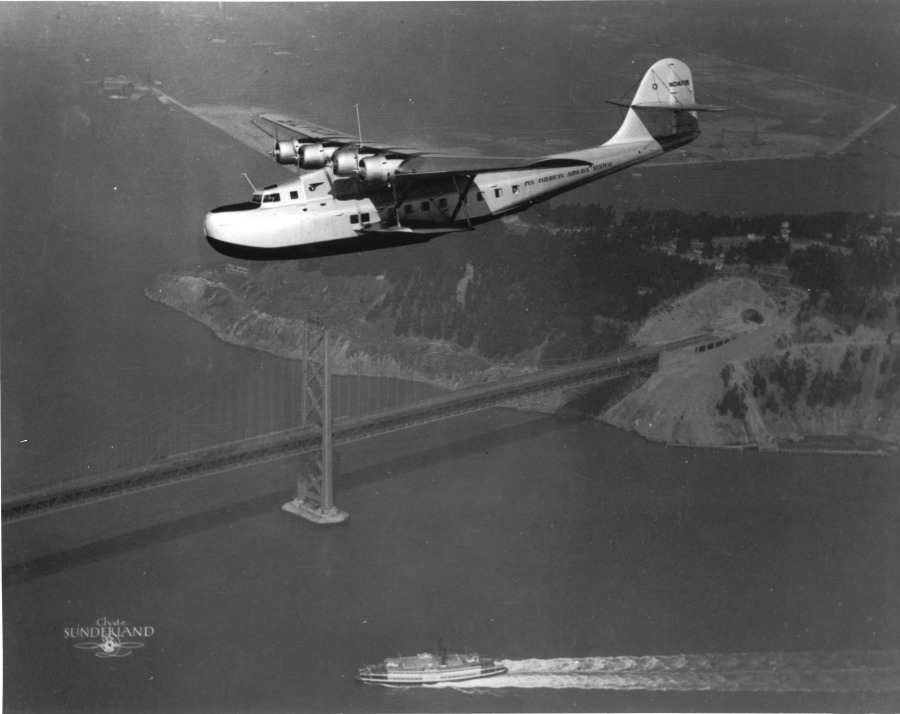
Flying the China Clipper was Captain Edwin Charles Musick, along with First Officer Robert Oliver Daniel (Rod) Sullivan. Along with the pilots, a familiar navigator served on the Pan Am flight crew: Frederick Joseph Noonan. Noonan would go on to fly with Amelia Earhart during her around-the-world flight attempt. Loaded aboard the China Clipper were 110,000 parcels of mail. NC14716 was additionally nicknamed Sweet Sixteen – due to the last two digits of the registration number. This aircraft was the first of three Martin M-130s built for Pan American Airways, and only these three airframes were built in total.
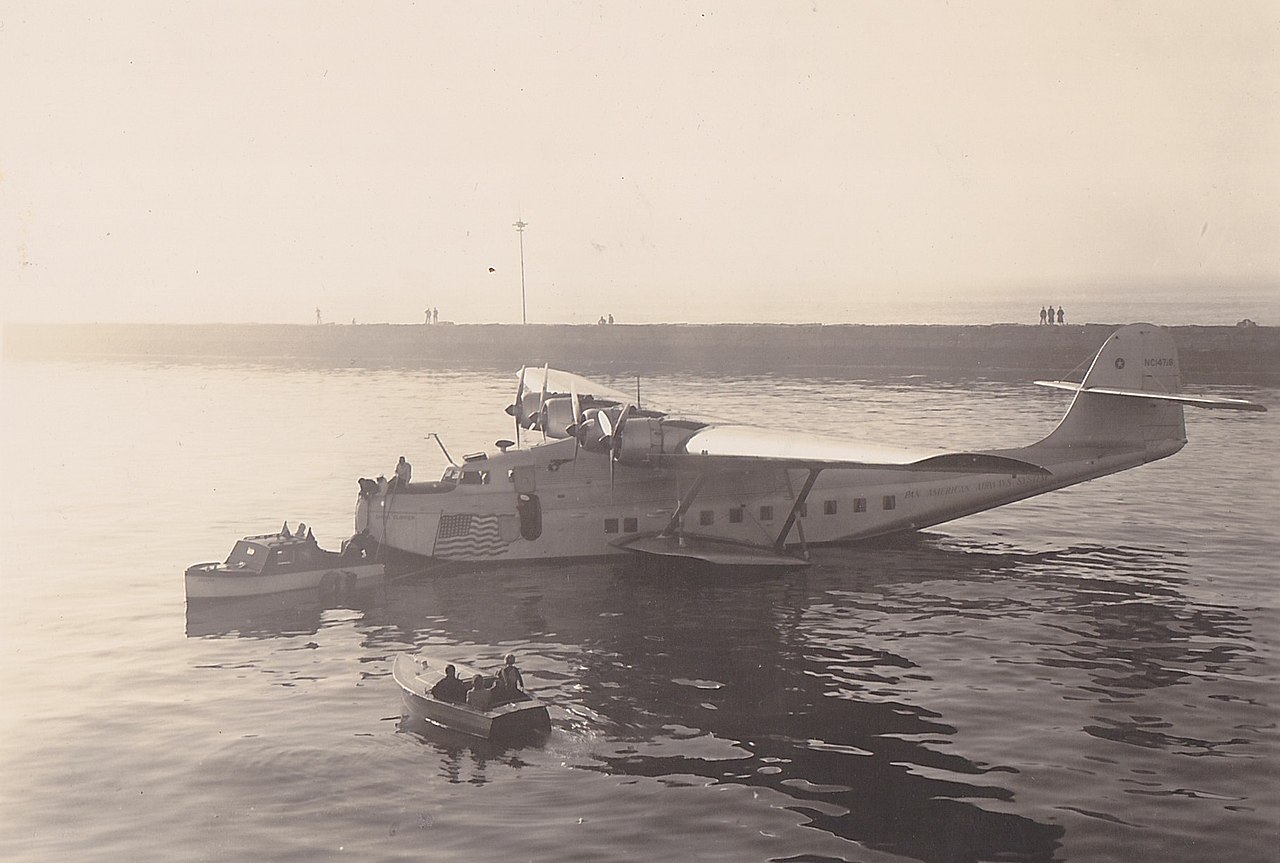
The Martin M-130 was a purpose-built commercial flying boat, designed and built by the Glenn L. Martin Company in Baltimore, Maryland. The M-130 first flew on December 30, 1934 — roughly a year before entering service with Pan American Airways. A crew of six to nine flight personnel served about the M-130 on each flight – including pilots, engineers, navigators, radio operators, and cabin crew. During day flights, the M-130 could carry 36 passengers, and at night it could carry 18 (different configurations). Four Pratt & Whitney R-1830-S2A5G Twin Wasp 14-cylinder radial engines powered the China Clipper. Initially, each engine’s output was 830 horsepower; however, with the addition of hydromatic propellers, each engine was able to produce 950 horsepower. M-130s could cruise at 130 mph and attain a maximum speed of 180. Martin’s flying, mail-hauling boat had a range of 2,800 nautical miles and a service ceiling of 10,000 feet.