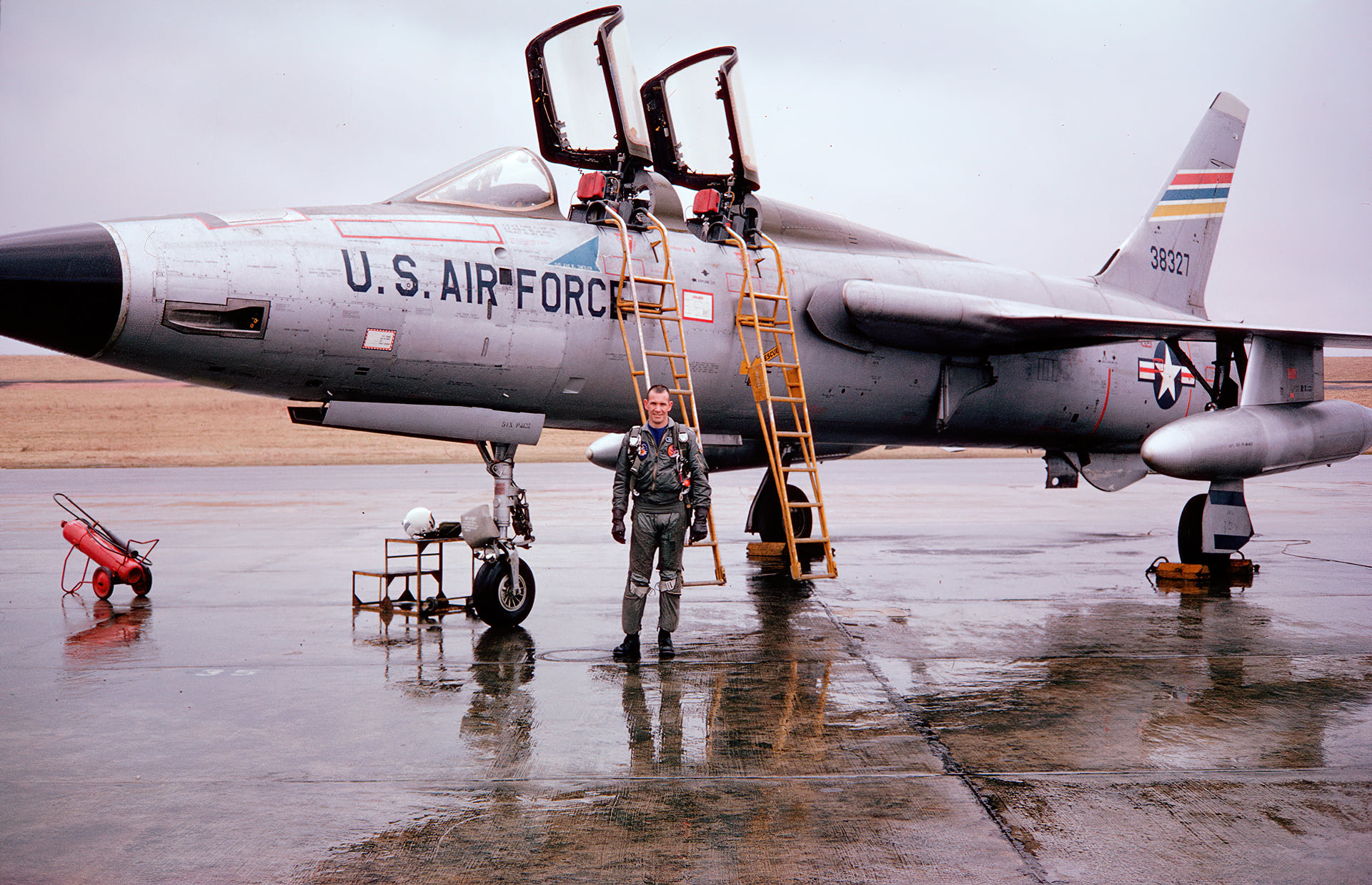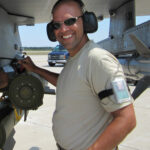
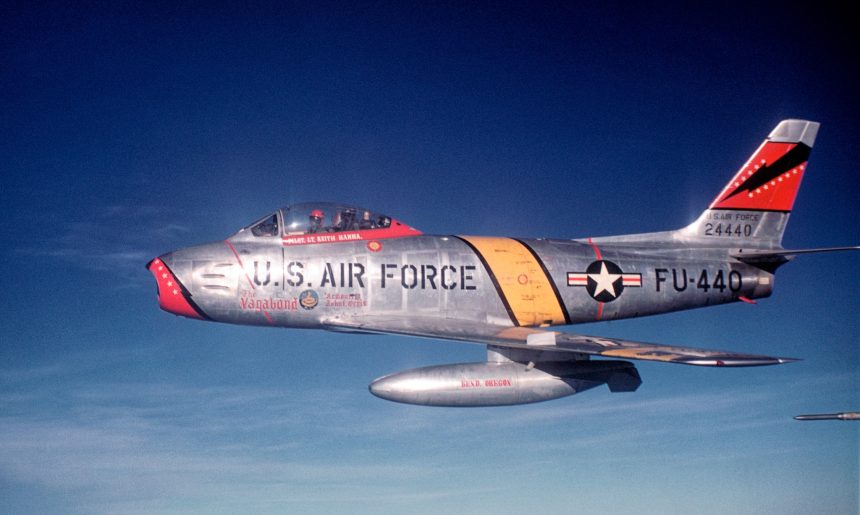

In February 2025, we brought you the story of an intense combat sortie that took place over Laos on January 24, 1968. One of the pilots on that mission was the late Colonel Keith Hanna. Hanna’s incredible Air Force career could not be summarized in a single article, and this past week, VintageAviationNews again sat down with Keith’s son, Andrew, and learned of a particular tragic day early in Hanna’s career. In 1955, 2nd Lieutenant (Lt) Robert Keith Hanna graduated from flight school as the Outstanding Graduate, and attended Advanced Gunnery School at Nellis AFB, Nevada, where he flew F-86F & H Sabres. Upon graduation on August 29, 1955, he immediately deployed to Korea for a one-year tour with the 311th Fighter-Bomber Squadron (FBS)/58th Fighter-Bomber Group (FBG) at Osan Airbase (K-55). During that period, he spent four months deployed to Tainan AB, Taiwan.
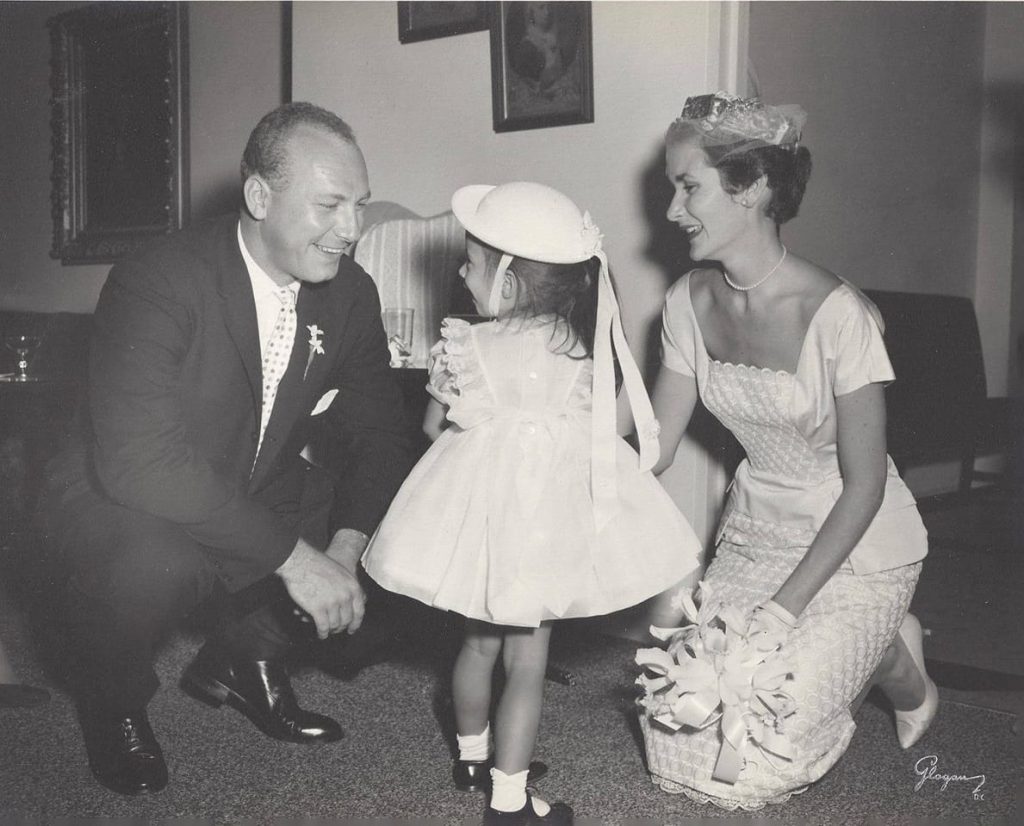
When Hanna arrived at K-55, he met 2nd Lt Leon “Lee” Banigan, Jr., who had already been with the 311th for four months. For Banigan, the previous two years had been a whirlwind of excitement. In the spring of 1953, he graduated from Cornell University, and shortly thereafter, on Saturday, August 1, 1953, he married Barbara Margaret Gavin. He reported for flight training at Columbus AFB, Ohio, and completed fighter training at Nellis a few months before Hanna. The following year, Lee and Barbara welcomed a daughter, Barbara Lee, into the world.
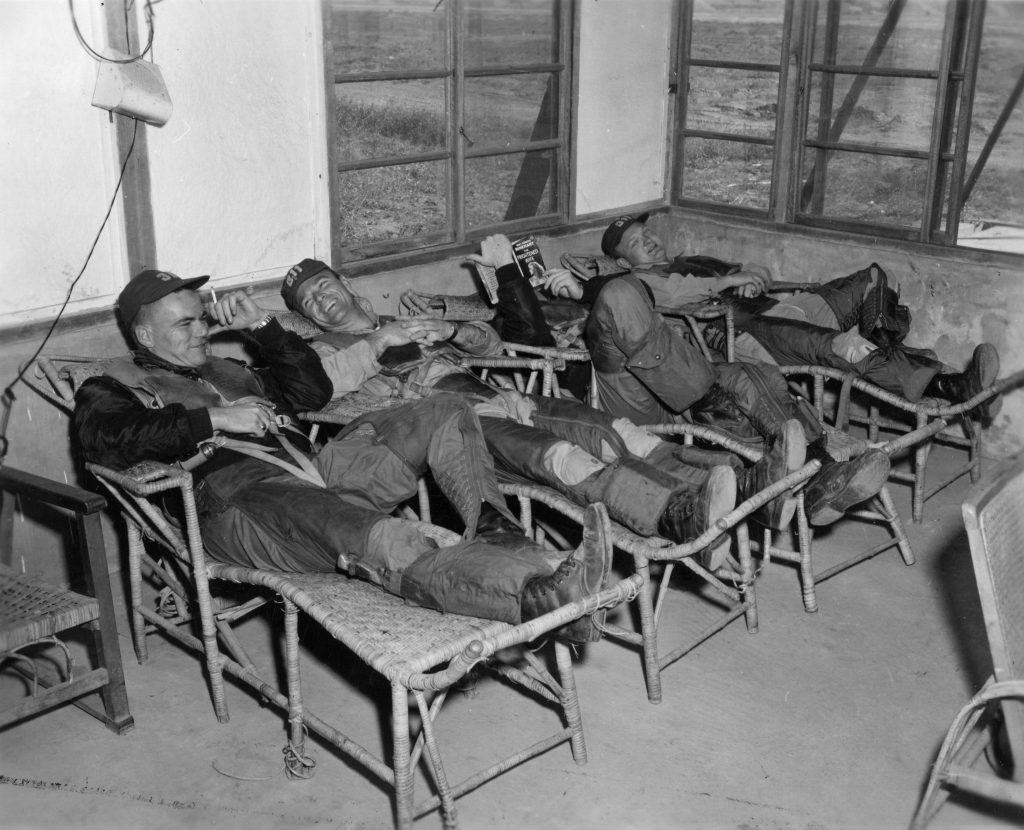
In late 1955, the 311th deployed to Tainan AB, Taiwan, where the pilots practiced combat tactics. By this time, Banigan had been promoted to 1st Lt and had logged over 561 hours with 201.1 in the F-86. Hanna had 454.2 total hours with 159.3 hours in the Sabre. On January 23, 1956, Banigan, the flight leader, was flying F-86F USAF #52-4760, Hanna, in F-86F USAF #52-4406, took off on a flight where they would practice ground-control intercepts (GCI). The ceiling that morning was 4,000 feet with cloud tops at 16,000 feet. The duo climbed to 25,000 feet where they completed three GCIs without incident, but on the fourth time, tragedy struck. Hanna’s son, Andrew, provided the author with numerous documents, including the partially redacted Report of AF Aircraft Accident, which read as follows: “Lt Hanna was behind Lt Banigan. Lt Banigan, the flight leader, was attempting to maneuver his aircraft to get on the tail of Lt Hanna’s aircraft. Lt Banigan pulled up in a left turn and reversed direction, [redacted] his aircraft to avoid a collision, but Lt Banigan collided with the left wing and underside of Lt Hanna’s aircraft”. So, it seems that when Banigan reversed his turn, Hanna saw the imminent collision and took evasive action. After the collision, Banigan’s Sabre went into a steep spiral into the undercast, while Hanna was able to land his damaged Sabre back at Tainan. The damage to the left wing and belly section was repaired, and the aircraft returned to flight.
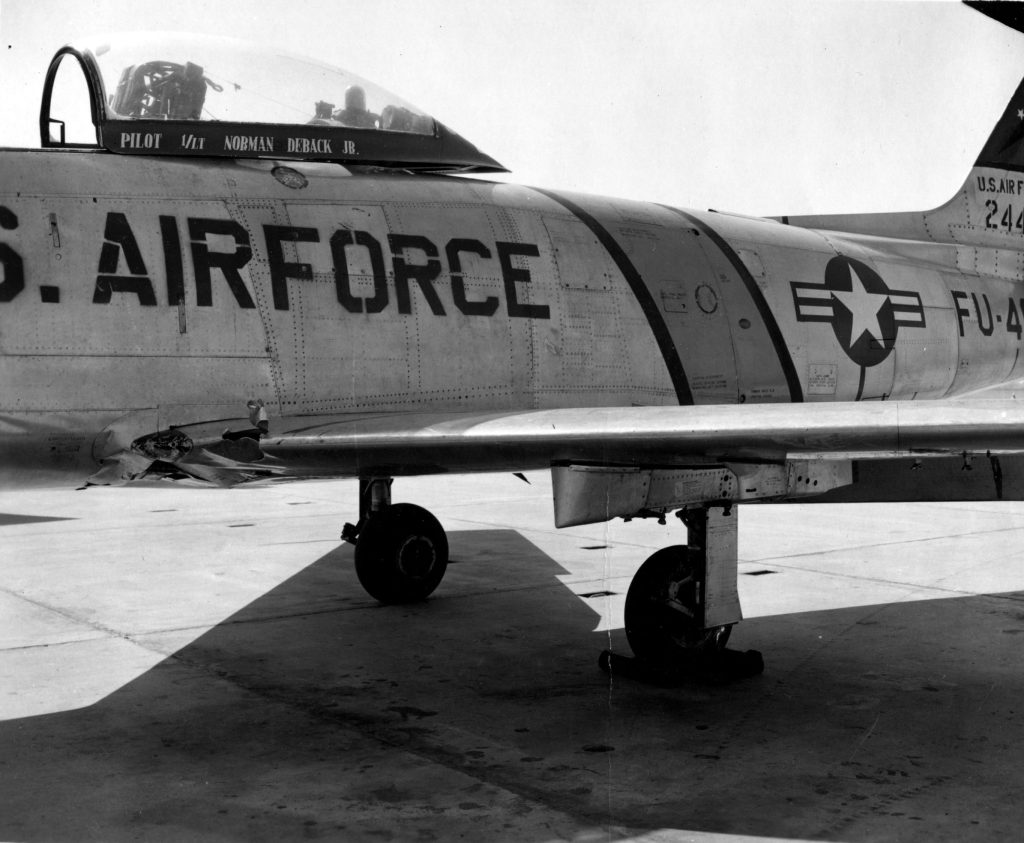
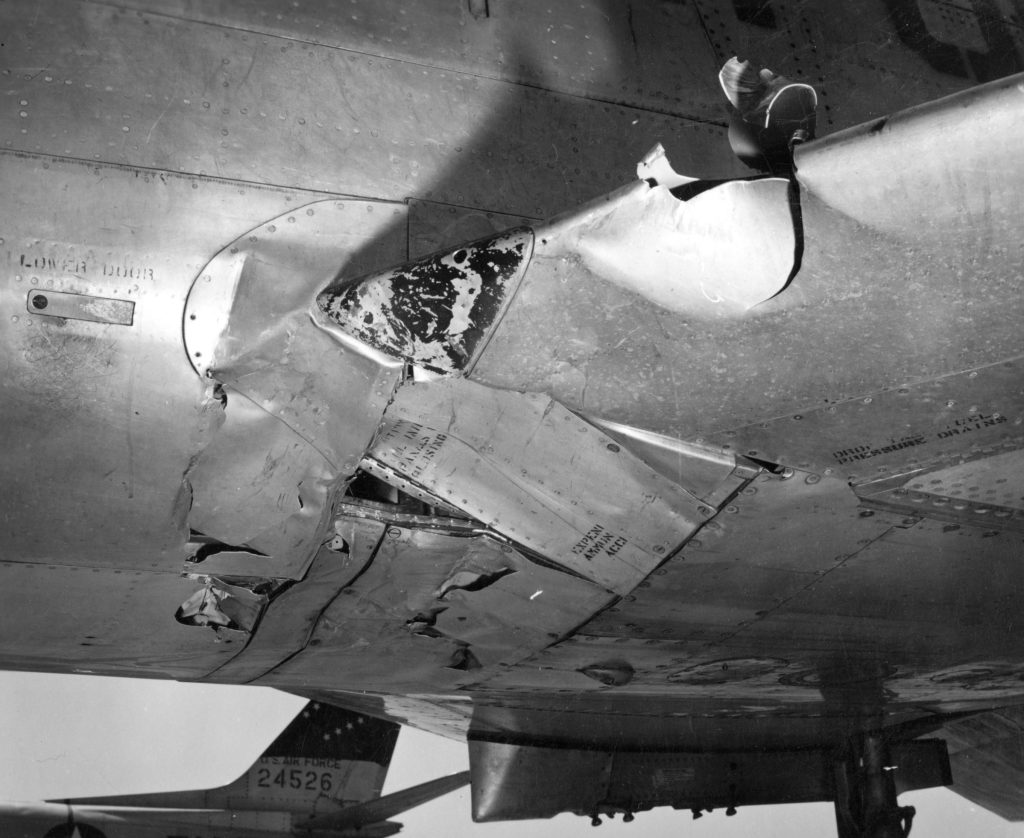
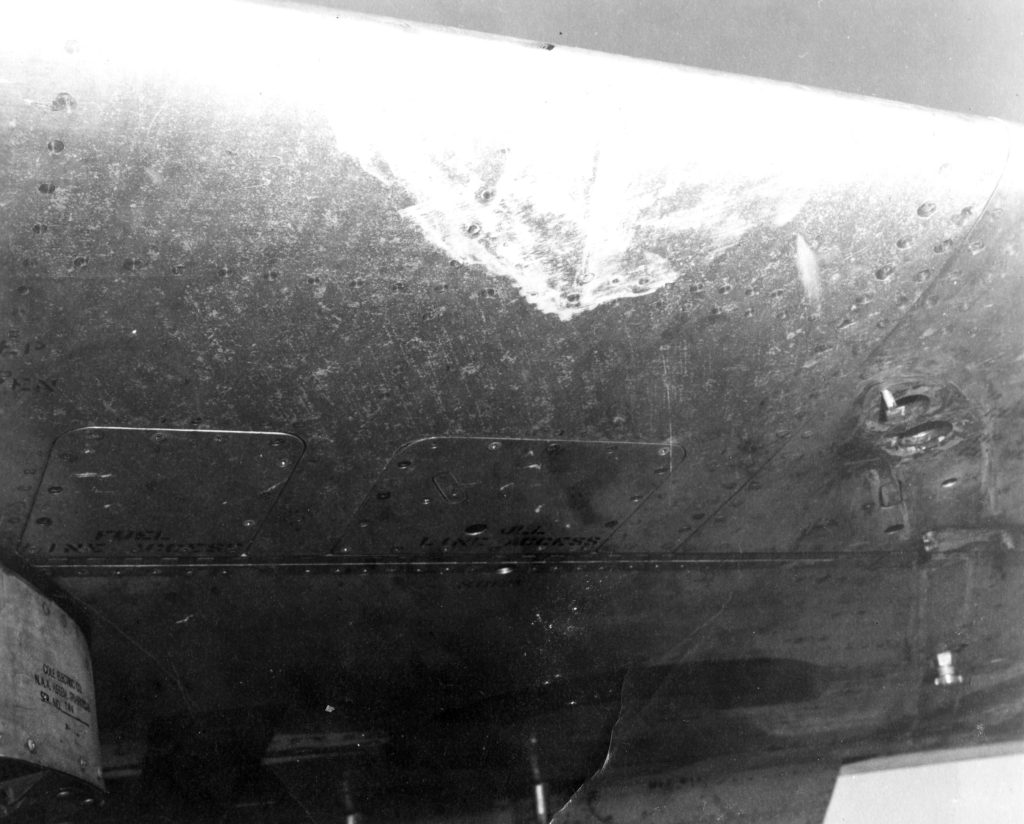
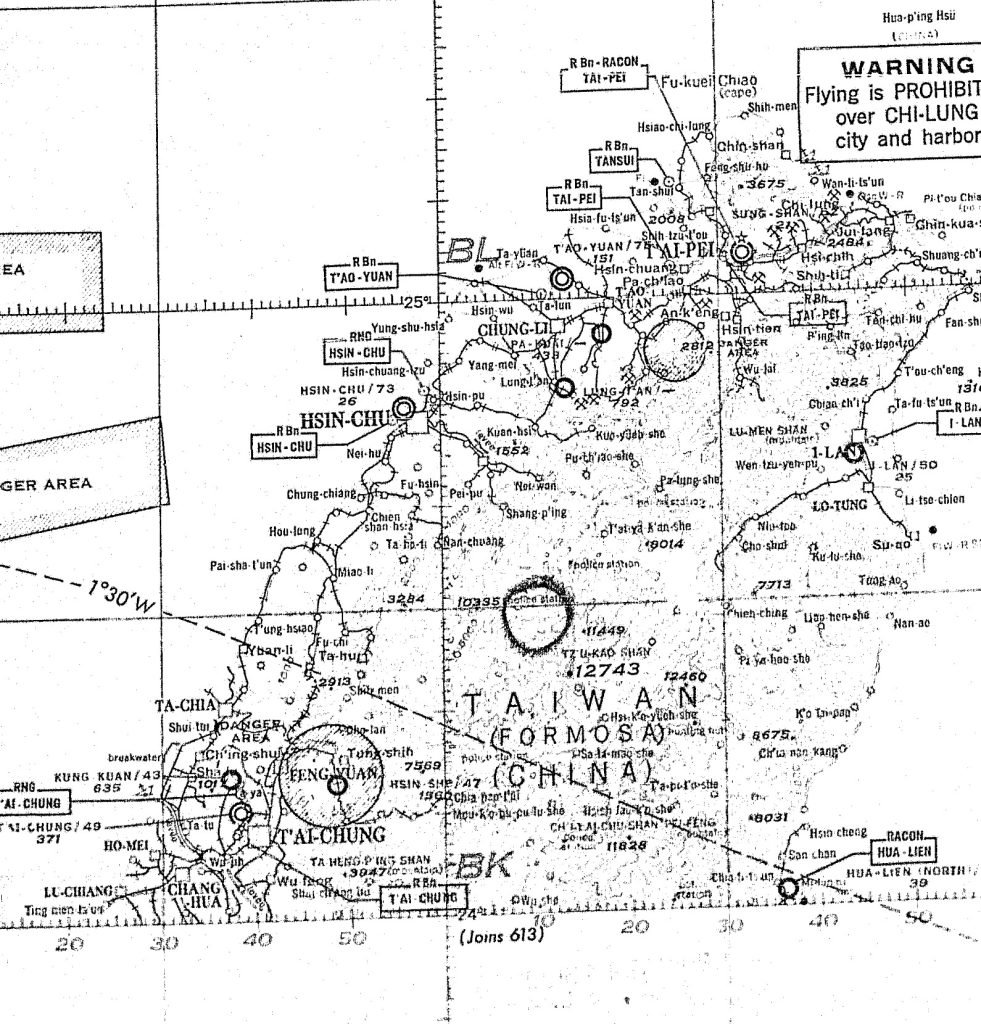
When Banigan and his Sabre went into the clouds, they simply vanished. Search and rescue combed the mountains southeast of Hsin-Chu-Shih before finally calling off the search on February 10, 1956. Sadly, sixty-eight years later, the crash site of Lt Banigan’s Sabre remains a mystery.
There was obviously an investigation into the accident, and the board focused on the 200-gallon external tanks and the effect they had on the flight characteristics. “The aircraft were equipped with 200-gallon drop tanks each containing 100 gallons of fuel. In practicing combat tactics and through maneuvering, the pilots allowed the air speed to dissipate to approximately 200 knots or less. These conditions had an adverse effect upon maneuverability and control of the aircraft.” The board went on to state Lt Banigan was in violation of a Fifth Air Force regulation outlining minimum separation during simulated combat maneuvers. The above report was undated, but on March 19, 1956, 2nd Lt Hanna sent a Statement of Rebuttal to the Commander of the 58thFBG. It opens with, “…I find I have been charged primarily with flying beyond my capability and secondly with failure to maintain adequate flying speed.” In the lengthy second paragraph, Hanna refuted the board’s focus on how much fuel was still in the drop tanks in both Sabres and questioned how they concluded that there was 100 gallons remaining in each tank when he and Banigan began their intercepts. Based on his experience, he claimed that there could not have been more than 61 gallons in each tank. He also addressed the question of airspeed, “The F-86F with the extended leading edges and 61 gallons of fuel in each drop stalls with power on at about 120 knots IAS according to the slow flight chart in the dash one. Assuming we had 200 knots, this would give us 80 knots of flying speed above stall.” He later admitted that low airspeed may have been part of what caused the accident, but “not nearly as important as the board made it appear.” He also went on to state that he would not be contesting the charge of the board if any of the members, “…ever flown in combat tactics with me…”. The tone of the letter seems to indicate that Hanna had been deeply affected by the loss of Lt Banigan, whether he contributed to his death or not. Banigan’s widow, Barbara, would have been notified of her husband’s disappearance within a few days; it would, however, take nearly two months for Keith to write to her. The letters they exchanged have survived to this day. They are presented here publicly, verbatim, for the first time:
| K-55, Korea
4 Mar 56 Dear Barbara, For some reason, I just couldn’t make myself write this letter any sooner, although I knew it was inevitable that I should write it sooner or later. Please forgive me. My name is Keith Hanna. You’ve never heard of me, I’m sure, but since I was the last person to see Lee and knew him so well, I feel we have something in common. I was the pilot of the other aircraft involved and lived right across the aisle from Lee here at K-55. My thoughts and sympathies have been with you countless times over the last month and a half, Barbara. I know the immense grief and sorrow you must have felt. Believe me, you were not the only one, though. Lee had many friends here at K-55, and it’s the general consensus of opinion that Lee’s death was not only a loss to you, me, the squadron, and the Air Force, but to the whole United States. He was a very brilliant young man with more than enough drive and ability to attain the highest goals he had set for himself. Barbara, I know you must have asked God countless times why it had to be Lee. Certainly, you were not the only one to ask that question, for I have asked it many times myself. Only God himself knows the answer. Although we sometimes don’t understand His reasons for allowing certain things to occur, we must still believe that he’s right. Sincerely, Keith Hanna |
Barbara replied on March 20, and it is a letter of a grieving widow trying to gain some kind, any kind, of insight into her husband’s final moments.
| Dear Keith,
Thank you very much for your letter. I know that it must have been a difficult one to write. The tone of your letter coincides perfectly with my thoughts- that for some reason God saw fit to take Lee. There have been so many questions in my mind that weren’t answered through official channels, and I thought you might be able to answer some of them. First, did you hear Lee say anything after the collision to indicate he might be conscious? Was the damage done to his canopy and tail sections? I have wondered whether you had any opinions as to whether he was able to eject. Do you think that it is possible that he recovered enough to go into the sea? In the original personal radiogram that my Father received from Gen. Lemnitzer, there was a statement that explosions were heard in the collision area, but in the last letter I received, they said that no information at all had been obtained from the natives in that area concerning the plane’s explosion. Had you heard anything about that? I do believe that Lee must have surely been killed, as the Air Force has decided. But I have never been given any reason for this decision other than the fact that no trace of him has been found. I realize, too, that all you can tell me is your personal opinions and the conclusions you reached after talking it over with the other men in the squadron. Knowing the characteristics of the F-86, do you think that there was any possibility of his pulling out of the spin at the altitude at which you last saw him, over the mountains? Please don’t rush to answer this- anytime that you have some spare time, I would be glad to hear from you. And thank you again for your letter. It helps to know that someone else thought that Lee was a great guy and feels his loss. Sincerely, Barbara Banigan |
| K-55, Korea
29 May 56 Dear Barbara, I’ve gotten so miserably behind on my letter writing that it almost seems impossible to catch up. Have been gone a lot the last two months, and they really stacked up. Am whittling them at the rate of about one every two days now, so that’s an improvement. It’s a little difficult to answer your questions with as much accuracy as there are many probabilities involved. Will do my best, though. Upon impact, my radio was knocked out, so I did not receive any transmissions, but the radar site that was controlling us did hear someone say, “can’t recover”. Whether this occurred before or after we collided can’t be determined. In fact, they don’t know for sure who said it. The only damage I saw on Lee’s airplane was the elevators. The right one appeared to be torn over halfway off, and the left was about one-third gone. But like I say, that’s all I saw. Things were happening fast. I don’t believe he ever ejected as I would have seen him, and even if I had missed him, we would have found him during the search. His aircraft was not in a spin – it was more of a tight spiral. Almost as if it were doing aileron rolls. I think he was either unconscious or the controls had failed. It’s very doubtful that he ever recovered from the spiral as the aircraft showed no indication of recovering when I last saw it disappear into a cloud near the ground. Explosions were reported in the collision area, but that’s all. The people didn’t know what they were, what direction they came from, or how far away. We could track them no further. You probably wonder why we could not find the aircraft if it went down over land, as I’m certain it did. The terrain in that area is the ruggedest I’ve seen anywhere. Also, it is practically uninhabited. In addition, the aircraft was headed almost straight down, so it would leave practically no mark where it went in. I’m sure we would have found a parachute if there had been one, as their brilliant orange and white panels would stick out like a sore thumb. Maybe I’ve been a little too frank in these explanations. Barbara, but by golly, there just isn’t any other way to explain so you will understand. Don’t know where my new assignment in the States will be yet, but I will be going home in August. If it’s on the East coast I would like to visit you. Sincerely, Keith Hanna |
As humans must do in the wake of loss, Robert Hanna and Barbara Banigan moved on with their respective lives. Hanna’s tour in Korea ended on August 18, 1956, and he went on to a stellar career that saw him fly F-100s, F-101s, F-104s, F-105s (including combat in Vietnam), and F-4Ds, as well as various non-flying staff jobs before retiring as a Colonel in 1974. Barbara eventually remarried, had a son with her new husband, and passed away in 2020.