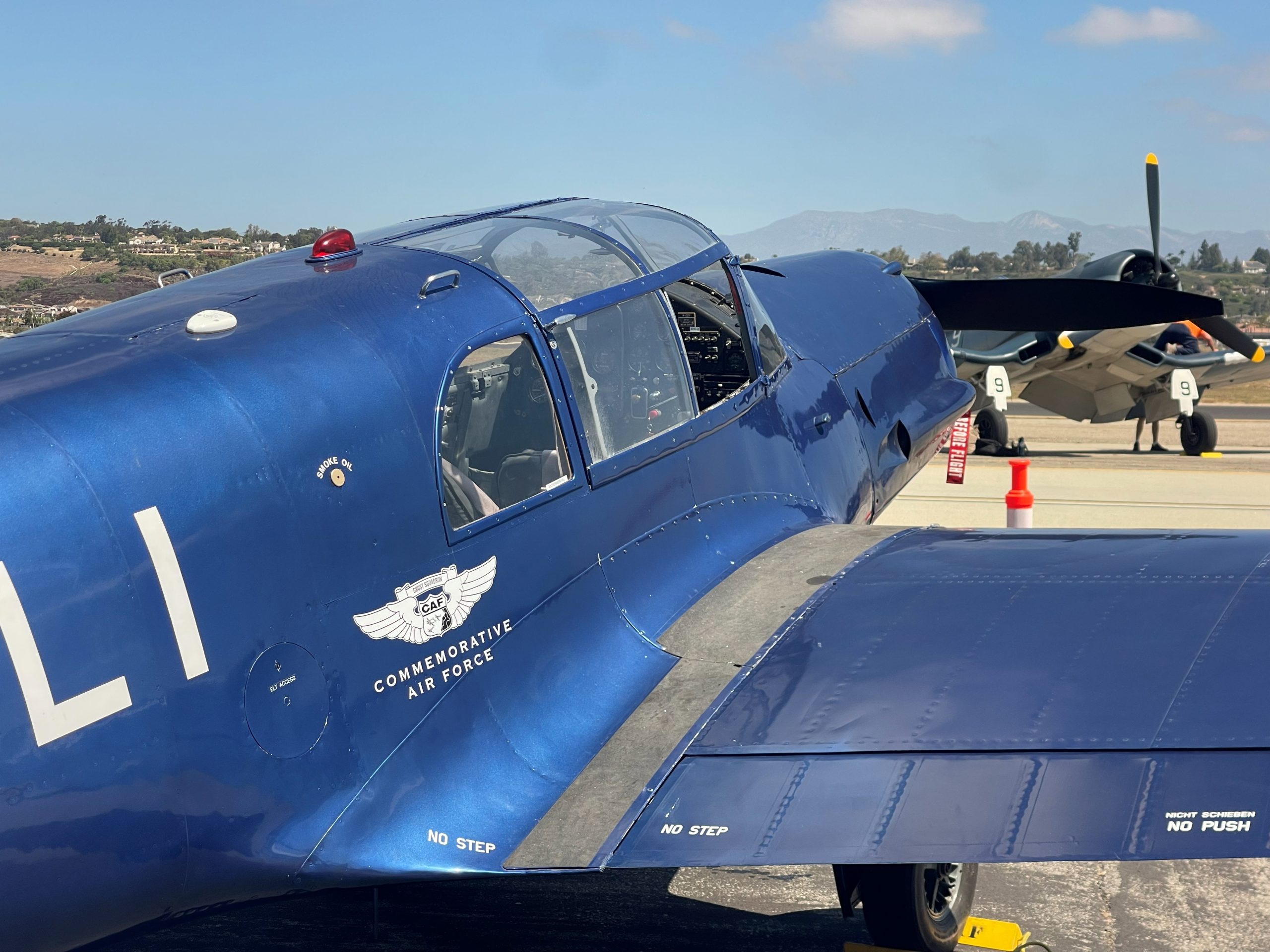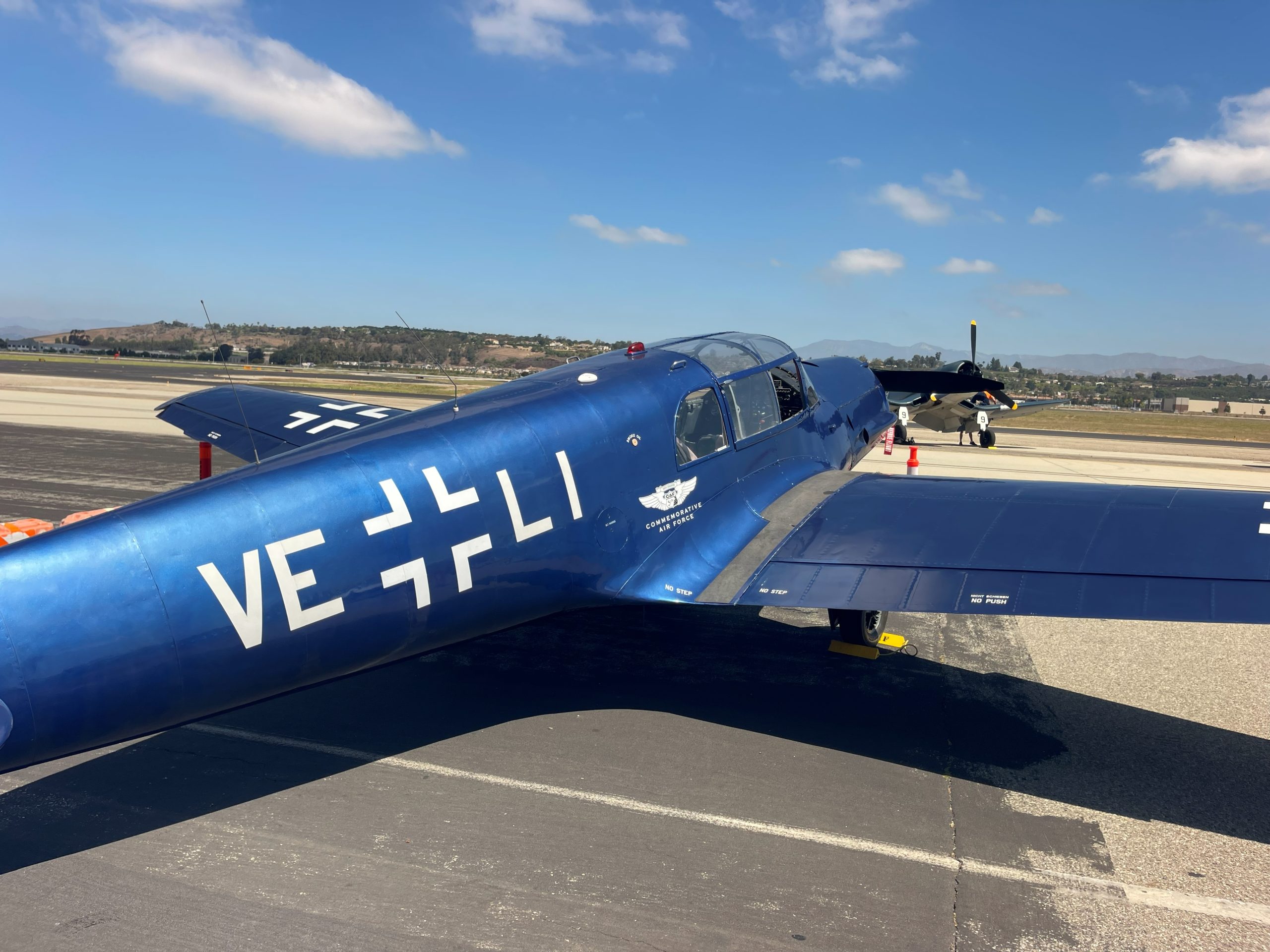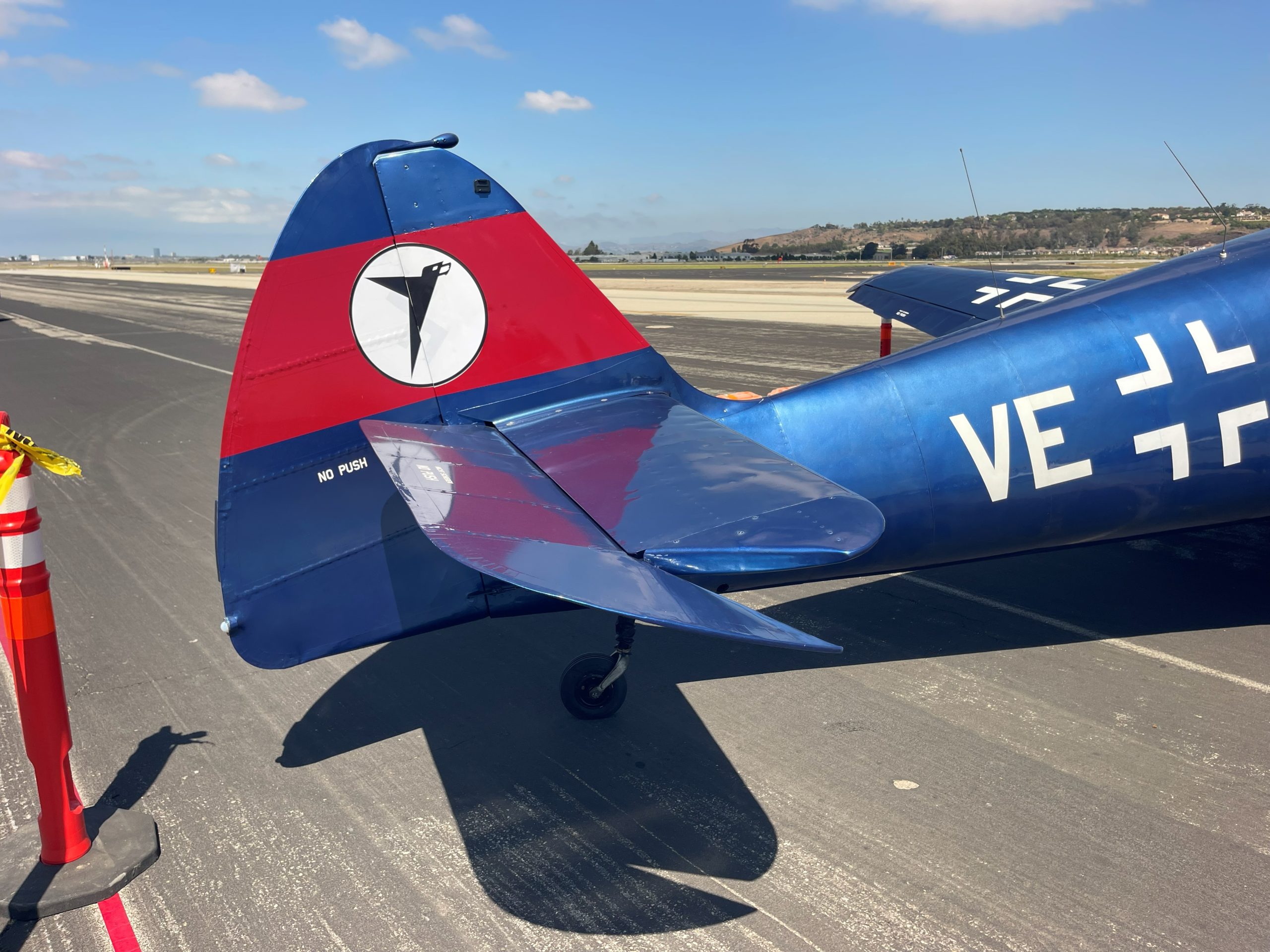
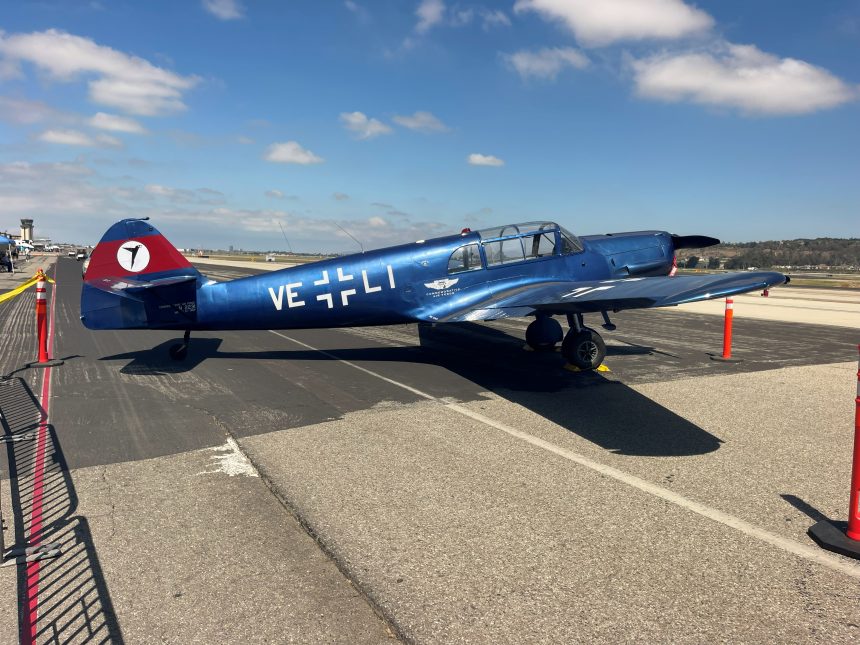

The Commemorative Air Force stands today as the premier organization for operating warbirds both across the United States and internationally in France, New Zealand, Switzerland, and the United Kingdom, and has come a long way since its inception in Texas’ Lower Rio Grande Valley. Although it is most well-known for maintaining over 100 American-built fighters, bombers, transports, and trainers of WWII, the various branches of the CAF spread out across the United States also host several foreign types, with the greatest concentration being found at the Southern California Wing in Camarillo, California, some 50 miles west of downtown Los Angeles. Here, the wing owns a Supermarine Spitfire Mk. XIV, rebuilt Mitsubishi A6M3 Model 22 Zero, and a Fieseler Fi 156 Storch, which airshow pilot Jason Somes of High Alpha Airshows keeps both his Mikoyan-Gurevich MiG-17F “Fresco” and Antonov An-2 “Colt” hangared with the CAF SoCal Wing. Yet another aircraft that calls Camarillo home is a Messerschmitt Bf 108 Taifun, a popular civilian and military aircraft built in Germany in the mid 1930s that saw service all over Europe before, during, and after WWII under the flags of many nations. Today, this example in California stands as the last Bf 108 flown in the United States with its original engine, and it carries a hidden legacy that connects the small aircraft to the most mass-produced fighter aircraft in military aviation history, the Bf 109.

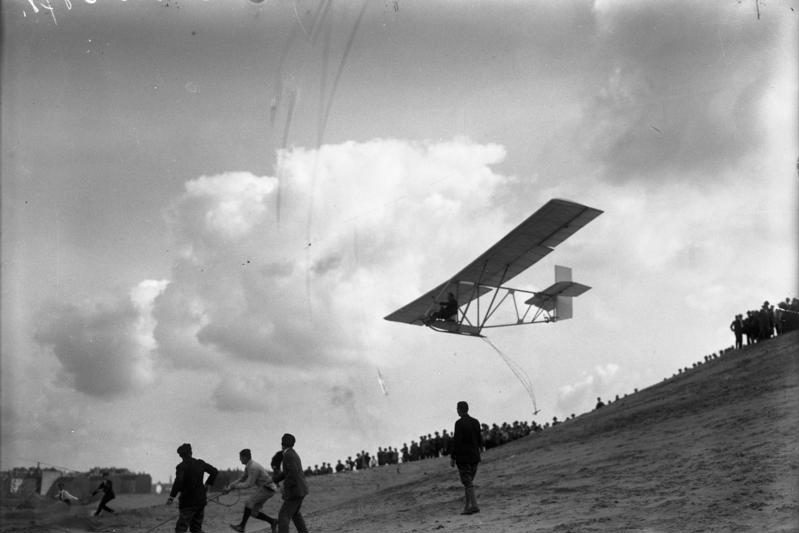
The story of the Messerschmitt Bf 108 is closely tied to the transitional period of German aviation between the First and Second World Wars. Although the Armistice of November 11, 1918, called for the surrender of all German aircraft, and the Treaty of Versailles held that Germany was never to have a new air force, German officials, even during the period of the Weimar Republic, were intent on subverting these stipulations until Germany could rebuild its air arm. As a result, many former pilots helped develop Germany’s sports aviation community, from sailplanes/gliders to light civilian aircraft, and by the 1920s restrictions on the German aircraft industry had eased to allow the production of commercial aircraft as well.
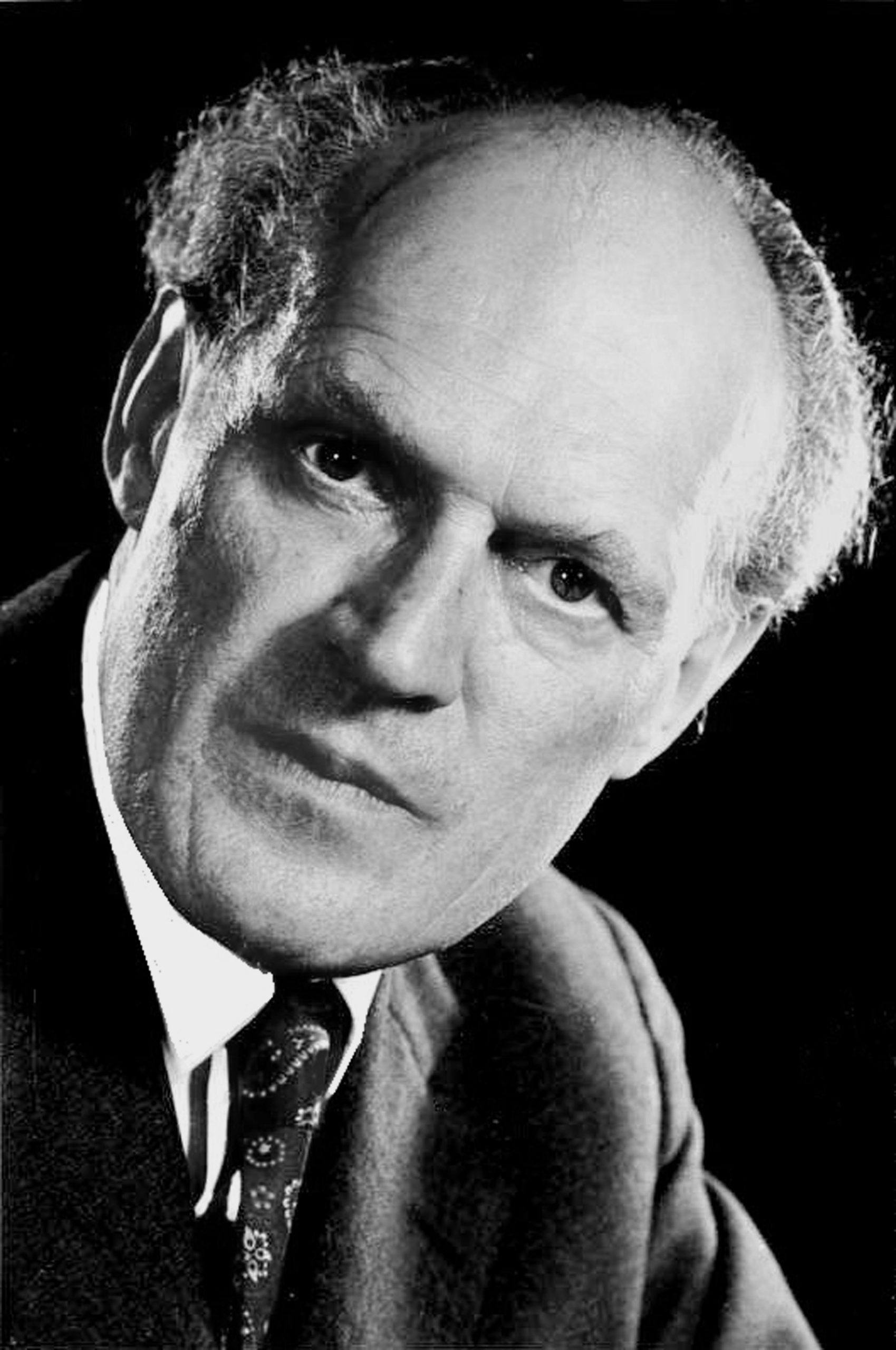
Among the aircraft designers working in the postwar German aviation community was Willy Messerschmitt, who developed designs such as the M 17 sports plane, and later developed small single-engine airliners such as the M.20 while working as chief designer for the Bavarian Aircraft Works (Bayerische Flugzeugwerke (BFW)). However, the loss of three M.20s to crashes caused by faulty tail assemblies, the first of which killed pilot Hans Hackmack, a close friend of Erhard Milch, the head of Germany’s largest airline, Deutsche Luft Hansa, and future deputy head of the Reich Aviation Ministry (RLM), who then developed a lifelong loathing for Messerschmitt that would continue to have ramifications during WWII, and Milch’s refusal to accept contracts with Messerschmitt, combined with the onset of the Great Depression, would drive BFW to the point of bankruptcy. However, Messerschmitt had secured the patronage of Theodor Croneiss, a former WWI fighter ace turned founder of an air sports club (Sportflug GmbH für Mittelfranken und Oberpfalz” (Sport Flying Ltd. for Middle Franconia and Upper Palatinate)) and regional airline (Nordbayerische Verkehrsflug (North Bavarian Commercial Flight; later Deutsche Verkehrsflug)), and who also became a board member of BFW.
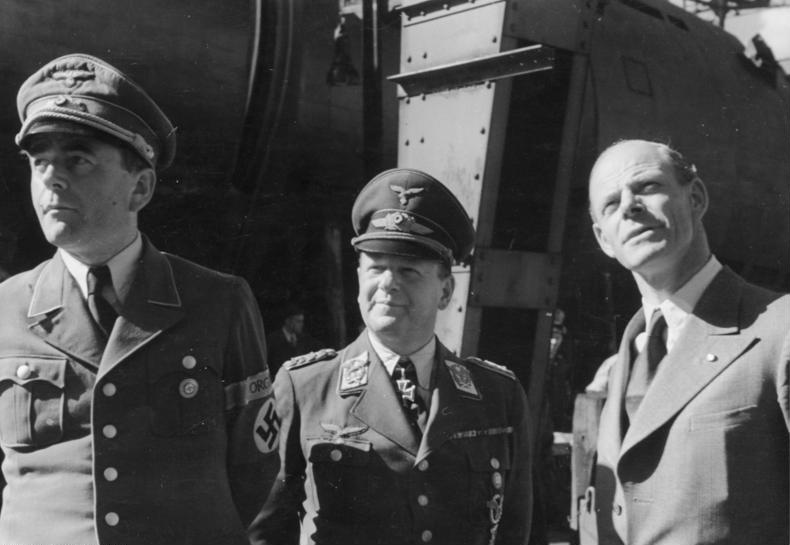

In 1933, Adolf Hitler came to power in Germany, and one of his high-ranking subordinates was the former World War I fighter pilot Hermann Göring, who was appointed to head multiple ministries within the new Nazi government, including Reich Minister without Portfolio, Prussian Minister of the Interior, and the Reich Commissioner for Aviation. That same year, Göring wrote to Theodor Croneiss, now serving as Supreme Sturmabteilung (SA) Leader for Aviation Affairs at the Bavarian State Chancellery, calling for the creation of a new touring monoplane to appear in the upcoming 1934 Challenge International de Tourisme, hosted by the Fédération Aéronautique Internationale (FAI), and set to be held in Warsaw, Poland, following prior outings in Paris and Berlin. The design team to create this new airplane was to be headed by Willy Messerschmitt, with engineers Robert Lusser, Richard Bauer, and Hubert Bauer working under him on the project labeled BFW M 37.

For BFW, this was a golden opportunity: the company had only narrowly escaped bankruptcy, and with the Nazi Party offering aeronautical companies secret approval to rebuild Germany’s air force, BFW was also invited to join an unofficial design competition for a new fighter aircraft. Although Bayerische Flugzeugwerke was too small to simultaneously develop both a modern touring aircraft and a fighter prototype, it was realized that elements from the BFW M 37 touring plane could be adapted into a new fighter design. On June 13, 1934, the first prototype of the BFW M 37, c/n 695, D-IBUM, made its first flight, with test pilot Karl Francke at the controls. For its time, the BFW M 37 was a revolutionary design, with all-metal cantilever wings and a semi-monocoque fuselage, both built with duralumin skins secured by countersunk rivets. The enclosed cockpit had space for four occupants in two rows of side-by-side seats, and the aircraft also had dual controls. The wings featured leading-edge slats, based on designs by the British manufacturer Handley Page, that could extend and retract independently based on speed and flight attitude, giving the M 37 excellent low-speed handling at low altitude. The main landing gear was also retractable, though the tail wheel remained fixed. For better stowage in small hangars, the three main wing mounting bolts could be unlatched, and the wings could then be folded against the sides of the fuselage and secured to the horizontal stabilizer; this also allowed the aircraft to be towed by securing it to a car or truck.

Just weeks after the first flight, the first prototype was lost in an accident near Augsburg, Germany, on July 27, 1934, with pilot Freiherr Wolf von Dungern being killed. Nevertheless, four more M 37s were built and were sent to the Challenge International de Tourisme at Warsaw’s Mokotów Airport, where the new design made its public debut under a new designation from the German Air Ministry, the Bf 108, with this initial model being the Bf 108A. The four Bf 108As flew alongside five Fieseler Fi 97s and four Klemm Kl 36 aircraft to make up the German team that competed against the light touring aircraft designs of Poland (represented by the PZL.26 and RWD-9 and a de Havilland Puss Moth flown by British aviator Walter MacPherson), Italy (with the Pallavicino PS-1, Breda Ba.39 and Breda Ba.42), and Czechoslovakia (flying the Aero A-200). The rules of the competition stated that the entrants had to take off with a crew of at least two, make a short takeoff and landing, and cover a prescribed distance at a good cruising speed, with prizes for first through fourth place offered in the form of French francs. In the ensuing competition, the Polish team would win first and second place with the RWD 9, with a Fieseler Fi 97 securing third place for Germany, while an Aero A.200 came in fourth place. However, three of the four Bf 108As made fifth, sixth, and tenth place, respectively, and the Bf 108A won first, second, and third place in both the maximum speed trial and the fuel consumption trial. The Bf 108 was also the fastest aircraft entered into the competition, but commercial success would not come quickly.

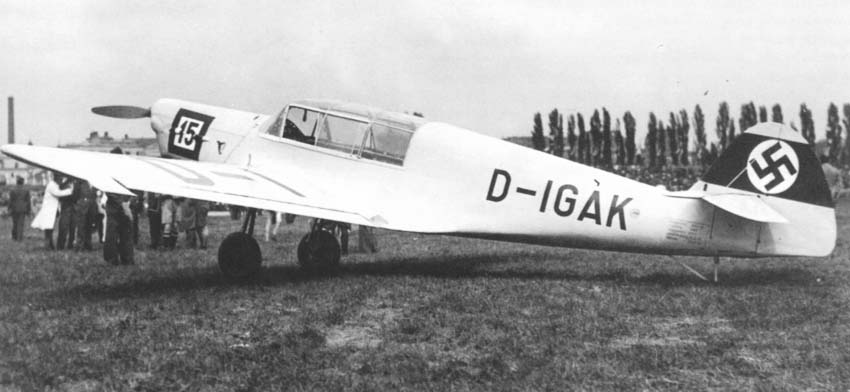
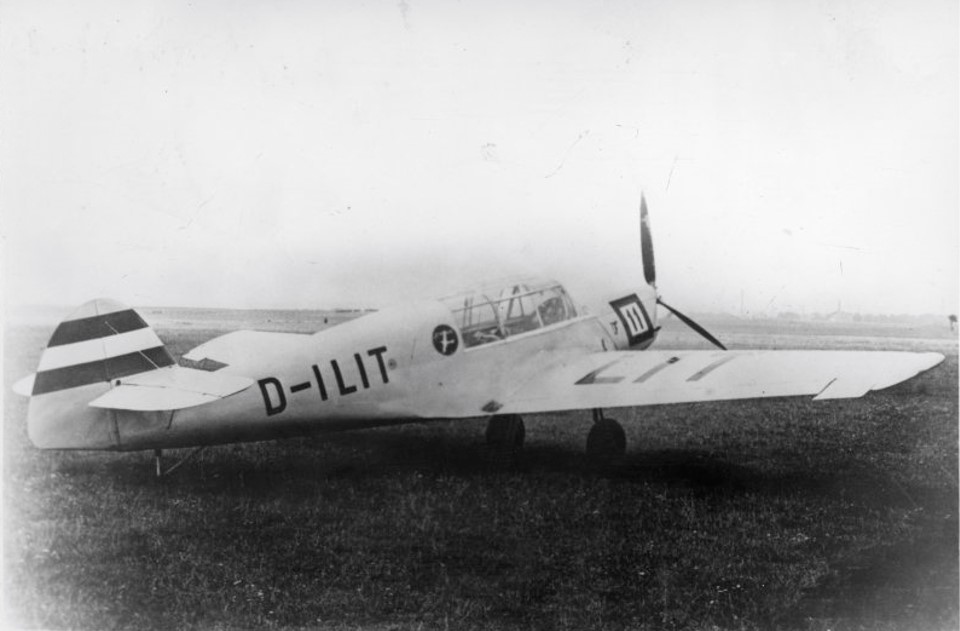
At first, the Bf 108 found only a niche market with private pilots and businesses that wanted their own personal aircraft, but the complexity of the Bf 108, combined with a high sales price and intensive maintenance precluded its use with flying clubs and flight schools, and only six Bf 108As and seven Bf 108B-0s were built, with the A models being powered by the Hirth HM 508 inverted V8 engine and the B model was powered by the larger Argus As 10, another inverted V8 design, which was ultimately the preferred choice of powerplant for the aircraft. The Hirth-powered Bf 108s were generally distinguished from their Argus-powered counterparts by the installation of a three-blade prop as opposed to the two-bladed props of the Argus-powered Bf 108s, which would become the standard propeller configuration for the type.

The Bf 108 would become far more prominent in the public eye when on August 13, 1935, famous aviator Elly Beinhorn flew a Bf 108 on a record-setting flight from Germany to Turkey and back in less, taking off from Gleiwitz, Upper Silesia (now Gleiwitz, Poland) and flying nonstop to Yeşilköy, near Istanbul, then flew to Berlin’s Tempelhof Airport, covering 3,470 kilometers in just 14 hours and 30 minutes, and having flown over the Bosphorus Strait and over the city of Haydarpaşa, Beinhorn also became the first pilot to fly from Europe to Asia and back in under 24 hours. When Beinhorn named her personal Bf 108 Taifun (German for Typhoon), her flight would inspire others to adopt the name Taifun as the aircraft type’s nickname. One year later, on August 6, 1936, Beinhorn set another record in a Bf 108, this time flying Bf 108 Taifun D-IGNY across three continents in one day, taking off from Damascus, Syria, and flying to Cairo, Egypt, and Athens, Greece on her way back to Berlin, covering 3,750 kilometers.

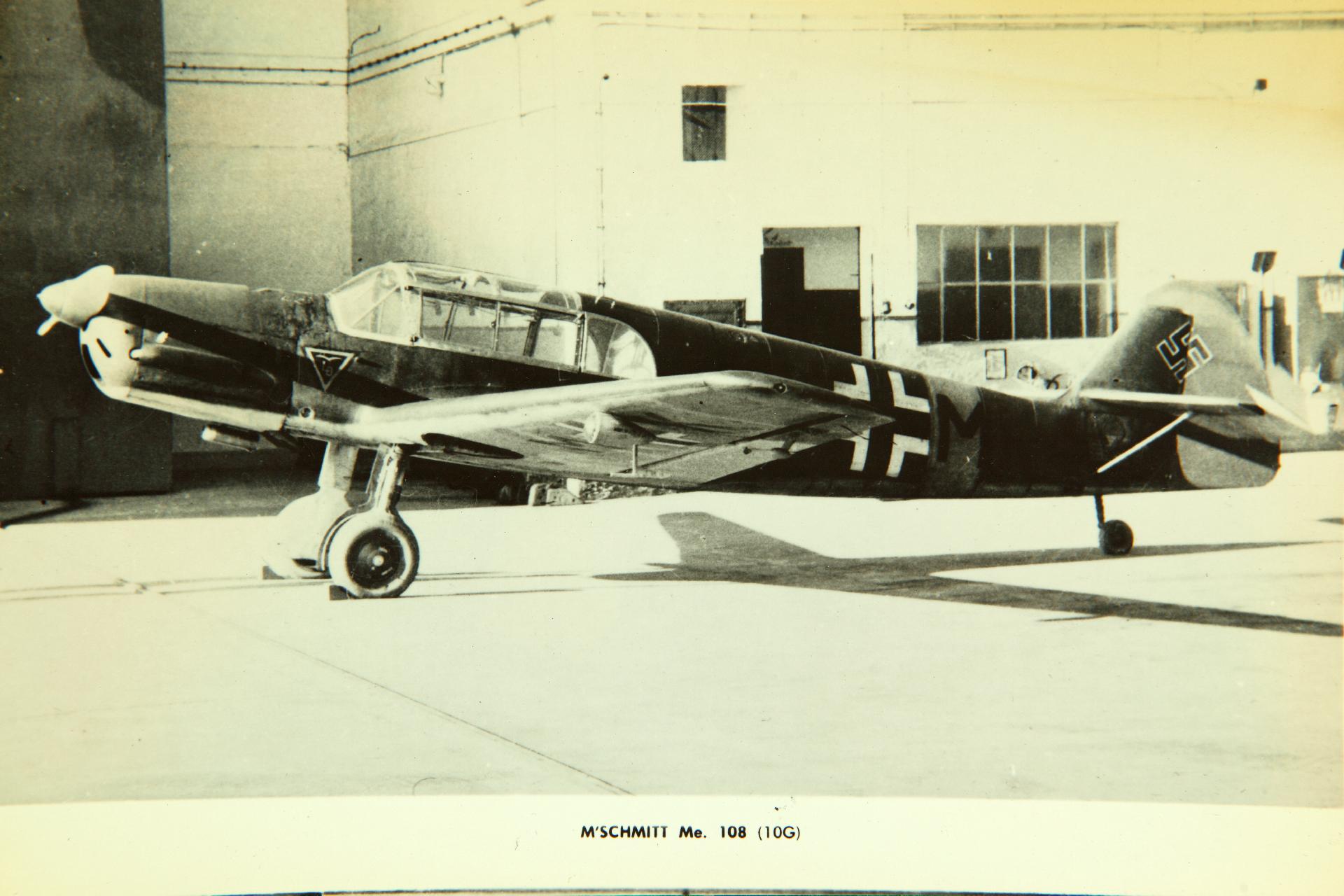
In 1935, in defiance of the Treaty of Versailles, Nazi Germany officially unveiled the new German air force, the Luftwaffe, complete with a new prototype fighter, the Bf 109, based on the design layout of the Bf 108. The Luftwaffe officially adopted the Bf 108 as its liaison aircraft, using it for high-speed personnel transport and courier duties. In 1938, Willy Messerschmitt restructured Bayerische Flugzeugwerke (BFW) as Messerschmitt AG. From then on, all subsequent aircraft built were designated with the ‘Me’ prefix, and aircraft designed prior to 1938, such as the Bf 108 and the Bf 109, were also referred to interchangeably with the ‘Me’ and ‘Bf’ prefixes, even in contemporary German documents. Production of the Messerschmitt Bf 108 Taifun was also transferred from Augsburg to the larger Messerschmitt factory in Regensburg.

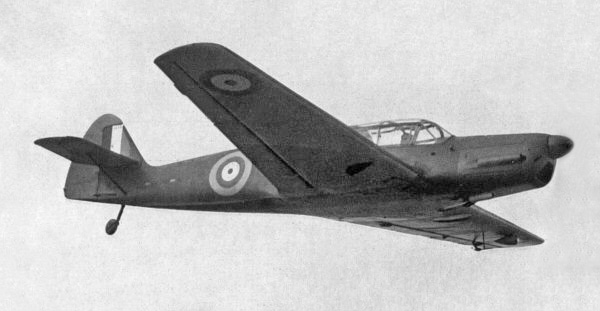
During WWII, the Bf 108 was flown in every theater of operation, from Norway to Libya and from France to Russia. One Bf 108 was also involved in the Mechelen incident of January 10, 1940, when a Bf 108 flying from Loddenheide Airfield to Cologne overshot the Rhine River in low-lying fog, and the aircraft made a forced landing in neutral Belgium while carrying secret documents for the planned German invasion of the Low Countries. The Bf 108 also occupies an unusual place as one of the few aircraft flown by both sides of WWII. At least four examples sold to private owners in the UK prior to the outbreak of war were confiscated by the Royal Air Force, nicknamed Aldons, and used as liaison aircraft. One aircraft. Bf 108B-1 Werknummer 2004 was flown by the US air attaché in Berlin as XC-44 39-718 before it was eventually confiscated by the RLM by December 1941 following the German declaration of war on the United States. At least 21 aircraft were exported to Switzerland, and another 35 to Yugoslavia, and one Bf 108 each is known to have been exported to Brazil and Chile, while German allies such as Bulgaria, Romania, and Hungary all flew a handful of Bf 108s, and some even made their way to Japan and to the Japanese puppet state of Manchukuo.
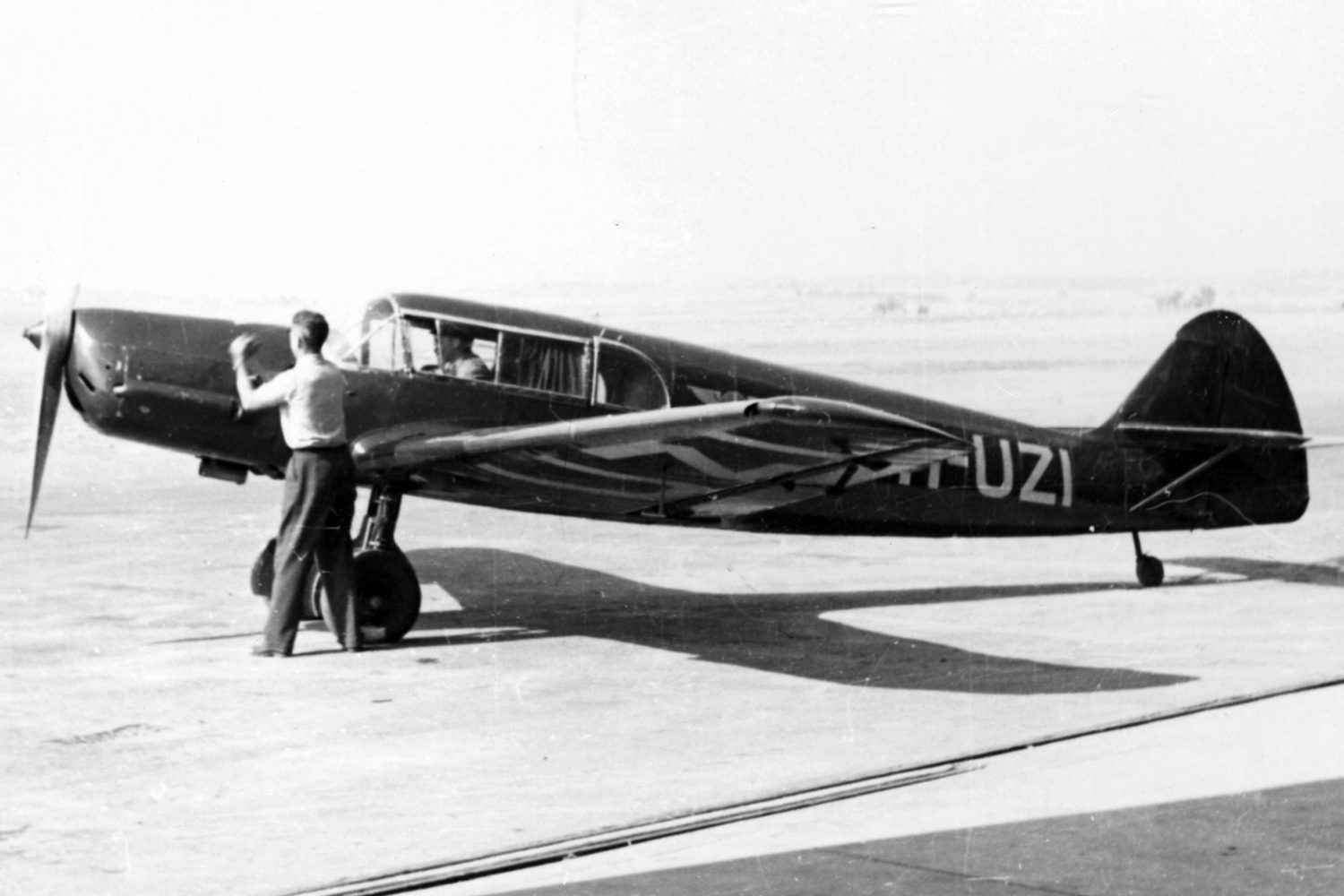

In 1942, to let Messerschmitt prioritize Bf 109 production in Germany, production of the Bf 108 was moved to occupied France, with the Société Nationale de Constructions Aéronautiques du Nord (SNCAN) factory in Les Mureaux selected for the task. However, the Allies liberated Les Mureaux in 1944, and only 170 airframes were built. With the French Air Force needing new aircraft immediately, the decision was made to continue production at what would be rebranded Nord Aviation, with the French Bf 108s being named the Nord 1000. Initially, these were fitted with leftover Argus As 10 engines, but when supplies of the engine ran out, the Renault 6Q, an inverted six-cylinder engine, was installed instead, with the aircraft becoming the Nord 1001 Pingouin I, followed by the 1002 Pingouin II. During the war, SNCAN was also ordered to build a prototype for what would become the Messerschmitt Me 208, which differed from the Bf 108 by adding a nose gear and moving the main landing gear to the wings. Two prototypes were built before the factory was liberated. Refitted with the Renault 6Q, the Messerschmitt Me 208 became the Nord 1100 Noralpha. The French Air Force flew these aircraft into the 1960s, and many surplus examples flown by private pilots have often been painted in Luftwaffe colors.

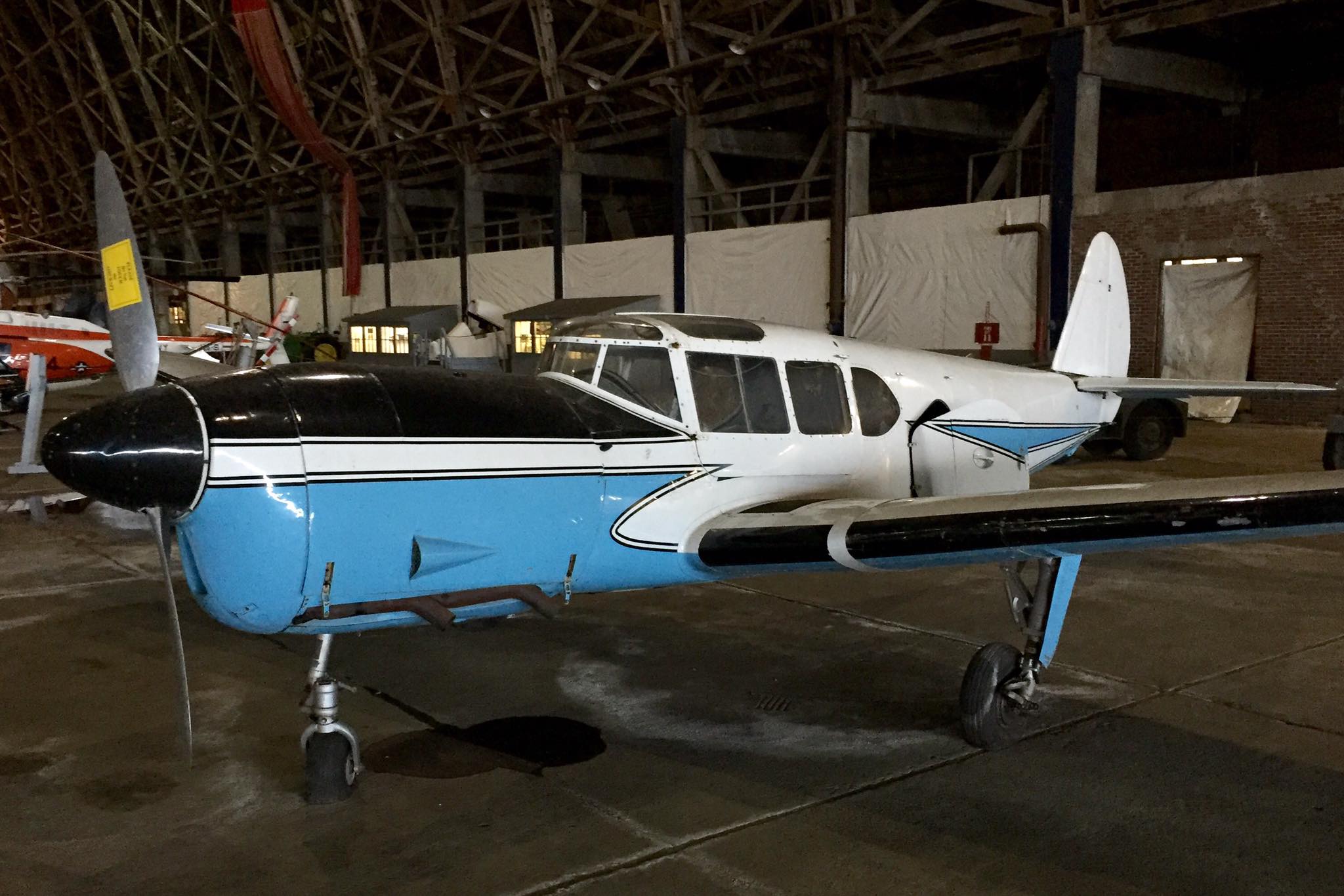
The ultimate variant of the German-built Bf 108 was the Bf 108D, a modernized version of the Bf 108B with the installation of a new variable-pitch propeller, alterations to the cockpit glazing, landing gear, fuel system, and upgrading the voltage in the electrical system from 12 volts to 24 volts. One of these Bf 108Ds has survived to become the example now flown by the CAF SoCal Wing, and the story of its long journey from Germany to California is one of many twists and turns, and it contains some level of mystery. Built in February 1942 by the Messerschmitt AG factory in Regensburg as Werknummer 3059. It was one of only 54 D-1 variants of the Bf 108 to be built at Regensburg and was one of the final Bf 108 Taifuns built in Germany before production switched to SNCAN at Les Mureaux later that year. According to recent research by the CAF, its first flight occurred on March 2, 1942, with pilot Josef Haid at the controls. Seven days later, on March 9, 1942, WkNr 3059 was flown from Regensburg to be delivered to the Luftwaffe by Sergeant Paul Kucher, a test pilot for the Luther-Werke & Co. GmbH at Braunschweig, Lower Saxony, which manufactured subassemblies for Messerschmitt Bf 110s and Heinkel He 111s. Following its acceptance into the Luftwaffe, there are virtually no surviving records to confirm exactly what the aircraft was used for, only that the aircraft was issued with the fuselage code ‘VE+LI’. With the surrender of Nazi Germany to the Allies on May 8, 1945, the victorious powers set about confiscating any remaining German aircraft, with several examples being selected for flight trials and evaluation against Allied types. One of these aircraft captured immediately after the surrender was Bf 108D-1 WkNr 3059, which came into RAF custody. Eventually, the aircraft was allocated the British Air Ministry code AM 87. On November 14, 1945, Bf 108 AM 87 was flown from the German city of Schleswig to the Royal Aircraft Establishment (RAE) headquarters in Farnborough, England, flown by a pilot listed only as Flight Lieutenant Walker. During the flight, Walker made two refueling stops at Twente Airport in Enschede, Netherlands, and Gatwick Airport, England. It is documented that the aircraft was flown at Farnborough for evaluation flights throughout the remainder of 1945, and by January 8, 1947, the aircraft was allocated to Miles Aircraft Limited at Woodley, Berkshire.

By 1948, AM 87 was stricken from the RAF inventory and entered the British civil aviation registry as G-AKZY. On June 7, 1948 Bf 108 G-AKZY was officially registered to the company Air Couriers Limited based at Croydon Airport, which had once been London’s largest civil airport in the prewar years before focus shifted to London-Heathrow Airport.

On January 9, 1950, the aircraft returned to continental Europe when it was brought to Switzerland and issued the Swiss registration HB-DUB before being re-registered as HB-ESK just three months later, on April 15, 1950. For the next 18 years, Bf 108D-1 HB-ESK could be seen at Swiss airports, flying high among the Alps and over the meadows and lakes of Switzerland. (Photos of HB-ESK in Switzerland HERE) But in 1968, this aircraft would make its journey to the United States. In 1968, Bf 108 HB-ESK was exported to the United States, and on July 9, 1968, the aircraft was registered with the FAA as NX2231 to a German-born businessman named Hans A. Gerstl of Charlottesville, Virginia. Gerstl was known locally to make the occasional flight in NX2231, but on March 5, 1970, he sold his Bf 108 to the Confederate Air Force, marking the first time a German-built aircraft was acquired by the CAF, though the CAF would also acquire surplus Spanish Air Force CASA 2.111s and Hispano HA-1112 Buchons, derivatives of the Heinkel He 111 and the Messerschmitt Bf 109, respectively.


For much of the first half of its time with the CAF, Bf 108 N2231 was assigned to the now-defunct New Mexico Wing at Lea County Regional Airport in Hobbs, New Mexico, and would often be flown alongside the CAF’s CASA 2.111D N72615. In 2014, however, the CAF New Mexico Wing at Lea County Airport was dissolved, and Bf 108 N2231 was sent to California. First, it was sent to CAF’s 3rd Pursuit Squadron, based at Cable Airport in Upland, California. This CAF squadron got its name from the 3rd Pursuit Squadron of the American Volunteer Group (AVG), better known in history as the Flying Tigers, and former charter member Erik Shilling was a member of the original squadron that flew combat sorties over China during WWII. Besides hosting the Bf 108, the 3rd Pursuit Squadron was also a home for Antonov An-2R “Colt” N2AN “Big Panda” and Fieseler Fi 156D Storch N40FS. All of these aircraft were kept airworthy and made frequent appearances at local airshows. However, the Antonov An-2 was written off following a non-fatal accident in San Bernardino on May 6, 2016, and in July 2020, Bf 108D-1 Werknummer 3059 was officially transferred to the CAF Southern California Wing in Camarillo, followed by the Fieseler Storch in April 2021.

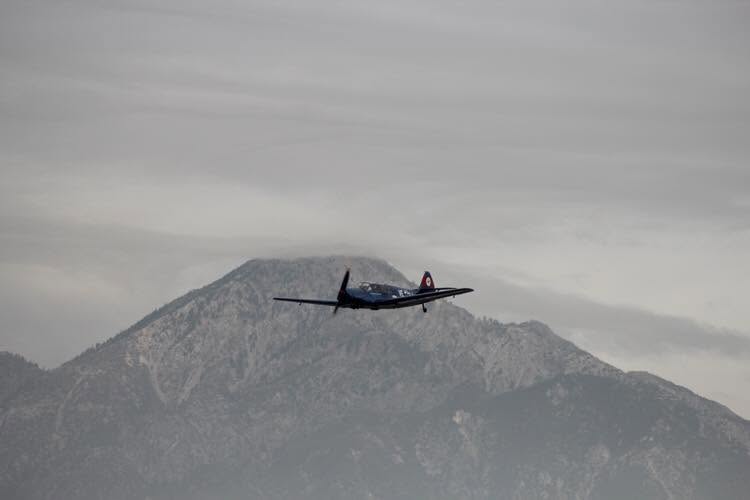
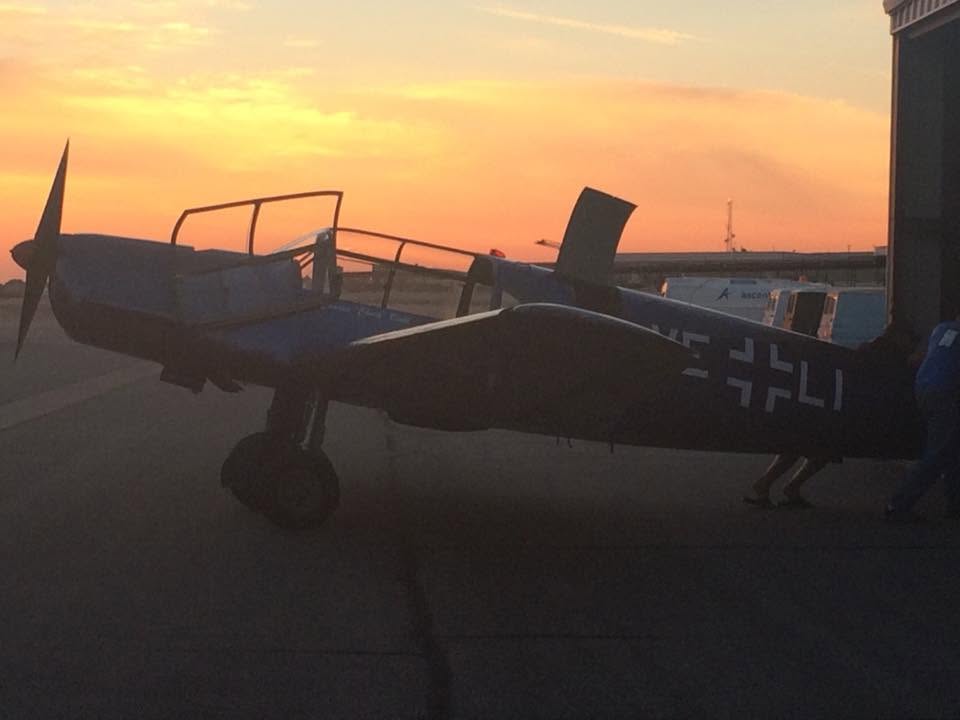
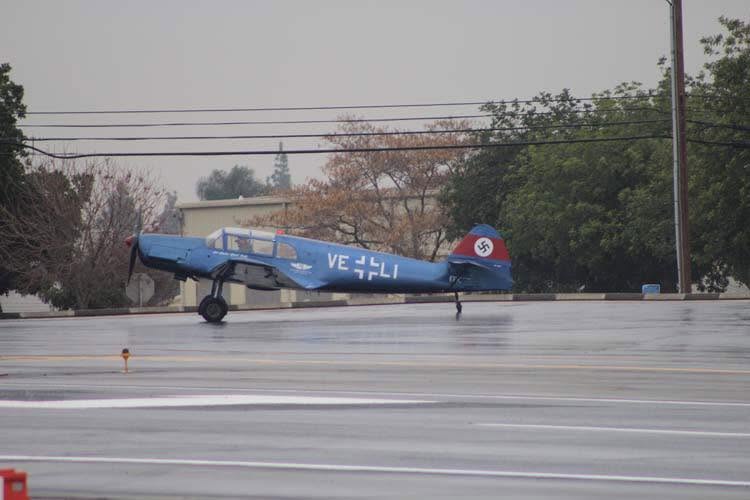
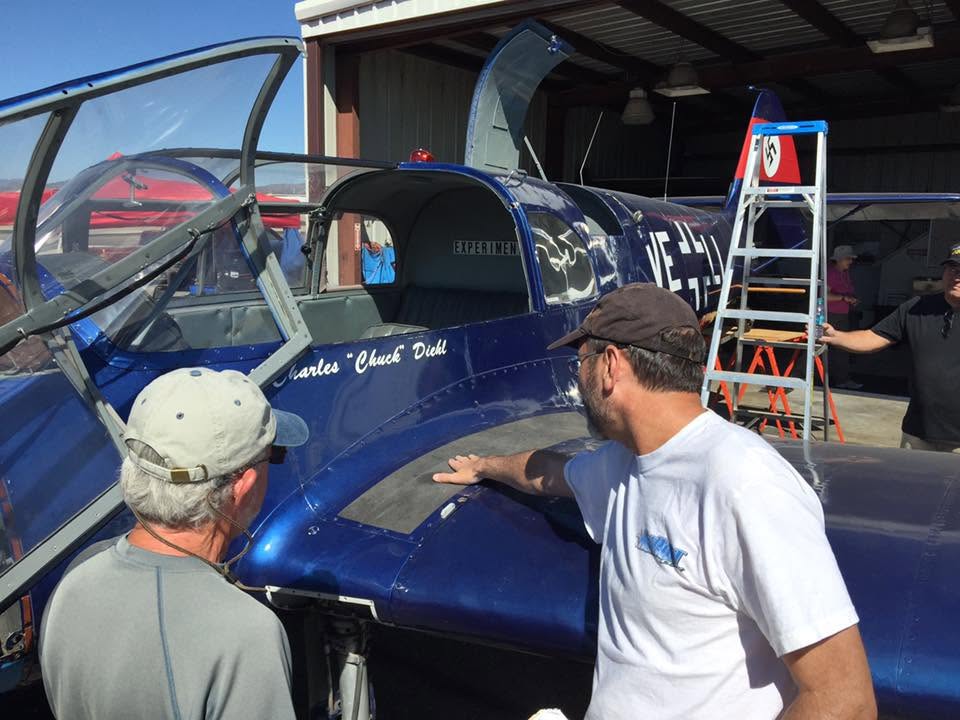
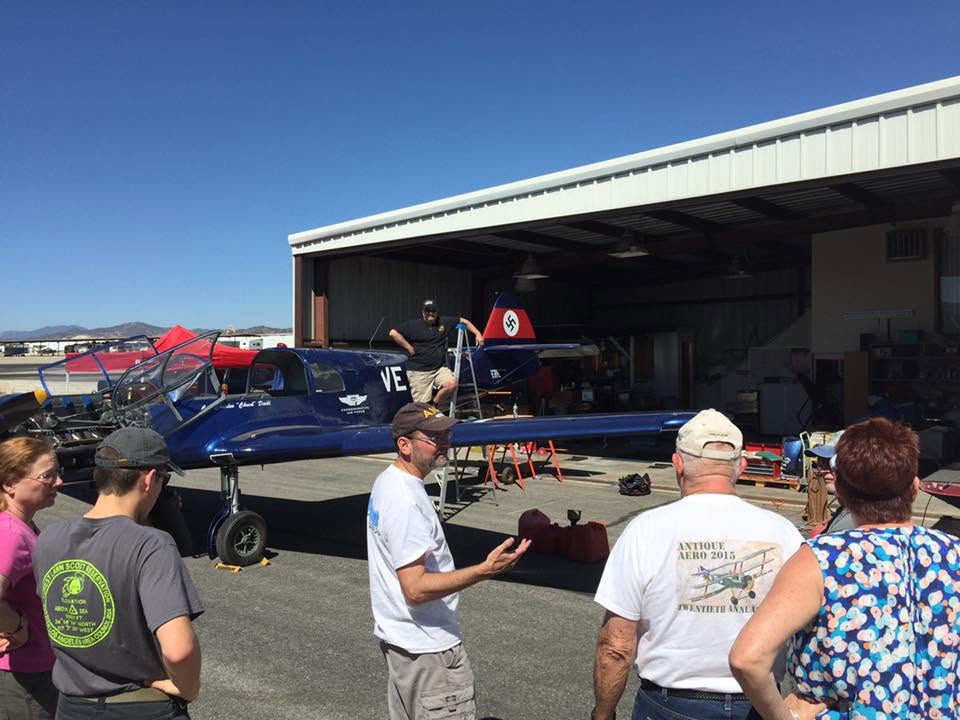
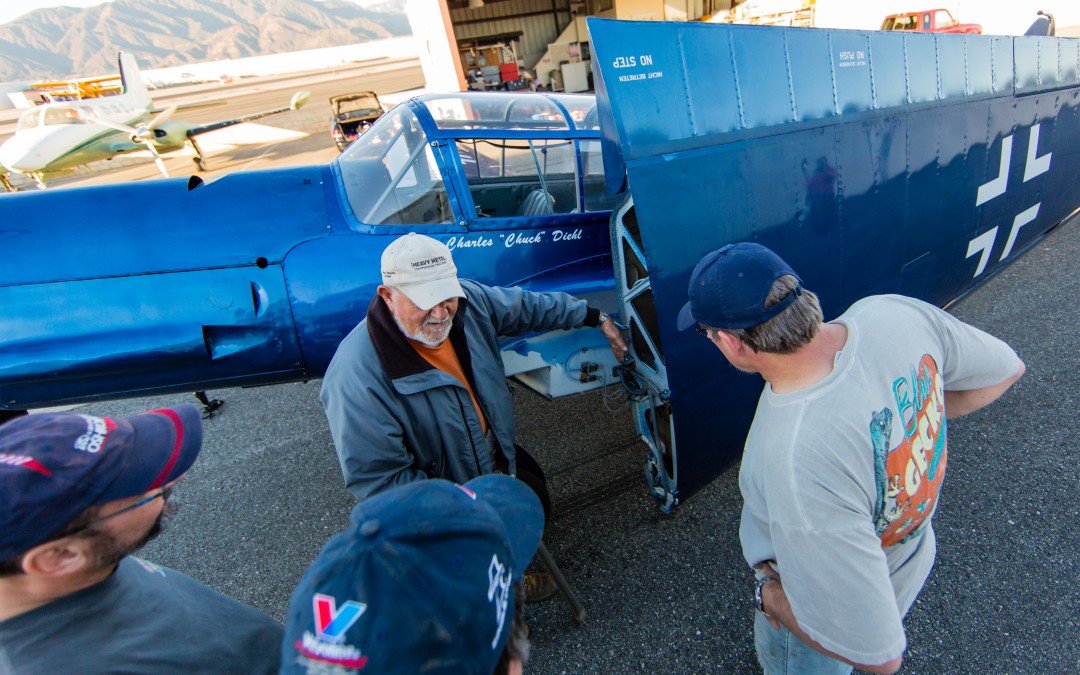
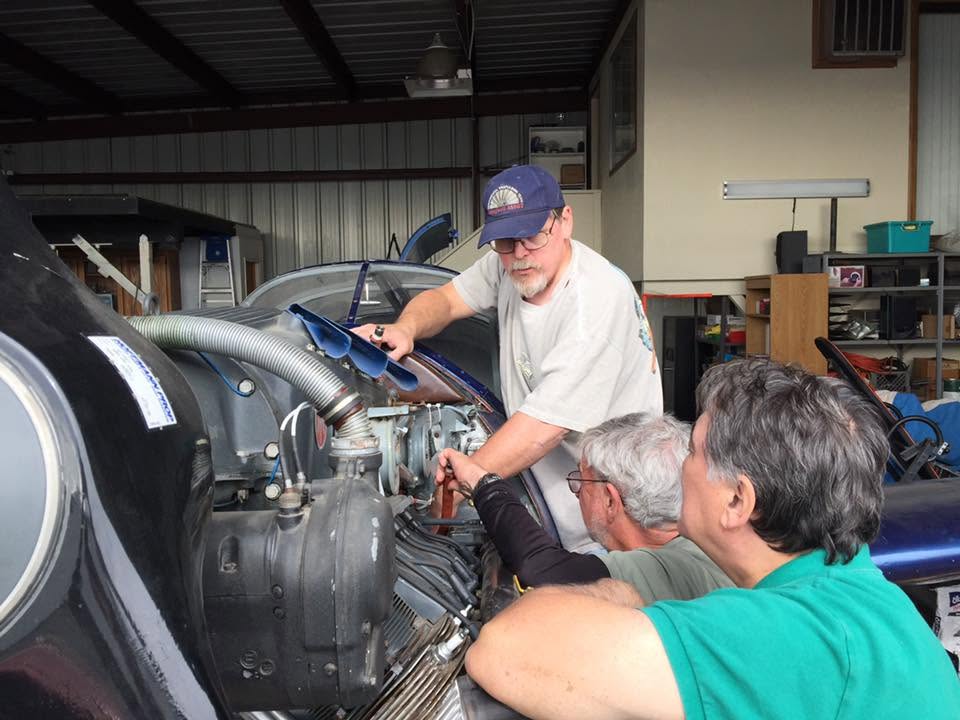
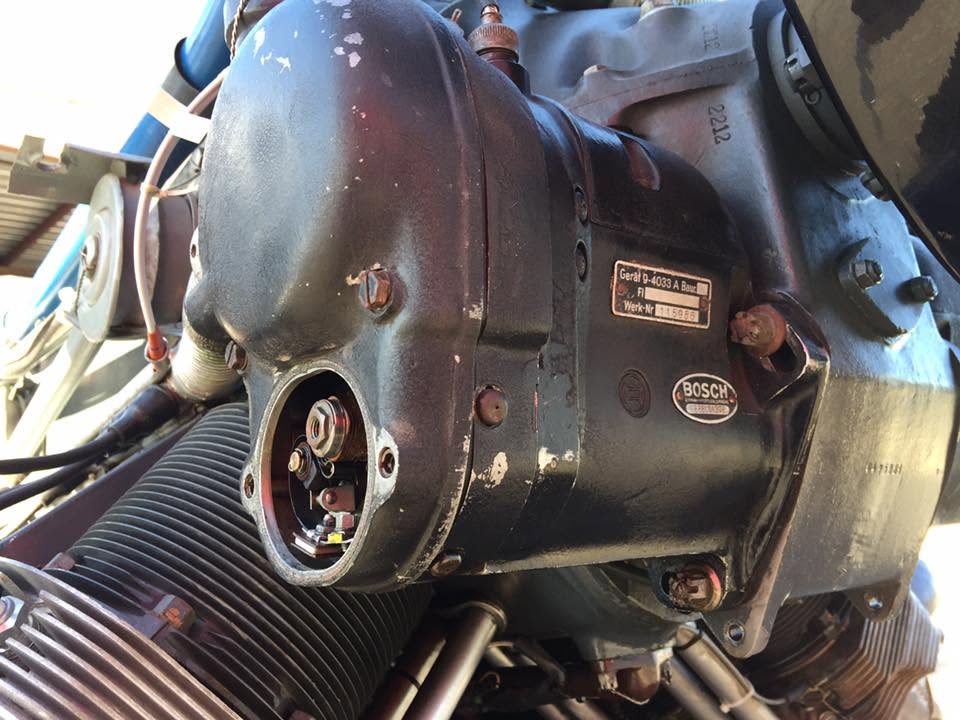
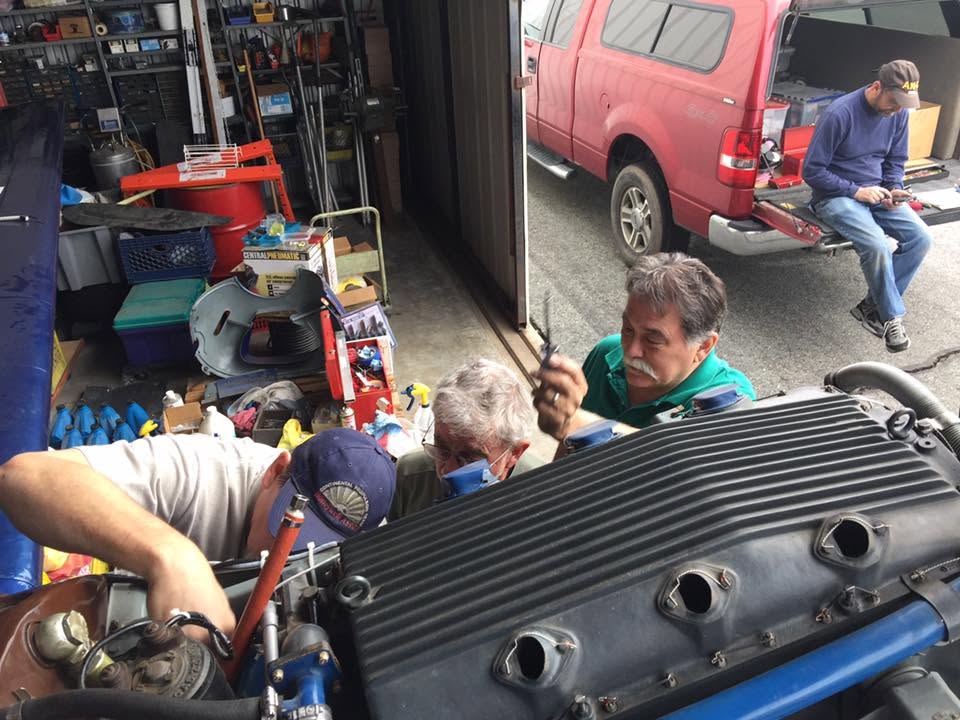

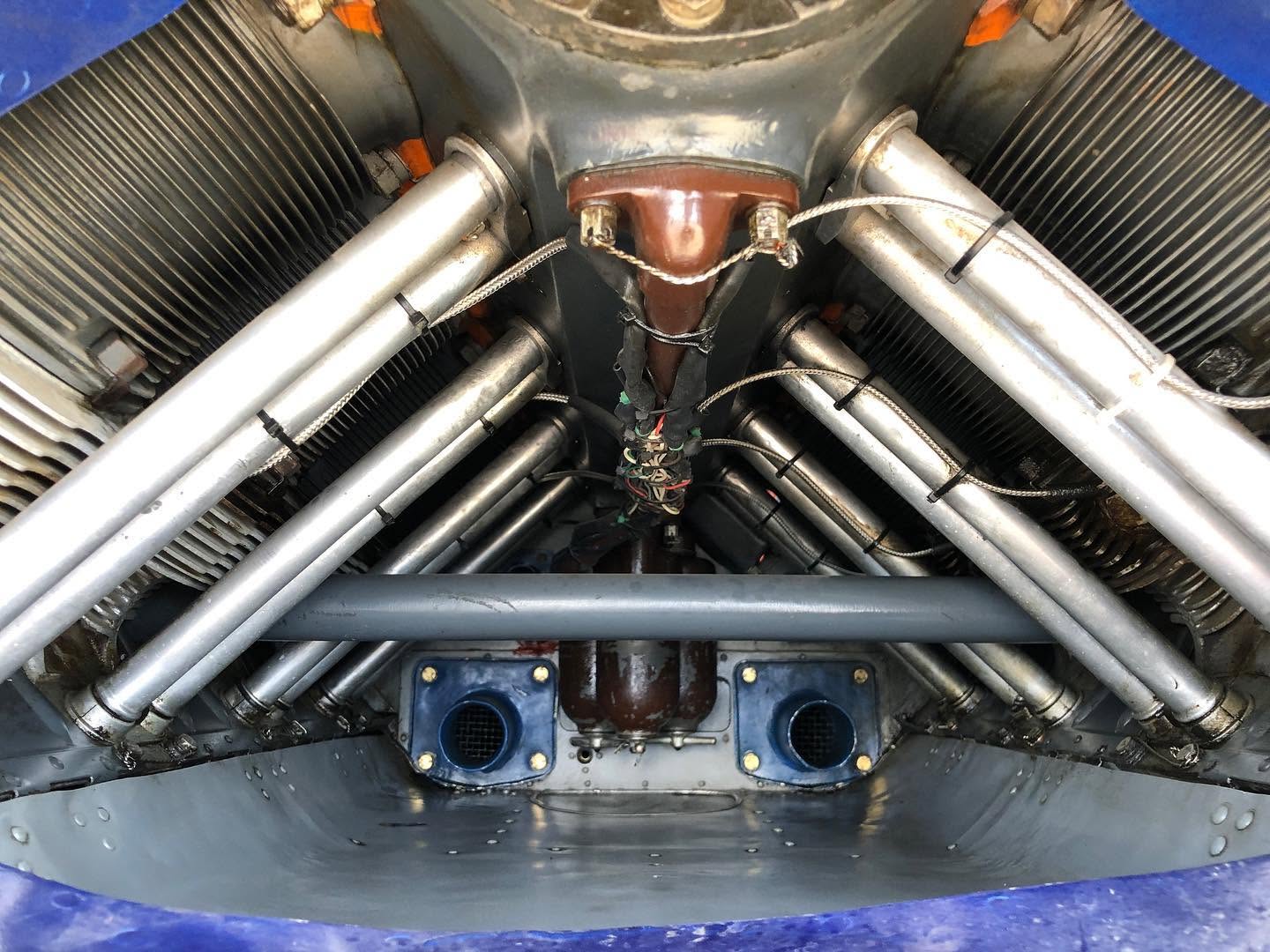
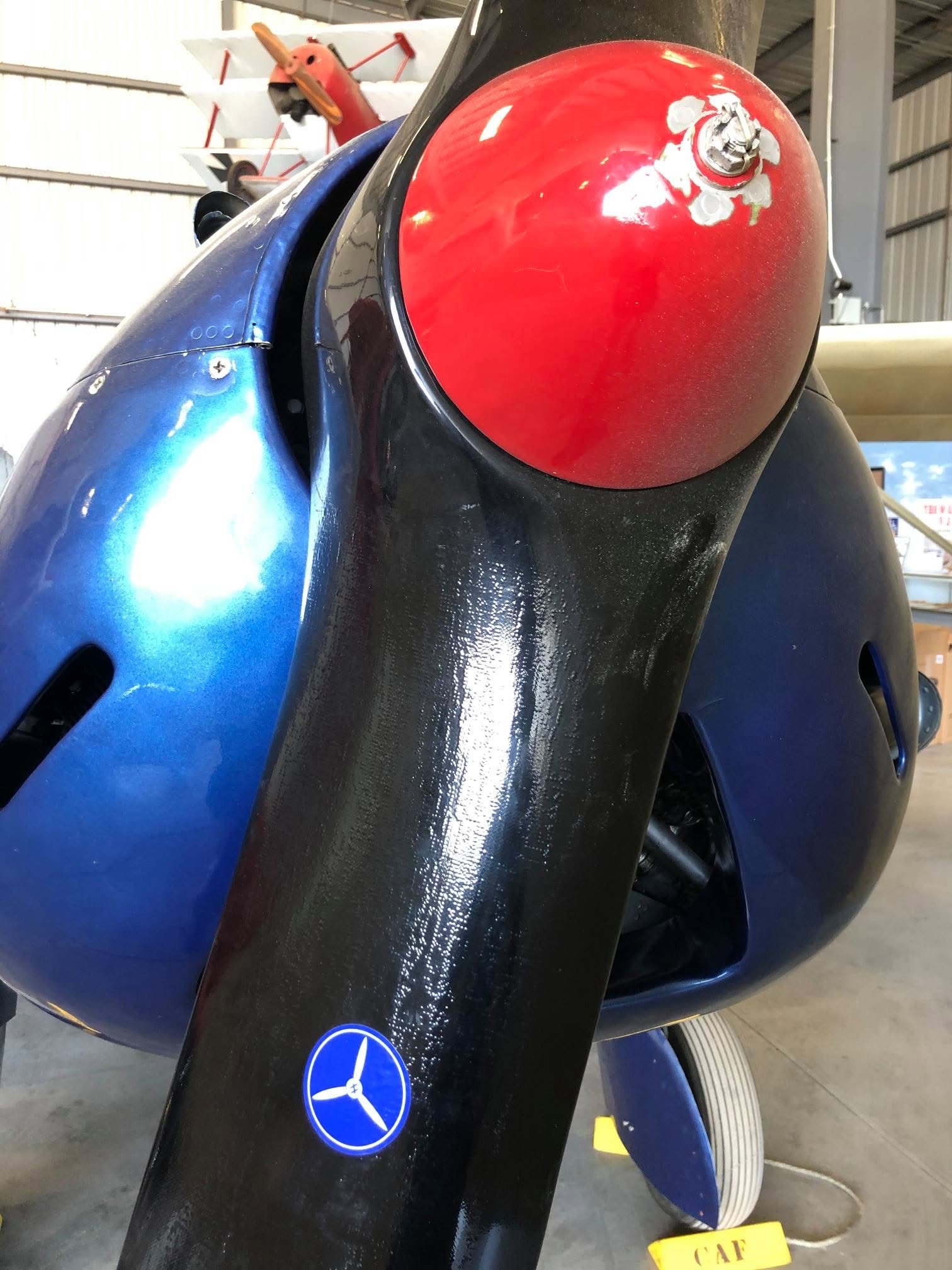
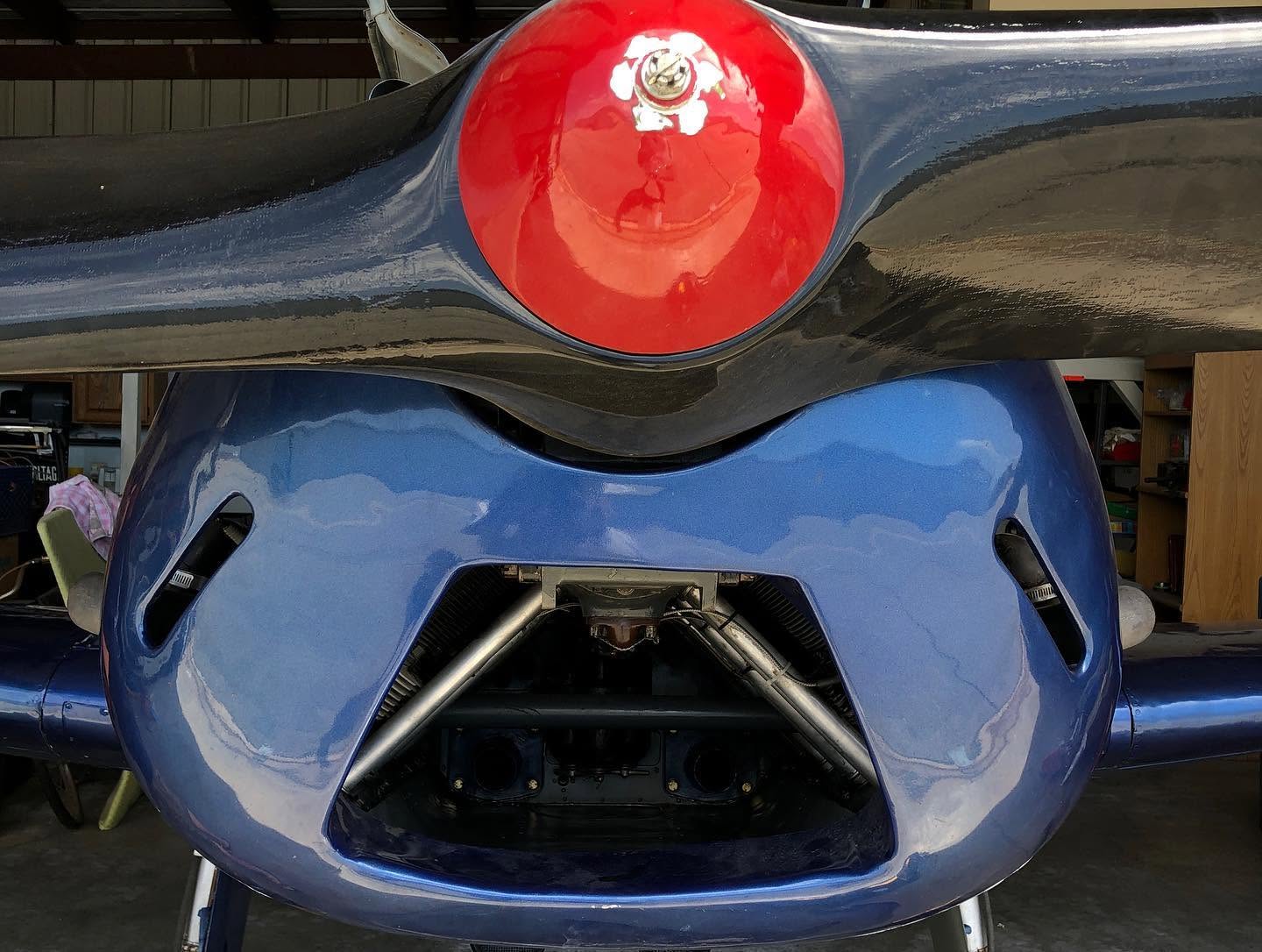
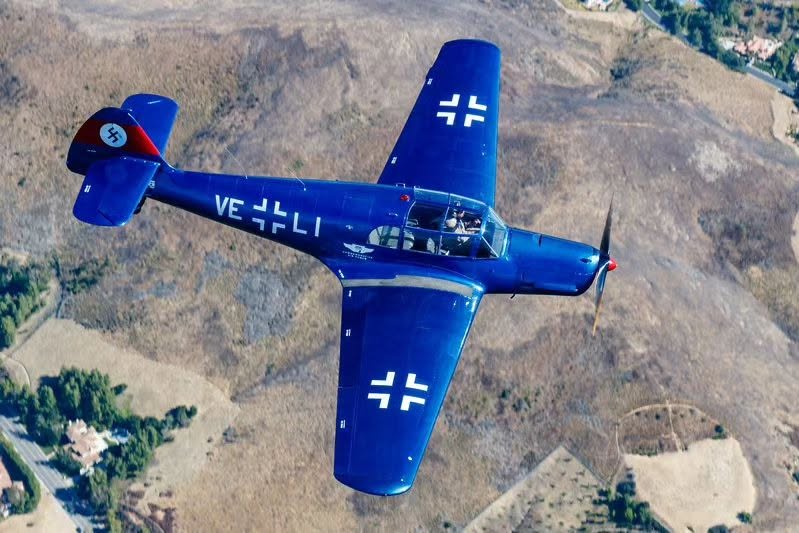
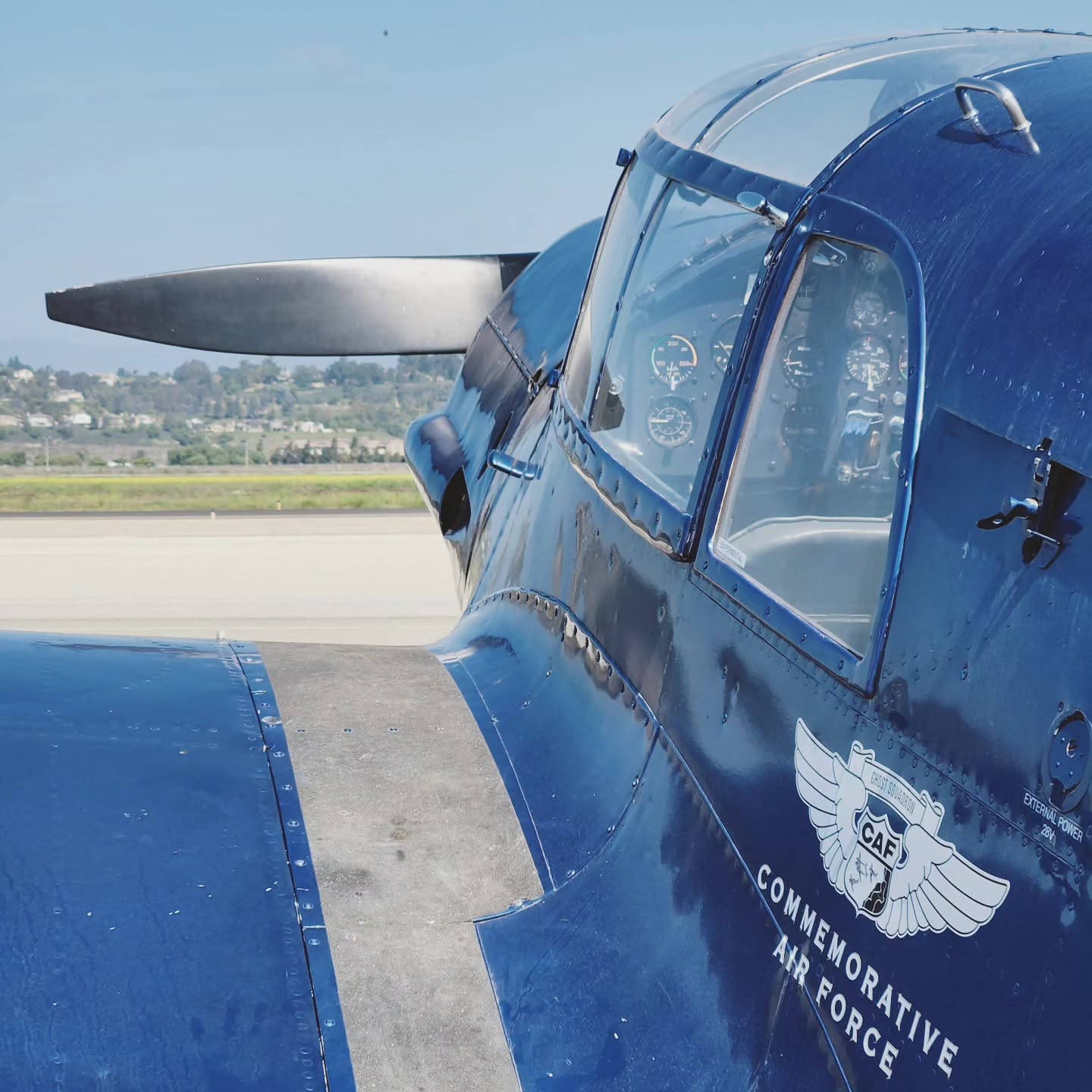
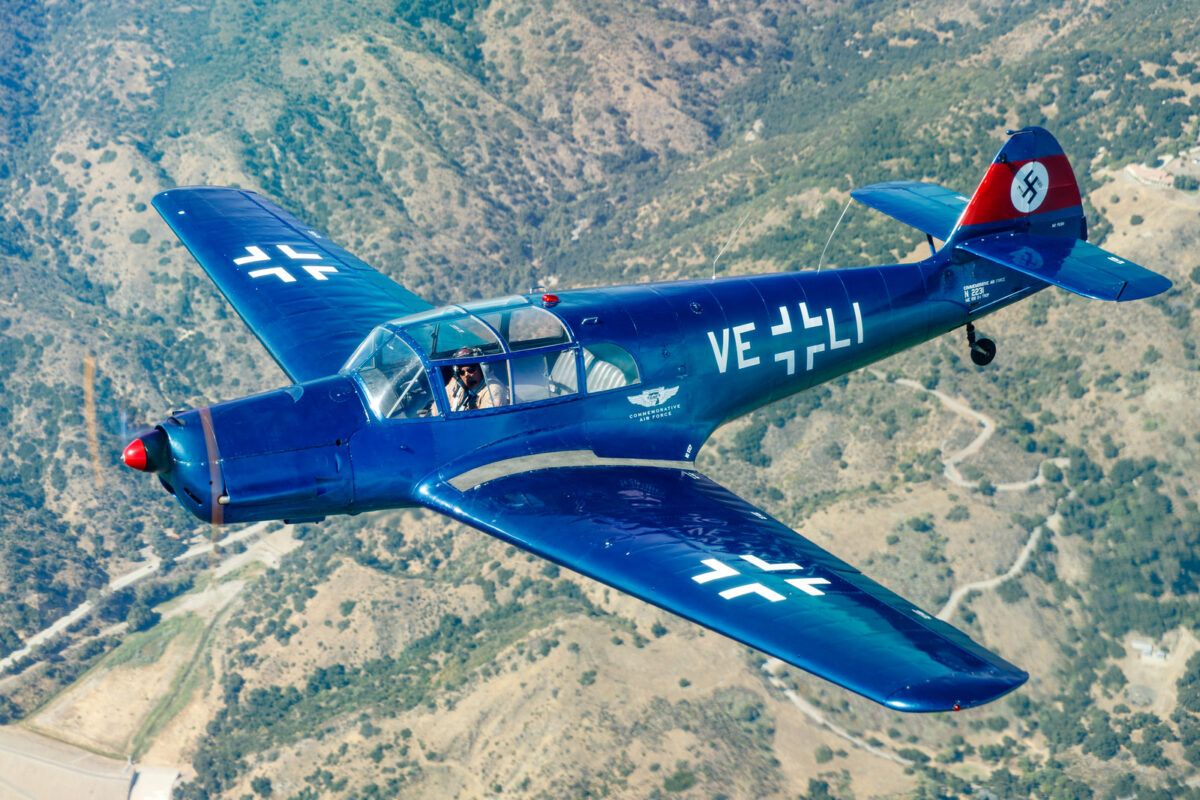
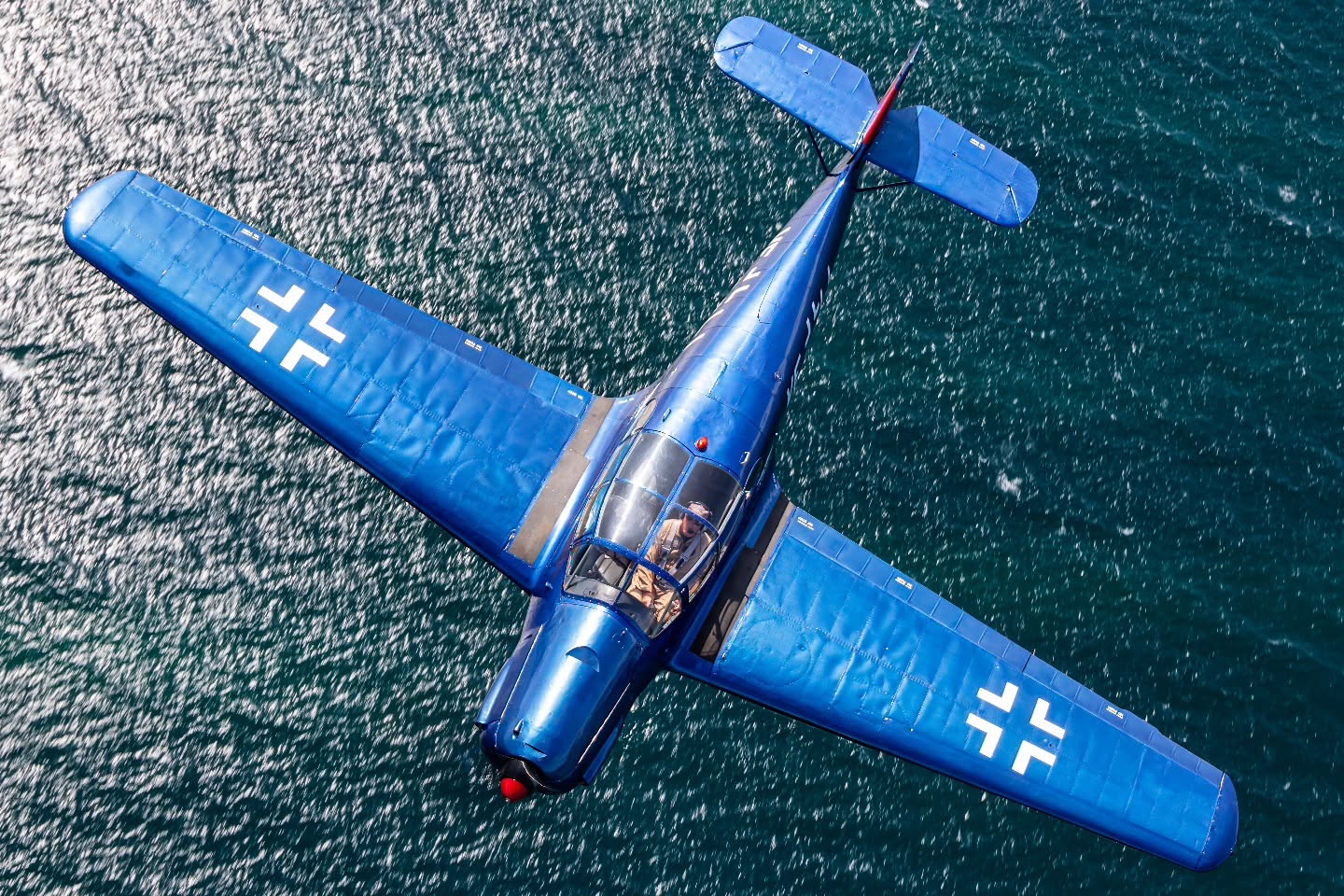
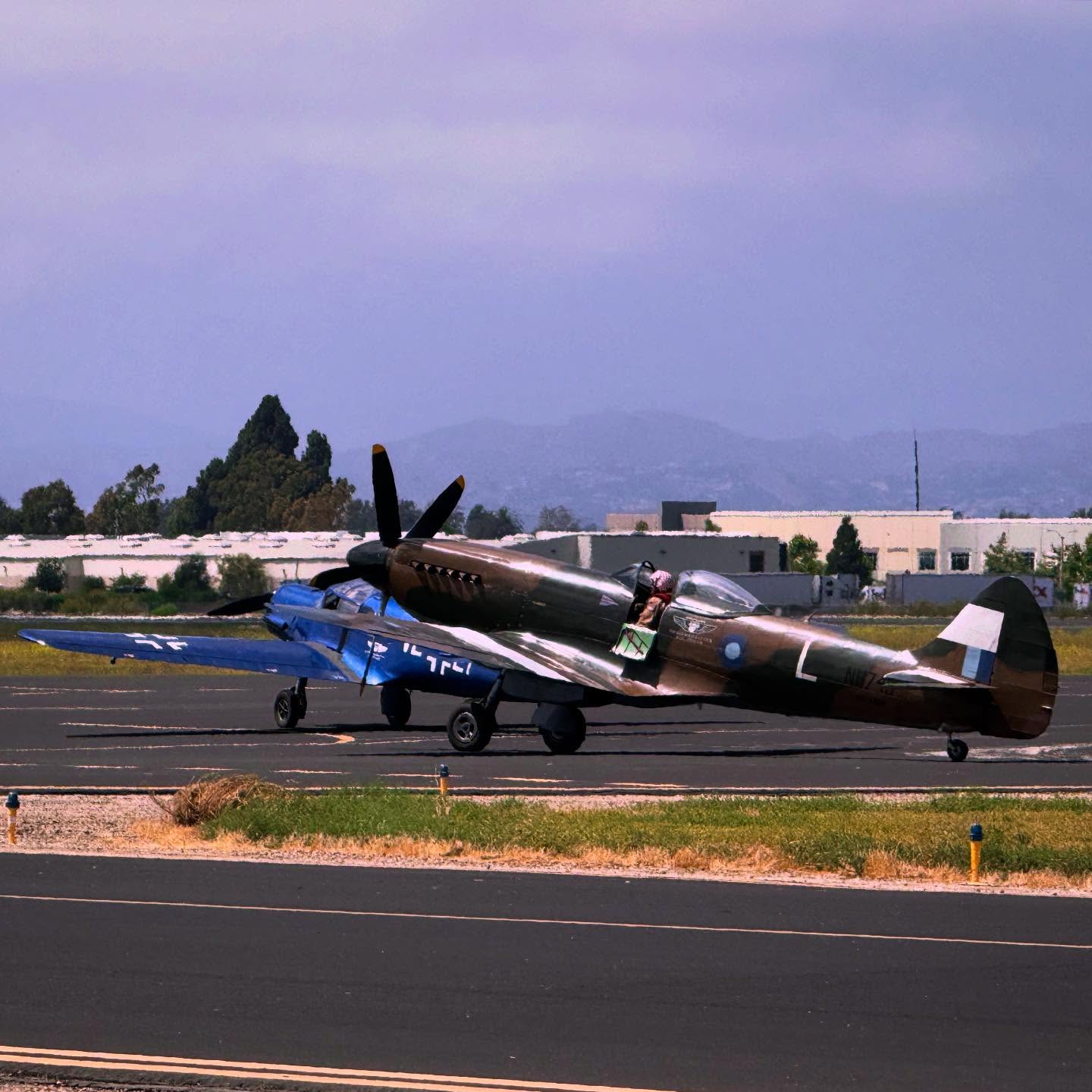
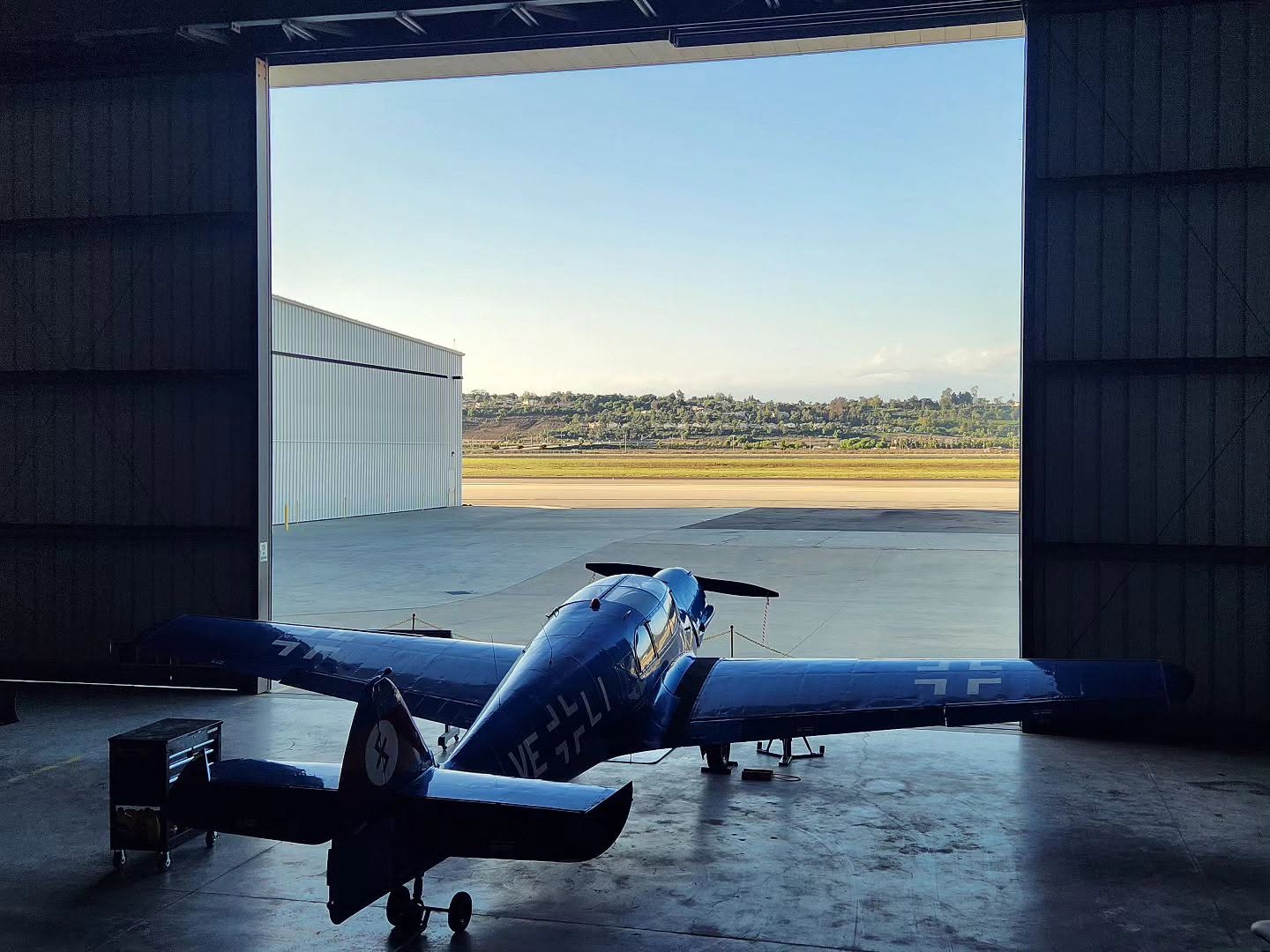
Since then, Messerschmitt Bf 108D-1 WkNr 3059 has been kept in airworthy condition and is at present the sole airworthy Bf 108 Taifun outside Europe that still flies with its Argus As 10 inverted V8 engine, as opposed to an alternative powerplant. It is not uncommon during airshows such as the annual Wings Over Camarillo Airshow for the Bf 108 to be chased over the runway by the SoCal Wing’s Spitfire Mk XIVe, RAF serial number NH749, or by a P-51D Mustang flown in from other air museums in southern California, such as the Mustangs from the Planes of Fame or the Palm Springs Air Museum. With the experience earned in maintaining the Argus engine mounted on Bf 108D-1 3059, the CAF SoCal Wing is also restoring the Fieseler Storch N40FS to airworthy condition, and with any luck, we will soon see two German aircraft flying together in the skies of Camarillo. For more information, visit the Commemorative Air Force Southern California Wing’s website HERE.

For more information, visit the Commemorative Air Force Southern California Wing’s website HERE.