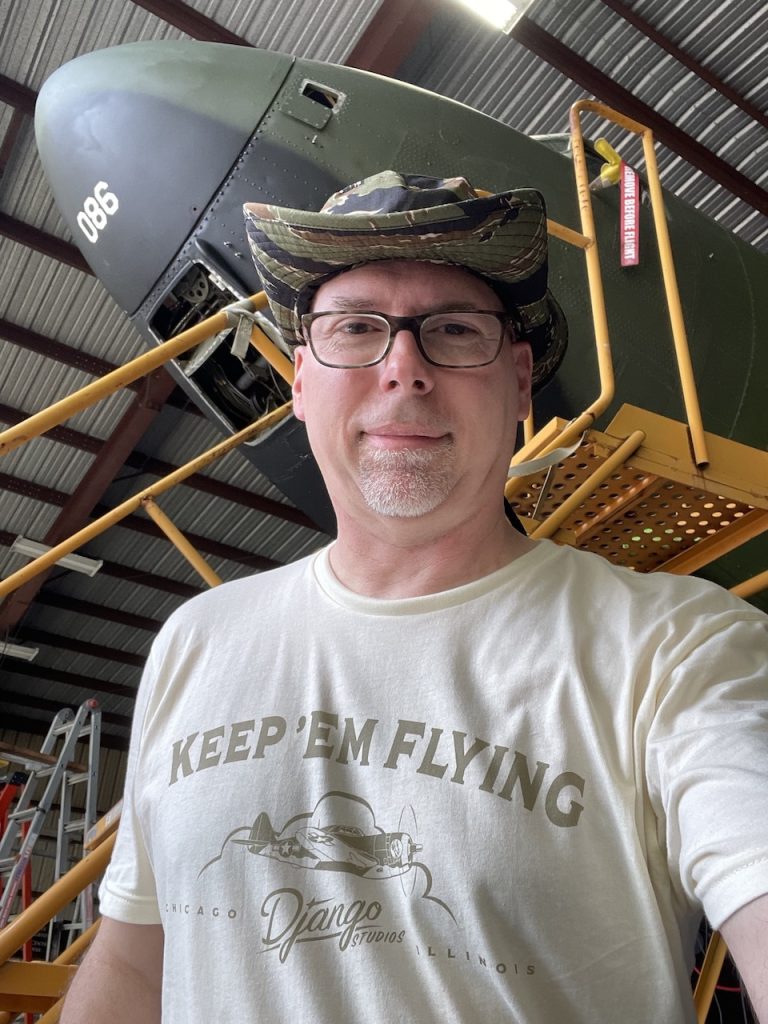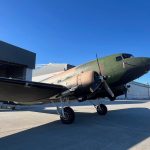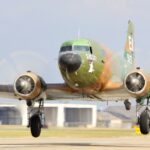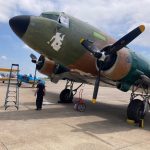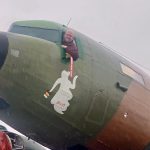
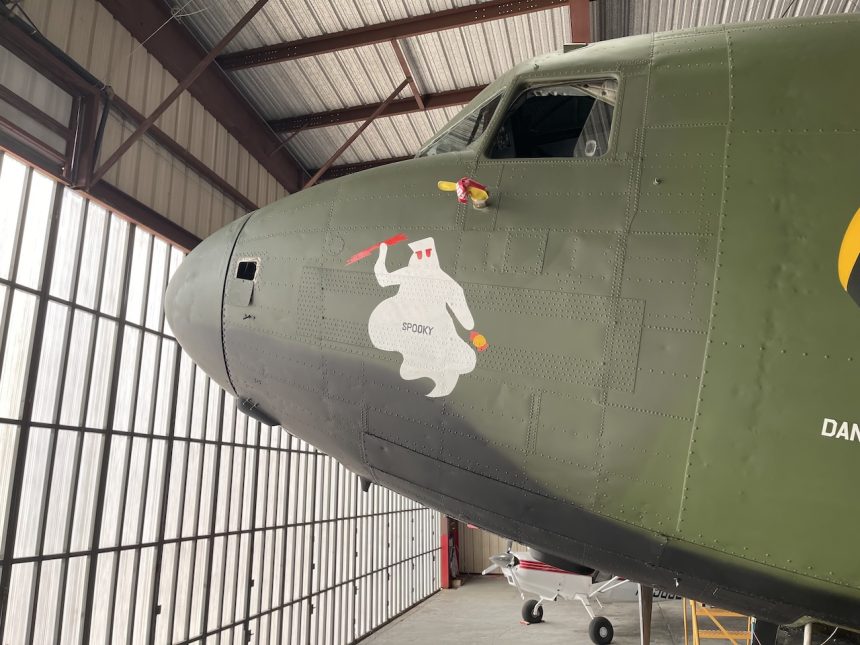

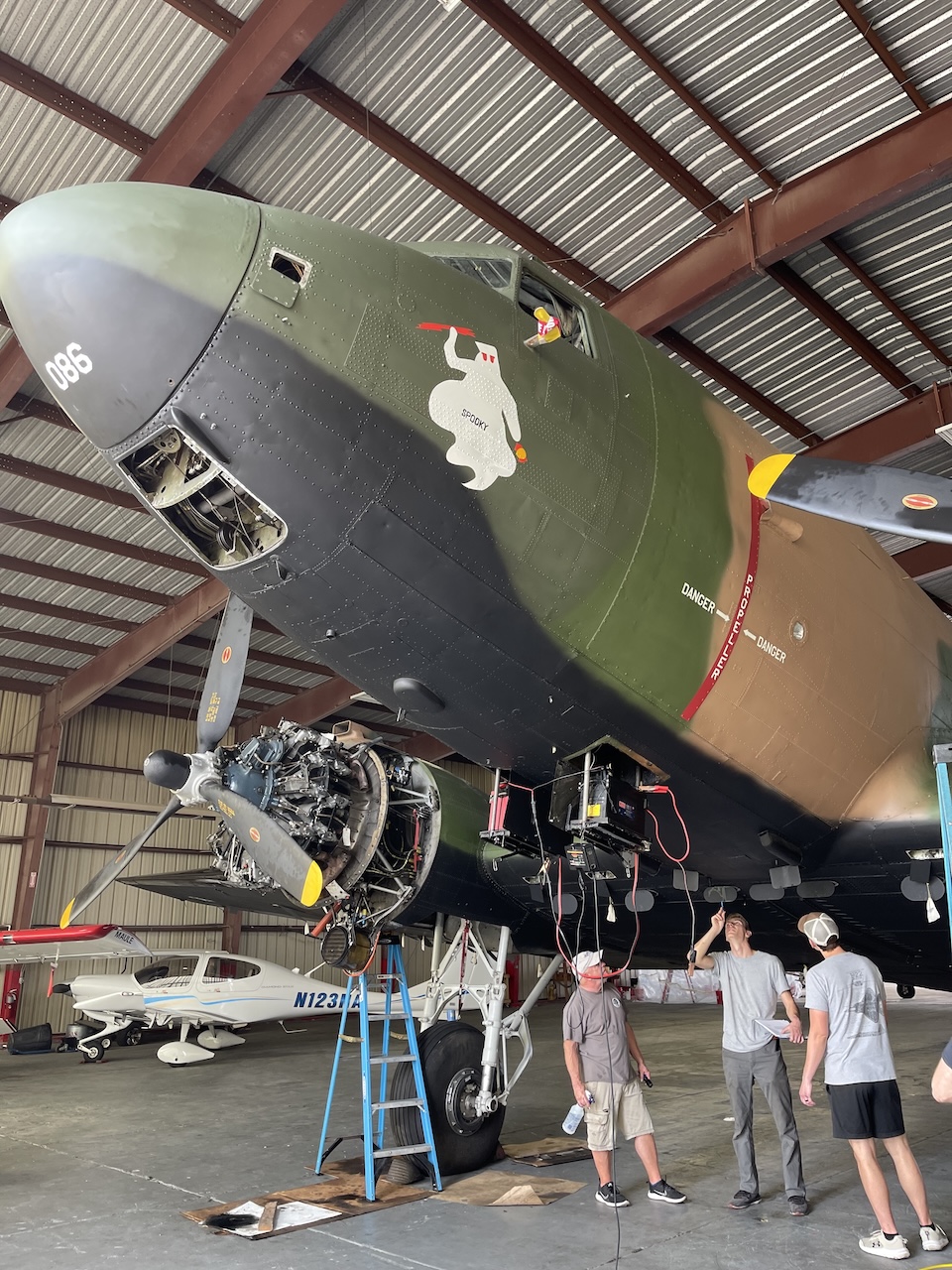
The latest addition to the CAF multi-engine fleet, the AC-47 gunship operated by the CAF Gulf Coast Wing, arrived at the CAF National Airbase in July 2024. The unit’s effort to interpret the aircraft’s history led to an exciting discovery—a C-47 already partially configured as an AC-47 located near Atlanta, Georgia. Even before its arrival, the aircraft was informally referred to as “Spooky,” a common nickname for AC-47 gunships, but it wasn’t until a white ghost silhouette was applied to the nose that the name truly became official. You can read our previous articles about this aircraft and its history HERE.
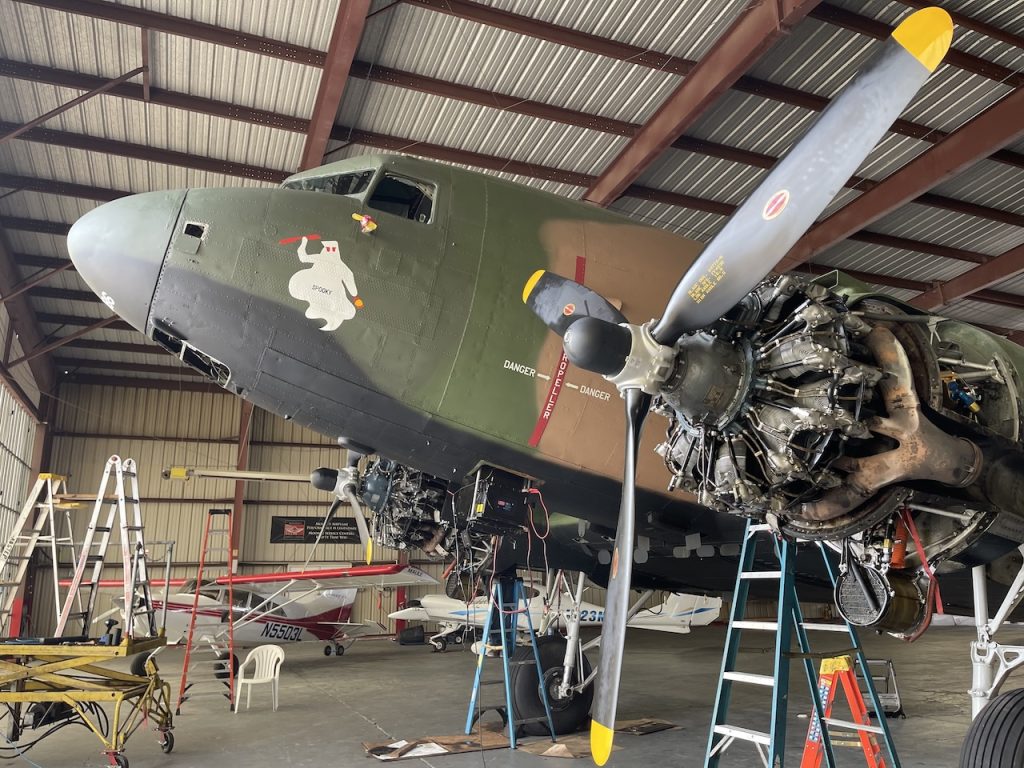
Converted from the venerable C-47 Skytrain, AC-47s were among the first fixed-wing gunships employed by the U.S. Air Force during the Vietnam War. Armed with three side-firing miniguns—each capable of firing up to 6,000 rounds per minute—the aircraft provided close air support for ground troops. At night, these gunships would emerge from the darkness, circling their targets while unleashing streams of tracer fire and illumination flares, creating an unmistakable and ominous spectacle. It was this eerie, almost ghostlike presence that led to the nickname “Spooky,” which originated as a radio callsign but quickly became synonymous with the aircraft itself.
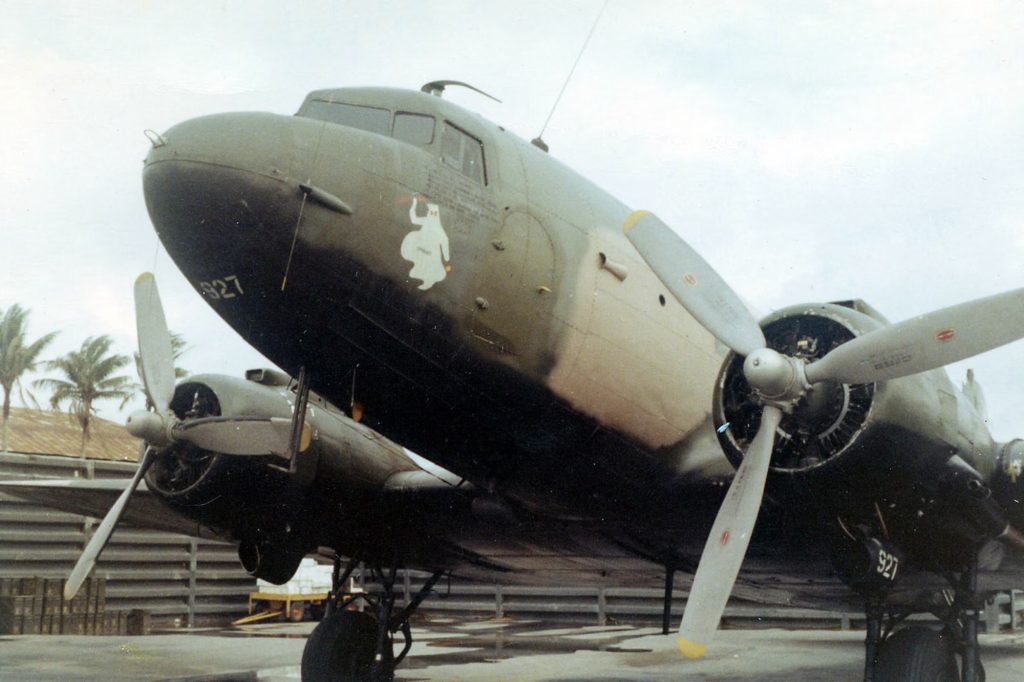
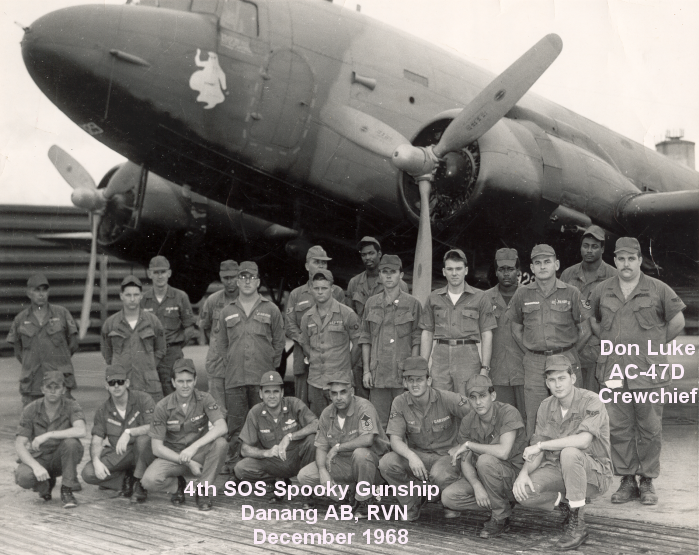
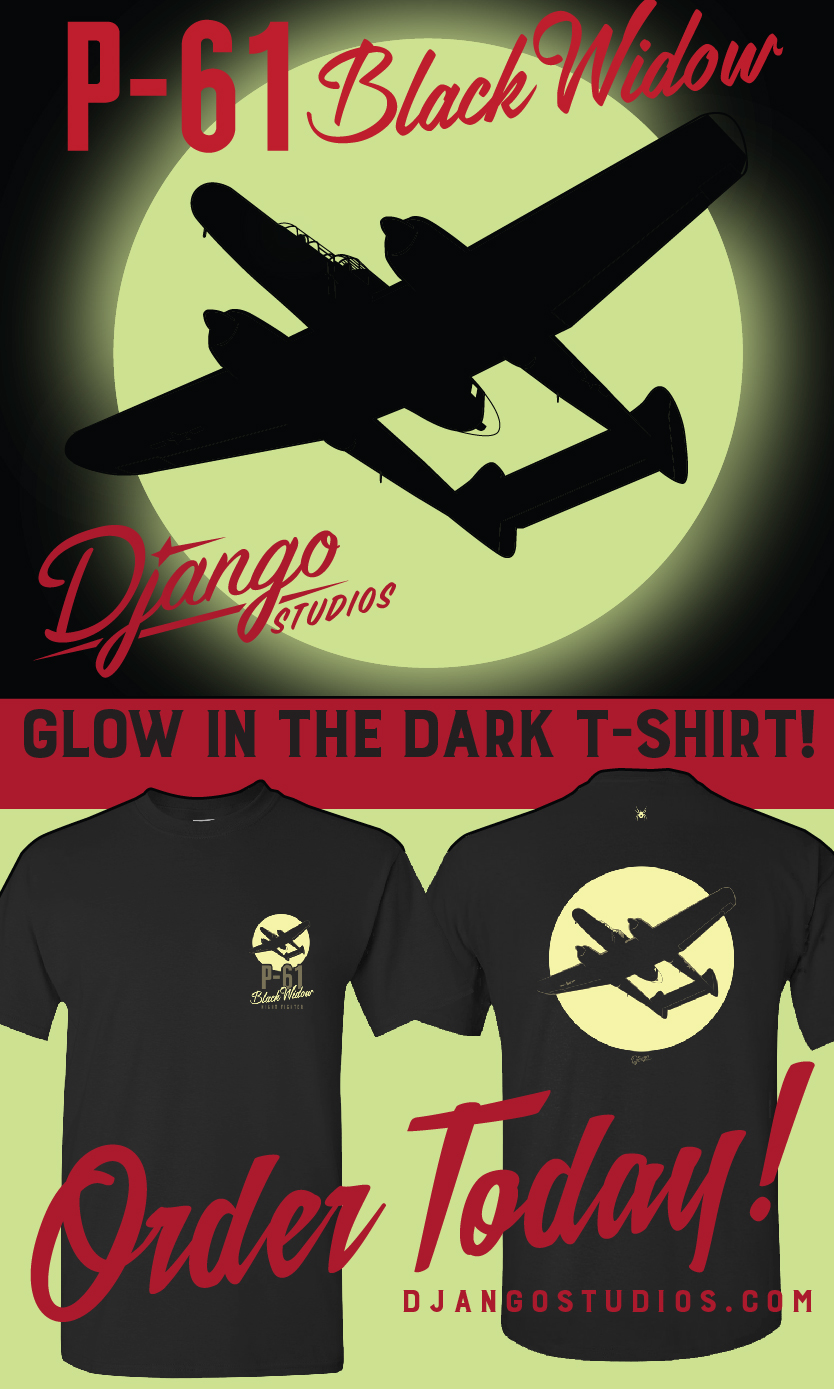
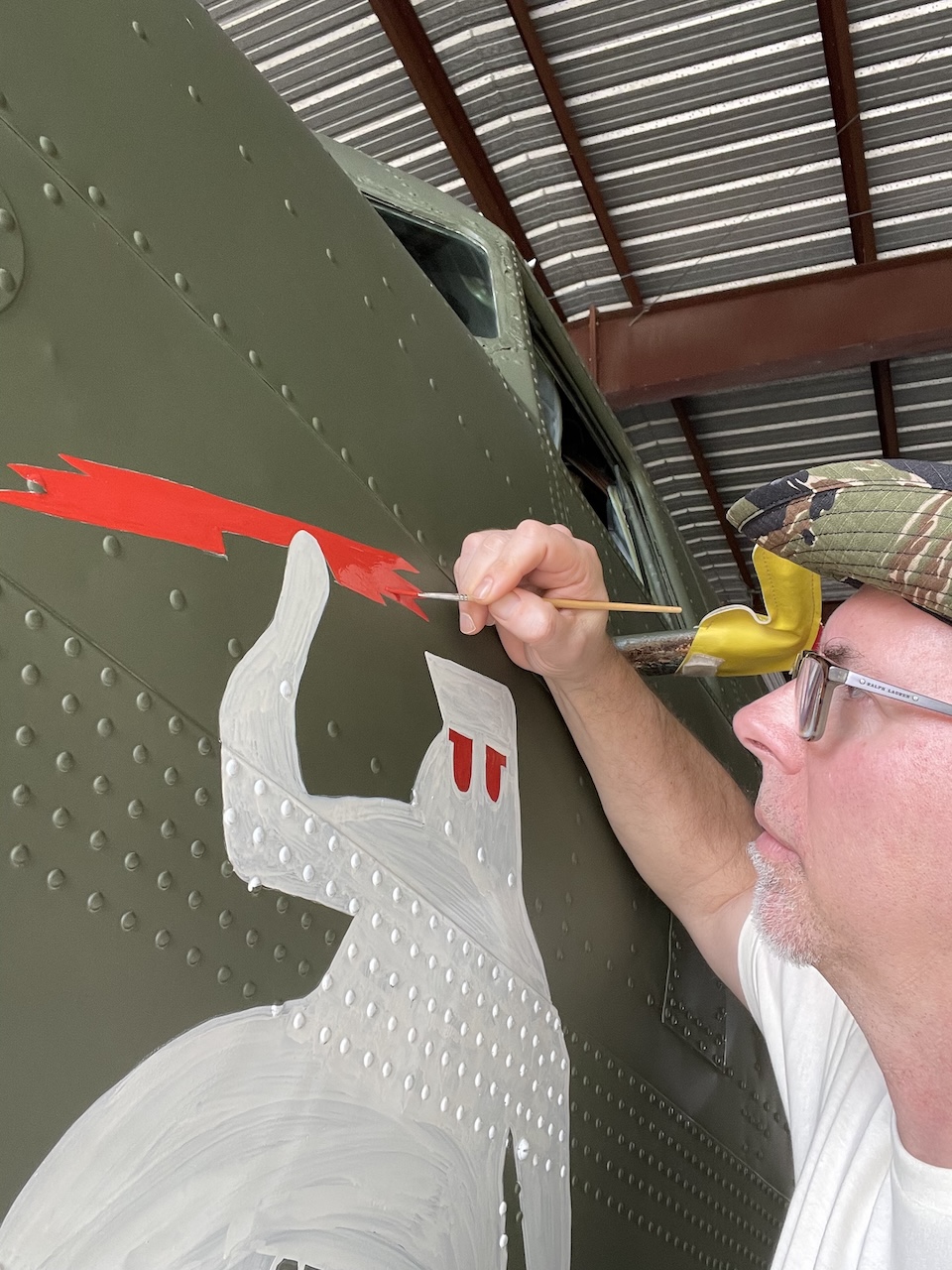
To bring that identity to life on the CAF aircraft, the Gulf Coast Wing turned to aviation artist and nose art specialist Chad Hill of Django Studios, whose previous work includes projects such as That’s All, Brother. Hill’s involvement began organically; after seeing news of the aircraft acquisition, he reached out, noting that he had already begun concept work for a similar project. His personal connection to the subject—his father served in Vietnam and often recounted stories of AC-47s operating at night—made the opportunity especially meaningful.
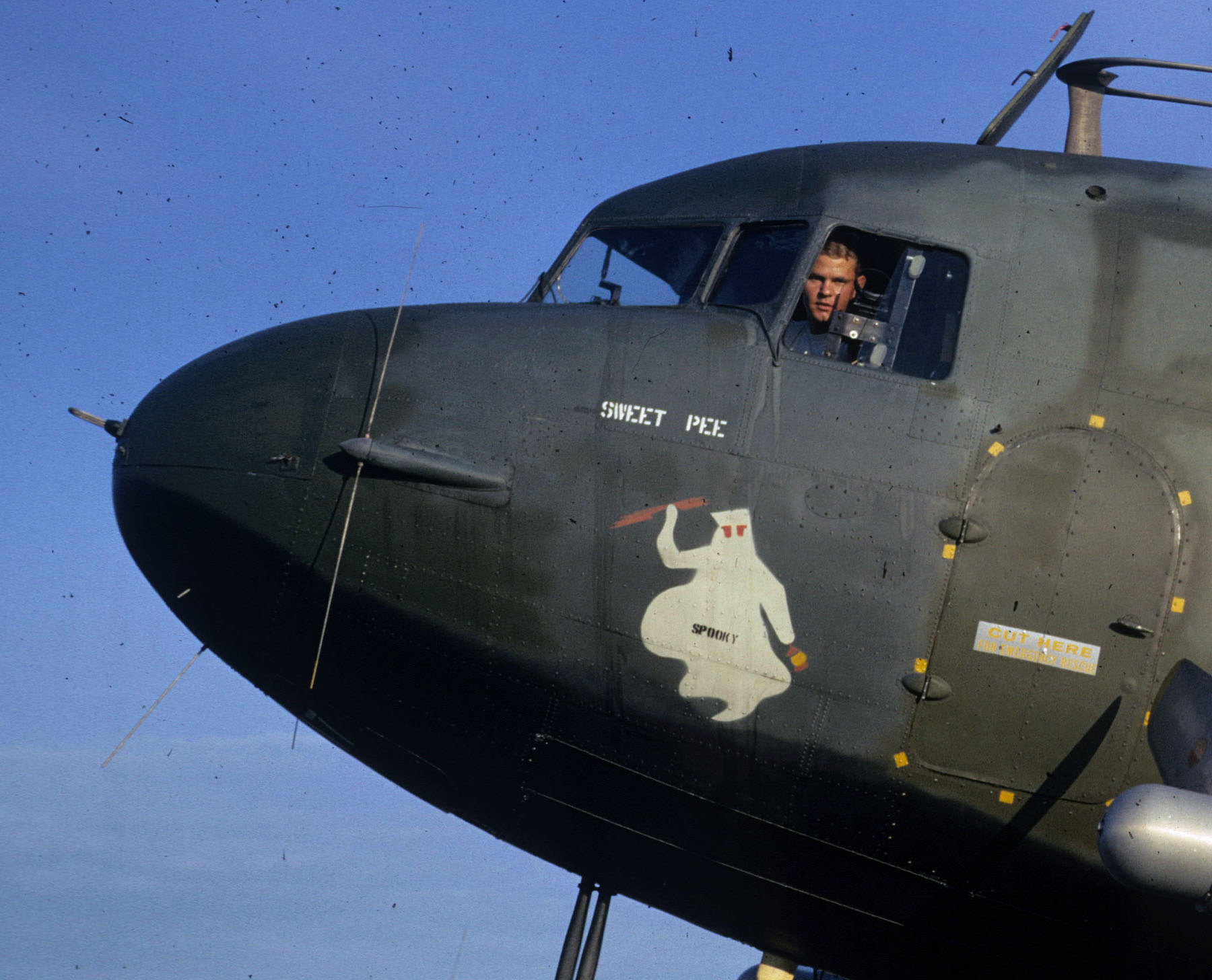
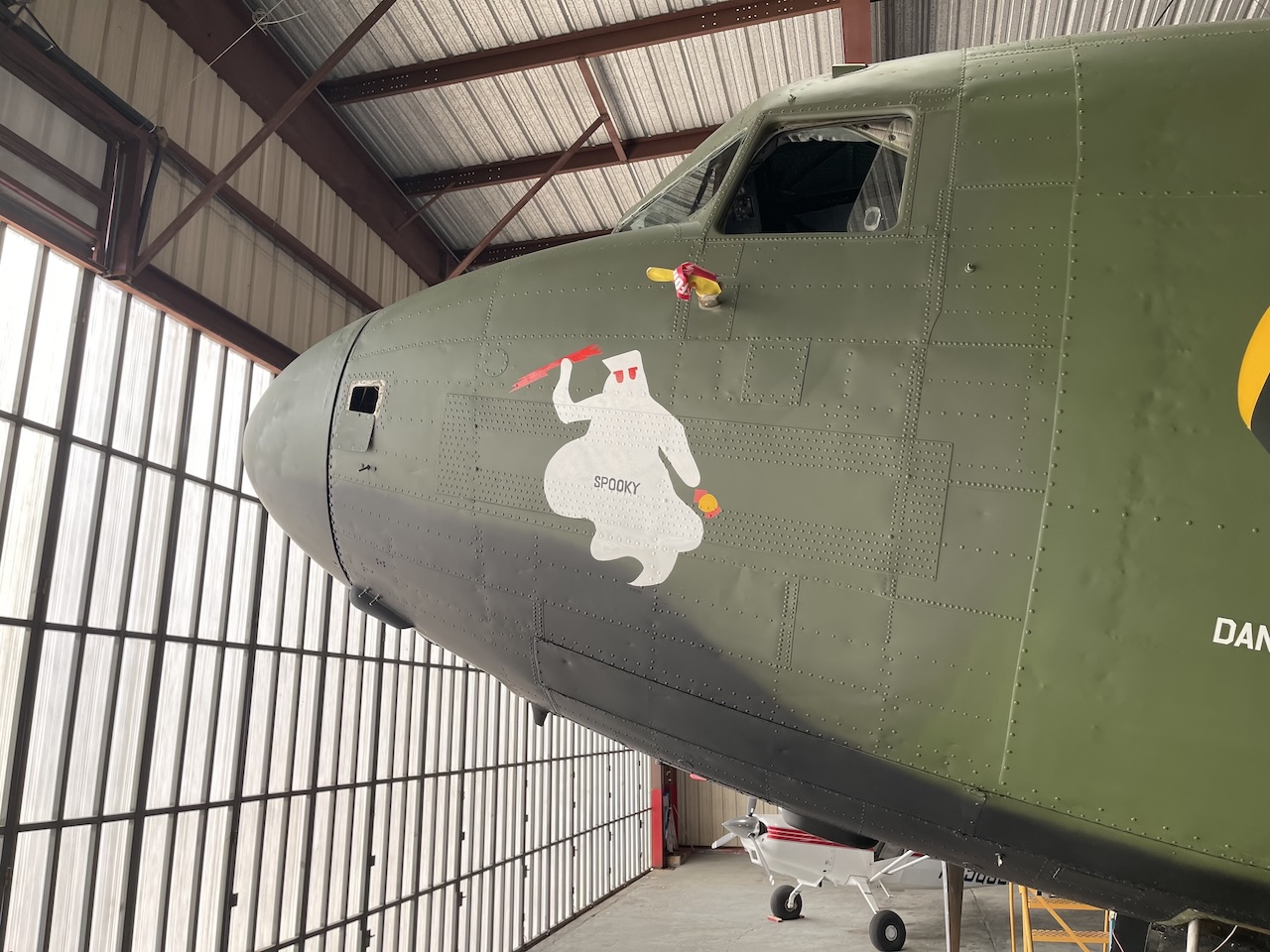
In preparing the artwork, Hill undertook extensive research into period photographs of AC-47s in Vietnam, carefully studying the placement, scale, and orientation of the iconic ghost imagery. He noted that many restorations fall short of historical accuracy, something he aimed to avoid by referencing multiple aircraft rather than a single example. The result was a design that represents the broader fleet of “Spooky” gunships, with the artwork positioned for both historical fidelity and visual balance.
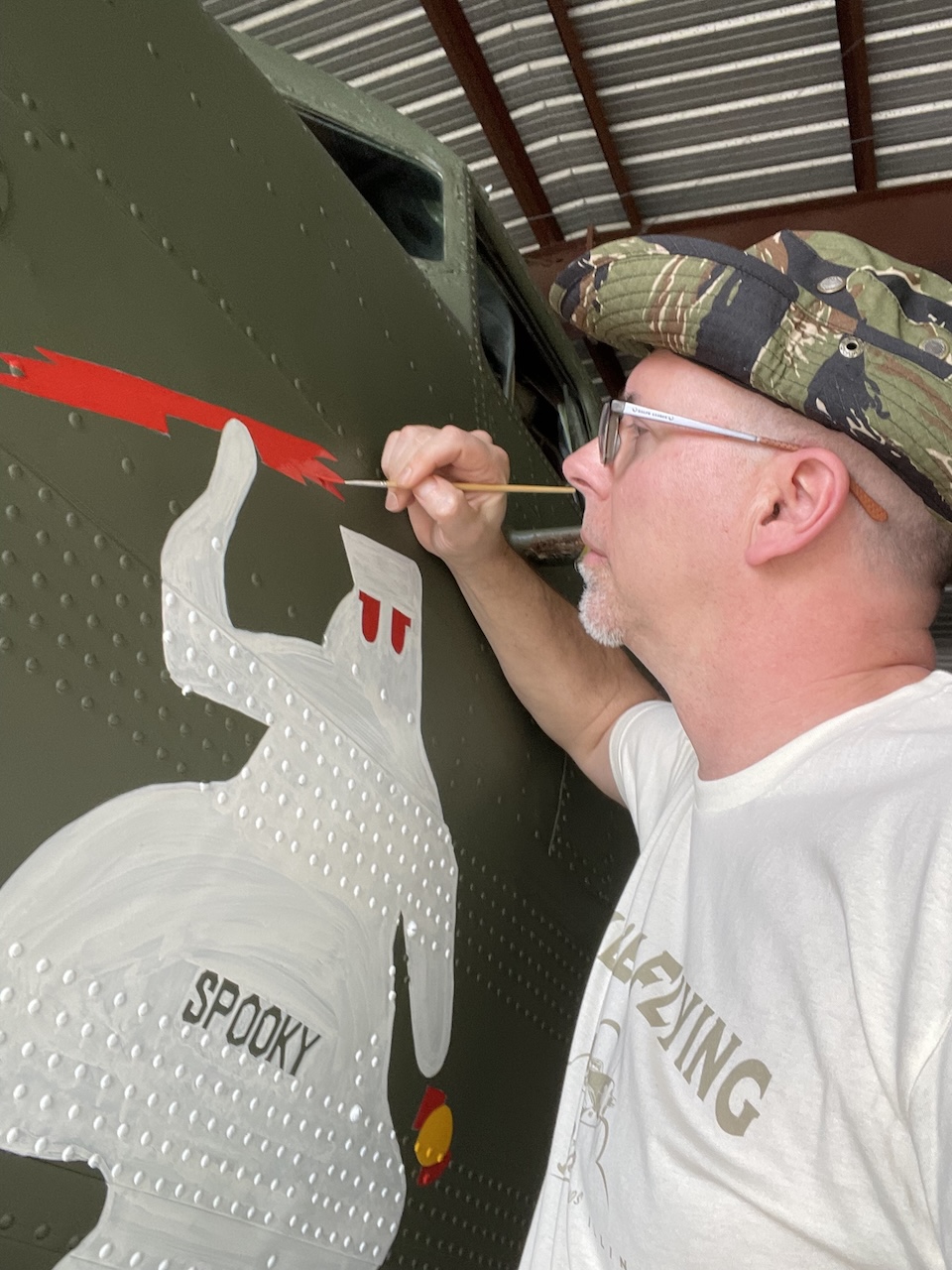
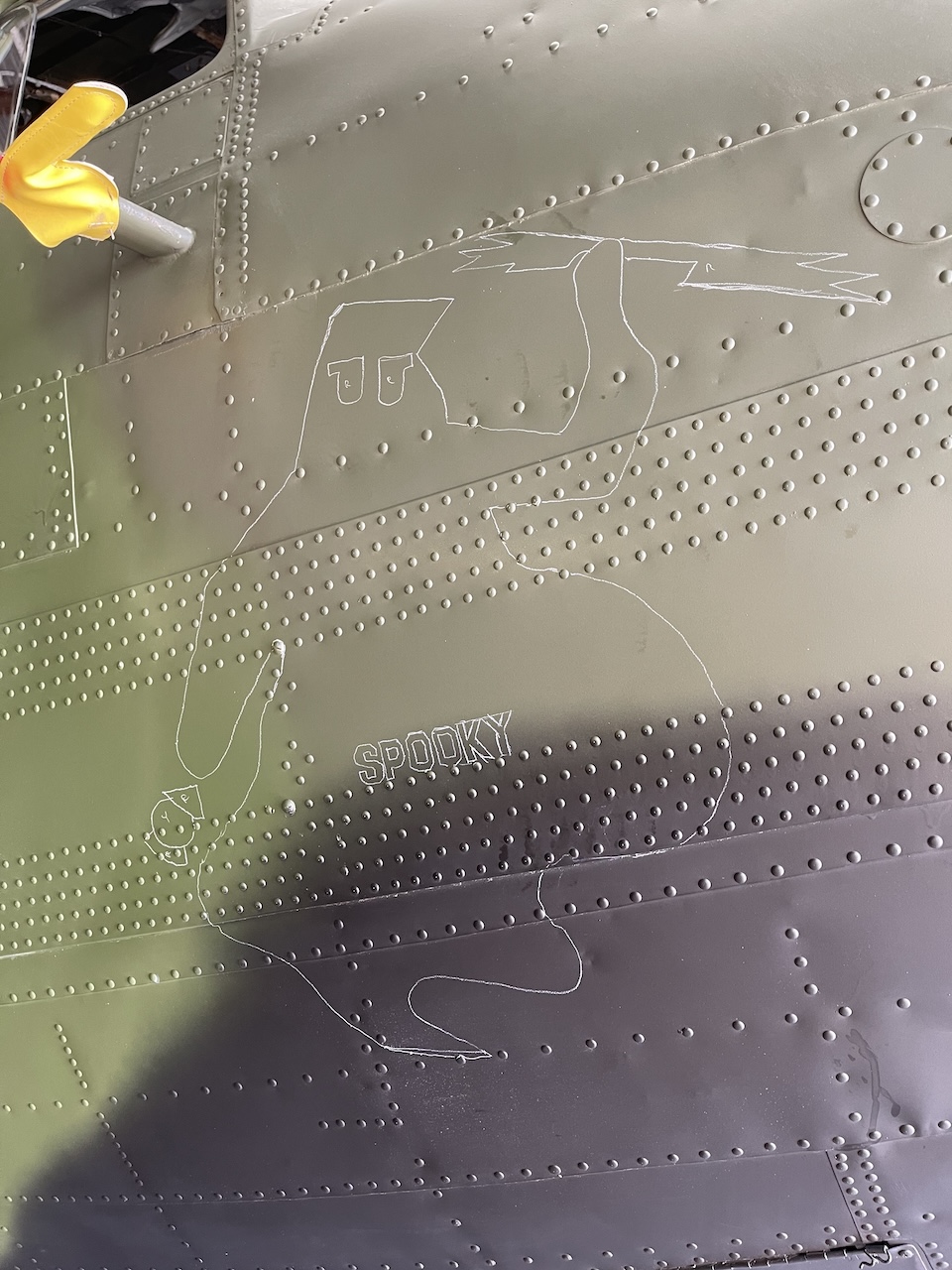
While original nose art was typically applied using sprayed stencils—resulting in variations from aircraft to aircraft—Hill opted for a more durable and refined approach. Using 1 Shot sign enamel paint, he hand-painted the design after projecting and outlining it on the fuselage to ensure precise placement. The process began with red, followed by white and yellow layers, and concluded with the bold black “Spooky” lettering. The finished result captures the spirit of the original artwork while ensuring longevity for the CAF’s flying tribute.
Today, the aircraft serves not only as a striking restoration but as a platform for storytelling—honoring Vietnam veterans and preserving the legacy of the AC-47 gunships that once illuminated the night skies of Southeast Asia. The tradition of applying nose art to aircraft dates back to the earliest days of military aviation. In World War I, fabric-covered aircraft were often adorned with simple markings such as shark teeth, while World War II saw an explosion of creativity, including pin-up art, cartoon characters, and unit insignia. Over time, nose art became a defining symbol of aircraft identity and crew pride—a tradition that continues today through restorations like the CAF’s AC-47 “Spooky.” To learn more about the CAF Gulf Coast Wing, you can visit their website or check out their page on Facebook. To learn more about Chad Hill and Django Studios, visit www.djangostudios.com.