







(Image credit: VAN)
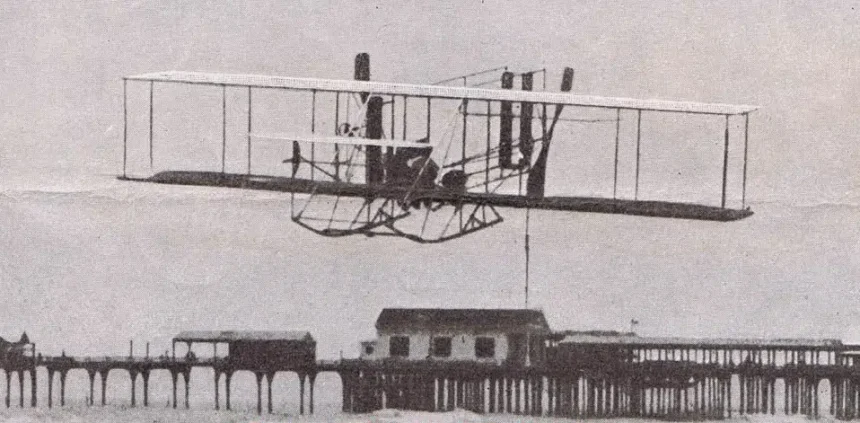
On this day in aviation history, 115 years ago (July 9, 1910), the first flight to reach a mile above Earth’s surface was successfully completed. Pilot Walter Richard Brookins was the man behind this milestone, accomplishing the feat in a Wright Model A. Brookins’ historic flight took place during the 1910 Atlantic City Aero Meet in Atlantic City, New Jersey.

Brookins took off from the Atlantic City Airport at 6:07:30 p.m. and began his ascent into aviation history. Just a month earlier, he had set the world altitude record at 4,380 feet in Indianapolis, Indiana. There was no stopping this determined aviator. Over the next 56 minutes, Brookins made large, gradual, two-mile climbing circles above the airfield. His trusty Wright Model A kept pushing skyward. His altitude was tracked by a Richard Frères recording aneroid barometer (barograph), serial number 48188. At approximately 7:04 p.m., Walter Brookins reached the one-mile mark.
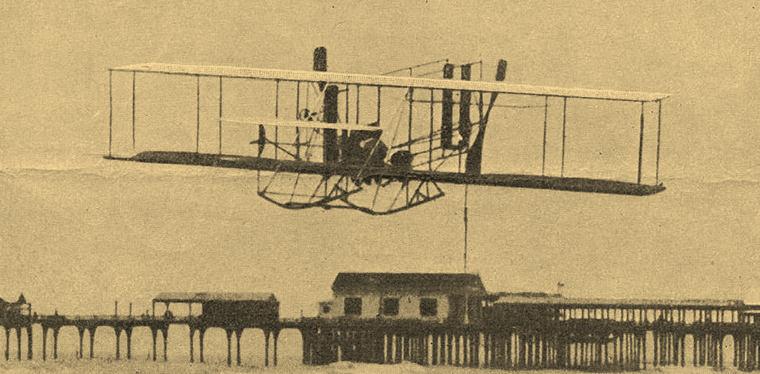
After reaching the “summit,” Brookins began a steep spiral descent. He landed safely at 7:11 p.m. The record had been set: Brookins had officially flown higher than any pilot before him. His altitude was confirmed on the ground by engineers from the local Atlantic City firm Ashmead & Hackney. Using triangulation and surveying transits, the team monitored and approximated his altitude throughout the flight.
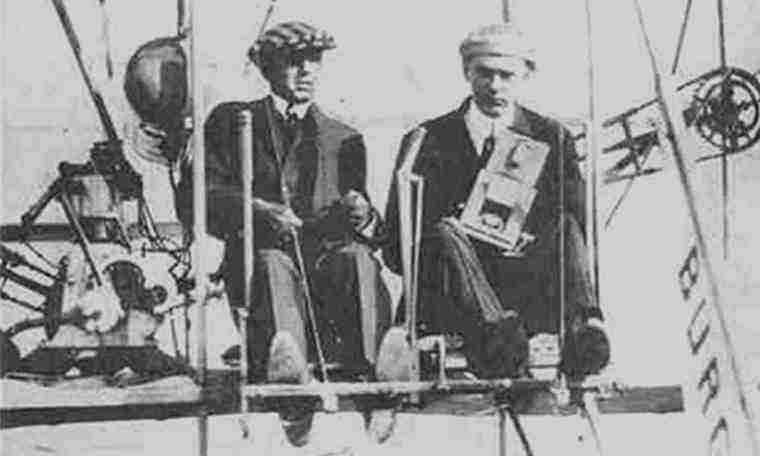
As a result of his record-breaking climb, Walter Brookins was awarded $5,000. But the money was secondary to the pride of being the first human to fly a mile above Earth’s surface—the highest-flying pilot alive at that time. Stories like Brookins’ must be remembered and shared. Although records during the “Golden Age” of aviation were often surpassed quickly, every aviator risked life and limb to advance the field. Even if their achievements lasted only a day, their efforts played a vital role in pushing aviation forward. We must never forget that.









Well, the first pilot to get to that altitude in fixed wing and/or powered flight categories. Balloonists had been looking down on people from much higher and way longer 🙂 🙂
Actually 1 statite mile is 5,280 ft while 1 nautical mile is 6,020 ft. So, he exceeded 1 nauticsl mile with 6,175 so the comment that he reached the 1 mile mark with 6,175 ft is incorrect unless the USA has its own definition of 1 mile.