





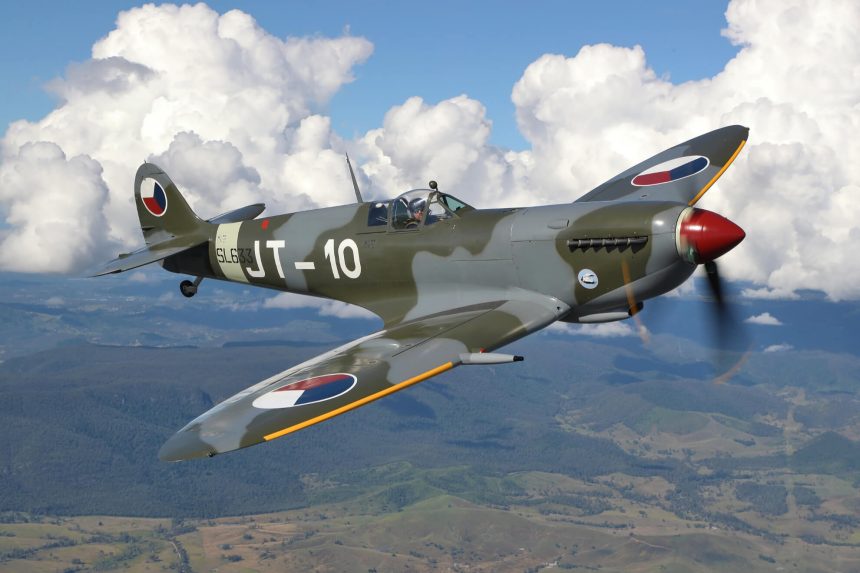

A historic Supermarine Spitfire LF Mk. IXe is set to arrive at Točná Airport, marking the symbolic return of an aircraft closely tied to Czechoslovak aviation history. The arrival of this legendary fighter will form a key highlight of the airport’s 80th anniversary celebrations. The airplane was previously owned by the Seattle-based Historic Flight Foundation until 2023, when it was sold to an Australian collector. The airplane was recently sold by Platinum Fighter Sales to its new Czech owner.
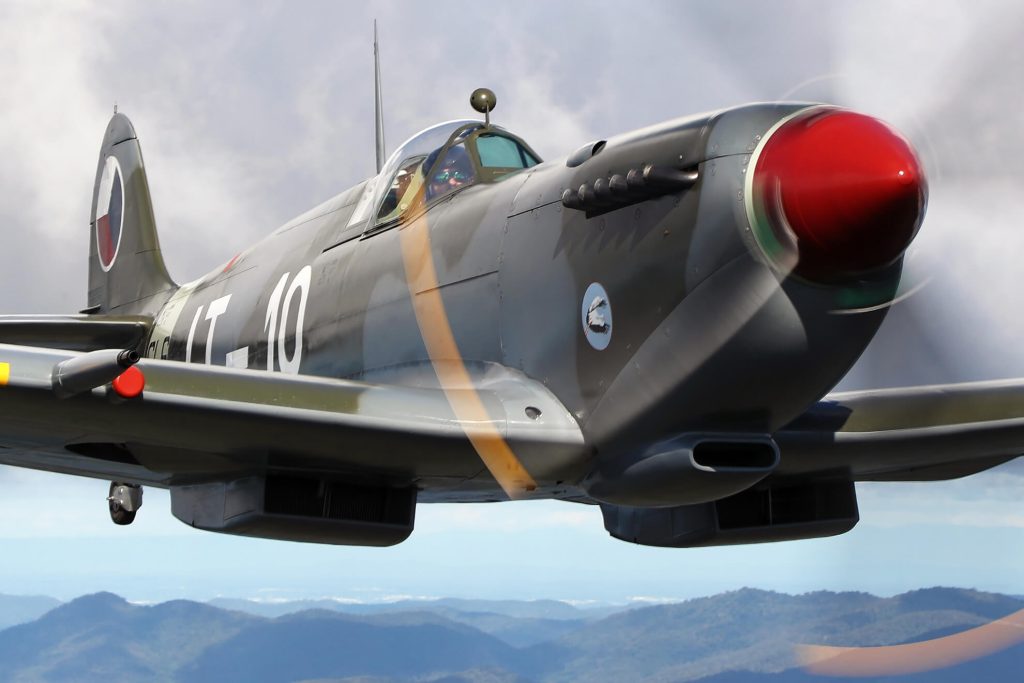
The aircraft, originally built at the Vickers Supermarine plant at Castle Bromwich, England, was delivered to the Royal Air Force in June 1945 as SL633. It was soon assigned to No. 312 (Czechoslovak) Squadron RAF, a unit originally formed at Duxford in 1940. Following WWII, it became one of 54 Spitfires transferred to the re-established Czechoslovak Air Force, where it served with No. 2 Czech Fighter Wing and later as a trainer with the 4th Air Regiment, carrying the fuselage code JT-10.
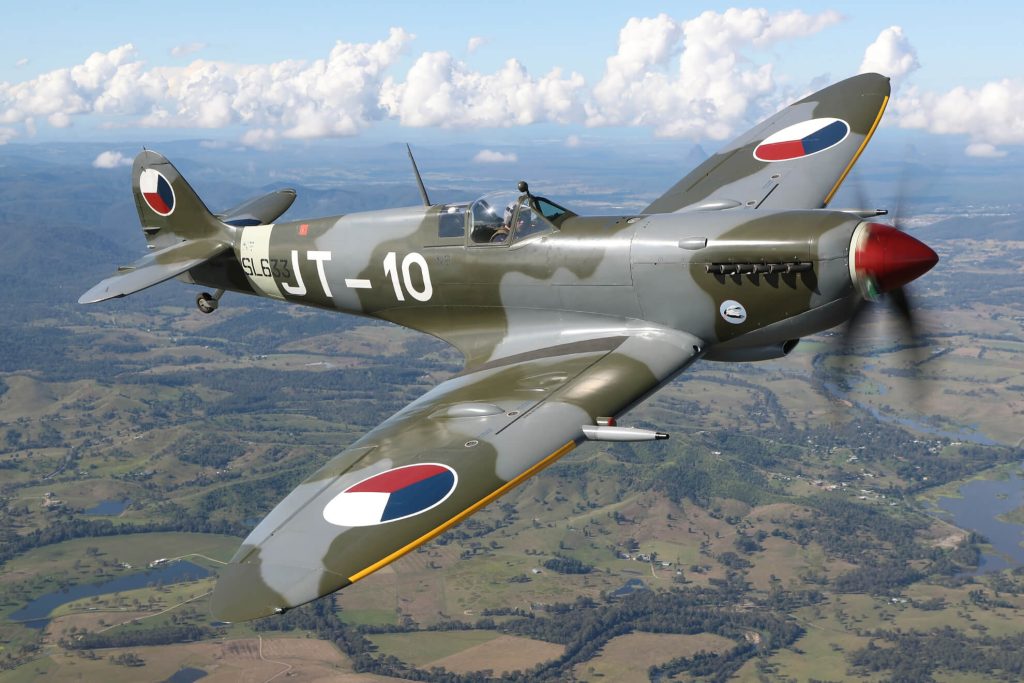
Among those who flew the aircraft was Flight Lieutenant Karel Pošta, a distinguished Czechoslovak RAF pilot. After escaping occupied Czechoslovakia in 1939, he made his way to the United Kingdom and joined No. 312 Squadron in September 1940. Over the course of the war, he flew 281 operational sorties, including air defence over Britain, offensive sweeps across occupied Europe, and bomber escort missions over Germany. Promoted to Flight Commander in 1944, he was awarded the Distinguished Flying Cross. After the war, Pošta returned home and flew this aircraft in aerobatic displays before later settling in Britain.

The Spitfire’s postwar journey reflects the shifting realities of the late 1940s. In 1948, it was among the aircraft supplied by Czechoslovakia to the newly formed Israeli Air Force, where it served as serial 20-42 after conversion to a photo-reconnaissance role. It later passed to the Myanmar Air Force, where it operated in a counter-insurgency capacity. Following a wheels-up accident, the aircraft spent years on static display in Mandalay before being recovered by private collectors and returned to Duxford in 1999 for restoration.
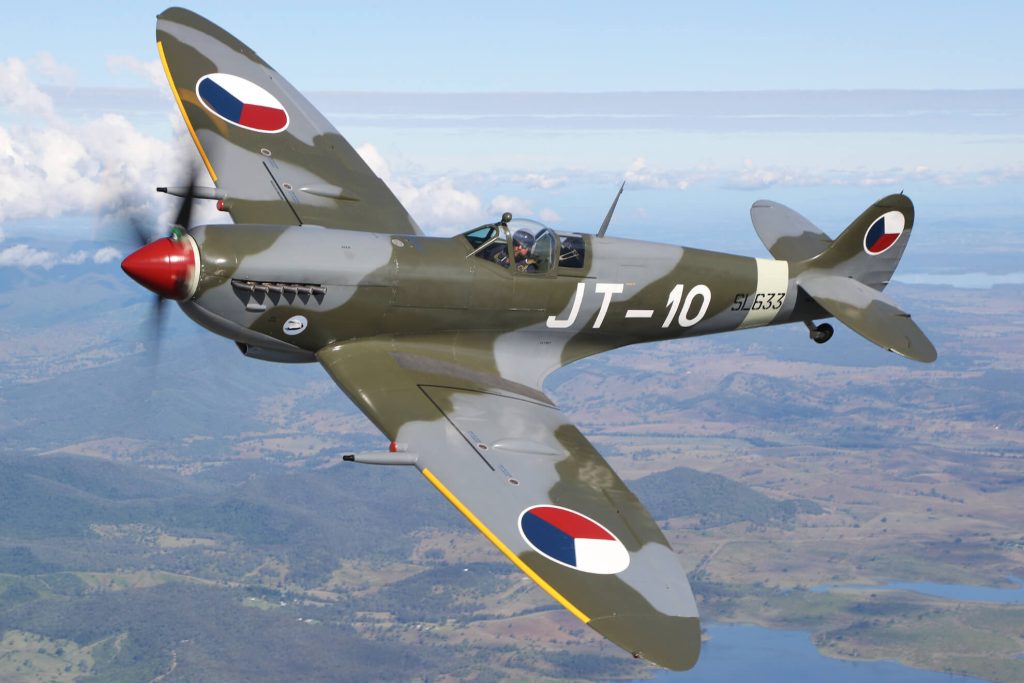
The Historic Flight Foundation acquired the aircraft in 2007 and restored it to its 1945 configuration, returning it to the air in 2010. In 2015, it was disassembled over three days—with assistance from Spitfire specialists from Duxford—and shipped to the United Kingdom, where it participated in 11 Battle of Britain memorial events. It was subsequently returned to the United States and reassembled in just three days in early 2016. More recently, the aircraft underwent further restoration in Australia following minor damage sustained in 2023. Now registered as VH-RAF, it remains airworthy and is currently en route back to Europe—a journey expected to take approximately two months.
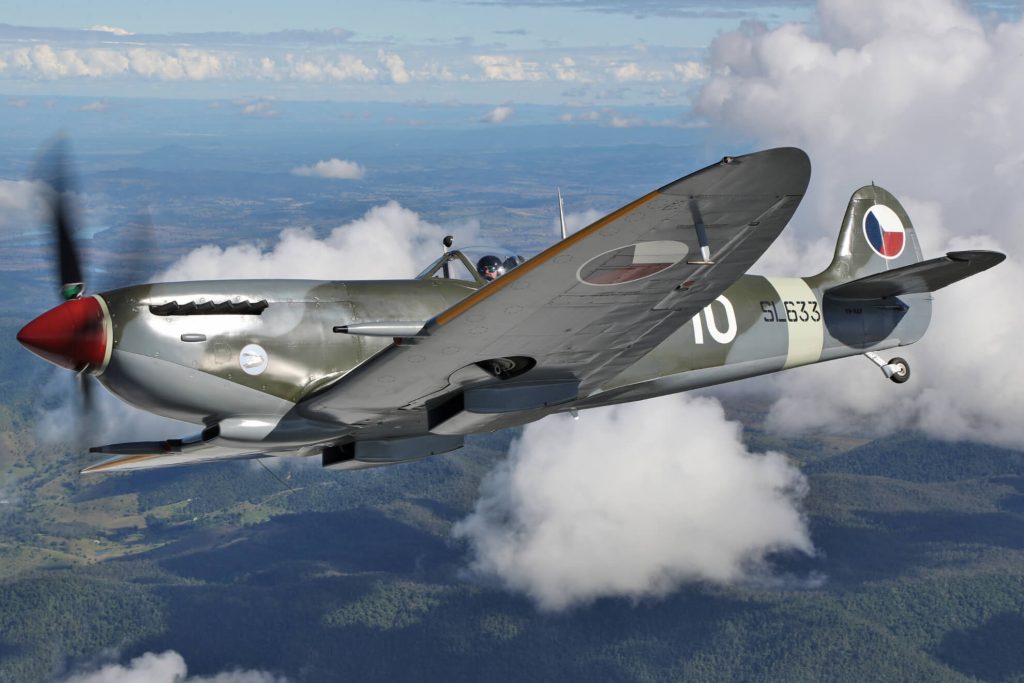
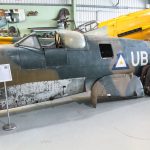
Its arrival at Točná represents more than the return of a historic aircraft. With identities including SL633 (RAF), DU-K and JT-10 (Czechoslovak Air Force), 20-42 (Israeli Air Force), and UB-425 (Myanmar Air Force), the Spitfire carries a uniquely international story. Yet its connection to Czechoslovak pilots gives this homecoming particular significance. “We see the return of a Spitfire with ties to Czechoslovak pilots as an extraordinary event not only for our airport, but also for all fans of aviation and history. We are especially pleased that this moment coincides with the 80th anniversary of Točná Airport,” said Michal Masař, PR Manager of Točná Airport.
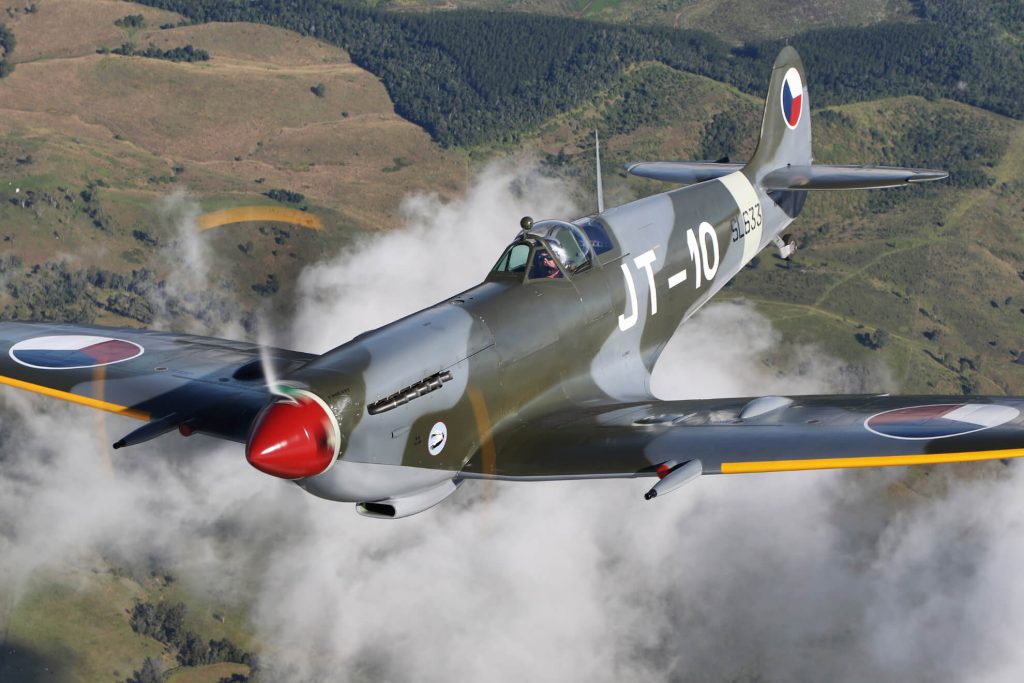
The aircraft is expected to be presented to the public in the second half of this year, subject to transport and logistical considerations. Točná Airport will provide regular updates on the aircraft’s journey, preparation, and arrival through its social media channels, allowing enthusiasts to follow the return step by step. This year marks 80 years since the founding of Točná Airport. The anniversary program will include traditional open hangar days and a range of public events, with the arrival of the Spitfire set to be one of the season’s highlights. For more information about Točná Airport, visit www.tocna.cz.





BEAUTIFUL PLANE, BEAUTIFUL STORY!
I grew up under the sound of Spitfires and Hurricane in the skies over my home in Canterbury Kent underneath the Battle of Britain. I have flown more miles than anyone that’s from my first experience being pushed into a Mosquito by my grandmother..my first flight from Lynmpne Airport was in a Tiger Moth in 1953 my first Atlantic crossings was in an Argonaut the UK version of a DC4b in 1958 taking 19hrs to Idlewild Airport o. Long Island all this time I was in love with the Spitfire until in 1976 I was on the inaugural Washington Dulles Airport to London Heathrow 25th May 1976 since then in total I flew 15 million miles and 718 flights in Concorde. I have flown with the Red Arrows and the last flight of the Phantom F4 from RAF Wattisham I have been to see the Spitfire at the wonderful Battle of Britain Memorial at Folkstone. Yet I have never flown in Spitfire who I now share my love of with that other most beautiful aircraft Concorde. I Am hoping this year to fly in a two seater and hear those amazing Merlin Engines from the inside.
Best wishes Fred Finn
A great Plane, flown by many International Pilots.
And the first of those mentioned, the Czech’s, made a telling contribution to the RAF and The Battle of Britain.
Were it not for all the Volunteer Pilots, from round the Globe, The Battle of Britain might have had a very different outcome.
*** The Roll of Honour ***
‘The Few’ refers to the 2,927 pilots and aircrew who are officially recognised as having taken part in the Battle of Britain between 10 July and 31 October 1940. Of these, 2,353 were from the United Kingdom, while 574 came from overseas, representing countries across the Commonwealth and Allied nations, including Poland, New Zealand, Canada, Czechoslovakia, Australia, Belgium, South Africa, France, Ireland, and the United States.
To be counted among ‘The Few’, each individual flew at least one authorised operational sortie with a recognised unit of the Royal Air Force or Fleet Air Arm during the official battle period. These sorties were part of Britain’s sustained defence against the Luftwaffe’s attempt to achieve air superiority ahead of a planned invasion.
Tragically, 544 of these airmen were killed during the battle itself, and their names are often marked with an asterisk in official rolls of honour. A further 791 were killed in action or died in the course of their service before the end of the war, and these losses are also solemnly recorded.
Today, ‘The Few’ are remembered not only for their role in a defining moment of the Second World War but as a symbol of collective courage, sacrifice, and international co-operation in the face of overwhelming odds.
*** Courtesy of The … battleofbritain1940.com Site ***
(With a full listing of Pilots and Countries)
1940 … Invasion… and let’s not forget … ‘Dad’s Army’ … The Home Guard
And how many know that TWO such Units were Volunteer ….. Americans!
Formation of American Home Guard Units
1st American Squadron of the Home Guard
Date Established: June 1, 1940
Location: London
Composition: Comprised Americans living in Britain who chose to stay, despite government warnings to return home.
Average Strength: 60-70 members
Command: Led by General Wade H. Hayes
Purpose and Role
The 1st American Squadron was part of the broader British defense strategy during World War II. These units were formed to bolster local defenses against potential German invasion and to support the British military efforts.
Support and Contributions
Equipment Donations: In November 1940, a committee was established to collect firearms and other equipment from American civilians to support Home Guard units, including the 1st American Squadron.
Types of Equipment: Donations included pistols, rifles, and shotguns, with a focus on police-issued revolvers from U.S. city police departments.
The establishment of American units within the Home Guard highlighted the international cooperation and solidarity in the face of the threat posed by Nazi Germany during the war.