







Few aviation families can trace their history across as many eras of flight as the Philpotts. What began with Lt. Col. James A. Philpott’s early flying career in the 1920s grew into a family connection to military aviation, the airline industry, air racing, and aircraft restoration that continues today. That history is the subject of an online archive assembled by airline captain Michelle “Micki” Sharp and her daughter, Eris. The collection contains photographs, documents, and family records connected to Philpott’s military and airline careers, along with material documenting the aviation activities of later generations of the family.
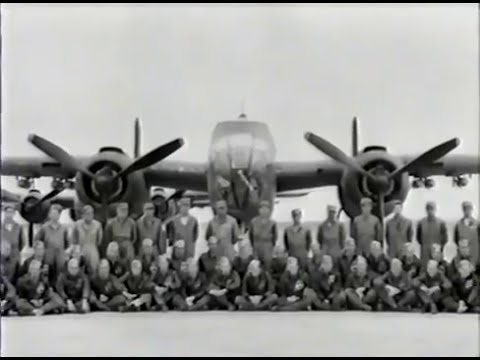
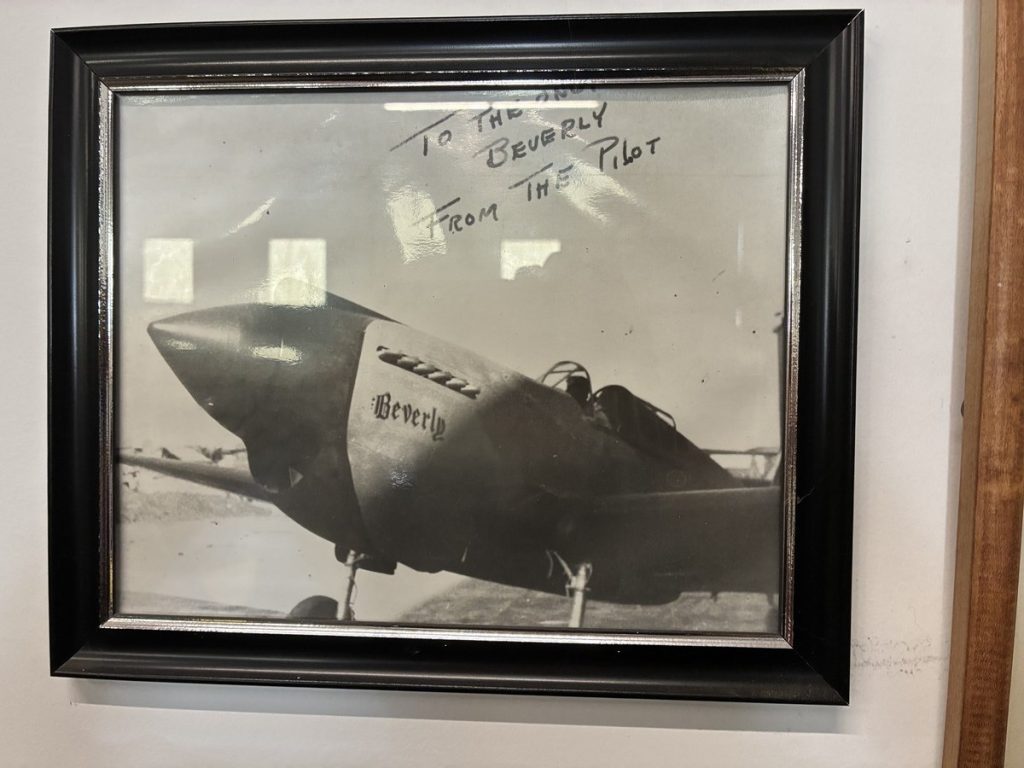
Philpott took command of the 490th Bombardment Squadron on October 20, 1942, when the unit was activated during WWII. The squadron later became known as the “Burma Bridge Busters” for its attacks against Japanese transportation networks in the China-Burma-India theater. According to family records, Philpott’s early military flying included time in P-40 and early P-51 fighters before the squadron’s transition to B-25 Mitchell bombers.
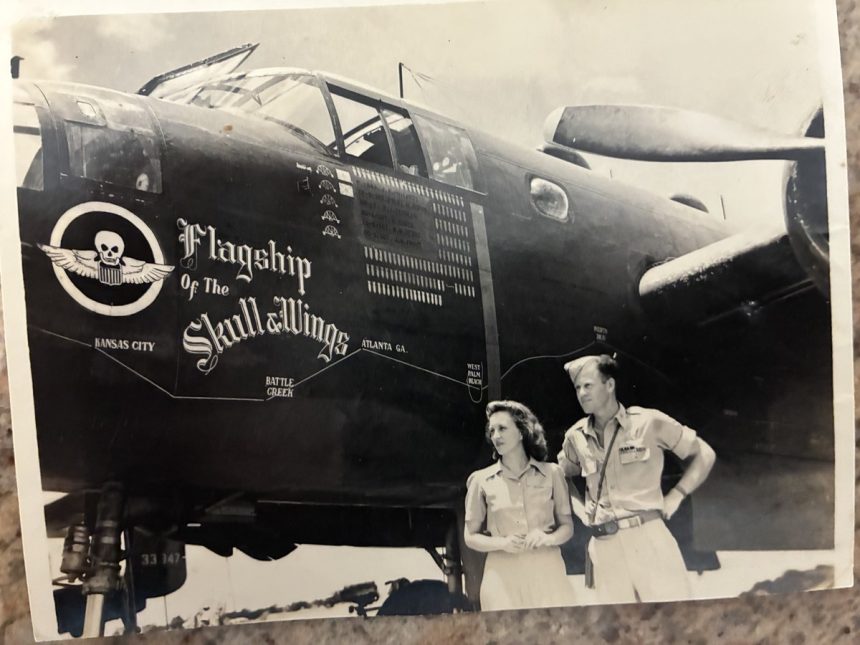
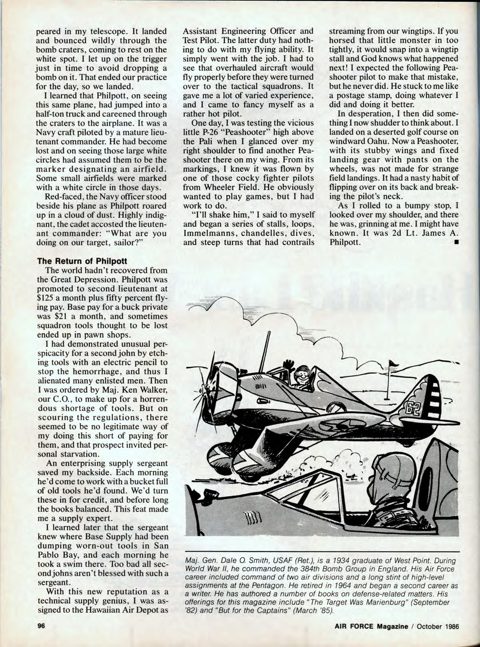
The squadron’s Skull and Wings insignia was adapted from Philpott’s personal mark and remains associated with the unit’s history. His reputation among those who served with him endured long after the war. In a 1986 Air Force Magazine article, Maj. Gen. Dale O. Smith opened a memoir about the squadron commander with the observation, “There are major legends and minor legends, and then there was Philpott.” Among the materials preserved by the family are photographs from Philpott’s wartime service, including images of his command B-25 during a war-bonds tour. The aircraft carried the names of tour-stop cities painted on its nose, and one photograph shows Philpott alongside his wife, Beverly, during the tour. Family-held footage from the 490th Bombardment Squadron was later used in the 2003 History Channel documentary Burma Bridge Busters, which credited the material to the Philpott family collection.
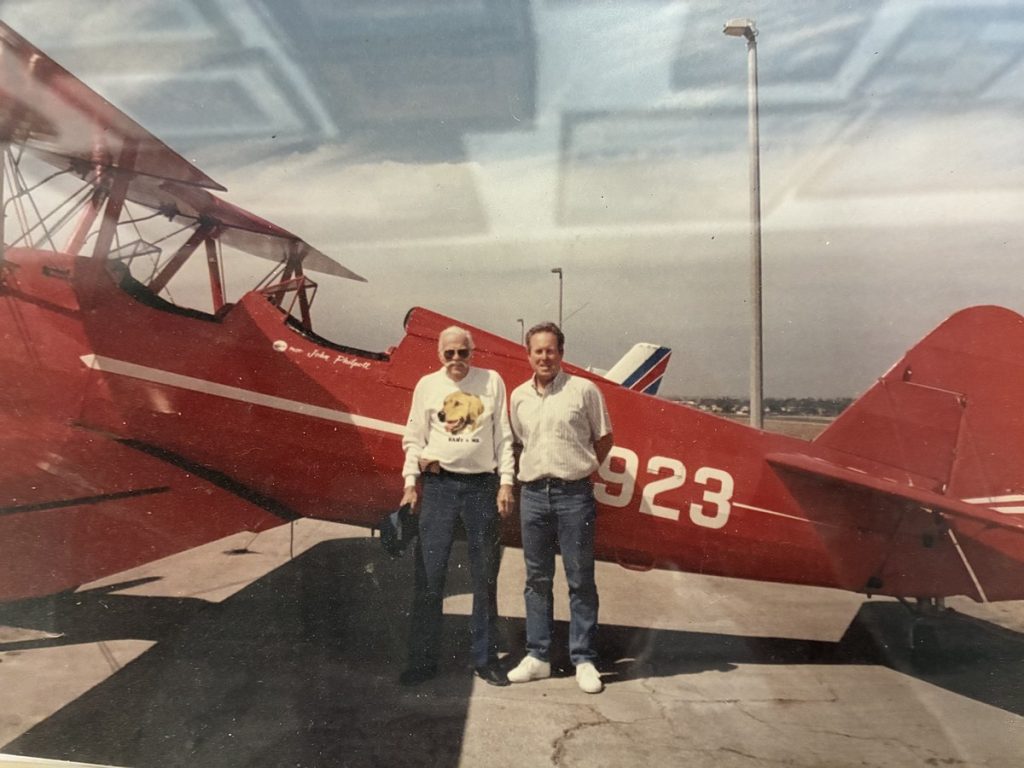
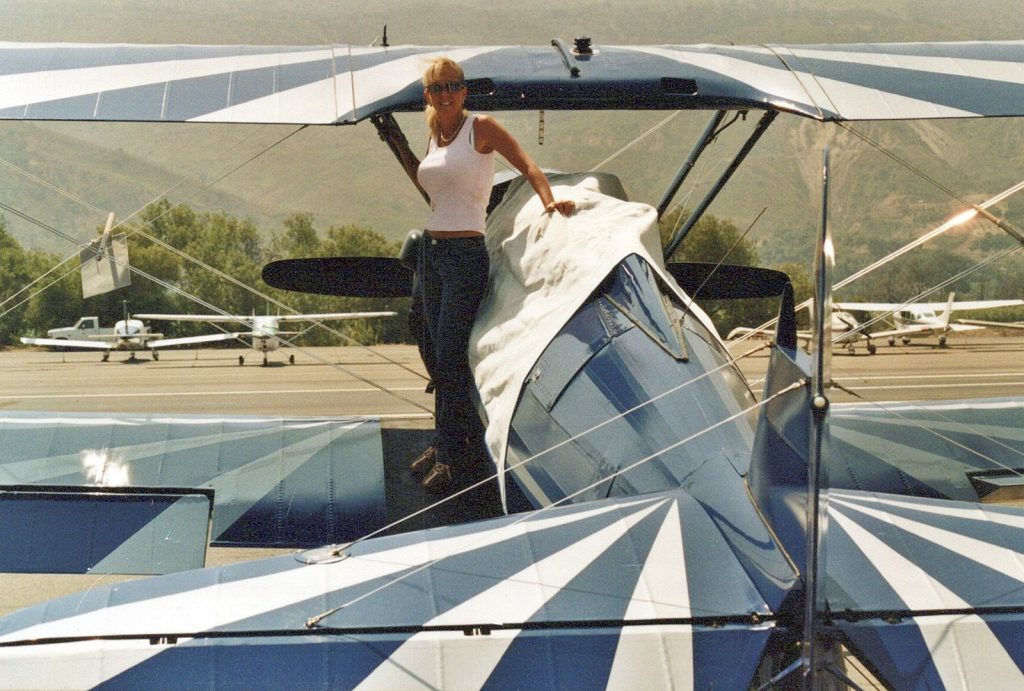
Following the war, Philpott joined Trans World Airlines and spent years flying during one of the most significant periods in commercial aviation. Family records indicate he flew the Lockheed Constellation during his airline career before retiring from TWA in September 1972. The family’s aviation activities extended well beyond the airline industry. Operating from Torrance Airport in California, Philpott ran an aerial advertising business that used two 450-horsepower Boeing Stearman PT-17 biplanes. The aircraft later appeared in the fold-out poster included with early pressings of the Beach Boys’ Endless Summer album. One Stearman, flown by Philpott’s son John, towed a “Beach Boys” banner, while the other, flown by Philpott, carried an “Endless Summer” banner.
Another chapter documented in the family collection involves a North American T-6 modified by Philpott and his brother-in-law, Perry Brown. According to family records, the aircraft was fitted with an inverted Ranger engine and was intended to be flown by Jackie Cochran at the Cleveland Air Races. A surviving family photograph shows the aircraft at Torrance Airport. Additional photographs show Philpott with famed aviator Pancho Barnes at an aviation function in California.
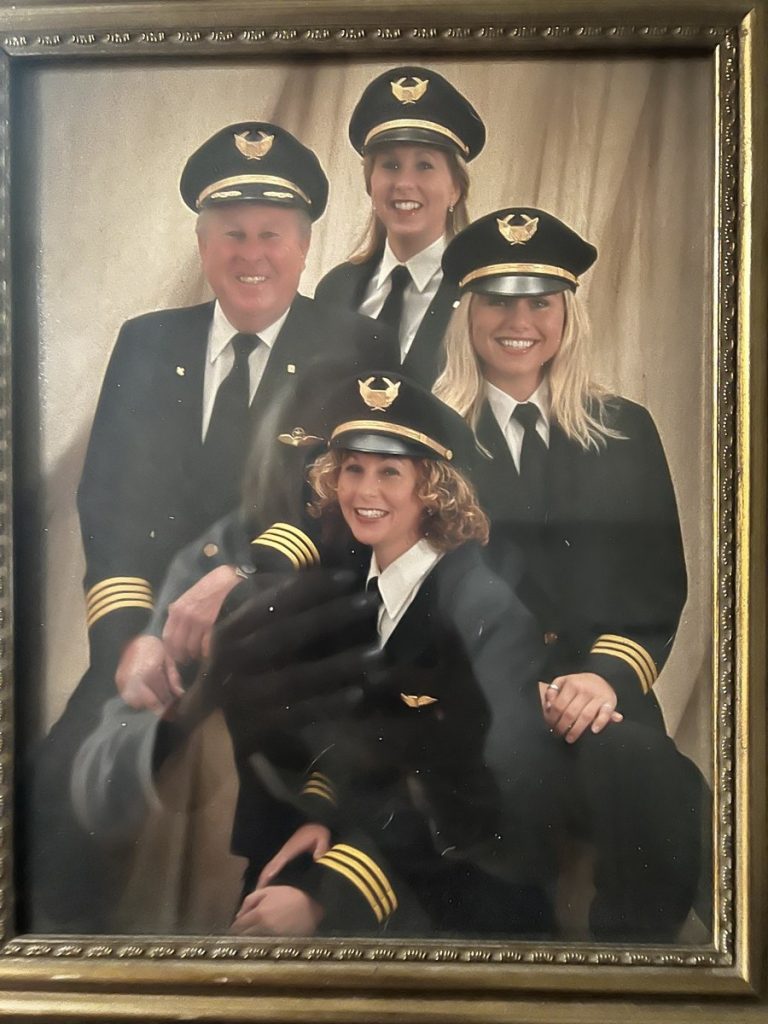
The collection also contains material linking the family to other notable figures in aviation history. Arnold Spielberg, father of filmmaker Steven Spielberg, served in the 490th Bombardment Squadron during WWII. A 1945 North American Aviation advertisement published in LIFE magazine celebrated the bridge-busting accomplishments of the squadron and has remained part of the family’s collection for decades. Aviation remained a profession within the family long after Philpott’s retirement. His son, Captain John Philpott, spent 42 years flying for Continental and United Airlines and retired at the top of United’s seniority list. He also earned an Airframe and Powerplant certificate and personally re-covered the family’s Stearman. Members of the third generation became airline captains as well, while a fourth generation has already entered professional flying careers.
One family story illustrates the transition between generations. In September 1972, Philpott was completing his final TWA flight from Honolulu to Los Angeles aboard a Boeing 707. At roughly the same time, his son John was being offered a position with Continental Airlines. By October of that year, one generation had retired from airline flying while the next had begun its own airline career. The archive traces the family’s involvement in aviation from the interwar years through WWII, the postwar airline boom, aerial advertising, air racing, and modern airline operations. Through photographs, documents, and personal records, it preserves a century of aviation history connected to one family and the people, aircraft, and events that shaped their lives in flight.








Very interesting article! Any more information on that P-40 he was in?
This is a truly remarkable and beautifully detailed account of a family’s enduring legacy in aviation. I deeply appreciate how the story connects generations of service and achievement, from early wartime efforts to modern commercial aviation, in a way that is both historically rich and personally meaningful. The narrative offers a powerful sense of continuity, dedication, and passion for flight, making it an engaging and inspiring read. It is a wonderful tribute to the Philpott family’s contribution to aviation history and the lasting impact of their shared commitment across a century of flight.