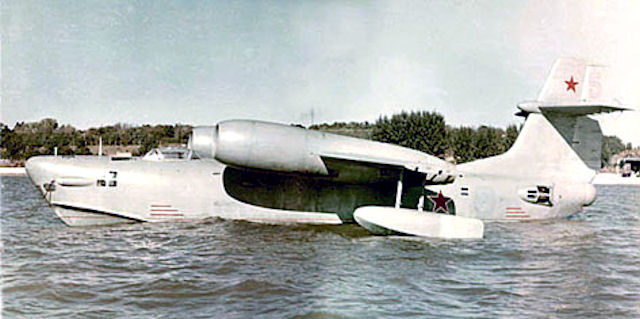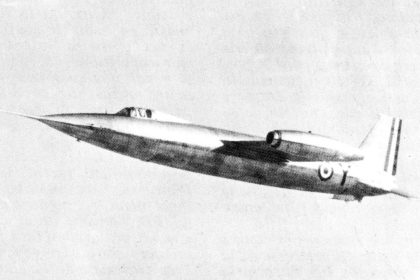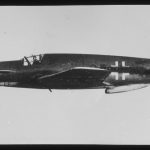
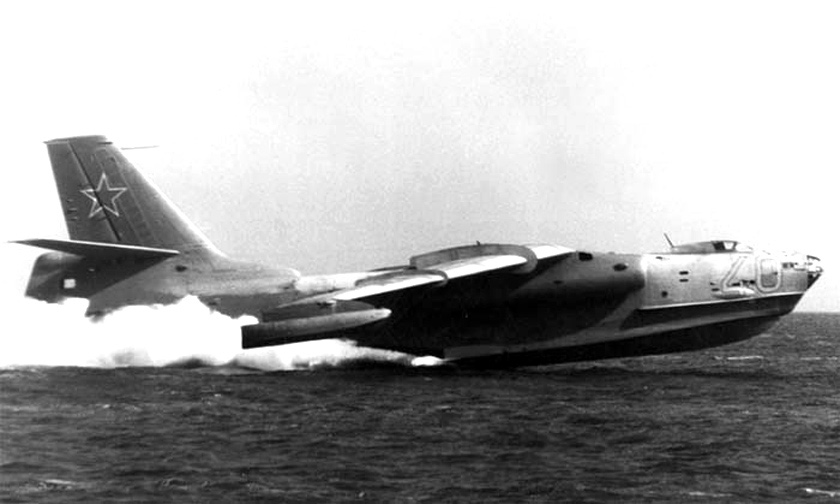


On this day in aviation history, 70 years ago (June 20, 1956), the Beriev Be-10 Izdelye M took flight for the first time. Known as the Mallow by NATO, the Be-10 was a rare breed of aircraft. The Mallow was a flying boat, designed to be a patrol bomber. It was powered by twin Lyul’ka AL-7PB axial-flow turbojet engines, each providing 16,000 pounds of thrust. In 1954, the Soviet Council of Ministers issued directive No.2622-1105ss. This directive sought a turbojet-powered flying boat, one that could handle open-sea recon, bombing/torpedo attack, and also lay mines. Chief designer Gheorgiy M. Beriev led a motivated team of engineers at OKB-49 to develop a solution to the Soviet Minister’s request. OKB-49 did not have the physical space to carry the design through, so work was done at GAZ No. 8, in Zavod. After much trial and error, the Be-10 finally flew on 6/20/56. After the initial flight, a series of 76 testing sorties followed. On October 20, 1958, the prototype was submitted for review. Production of 27 examples for service with Soviet Naval Aviation was approved, on the condition that any teething issues be remedied as incurred.
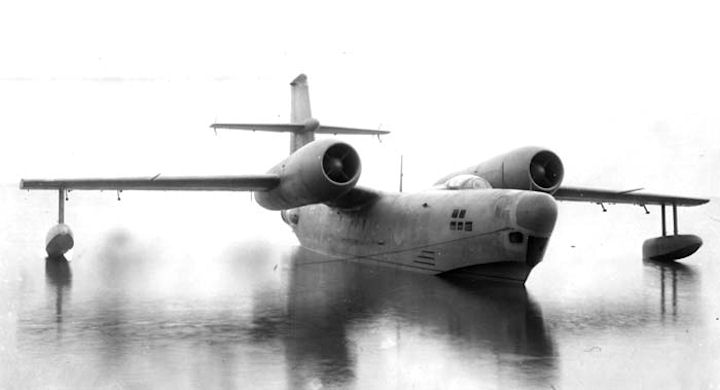
The Be-10 was designed as a high-wing aircraft, to keep the engines out of the line of water ingestion. The Mallow also featured swept wings and a sea rudder under the rear fuselage area. The 2nd Squadron of the 977th Independent Naval Long-range Reconnaissance Air Regiment (977th OMDRAP) was the first unit to operate the Be-10, and they would also be the only outfit to fly the ship. Ultimately, the Mallow proved difficult to fly and suffered from metal fatigue from high-speed takeoffs and landings. It was removed from service in 1968, with only 28 Be-10s being produced. A crew of three flew the Be-10, which had a maximum airspeed of 570 mph and a range of 1,563 nmi. The Mallow had a service ceiling of 41,000 ft, and could climb at a rate of 2,025 fpm. Armament consisted of four 23 mm Afanasev Makarov AM-23 cannons (two forward firing, and two more in a radar-controlled tail turret), missiles, torpedoes, bombs, and anti-shipping mines.