






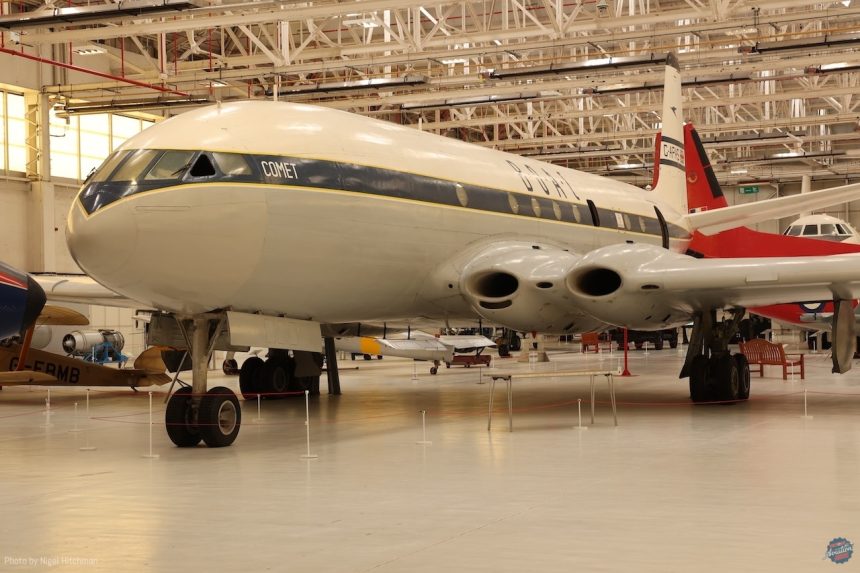

In early March, the Royal Air Force Museum announced its latest round of airframe disposals, affecting several historically significant aircraft on display at RAF Museum Midlands, Cosford. Among these was the fuselage of the last surviving short-fuselage de Havilland DH106 Comet 1XB, registered G-APAS, which departed Cosford on 9 September for its new home at the South Wales Aviation Museum in St Athan. While the aircraft’s wings were also relocated to Wales, severe corrosion has rendered them unsuitable for reattachment. As a result, the early-configuration Comet will now be displayed solely as a fuselage, marking the end of the aircraft as a complete entity.
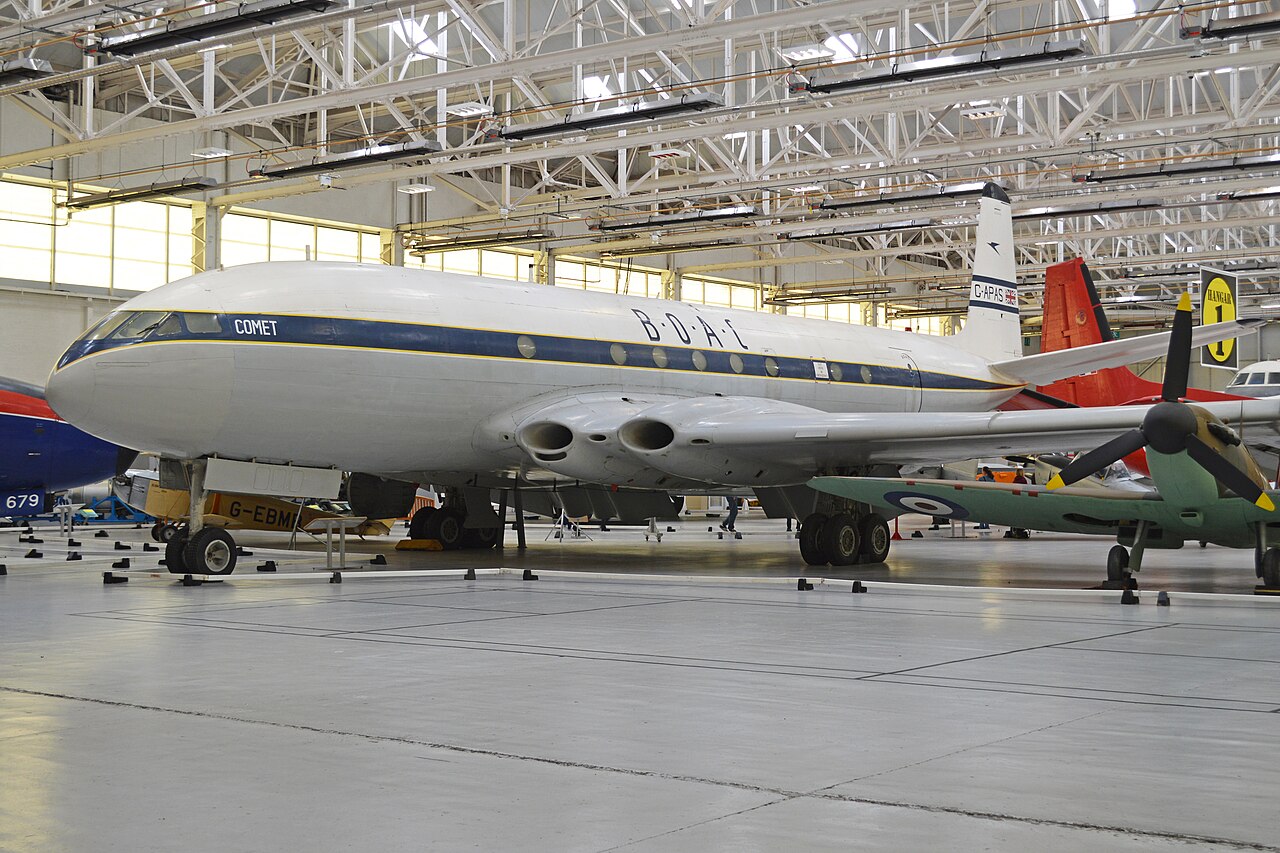
Following repeated inquiries, the RAF Museum issued a statement on 16 September explaining the transfer: “The transfer of the Comet out of the RAF Museum’s collection was approved by trustees in January 2025, as part of the museum’s ongoing Collection Review and future display planning. This variant of the Comet was never operated by the RAF and carries a false civilian BOAC livery. The Comet is represented in the museum’s collection by 950 other items, including photographs, archives, film, sound recordings, and fine art. Despite making a national offer for gifting the Comet, no interest was received. The museum therefore approached the South Wales Aviation Museum in St Athan, which accepted the offer. The aircraft will be placed on public display, ensuring its story is shared with future generations.”
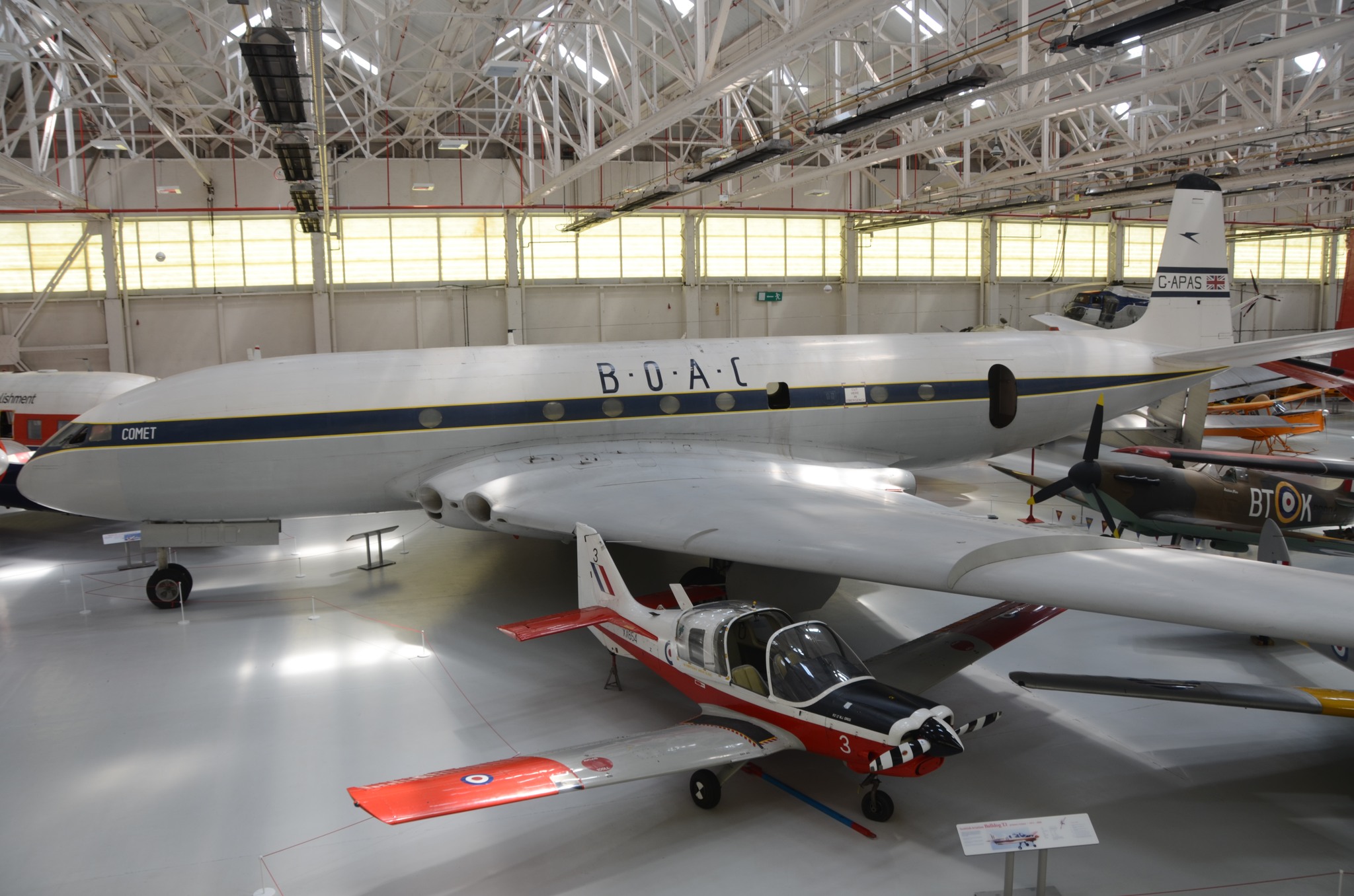
The museum added that a condition assessment revealed severe corrosion on portions of the airframe, likely caused by prolonged outdoor storage prior to its 2006 placement in Midlands Hangar 1. As a result, the wings and any irreparably damaged materials were removed, with salvageable components repurposed to help offset display costs. G-APAS was the final aircraft of 21 Comet 1s built, making its maiden flight at Hatfield on 16 March 1953. Delivered to Air France on 22 July 1953 as F-BGNZ, it was withdrawn from service on 11 January 1954 following the grounding of the BOAC Comet fleet after the catastrophic loss of G-ALYP over the Mediterranean. Returned to the manufacturer in February 1954 for modifications, it entered storage before undergoing a conversion program in September 1956 at Broughton, Chester. The aircraft was re-registered as G-APAS on 29 November 1957 and subsequently used for trials and research, including infra-red weapon programs for the Red Top and Firestreak air-to-air missiles. Much of this work was conducted in an RAF Transport Command-style color scheme.
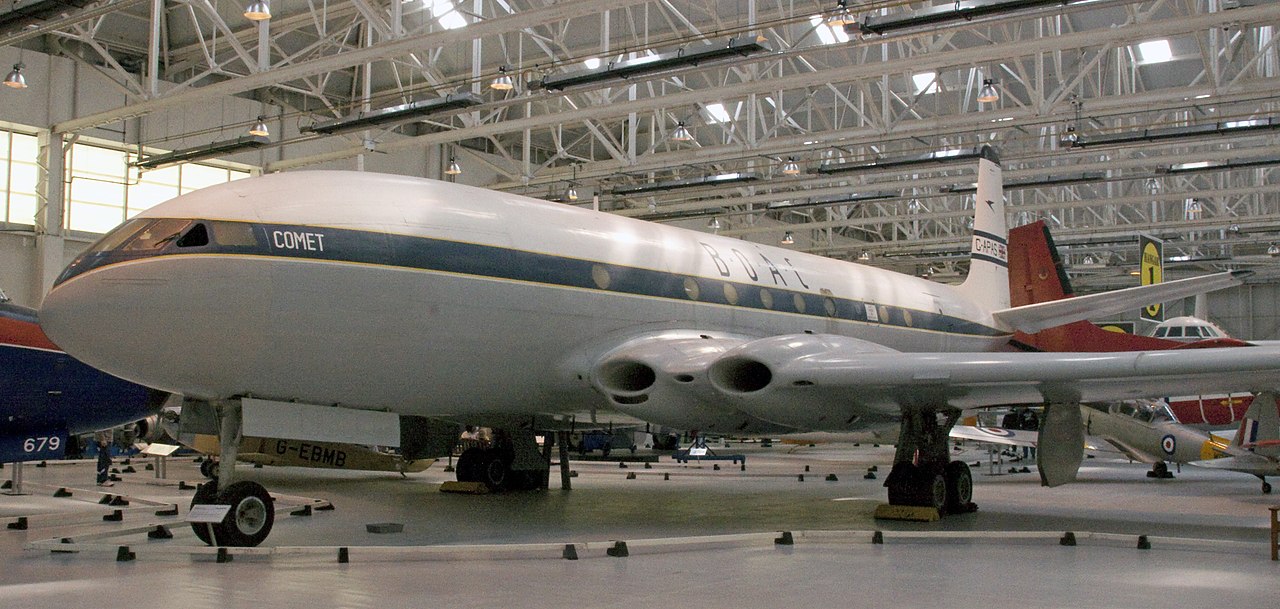
Struck off charge on 23 February 1968, the Comet was transferred to the RAF Museum later that year, initially stored at Shawbury before being repainted in BOAC livery and moved to Cosford in September 1978. Years of display and storage at Cosford followed, until its recent relocation to South Wales. The South Wales Aviation Museum, the largest independent aircraft museum in Wales, will now preserve the fuselage as part of its mission to protect aviation heritage and inspire the next generation of engineers and aviators.
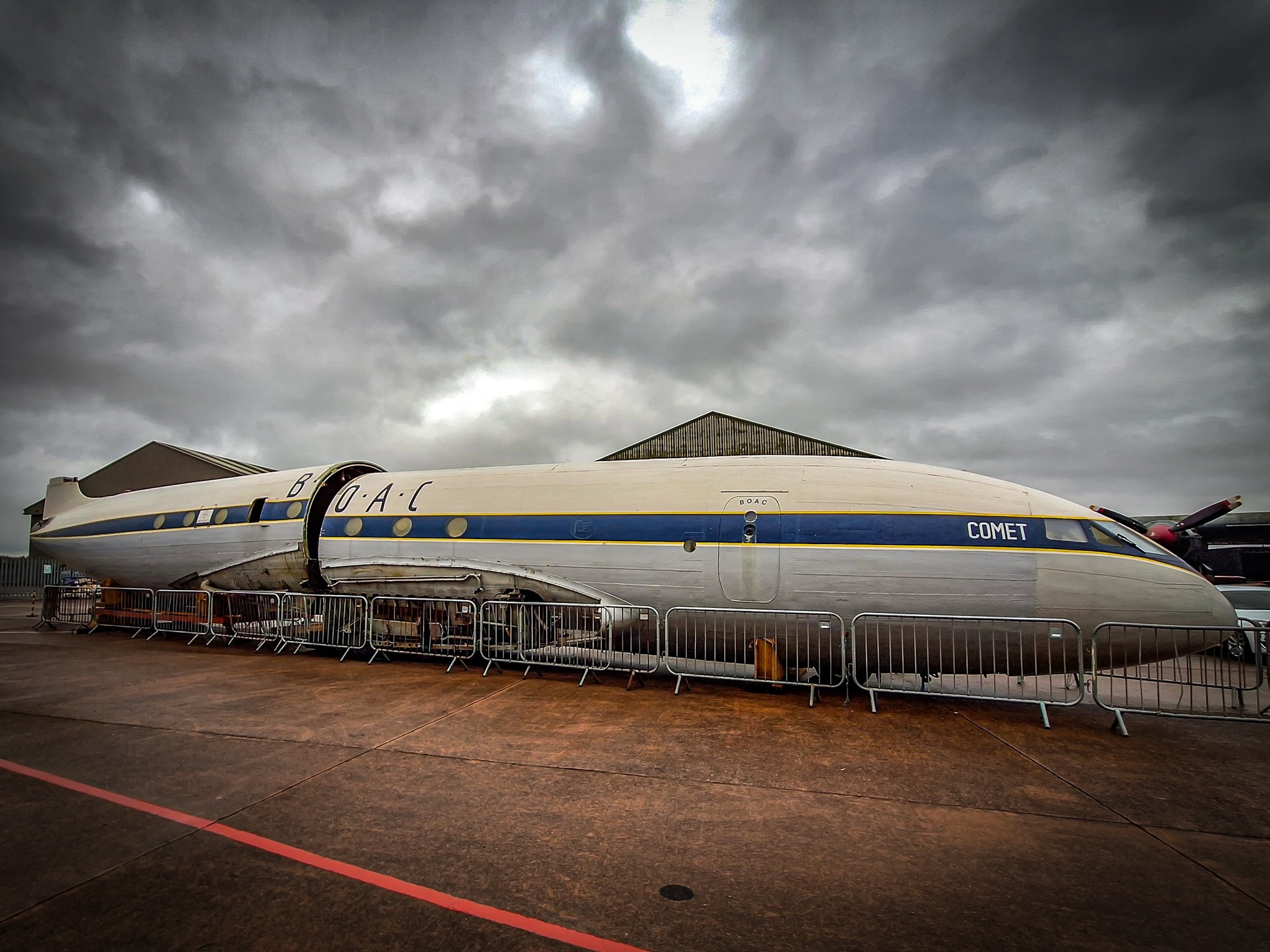








The last short fuselage Comet…..apart from the one at Salisbury Hall which still has square windows.
There is one under reconstruction at Paine Field, Everett, Washington.
I am really starting to wonder what the big British aviation museums view is their mission. Duxford also had a short fuselage Comet in the 1980s that they scraped. Now the RAF museum does this to the last one in existence that looks like it was in stable condition with indoor storage. Seems like Americans care more about British aviation heritage than they do.The Museum of Flight went to huge efforts to save their Comet whole and I think it had worse corrosion than the one at Cosford
So who was the “brains” behind this destruction of history? Can’t reattach the wings because of corrosion? It’s never going to fly again so what is the problem? They could easily create a attachment frame to at least place the wings with the fuselage but unfortunately the person in charge is incapable of thinking outside the box
It would appear that, since the beginning of the year 2,000’s, ALL the major British Museums have entirely ‘Lost The Plot’, on what their true Role is, and should be.
They all appear to be run by Accountants, for Accountants; and some (such as IWM) appear ashamed of that they are entrusted with – to the extent of driving away Volunteers and Enthusiasts.
I used to be a friend of the Imperial War Museum, but quit, they’d lost their way.
I had the pleasure in 1964 of returning to the UK from Libya in a Comet. If memory serves the pilot was Flying Officer Tulip. A huge step up from an Argosy or an Eagle Air DC-6b.
Seems a real shame to lose the wings. To my way of thinking, it was the wings and iconic engine housing that made the Comet special. The fuselage is much the same as any other airliner. I remember what a revelation it was to fly in the Comet in the 60’s after the noise and vibration from the old Bristol Brittanias that previously carried us to Spain.
What a shame to leave the wings unattached,and to possibly be scrapped! This aircraft deserves to be, and should be, preserved complete. We’re not talking about a restoration to flight, so why can’t some (unobstrusive) repairs be msde, to allow the wings to be reattached?
I emailed with the new museum and they said they don’t have the money to deal with the wing corrosion. Seems like the RAF museum would take that into consideration before dismantling the last complete example of such a historic airplane
Cosford does have a Nimrod though, which of course takes its design roots from the Comet. Perhaps they could populate the space with an EE Canberra, which is sadly lacking at this museum.
We are building a full-scale replica de Havilland Comet 1 fuselage in Wisconsin. See http://www.dehavillandcomet.com . Anyone interested in details/photos, please email [email protected] . I’d post photos if I could, but this form doesn’t allow.
I saw a Jimmy Sturate, move about that jet, and it said the problem with that air plain was the engine configuration it would vibrate the air fraim so bad it would shake the plain to peices, ofcource that was and old movie made in the 60’s i belive? In the movie while the jet was flying Jimmy Sturate, was a passenger and he told them to land, and i thinked they turned it around and they landed it, and not long after words the tail section fell of of the jet!
A thing of beauty, destroyed unncessarily but hey, does it matter? It was only the last one built afterall..and to say that it didnt serve in the RAF and then say it was involved in RT/FS trials is rather strange to me.
It isnt as if there are a dozen more parked outside. Glad there is space for F111s, Mig21s etc (not). Management? Yeah, right on. Wait till the Herc falls apart like the Bev. The Brit is a civvy kite, we gave a Dutch Neptune that looks rather sad, but I reckon that the last if the early comets deserved better. Useless shower.
If keen on disposing aircraft, why not let Aerospace Bristol have the Bristol Type188 for its display area. The aircraft was never associated with the RAF as far as I am aware.